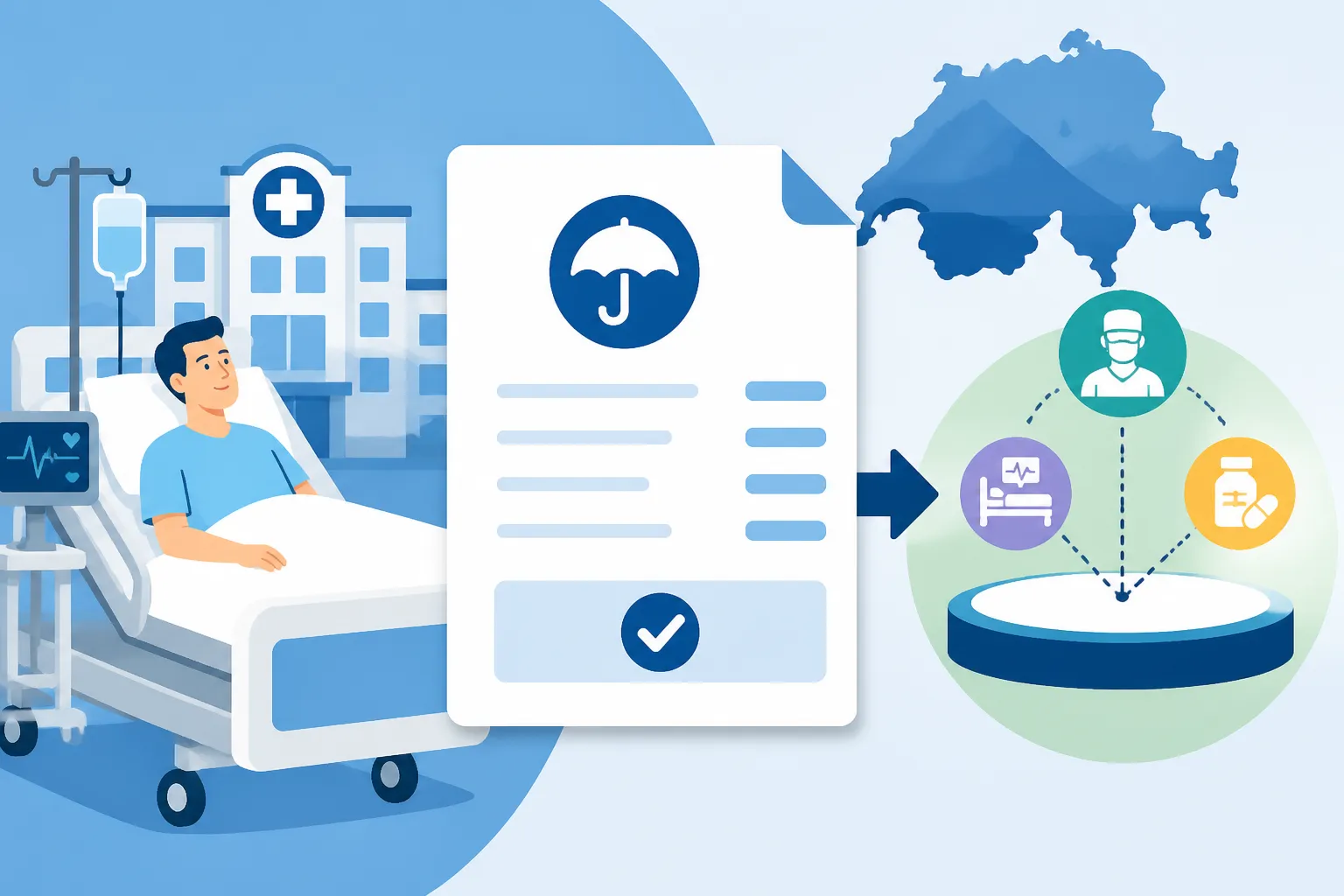
Understanding Swiss Hospital Bills: DRG Flat Rates Explained
Staring at a Swiss hospital bill can feel like deciphering an ancient alien script, especially when you're already recovering from an illness or injury. The sheer volume of codes, the unfamiliar terminology, and the seemingly endless stream of separate invoices for a single incident can leave even the most seasoned expat utterly bewildered and frankly, a little stressed. This guide aims to pull back the curtain on this complex system, helping you understand the infamous DRG flat rates and what exactly you’re paying for when that imposing envelope lands on your doorstep.
The Initial Shock: Why Swiss Hospital Bills Look So Different
When you first arrive in Switzerland, everything related to healthcare, including how you pay for it, feels like a foreign planet. You’re likely used to a system where you either pay a small co-pay at the doctor’s office or your insurance handles everything seamlessly in the background. Here, it’s a whole different ballgame, and the way hospital bills are presented is often the most striking example of this cultural and administrative difference. It’s not just about the money; it’s about the opaque nature of the billing that catches many newcomers off guard.
Tiers Garant vs. Tiers Payant: How You're Expected to Pay
One of the first hurdles you’ll encounter is understanding the two primary billing methods in Switzerland: Tiers Garant and Tiers Payant. These aren’t just fancy terms; they dictate who pays the bill first.
With the Tiers Garant system, which is the most common for outpatient treatments, doctor visits, and often for hospital stays too, you are the primary guarantor of payment. This means the hospital or medical provider sends the bill directly to you. You are expected to pay this bill first, typically within 30 days, and then submit the receipt and a reimbursement form (the Rückforderungsbeleg) to your basic health insurance provider (KVG/LAMal) for them to reimburse you, minus your franchise and copay. This system can be a real shock, especially if you’re used to direct billing. Imagine having a significant hospital stay and then receiving a bill for thousands of francs that you need to cover upfront before your insurance even steps in. It's a massive cash flow concern for many, particularly new arrivals still getting their finances sorted. If you happen to be on a short-term travel insurance policy, like perhaps one from SafetyWing, during your initial weeks or months before your mandatory Swiss basic insurance kicks in, you would definitely be operating under a "Tiers Garant" principle, needing to pay out of pocket and then claim.
On the flip side, Tiers Payant is where the insurance company pays the healthcare provider directly. You only receive a statement from your insurer detailing what they paid and what portion (your franchise and copay) you still owe them. This system is far less common for large hospital bills, though it does happen more frequently with pharmacies or certain pre-approved inpatient procedures, making life a little easier for the patient. It removes the immediate financial burden of a large upfront payment. Knowing which system your particular provider or hospital uses for a specific service is crucial, but often, you only find out when the bill arrives! This is why it’s so important to understand How to Pay Medical Bills: Tiers Garant vs. Tiers Payant Billing Systems.
The Intricacies of the Rückforderungsbeleg
The Rückforderungsbeleg is the detailed invoice you receive from the hospital or medical practitioner. This isn’t just a simple total; it's a meticulously itemized document, often several pages long, that breaks down every single service, medication, and material used during your treatment. Each line item will have a specific code, a quantity, and a price.
Decoding this document can feel like a full-time job. You'll see codes like "TARMED" for outpatient doctor services, "DRG" codes for inpatient hospital stays (which we'll dive into shortly), and various other classifications for lab tests, imaging, specific medical devices, and pharmaceuticals. For instance, a simple appendectomy won't just be one line item. You'll see separate charges for the surgeon's time, the anesthesiologist, the operating room usage per minute, specific medications administered, bandages, overnight stay, meals, and even small items like cotton swabs. Each one of these will correspond to a precise tariff code and cost. The total can be staggering, and it's easy to feel overwhelmed. Many expats find themselves cross-referencing these codes with online guides, trying to make sense of what they actually mean. It’s a level of detail that’s rarely seen in other healthcare systems, and it often leads to questions about the necessity of certain charges. Don't worry, there are resources that can help you understand How to Read a Swiss Medical Bill (Rückforderungsbeleg) and Claim Refunds.
Deconstructing DRG Flat Rates: The Swiss System's Backbone
Here's where things get really interesting, and frankly, quite complex. For inpatient hospital stays in Switzerland, the billing system predominantly uses what are known as Diagnosis Related Groups, or DRGs. Specifically, in Switzerland, it's called SwissDRG. This system fundamentally changed how hospitals are remunerated for their services and, consequently, how your bill is calculated.
What are DRG Flat Rates (SwissDRG)?
DRG stands for Diagnosis Related Group. In essence, it's a patient classification system that groups similar medical cases together based on diagnosis, procedures performed, age, sex, and presence of complications or comorbidities. Each group then has an assigned "flat rate" or lump sum payment. The idea behind SwissDRG, which was introduced to enhance transparency and efficiency in 2012, is to pay hospitals a predetermined price for a specific illness or treatment, regardless of how long a patient stays in the hospital or how many resources are used, within certain parameters.
Let’s say, for example, you are admitted for a straightforward hernia repair. Under the DRG system, this specific diagnosis and procedure would fall into a particular DRG category. The hospital then receives a set payment for treating that hernia, which is designed to cover all the medical services, nursing care, accommodation, and medications related to that specific illness during your stay. The hope is that this incentivizes hospitals to be efficient and avoid unnecessary procedures or extended stays, as they won't get paid extra for them. However, it can also make a hospital bill feel incredibly abstract because you’re not paying for each individual minute or pill, but rather for a 'package' that corresponds to your condition. It’s a major component of Healthcare in Switzerland for Expats: The Complete System Overview (2027).
How Your Basic Insurance (KVG/LAMal) Interacts with DRGs
Your mandatory basic health insurance (KVG/LAMal) covers the costs of hospital treatment in a general ward ( allgemeine Abteilung or standard ward) in any public hospital in your canton of residence. If you’re treated in a hospital outside your canton, your basic insurance will typically cover the costs up to the rate that would have been charged in a public hospital in your canton. Any difference might be your responsibility, though there are often agreements between cantons. It’s a common misconception that basic insurance covers "any hospital anywhere." While you technically have free choice of hospitals in Switzerland, your KVG policy will only cover the costs up to the standard rate of a public hospital in your residential canton for the same DRG. This means if you choose a more expensive hospital or one outside your canton that doesn't have an agreement, you could be on the hook for the difference, even for the medical portion. This is why understanding Hospital Choice in Switzerland: Can You Pick Any Hospital on Basic Insurance? is so important.
When it comes to the DRG flat rates, your basic insurance covers the majority of this cost. However, it's crucial to remember that your personal financial contribution – namely your franchise (deductible) and copay (Selbstbehalt) – still applies to the DRG amount. So, if your DRG for a particular hospital stay is CHF 10,000, your insurance will first deduct your chosen annual franchise amount, and then a 10% copay on the remaining costs, up to a certain annual maximum. This is the bedrock of Understanding KVG/LAMal: Mandatory Basic Basic Health Insurance Explained.
Understanding Your Financial Share: Franchise, Deductible, and Copay
This is where many expats get tripped up. The combination of franchise and copay can lead to significant out-of-pocket expenses, even for seemingly routine hospital visits. It's a system designed to make individuals bear a portion of the healthcare cost, encouraging mindful usage.
The Franchise (Deductible): Your Annual Out-of-Pocket
The franchise, or Franchise in German, is the annual deductible you choose for your basic health insurance. This is the fixed amount you agree to pay out of your own pocket for medical costs each calendar year before your insurance starts contributing. Swiss basic insurance offers a range of franchises, from the mandatory minimum of CHF 300 up to CHF 2,500 for adults. Generally, the higher your chosen franchise, the lower your monthly insurance premiums.
Let’s consider an example: You have a CHF 2,500 franchise. If your first medical bill of the year is CHF 500, you pay the full CHF 500. If your next bill is CHF 1,000, you pay that too. If you then have a hospital stay with a DRG flat rate of CHF 8,000, and you’ve already paid CHF 1,500 towards your franchise from previous bills, you would first pay the remaining CHF 1,000 of your franchise. Only after your annual franchise is fully met does the insurance step in to cover the majority of the subsequent costs. This is a critical concept and dictates a large part of your potential annual healthcare expenditure. Many expats agonize over choosing the right franchise, trying to balance lower premiums with the risk of high out-of-pocket costs if they get sick. This balancing act is thoroughly explained in How to Choose the Right Deductible (Franchise) for Your First Year. It's a crucial part of The Swiss Franchise System: How Deductibles and Copays Work.
The 10% Copay (Selbstbehalt): Post-Franchise Contributions
Once you’ve paid your full annual franchise, you're not entirely off the hook. You then enter the "copay" phase, known as Selbstbehalt. For basic insurance, you are responsible for 10% of all further medical costs, including hospital DRG rates, after your franchise has been met. This 10% copay, however, has an annual maximum. For adults, this maximum is CHF 700 per calendar year.
So, if you had that CHF 8,000 hospital DRG bill, and you've already paid your CHF 2,500 franchise, there's CHF 5,500 remaining. You would then pay 10% of this CHF 5,500, which is CHF 550. Your insurance would cover the rest of that bill. Even if you incurred another CHF 10,000 in medical costs later that year, you would only pay an additional CHF 150 towards your copay (reaching the CHF 700 annual maximum), and your insurance would cover everything else. This cap provides a welcome relief, setting a predictable ceiling on your total annual out-of-pocket expenses, known as your Out-of-Pocket Maximums: Calculating Your True Annual Healthcare Costs.
Accident Insurance (UVG): A Different Beast Entirely
This is a vital distinction many expats miss, and it can save you a bundle. If your hospital stay, or any medical treatment for that matter, is a direct result of an accident, then a completely different set of rules often applies. In Switzerland, if you work more than 8 hours a week for the same employer, you are automatically covered by occupational and non-occupational accident insurance (UVG – Unfallversicherungsgesetz), paid by your employer.
The beauty of UVG is that for accident-related treatments, you do not pay any franchise or copay. The accident insurance covers 100% of the costs. This means that if you break your leg skiing and end up in the hospital, the entire DRG flat rate, along with all associated medical costs, will be covered without you touching your franchise or paying a single cent of copay. This is a huge relief and a crucial benefit that sets accident-related care apart from illness-related care. It’s important to understand the nuances of Accident Insurance (UVG): Occupational vs. Non-Occupational Coverage to know when this valuable coverage applies.
When Supplementary Insurance (VVG) Comes into Play
While basic insurance (KVG/LAMal) provides excellent core medical coverage, it often only gets you a spot in a shared room in a public hospital within your canton. This is where supplementary health insurance (VVG – Versicherungsvertragsgesetz) comes into its own, allowing you to upgrade your comfort and choices, especially concerning hospital stays.
Upgrading Your Comfort: Semi-Private and Private Rooms
If you value comfort, privacy, and perhaps a bit more control over your medical care during a hospital stay, then supplementary insurance for hospital accommodation is what you’re looking for. These policies, often called "halbprivat" (semi-private) or "privat" (private), cover the additional costs of staying in a two-bed room or a single room, respectively.
With a semi-private room, you usually share with one other patient. With a private room, you get the entire space to yourself. The benefits extend beyond just the room itself; often, these policies also grant you the right to choose your treating physician (the Chefarzt or head physician), which can be incredibly reassuring. They might also offer more flexible visiting hours or access to concierge-like services. While the DRG system still dictates the medical payment to the hospital for your illness, your VVG supplementary insurance covers the significant "hotel" portion of the bill that differentiates a general ward from a semi-private or private one. This is a considerable expense, and without VVG, opting for these upgrades would mean paying the full difference out of your own pocket. For many expats, this additional comfort and choice are why they invest in Supplementary Health Insurance (VVG): What It Covers and When to Buy It.
Elective Procedures and "Hotel Costs"
It's important to understand that basic KVG insurance focuses strictly on medically necessary treatments. It won't cover elective procedures, non-traditional therapies, or enhanced comfort items that aren't deemed essential for your recovery in a standard ward. For instance, if you want a specific non-essential cosmetic procedure, or perhaps certain types of alternative medicine that aren't part of KVG's standard offerings, supplementary VVG insurance might step in.
The "hotel costs" portion of a hospital bill refers to everything beyond the purely medical treatment covered by the DRG. This includes the room standard (private vs. shared), meals (special menus), and often amenities like TV, internet, and sometimes even complimentary toiletries. While a portion of these "hotel costs" is baked into the DRG rate for a general ward, the hefty surcharges for a semi-private or private room are what VVG hospital supplementary insurance is designed to cover. Without VVG, if you were to ask for a private room simply because you prefer it, you would receive an invoice for the difference between the standard ward rate and the private room rate, which can easily run into hundreds or even thousands of francs per night. This is a crucial financial consideration if you anticipate a hospital stay and prioritize personal space and comfort.
Scrutinizing Your Bill and Seeking Clarification
Even in a country renowned for its precision, medical bills can contain errors. It's not common, but it happens. More often, the confusion arises from the sheer complexity and the fragmented nature of the billing process. Don't just pay a bill without understanding it – that's a sure way to financial stress.
Decoding the Line Items: What to Look For
When you receive your Rückforderungsbeleg from the hospital, resist the urge to simply file it away or pay it blindly. Take the time to scrutinize it carefully. Look for:
- Dates: Do the treatment dates align with your actual hospital stay?
- Services: Are there any services listed that you clearly did not receive? Sometimes, a standard package of services might be billed, and if something was omitted, it might still appear.
- Medication: Review the medications. Were these the ones you received? Pay particular attention to expensive items.
- Duplicate Charges: In rare instances, you might see the same service billed twice.
- Your Personal Data: Ensure your name, date of birth, and insurance number are correct.
- The DRG Code: For inpatient stays, familiarise yourself with the main DRG code. While challenging to interpret without specialized knowledge, you can at least confirm it relates to your primary diagnosis.
If anything looks even remotely off, question it. The initial bill is often the first step in a dialogue, not the final word. It's a key part of your responsibility, especially since you are often on the Tiers Garant system, to verify the accuracy of the charges. This deep dive into How to Read a Swiss Medical Bill (Rückforderungsbeleg) and Claim Refunds will give you the tools you need.
Who to Contact When You Have Questions
You're not alone in facing these bewildering documents. There's a clear chain of command for inquiries:
- The Hospital Billing Department (Patientenadministration / Service de Facturation): Your first port of call. They are best equipped to explain the specific line items, DRG codes, and the hospital's internal tariff structure. Be polite but firm, and don't be afraid to ask for explanations in English if possible.
- Your Health Insurance Provider: Your insurer has a vested interest in ensuring bills are correct and not inflated, as they're the ones ultimately paying the larger share. They have experts who regularly deal with these bills and can often spot inconsistencies or explain complex aspects more clearly. They can act as an intermediary, querying the hospital on your behalf.
- The Cantonal Tariffs Office or Ombudsman: If you're still not satisfied after speaking with the hospital and your insurer, and you suspect an actual billing error or overcharge, you can escalate the matter. Each canton has a tariffs office or an ombudsman for health insurance disputes that can provide guidance.
- Your Travel Insurance (if applicable): If you're still in the transitional phase and have an international travel insurance like SafetyWing, they should be your primary contact for any bill queries related to treatments they cover. They will guide you through their claims process and help clarify covered expenses.
Navigating Multiple Bills for One Incident
One of the most common sources of frustration for expats is the phenomenon of receiving multiple, separate bills for what they perceive as a single medical incident or hospital stay. You might get one bill from the hospital for the DRG, another from the chief physician for their specific services (if you had private supplementary insurance), a third from the anesthesiologist, a fourth from the laboratory for blood tests, and a fifth from the radiology department for X-rays or scans.
This fragmented billing is standard practice in Switzerland. Each medical professional or service provider operates as a semi-independent entity and sends their own invoice. It can be incredibly confusing to track, and often these bills arrive weeks or even months apart, making it difficult to reconcile them with the initial event. It makes the administrative burden feel much heavier than just recovering from an illness. For instance, after an emergency room visit, you might receive separate bills for the doctor's consultation, the blood tests, and any imaging done. This is part of the challenge detailed in articles like Emergency Rooms in Switzerland: Triage, Waiting Times, and Billing.
Practical Tips for Expats Faced with Hospital Bills
Dealing with Swiss hospital bills can be a significant administrative load on top of what might already be a stressful situation. Being proactive and organized can save you headaches and potentially money.
Setting Up eBill and Managing Payments
To streamline your bill payment process, I highly recommend setting up eBill (E-Rechnung in German, facture électronique in French) through your Swiss e-banking portal. Most major hospitals, doctors, and health insurance providers offer eBill. Instead of receiving paper invoices, the bills are sent directly to your online banking, where you can review them and approve payment with a single click.
This isn't just about convenience; it helps you stay organized and on top of due dates. Missing a payment in Switzerland can lead to formal debt collection procedures (Betreibung), which are serious and can negatively impact your credit standing for future apartment rentals or loans. Many bills operate on a 30-day payment term, so keeping track is essential. Once you’re settled, definitely look into How to Pay Medical Bills: Tiers Garant vs. Tiers Payant Billing Systems and how eBill can simplify things.
Keeping a Record of All Correspondence
When dealing with medical bills, especially complex ones or those you're questioning, meticulous record-keeping is your best friend. Create a dedicated folder (digital or physical) for all medical documents. This should include:
- Copies of all bills received.
- Dates of payment and confirmation receipts.
- Any correspondence with the hospital or your insurance provider (letters, emails).
- Notes from phone calls, including the date, time, who you spoke to, and a summary of the conversation.
This paper trail is invaluable if a dispute arises or if you need to reconcile conflicting invoices months down the line. It ensures you have all the necessary information at your fingertips and can clearly demonstrate your actions and inquiries.
Don't Hesitate to Ask for a Payment Plan
If you receive a large hospital bill and find yourself struggling to pay the full amount upfront (especially under the Tiers Garant system before reimbursement), do not ignore it. Swiss hospitals and medical providers are generally very understanding and flexible if you communicate proactively.
Contact the hospital's billing department as soon as possible and explain your situation. Many will be willing to set up an installment plan (Ratenzahlung) that allows you to pay the bill over several months without incurring additional fees or initiating debt collection. It is always better to reach out and negotiate than to let a bill go unpaid, which can lead to unnecessary legal complications and stress. This applies even if you are covered by an international insurance like SafetyWing for a short period, and are waiting for reimbursement while the initial large bill is due; communication is key.
Remember, while the Swiss healthcare system is excellent, its administrative side can be a steep learning curve for expats. Being informed, organized, and proactive is crucial to navigating it successfully. Don't be afraid to ask questions, leverage your insurance provider's expertise, and take control of your financial health. And for those just arriving, remember the Mandatory Registration: How to Sign Up for Health Insurance Within 90 Days rule – it’s foundational to your healthcare journey here.
Swiss Hospital Billing Overview
Here's a quick table to summarize the key aspects of Swiss hospital billing for basic and supplementary insurance, especially concerning DRG flat rates:
| Feature | Basic Insurance (KVG/LAMal) (Standard Ward) | Supplementary Insurance (VVG) (Semi-Private/Private Ward) |
|---|---|---|
| Covers Medical DRG Rate | Yes, minus franchise and 10% copay (up to CHF 700/year) | Yes, for the medical portion (DRG) of higher-class wards |
| Room Standard | Shared room (2-6 beds) in a public hospital in your canton | Semi-private (2 beds) or private (1 bed) room |
| Choice of Doctor | Usually the on-duty doctor assigned to the ward | Often free choice of treating physician (e.g., Chefarzt) |
| Hospital Choice | Any public hospital in your canton (or equivalent rates outside) | Free choice of accredited hospitals across Switzerland |
| Accident Coverage (UVG) | No franchise/copay if accident-related and employer-insured | Still no franchise/copay for the medical part, VVG covers room upgrade |
| Billing System (Often) | Tiers Garant (you pay first, then claim reimbursement) | Tiers Garant or Tiers Payant (depends on policy/provider) |
| Purpose | Essential medical care, cost-sharing for efficiency | Enhanced comfort, privacy, and expanded choice |
Disclaimer
The information provided in this guide is for general informational purposes only and does not constitute medical, legal, or financial advice. While we strive to provide accurate and up-to-date information, the Swiss healthcare and insurance landscape is complex and subject to change. Always consult with your specific health insurance provider, legal counsel, or financial advisor for advice tailored to your personal situation.