Healthcare in Switzerland for Expats: The Complete System Overview (2027)
The transition to Swiss life often feels like a series of expensive puzzles, but nothing is quite as daunting as the first time you receive a bill for your mandatory health insurance premium. I remember sitting at my kitchen table in Zurich, staring at a bill that cost more than my first car’s monthly payment, feeling utterly overwhelmed. This guide is designed to strip away the confusion and provide a clear, realistic roadmap to the Swiss healthcare system so you can stop worrying about the paperwork and start focusing on your health.
The Core Pillar: Mandatory Health Insurance (KVG/LAMal)
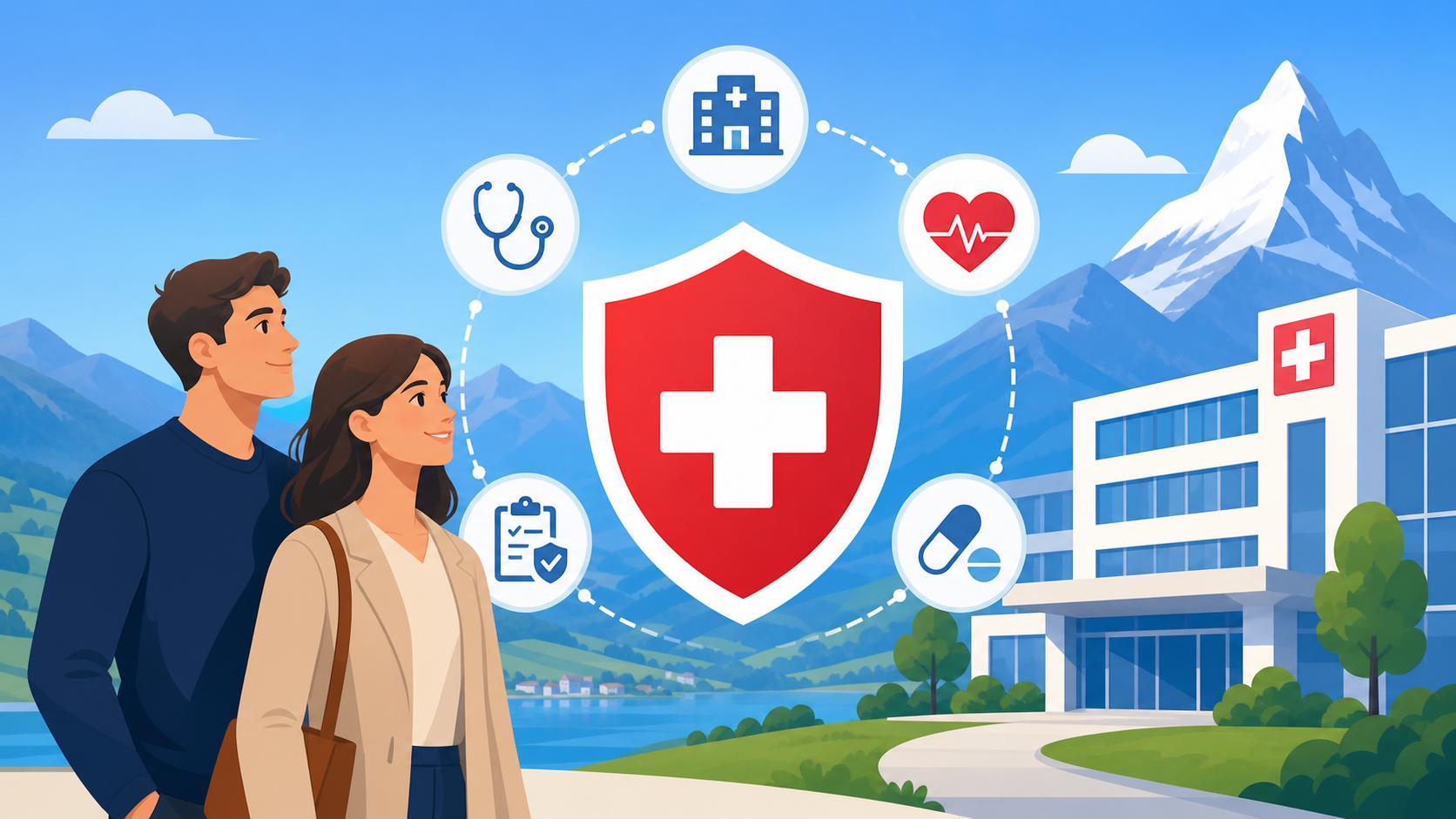
If you have just arrived in Switzerland, you have likely already heard the acronyms KVG or LAMal. This is the federal law that governs basic health insurance, and it is non-negotiable. Whether you are a CEO or a student, the law requires every resident to carry a basic level of coverage. The system is private but highly regulated, meaning insurance companies cannot profit from the basic plan and are legally required to accept you regardless of your pre-existing conditions.
The 90 Day Registration Window
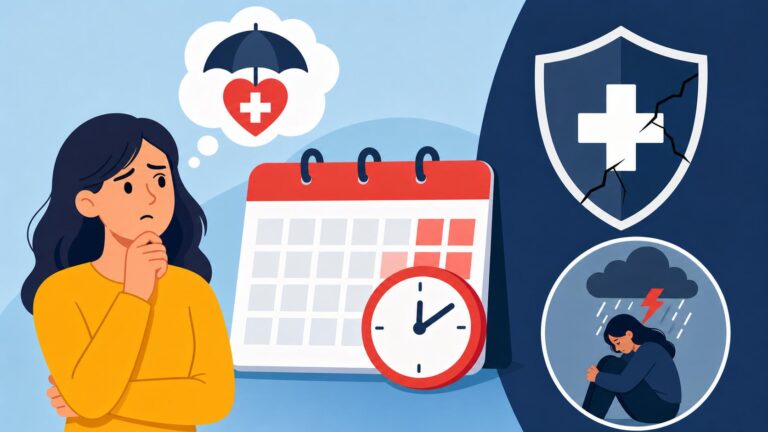
From the moment you register at your local Gemeinde or Kreisbüro, the clock begins to tick. You have exactly 90 days to select an insurance provider and sign a contract. While this might seem like a generous amount of time, I highly recommend starting your research in week two. If you miss this window, the local authorities will eventually assign you to a random insurer—often one of the most expensive ones—and you will still be liable for all premiums backdated to your arrival date.
I learned the hard way that backdating is no joke. If you wait until day 89 to sign up, your first invoice will include three months of premiums due immediately. It can be a massive hit to your initial relocation budget. Understanding KVG/LAMal: Mandatory Basic Health Insurance Explained is the first step every expat should take to understand what is actually being covered by those monthly payments.
Choosing Your Insurer and Model
While the benefits of the basic KVG plan are identical across all companies, the premiums and customer service levels vary wildly. You are essentially choosing who you want to handle your paperwork and how much you are willing to pay for that privilege. Beyond the company, you must choose a "model." The Standard (Free Choice) model is the most expensive, allowing you to see any doctor you want at any time.
Most expats, however, opt for alternative models like Telmed, HMO, or the Family Doctor model. In a Telmed model, you agree to call a medical hotline before seeking treatment. In an HMO model, you are restricted to a specific group practice. These restrictions can lower your monthly premium by up to 20%. If you are living in a smaller town, like I was initially, make sure your chosen HMO center isn't two train rides away. If you find yourself Finding an English-Speaking Family Doctor in Zug, for example, the Family Doctor model is often the best balance between cost-saving and personalized care.
Premiums and Cantonal Variations
One of the most surprising aspects for newcomers is that health insurance premiums are not based on your income, but on your age and where you live. Each canton has different risk pools, meaning a 30-year-old in Geneva will pay significantly more than a 30-year-old in Appenzell Innerrhoden. These rates are adjusted annually and announced every September for the following year.
It is worth noting that if your household income is below a certain threshold, you might be eligible for "Prämienverbilligung" or premium reductions. Each canton manages this differently, so it pays to check with your local social insurance office. For those moving from countries with socialized medicine, the sticker shock is real. While basic insurance is robust, many of my friends have supplemented their lifestyle with products from Cigna Global to ensure they have seamless coverage when traveling or if they want access to private wards that the basic KVG doesn't provide.
Understanding the Cost Sharing System: Franchise and Copayments
The Swiss system relies on the principle of personal responsibility, which translates to out-of-pocket costs. Even after paying your monthly premium, you aren't "done" paying for healthcare. You must navigate the Franchise (deductible) and the Selbstbehalt (copayment).
How the Swiss Franchise System Works
Your Franchise is the amount you must pay out of your own pocket each year before your insurance company starts chipping in a single rappen. For adults, this ranges from a minimum of CHF 300 to a maximum of CHF 2,500. Choosing your Franchise is a calculated gamble. If you are generally healthy and rarely see a doctor, a CHF 2,500 Franchise will give you the lowest possible monthly premium.
Conversely, if you have a chronic condition or plan on starting a family, the CHF 300 Franchise is usually the smarter move. I typically tell new arrivals to look at their past three years of medical history. If you spent less than CHF 2,000 on healthcare annually, go for the high Franchise. The Swiss Franchise System: How Deductibles and Copays Work goes into the math behind this decision in much greater detail, helping you avoid the common trap of overpaying for insurance you don't use.
The 10 Percent Copayment (Selbstbehalt)
Once you have surpassed your chosen Franchise, the insurance company takes over, but they don't cover 100% yet. You are still responsible for a 10% copayment on every bill, known as the Selbstbehalt. This is capped at CHF 700 per year for adults (and CHF 350 for children). This means that even in a year where you have a major surgery, your maximum exposure after the Franchise is reached is an additional CHF 700.
There is one specific exception to the 10% rule: brand-name medications. If a generic version of a drug is available and you choose the brand name anyway, your copayment can jump to 20%. This is the system’s way of encouraging cost-effectiveness. It is a small detail that can add up if you are on long-term medication, so always ask your doctor for the generic equivalent.
Out of Pocket Maximums and Budgeting
To truly understand your financial exposure in Switzerland, you need to calculate your "Maximum Annual Cost." This is your Total Annual Premiums + [Franchise] + CHF 700 Max Copayment. For a healthy expat on a high Franchise, this can be a significant number to keep in an emergency fund.
I suggest setting up a separate "health" savings account. When I first moved here, I didn't realize that billing can sometimes be delayed by months. You might receive a bill for a blood test in July that you actually had done in February. Having that buffer prevents the inevitable stress of a surprise CHF 400 invoice hitting your inbox during the holidays.
Navigating Medical Care: Doctors, Specialists, and Pharmacies
The quality of care in Switzerland is world-class, but the etiquette of the medical system can be confusing. It is a system built on efficiency and punctuality—traits that extend to the doctor's office.
Finding a Family Doctor (Hausarzt)
Your first point of contact should always be a Hausarzt. Unlike in some countries where you can just walk into a clinic, in Switzerland, you generally need an appointment. Finding a doctor who speaks English is usually easy in cities like Zurich, Basel, or Geneva, but can be trickier in the more rural cantons.
When looking for a doctor, don't just rely on Google Reviews. Ask your colleagues or neighbors for recommendations. A good Hausarzt is your gatekeeper to the rest of the system. They keep your medical history, manage your vaccinations, and provide the referrals you need to see specialists if you are on a restricted insurance model. For a deeper dive into the search process, check out Finding Medical Care in Switzerland: Doctors, Specialists, and Referrals.
Accessing Specialists and Referrals
If you are on the Standard insurance model, you can book an appointment with a dermatologist, gynecologist, or cardiologist directly. However, if you are on a Telmed or HMO model, you must get a referral from your primary care provider or the medical hotline first. If you bypass this step, your insurance company has the right to refuse payment for the specialist visit.
Wait times for specialists are remarkably short compared to other European countries. You can often see a specialist within a week or two. This efficiency is one of the things I love most about the Swiss system. The consultation will be thorough, but be prepared: Swiss doctors are direct. They will give you the facts, the options, and expect you to take part in the decision-making process.
Pharmacies and Prescription Medication
Pharmacies (Apotheken) are ubiquitous in Switzerland, but they are not just shops; they are highly regulated medical hubs. You cannot buy basic painkillers like high-dosage Ibuprofen without a consultation or a prescription. For expats, the cost of over-the-counter (OTC) meds can be a shock. A simple box of throat lozenges can cost three times what you'd pay in the US or UK.
This is why many of us order our non-prescription supplements, vitamins, and skincare through iHerb. It’s a common expat hack to save money on daily wellness items that don't require a Swiss pharmacy's stamp. However, for anything prescription-strength, you must use a local pharmacy. Pharmacies and Medication: Prescriptions, Costs, and OTC Regulations explains how to handle your Swiss medical card at the counter and why some medications are billed directly to your insurance while others require you to pay upfront.
Hospitalization and Emergency Services
Nobody wants to think about emergencies, but in a country with the Alps as a backyard, accidents happen. Knowing how the hospital system works before you need it is essential.
Public vs Private Hospitals
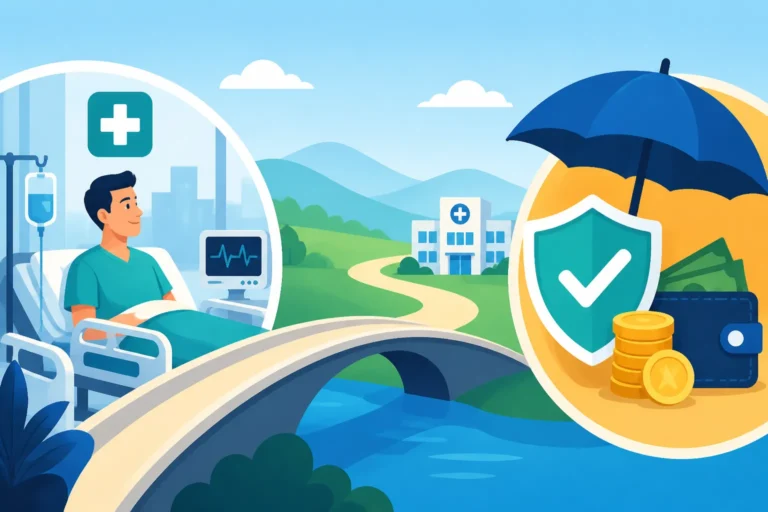
Switzerland has a dual hospital system. Public hospitals are excellent and accessible to everyone with basic insurance. If you have KVG, you are covered for a stay in a multi-bed ward in your canton of residence. If you want a private room, a choice of surgeon, or to be treated in a hospital outside your home canton, you generally need supplementary insurance.
The care in public wards is fantastic, but the lack of privacy can be an adjustment. I once spent three days in a four-person ward after a hiking accident, and while the nurses were angels, the snoring from my neighbors was less than ideal. This is why many expats look into international plans like those from Cigna Global, which often provide private or semi-private room coverage as a standard feature.
Emergency Rooms and Triage
In a true medical crisis, you head to the Notfall (Emergency Room). Swiss ERs use a triage system, so if you show up with a minor cut while a helicopter is bringing in a ski accident victim, be prepared to wait. However, for non-life-threatening issues after hours, many cities have "Permanence" clinics—walk-in centers that are much faster than the main hospital ER.
When you arrive at the ER, the first thing they will ask for is your insurance card. If you don't have it, they will still treat you, but the administrative headache afterward is significant. Make sure you carry that card in your wallet at all times.
REGA and Ambulance Services
Here is a piece of advice that could save you thousands: Basic insurance does not fully cover ambulance rides. Generally, KVG only covers 50% of the cost, up to a maximum of CHF 500 per year. Given that a single ambulance ride can cost CHF 1,200, you are left with a massive bill.
This is why almost every resident in Switzerland is a "patron" of REGA, the air rescue service. For a small annual contribution, REGA may waive the costs of search and rescue missions that aren't covered by insurance. It’s the best CHF 40 you will ever spend. You can learn more about this in Emergency Medical Services: Ambulances, REGA, and Crisis Protocols and REGA Membership: Why Expats Need Air Rescue Insurance in the Alps.
Specialized Care: Dental, Mental Health, and Maternity
While the basic insurance covers a lot, there are some notable gaps and specific rules for life's major milestones.
The Dental Care Reality
In Switzerland, dental care is almost entirely private. Basic health insurance only covers dental work if it is caused by a serious, unavoidable illness or a severe accident. Routine cleanings, fillings, wisdom tooth extractions, and braces are all on you.
Because Swiss dental costs are some of the highest in the world, many expats either travel across the border to Germany or France for major work or simply save up for their annual checkups. Dental Care in Switzerland: Costs, Insurance Reality, and Alternative Options breaks down what you can expect to pay and whether "dental insurance" is actually worth the premium (spoiler: often it isn't).
Mental Health Coverage
The Swiss system has made significant strides in mental healthcare in recent years. Since 2022, psychological psychotherapy is covered by basic insurance, provided it is prescribed by a doctor (like your Hausarzt). This was a huge win for the expat community, as the stress of relocation often brings mental health to the forefront.
Finding an English-speaking therapist can take some time, especially in high demand areas. Don't be afraid to ask for a list of providers from your insurance company. Mental Health in Switzerland: Accessing Therapists and Psychiatric Care provides a guide on how to navigate the "Anordnungsmodell" and ensure your sessions are covered.
Maternity and Child Healthcare
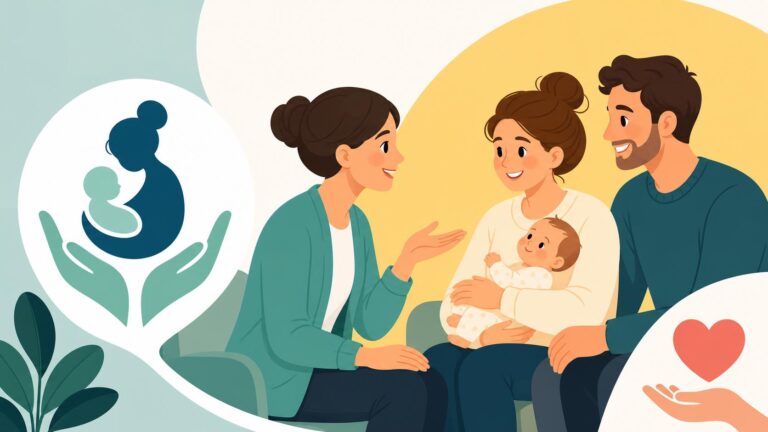
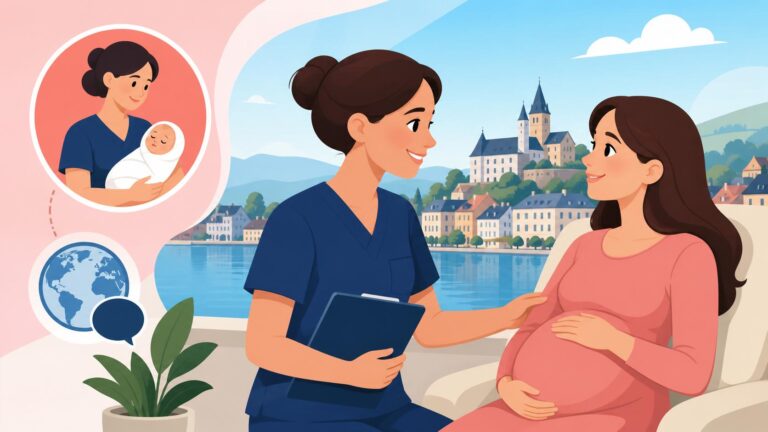
If you are planning to have a baby in Switzerland, you are in for a treat. The maternity care here is exceptional. From the moment you are pregnant, all costs related to the pregnancy and birth are covered by basic insurance with no Franchise or copayment applied after the 13th week.
You will have a choice between giving birth in a hospital, a birthing center (Geburtshaus), or at home. The system also provides for a Hebamme (midwife) to visit you at home for several days after the birth to help with breastfeeding and recovery. For parents, Maternity and Child Healthcare in Switzerland: From Pregnancy to Pediatrics is an essential read for understanding the timeline of scans and pediatric checkups.
Administrative Realities: Billing and Paperwork
Finally, we have to talk about the paperwork. The Swiss healthcare system generates a lot of it, and understanding the billing methods will save you hours of phone calls with your insurer.
Tiers Garant vs Tiers Payant
There are two ways bills are handled. In the Tiers Payant system, the doctor or pharmacy sends the bill directly to the insurance company. The insurer pays it and then sends you an invoice for your share (the Franchise or 10% copayment).
In the Tiers Garant system, the doctor sends the bill to you. You pay it upfront and then send the receipt (Rückforderungsbeleg) to your insurance company for reimbursement. Most pharmacies and hospitals use Tiers Payant, while many independent doctors still use Tiers Garant. It’s always helpful to ask "Tiers Payant?" at the reception desk so you know if you need to reach for your wallet.
Comparison of Insurance Models
| Model | Choice of Doctor | Premium Discount | Procedure |
|---|---|---|---|
| Standard | Full freedom | 0% (Base) | Go directly to any doctor or specialist. |
| Telmed | Restricted | 15-20% | Must call a medical hotline first for advice. |
| HMO | Restricted | 20-25% | Must go to a specific group practice center. |
| Family Doctor | Restricted | 10-15% | Your chosen Hausarzt must provide all referrals. |
Important Medical Disclaimer
The information provided in this article is for educational and informational purposes only and does not constitute medical or legal advice. While every effort has been made to ensure the accuracy of the information, healthcare laws and insurance regulations in Switzerland are subject to change. Always consult with a qualified insurance advisor, a medical professional, or the Swiss Federal Office of Public Health (FOPH) for advice tailored to your specific circumstances. Relocating to a new country involves complex administrative steps, and it is your responsibility to ensure you are in compliance with all local mandatory insurance requirements.