How to Choose the Right Deductible (Franchise) for Your First Year
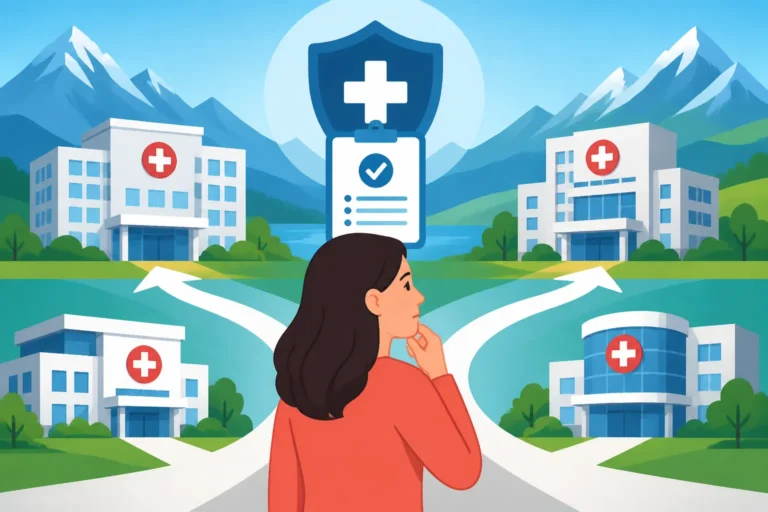
Staring at a colorful grid of premium numbers and deductible options while your relocation boxes are still unpacked is a rite of passage for every new arrival in Switzerland. I remember sitting in my first apartment in Zurich, feeling a cold sweat break out as I realized that picking the wrong "Franchise" could cost me thousands of francs before I even figured out how to use the communal laundry room. This guide will walk you through the logic of the Swiss health system so you can choose a deductible that protects your wallet during your first year.
Decoding the Swiss Health Insurance Jargon
Before you can pick a number, you have to understand what you are actually looking at. In Switzerland, the basic health insurance mandate is known as KVG or LAMal. Every resident has 90 days from their arrival to sign up, and the coverage is backdated to your first day. If you are feeling overwhelmed by the terminology, you aren't alone; even the locals spend their November evenings debating these figures over fondue.
The "Franchise" is your annual deductible. This is the fixed amount you must pay out of your own pocket for medical services—doctors, hospital stays, and prescriptions—before your insurance company starts chipping in. In the Swiss system, there are two extreme options that make the most sense, and a middle ground that is almost always a mathematical trap.
While the basic insurance is standardized, many expats prefer the flexibility of international providers like Cigna Global, especially if they travel frequently or want coverage that extends beyond the Swiss borders. However, for the mandatory local portion, the Franchise remains the most significant lever you have to control your monthly costs.
The Six Deductible Levels
The Swiss government sets specific levels for adults: CHF 300, 500, 1000, 1500, 2000, and 2500. The rule is simple: the higher your Franchise, the lower your monthly premium. If you choose the CHF 2,500 option, your monthly bill might be CHF 250. If you choose the CHF 300 option, that same bill could jump to CHF 450 or more.
Understanding KVG LAMal Mandatory Basic Health Insurance Explained
The basic insurance covers a wide range of needs, from GP visits to emergency surgeries. However, it does not cover everything. For instance, dental care is almost entirely excluded. This is why many newcomers look into Supplementary Health Insurance VVG What It Covers and When to Buy It early on. For your first year, focusing on the Franchise is about managing the "known" costs of the basic system.
The Role of the Selbstbehalt
Once you hit your Franchise limit, you aren't totally off the hook. You then enter the "Selbstbehalt" phase, which is a 10% co-payment. For every franc spent after your deductible is met, you pay 10 cents, up to a maximum of CHF 700 per year for adults. This means your "maximum out-of-pocket" cost is actually your Franchise + CHF 700. It is vital to have this liquidity sitting in a savings account.
The Mathematical Tipping Point
Choosing a deductible isn't a guessing game; it is a calculation of your expected health. To make the right choice, you need to estimate how much medical care you will consume in the next twelve months. For a veteran expat, I always suggest looking at your last three years of health history in your home country.
The general consensus in Switzerland is that the middle deductibles (CHF 500 to CHF 2,000) are rarely beneficial. Mathematically, you are almost always better off at the extremes: either the minimum (CHF 300) or the maximum (CHF 2,500).
When to Choose the CHF 2500 Deductible
If you are generally healthy, rarely see a doctor, and don't take expensive daily medications, the CHF 2,500 Franchise is your best friend. By choosing this level, you can save upwards of CHF 1,200 per year in premiums. Even if you have one minor accident or a bad flu that requires a visit to Emergency Medical Services Ambulances REGA and Crisis Protocols, the premium savings usually cover the bill.
I often suggest that expats on this plan supplement their wellness routine with high-quality vitamins or supplements from iHerb to stay out of the doctor's office. Maintaining a strong immune system is a financial strategy in Switzerland.
When to Choose the CHF 300 Deductible
If you have a chronic condition, plan on starting a family, or know you will need regular specialist visits, go for the CHF 300 Franchise. You will pay a much higher monthly premium, but the moment you hit that CHF 300 mark, the insurance company takes over 90% of the costs. This provides peace of mind and predictable monthly budgeting.
If you are struggling to find a practitioner to manage a long-term condition, you might start by Finding an English-Speaking Family Doctor in Major Cantons to discuss your projected annual costs before committing to a insurance level.
The No Mans Land of Middle Deductibles
The CHF 1,000 and CHF 1,500 options are statistically the least efficient. In most cantonal premium structures, the discount you receive for moving from a CHF 300 to a CHF 1,500 Franchise does not outweigh the risk of having to pay that extra CHF 1,200 out of pocket. It’s a "worst of both worlds" scenario where premiums are still relatively high, but the deductible is large enough to hurt.
Comparison of Annual Costs Based on Health Scenarios
| Annual Medical Expenses | Result with CHF 300 Franchise | Result with CHF 2500 Franchise | Winner |
|---|---|---|---|
| CHF 0 (Perfect Health) | High Premiums + CHF 0 | Low Premiums + CHF 0 | CHF 2500 |
| CHF 1,500 (Moderate) | High Premiums + CHF 420* | Low Premiums + CHF 1500 | Variable |
| CHF 5,000+ (High) | High Premiums + CHF 1000** | Low Premiums + CHF 3200** | CHF 300 |
Note: Based on Franchise + 10% co-pay.
*Note: Based on Franchise + Max CHF 700 co-pay.
Practical Considerations for Your First Year
Your first year in Switzerland is full of "hidden" medical costs you might not expect. From the stress-induced shingles flare-up to the inevitable skiing injury in Verbier, your health needs can change fast. This is where Comparing Health Insurance Models Telmed HMO Family Doctor and Standard becomes just as important as the deductible itself.
If you choose a high deductible and find yourself needing a prescription, remember that Pharmacies and Medication Prescriptions Costs and OTC Regulations can be surprisingly expensive. For non-prescription essentials like magnesium (great for those mountain hikes) or skincare for the dry Alpine air, many expats use iHerb to avoid the steep Swiss pharmacy markups.
The 90 Day Window
You have three months to decide. During this time, you are technically covered, but you won't have a card. If you go to the doctor, you will pay cash. Once you register, you will get reimbursed minus your chosen Franchise. Many expats use this "buffer" time to look into Mandatory Registration How to Sign Up for Health Insurance Within 90 Days and see if their employer-provided accident insurance covers non-work mishaps.
Using International Coverage
If you are a global nomad or a high-net-worth expat, you might find that Swiss local insurance is too restrictive. Brands like Cigna Global offer plans that can sometimes be used in conjunction with or as a primary solution for those who aren't subject to the local mandate (like certain diplomats or international organization employees). Even for those who must have KVG, a private international plan provides a level of comfort and "private room" access that the basic Swiss system lacks.
The Importance of the November Deadline
Remember that the Franchise you choose now isn't forever. Every year, you have until the last working day of November to change your deductible or your provider for the following January. If you find that you chose a CHF 2,500 Franchise but ended up visiting the doctor every month, keep an eye on the November 30 Deadline The Exact Steps to Switch Your Swiss Health Insurance to fix your strategy for year two.
Common Pitfalls for New Arrivals
One of the biggest mistakes I see expats make is choosing the CHF 2,500 Franchise because "back home I never go to the doctor," and then failing to save the CHF 2,500 in a dedicated account. In Switzerland, doctors and hospitals often use the "Tiers Garant" system. This means you pay the bill first and then ask the insurance for money back.
Understanding How to Read a Swiss Medical Bill Rückforderungsbeleg and Claim Refunds is crucial because if you have a high deductible, the insurance company will simply tell you that the bill counts toward your Franchise and won't send you a rappen. This can be a huge shock to your cash flow if you aren't prepared.
Overlooking Accident Insurance
If you work more than 8 hours a week for a Swiss employer, you are automatically covered for accidents (both at work and elsewhere). This means you can exclude "Accident Coverage" from your health insurance policy, saving you about 7% on your monthly premium. If you are a freelancer or a stay-at-home parent, you must include it.
Forgetting About Prescription Costs
Swiss pharmacies are highly regulated and expensive. While your insurance will cover a portion of prescribed life-saving drugs once your Franchise is met, everyday items like specialized sunscreens or high-dose vitamins are often out-of-pocket. I personally stock up on these via iHerb because the prices in local "Apotheken" can be double what you'd pay elsewhere.
Not Considering the Telmed Model
To lower your premiums even further, regardless of your deductible, look into the Telmed model. This requires you to call a medical hotline before seeing a doctor in person. It’s a great way to save an extra 10-15% on premiums. If you are comfortable with digital health, this, combined with a CHF 2,500 Franchise, is the ultimate "frugal expat" setup.
Final Advice for Making Your Choice
If you are truly stuck, look at your bank account. Can you afford to pay a CHF 2,500 bill tomorrow if you trip on a cobblestone street in Bern? If the answer is no, take the CHF 300 Franchise. The "peace of mind" tax you pay in higher monthly premiums is worth it to avoid a financial crisis during your first year of integration.
However, if you have a healthy emergency fund, the high-deductible route is almost always the winner over a two-year period. Switzerland is a country that rewards those who plan for the long term. Use your first year to observe how the system works, find a doctor you trust, and then adjust your coverage as you become a true "Swiss" pro.
Whether you go with a local giant like CSS or Helsana, or prefer the expat-centric service of Cigna Global, the most important thing is to stay informed. Your health is your greatest asset, but in Switzerland, understanding the paperwork behind that health is a very close second.
Disclaimer
The information provided in this article is for informational purposes only and does not constitute financial or legal advice. Health insurance regulations in Switzerland are subject to change, and individual cantonal requirements may vary. Always consult with an official insurance advisor or the Swiss Federal Office of Public Health (FOPH) before making decisions regarding your mandatory health insurance coverage.