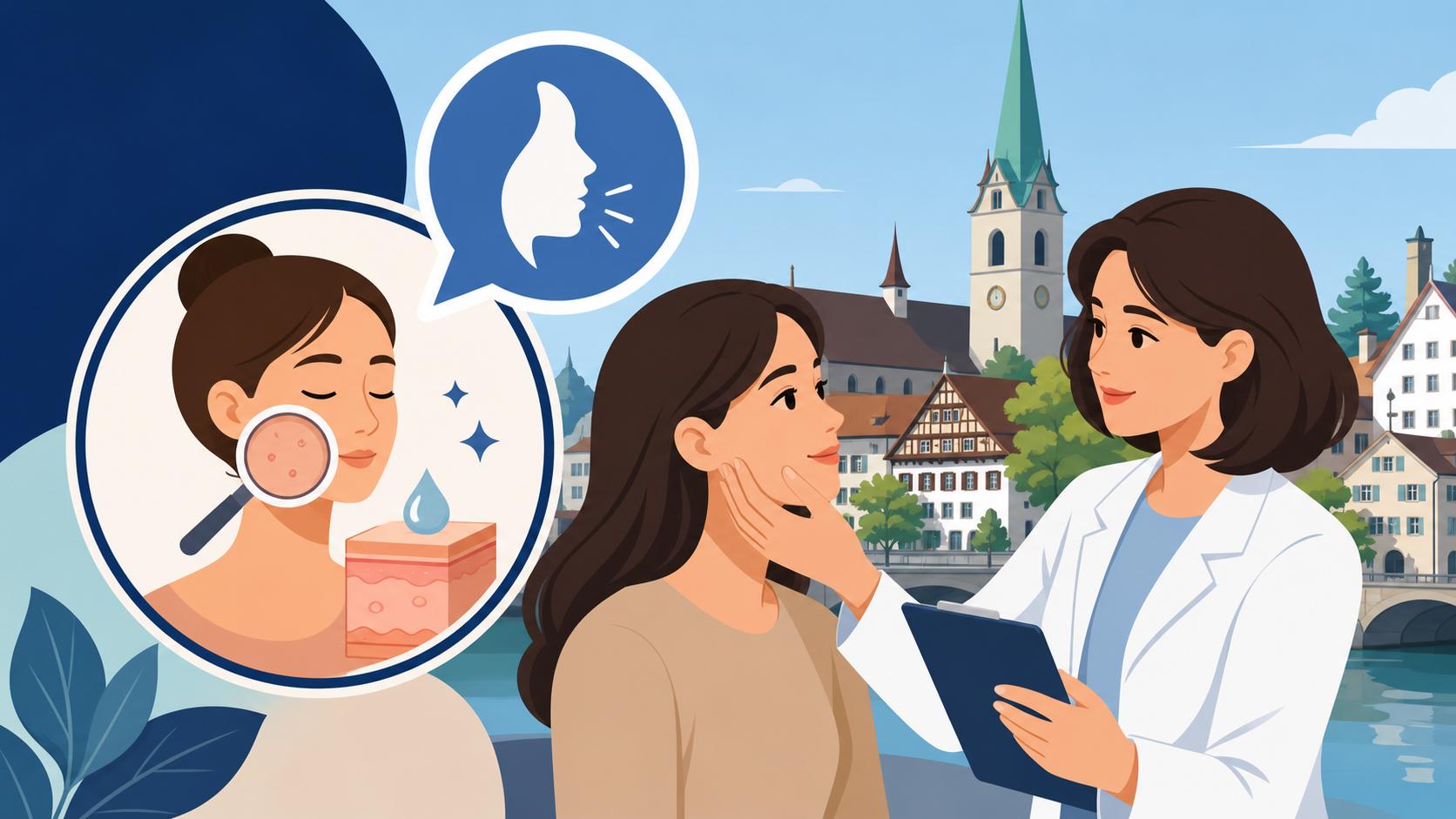
Finding an English-Speaking Dermatologist in Winterthur
Staring at a persistent rash while trying to translate "inflamed" into High German is a unique kind of expat stress that I wouldn’t wish on anyone. I remember sitting in a waiting room in the Töss district, sweating over a dictionary app just to explain a simple case of eczema. This guide solves your search for an English-speaking dermatologist in Winterthur, ensuring you get expert skin care without the linguistic barrier.
Navigating the Referral Maze in Winterthur
Finding a specialist in Switzerland isn't always as simple as picking up the phone and booking an appointment. Before you start searching for the best skin clinic near the Winterthur main station, you need to understand the administrative gatekeeping that defines Swiss healthcare. Your ability to see a dermatologist often depends entirely on the specific insurance policy you signed up for when you arrived.
If you are on a standard model, you have the freedom to call any specialist you like. However, many expats opt for more affordable options. If you are Comparing Health Insurance Models: Telmed, HMO, Family Doctor, and Standard, you might find yourself in a position where you need a "pardon" from your GP before a dermatologist will even look at you. In the HMO or Family Doctor models, your primary physician acts as the coordinator. They will evaluate your skin concern and, if they deem it necessary, issue a formal referral to a specialist in the Winterthur network.
I’ve seen many newcomers get frustrated when they try to book a mole check directly, only to be told the doctor isn't accepting new patients without a referral. This is often a polite way of saying your insurance model requires a gatekeeper’s approval first. If you’re unsure about your status, it’s worth reviewing Understanding KVG/LAMal: Mandatory Basic Health Insurance Explained to see how your specific plan handles specialist access.
Why Winterthur is a Strategic Choice for Specialist Care
While many people instinctively look toward Zurich for medical experts, Winterthur is actually a hidden gem for healthcare. As the sixth-largest city in Switzerland, it hosts a high density of specialists who are often less "overbooked" than their counterparts in Zurich’s Seefeld or Enge districts. The medical community here is highly international, with many doctors having completed fellowships in the US, UK, or Australia.
In Winterthur, you have a mix of large institutional providers like the Kantonsspital Winterthur (KSW) and smaller, boutique private practices near the Altstadt. The KSW has a dedicated dermatology department that handles everything from chronic inflammatory diseases to skin cancer surgery. The benefit of a larger hospital is the availability of English-speaking staff at every level, from the reception to the senior consultants.
The Impact of the 90-Day Rule
If you are a new arrival, remember that you have a grace period to set up your coverage. If you are still within your first few months, you should check the rules on Mandatory Registration: How to Sign Up for Health Insurance Within 90 Days to ensure your dermatologist visit will be backdated and covered. Even if you haven't received your physical card yet, as long as you have a certificate of insurance, most Winterthur clinics will see you.
Top Strategies for Finding an English-Speaking Specialist
When you are Finding Medical Care in Switzerland: Doctors, Specialists, and Referrals, the most reliable tool at your disposal is the FMH (Swiss Medical Association) directory. This database allows you to filter providers by "Sprache" (Language). By selecting "Englisch" and "Dermatologie," you can narrow down the list to practitioners in the 8400 postal code who have officially registered their English proficiency.
However, a directory listing doesn't tell the whole story. I always recommend checking the "About Us" or "Team" section of a clinic’s website. Look for doctors who list "Fellowship" or "Board Certification" in English-speaking countries. This is usually a sign that they are not just "conversational" in English, but are comfortable discussing complex medical terminology and latest research.
Local Recommendations and Group Practices
In Winterthur, several group practices (Gruppenpraxen) are known for being expat-friendly. Clinics like Sanacare or Medix often have English-speaking GPs who can then refer you to an in-house or affiliated dermatologist. The advantage of these larger networks is that your medical records are shared seamlessly within the system, which is incredibly helpful if your skin condition is a symptom of a broader health issue.
Don’t overlook the value of local expat forums and Facebook groups specifically for the Winterthur and Zurich North area. Personal recommendations often highlight things a directory won’t, such as the friendliness of the front-desk staff. Even if the doctor speaks perfect English, a receptionist who only speaks Swiss German can make the booking process a nightmare. If you find yourself struggling with a specific clinic’s administration, consider looking into Cigna Global for supplemental coverage that might offer a more concierge-style experience in navigating private specialist networks.
What to Ask When Booking
When you finally call to make that appointment, be direct. Ask: "Is it possible to have the consultation in English?" and "Are you currently accepting new patients under the KVG (Basic Insurance)?" Some private dermatologists in Switzerland only take patients with semi-private or private supplementary insurance. Knowing this upfront saves you from a wasted trip and a potentially massive out-of-pocket bill. If you're confused about these tiers, reading up on Supplementary Health Insurance (VVG): What It Covers and When to Buy It can clarify why some clinics seem more "exclusive" than others.
The Appointment Experience: What to Expect
The Swiss approach to dermatology is remarkably thorough, especially when it comes to preventative care. If you are coming from the US or the UK, you might find the "Hautcheck" (Skin Check) here to be much more detailed. Because of the high altitude and the culture of outdoor sports like skiing and hiking, Sunscreen and Dermatologist Checks: Skin Cancer Prevention in the Alps are treated with high priority by local doctors.
During a typical full-body scan in a Winterthur clinic, the dermatologist will use a dermatoscope—a specialized magnifying tool—to inspect every mole. In many cases, they will use digital mapping to track changes in your skin over the years. This level of preventative care is a cornerstone of the Swiss medical philosophy: find it early, treat it easily.
Communicating Your Symptoms Effectively
Even if your doctor speaks English, it helps to be prepared. Bring a list of any topical creams or oral medications you are currently using. Many brands in Switzerland have different names than those in the UK or North America. If you have a specific product you swear by, you might find that it’s not available in local pharmacies. In such cases, many expats use iHerb to source familiar skincare brands and supplements that aren't stocked in the local Apotheke.
| Service Category | Typical Coverage (Basic KVG) | Wait Time in Winterthur |
|---|---|---|
| Annual Mole Check | Covered (if risk is present) | 2 – 4 Months |
| Acute Rash/Infection | Covered | 1 – 5 Days |
| Cosmetic Laser | Not Covered | 1 – 2 Weeks |
| Acne Treatment | Covered (if severe/medical) | 1 – 2 Months |
| Skin Cancer Surgery | Covered | 2 – 4 Weeks |
The "Wait and See" Culture
One thing that surprised me when I first moved here was the wait times for non-urgent appointments. For a routine check-up, don't be shocked if the earliest opening is three months away. However, if you have an acute flare-up or a suspicious, rapidly changing lesion, tell the receptionist it is an "emergency" (Notfall). Most clinics in Winterthur keep a few slots open daily for urgent cases. If they truly can't fit you in, they will direct you to the "Permanence" or the emergency room at KSW.
Understanding the Financials of Swiss Dermatology
The cost of seeing a specialist is a major concern for many expats. In Switzerland, medical billing follows the Tarmed system, which breaks down every minute of the consultation and every piece of equipment used into "points." This can make your final invoice look like a complicated math problem.
When you receive your bill, usually a few weeks after the appointment, you need to know How to Read a Swiss Medical Bill (Rückforderungsbeleg) and Claim Refunds. Most dermatologists in Winterthur operate on the "Tiers Garant" system, meaning they bill you directly, and you then send the receipt to your insurance company for reimbursement. This is where your deductible comes into play. If you haven't met your annual limit, you will be paying that bill out of your own pocket.
Managing Your Deductible and Copays
It is crucial to understand The Swiss Franchise System: How Deductibles and Copays Work before you start booking specialist visits. If you chose a high franchise (like CHF 2,500), you will likely be responsible for the full cost of your dermatology visits throughout the year. A standard consultation with a mole check usually ranges from CHF 150 to CHF 300, depending on the complexity and the use of specialized imaging equipment.
If the doctor prescribes a medicated cream, you will take that prescription to a pharmacy like Amavita or Sun Store. For a deep dive into how this works, check Pharmacies and Medication: Prescriptions, Costs, and OTC Regulations. Remember that while the medication is covered by basic insurance, you still have a 10% copay (Selbstbehalt) to cover once your franchise is met.
iHerb and Supplemental Care
For non-prescription needs—like high-quality sunscreens, Vitamin D supplements, or specific cleansers for sensitive skin—I often find that the prices in Swiss pharmacies are significantly marked up. Many of us in the expat community rely on iHerb to stock up on these essentials. It’s a legal and cost-effective way to maintain the skincare routine you had back home without paying the "Swiss price" for every single bottle of moisturizer.
Emergency Situations and Local Resources
Sometimes a skin issue cannot wait for a three-month appointment. If you develop a sudden, painful rash or an allergic reaction, Winterthur has several options. The "Ärztefon" (0800 33 66 55) is a 24/7 service that can tell you which dermatologist is on emergency call in the Canton of Zurich.
Alternatively, the Winterthur Cantonal Hospital has a walk-in emergency desk. While you might wait several hours, you are guaranteed to be seen by a doctor. If you are worried about the cost of an emergency visit, rest assured that Is Basic Health Insurance (KVG) Mandatory for Expats? A Plain-English Guide confirms that emergency services are part of the core coverage everyone must have.
Final Tips for Your Search
- Check the Map: Winterthur is bigger than it looks. A clinic in "Oberwinterthur" might be a long trek if you live in "Wülflingen." Use the SBB app to check travel times.
- Language Clarification: When you call, don't just ask if they speak English. Ask if the doctor can conduct the entire consultation in English. It makes a big difference.
- Preparation: Have your Swiss health insurance card (VeKa) ready. They will scan this the moment you walk in.
- Specialization: Some dermatologists focus on "Venerology" (STIs), while others focus on "Dermatosurgery." Make sure the clinic aligns with your specific need.
Finding the right specialist takes a bit of legwork, but Winterthur's medical infrastructure is world-class. Once you find a doctor who speaks your language and understands your skin's history, the peace of mind is worth every bit of the administrative effort. Whether you are navigating a complex condition or just seeking a routine check, the resources available in this city will ensure your health remains a top priority.
Disclaimer
This article provides general information for expats in Switzerland and does not constitute formal medical or legal advice. Healthcare regulations and insurance policies can change frequently. Always consult with a qualified medical professional or your insurance provider regarding your specific health needs and coverage details.