Accident Insurance (UVG): Occupational vs. Non-Occupational Coverage
Most expats arrive in Switzerland thinking their basic health insurance covers every medical mishap, only to be blindsided when an injury occurs outside office hours. I remember my first winter in Zurich, slipping on black ice and wondering if my boss or my insurer was responsible for the crutches. This guide clarifies the confusing divide between occupational and non-occupational accident insurance under the UVG.
The Administrative Reality of UVG in Switzerland
The Swiss Federal Act on Accident Insurance, known as UVG (Unfallversicherungsgesetz), is a pillar of the local social security system that functions quite differently from your standard health insurance. While Understanding KVG/LAMal: Mandatory Basic Health Insurance Explained covers illnesses, the UVG is specifically designed to handle the financial and medical fallout of sudden, external, and unintended injuries. In the Swiss mindset, an illness is something your body "does," while an accident is something that "happens" to you. This distinction is vital because the benefits provided by accident insurance are significantly more generous than those of the basic health system.
If you are employed by a Swiss company for more than eight hours a week, you are automatically enrolled in UVG through your employer. This isn't optional, and for many expats, it is the first time they encounter a "zero-deductible" medical scenario. Unlike the standard health system where you must battle The Swiss Franchise System: How Deductibles and Copays Work before seeing a cent of coverage, UVG pays from the very first franc. This makes it an incredibly powerful safety net, provided you understand which "bucket" your accident falls into.
The system is managed by various insurers, with Suva (the Swiss National Accident Insurance Fund) being the largest. However, many private companies use insurers like AXA or Zurich. Regardless of the carrier, the law dictates the minimum coverage. The beauty of this veteran expat life is realizing that while the paperwork seems daunting, the system is designed to get you back to work as quickly as possible. If you’re ever unsure about your specific coverage details, checking your monthly payslip for "UVG" or "NBU" deductions is the quickest way to verify your status.
The Definition of an Accident in Swiss Law
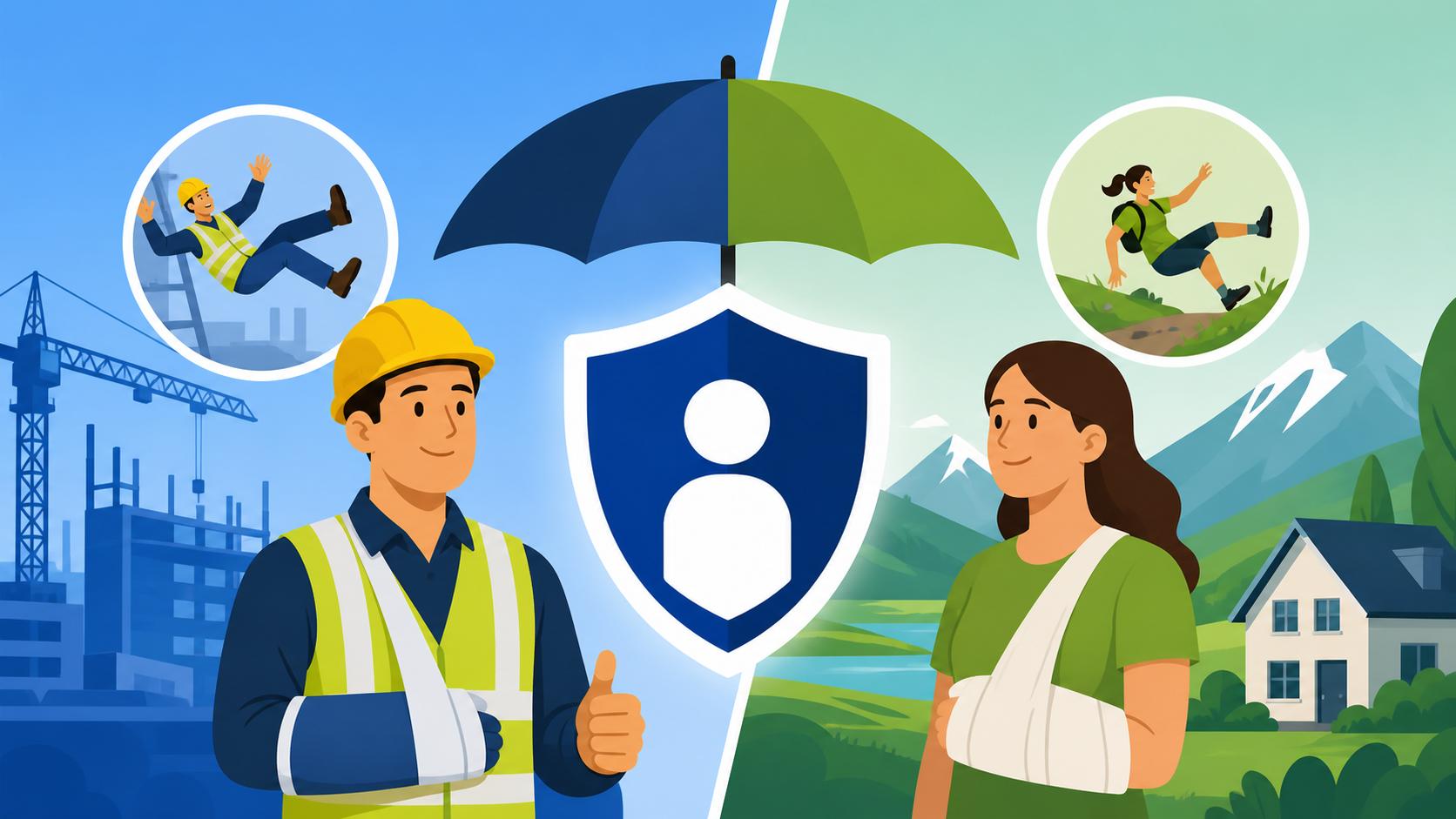
To the Swiss authorities, not every "oops" moment is a legal accident. For a claim to be processed under UVG, the event must meet five strict criteria: it must be an individual, unintended, sudden, and unusual external factor that causes harm to the human body. If you slowly develop back pain from a poor office chair, that is an illness (KVG). If you fall off that chair and break your arm, that is an accident (UVG). This distinction determines who pays the bill and whether you have to contribute to the costs.
I have seen many newcomers try to claim repetitive strain injuries as accidents, only to be redirected to their health insurer. This matters because How to Pay Medical Bills: Tiers Garant vs. Tiers Payant Billing Systems can change depending on whether it’s an accident or an illness. Accident insurers usually pay the hospital or doctor directly (Tiers Payant), whereas, with illness, you might have to pay upfront and seek reimbursement. Understanding these nuances saves a lot of stress when you're sitting in an emergency room in Geneva or Basel.
The 8 Hour Rule for Part Time Employees
The most critical threshold for any expat to remember is the eight-hour work week. If you work at least eight hours per week for a single employer, they are legally required to cover you for both occupational and non-occupational accidents. If you work seven hours or fewer, you are only covered for accidents that happen at work or during your commute. For everything else—skiing, hiking, or falling off a ladder at home—you must ensure that accident coverage is included in your private health insurance policy.
This is a common trap for freelancers or those in the "gig economy" who might have multiple small contracts. If none of those contracts exceed eight hours a week, you have a massive gap in your coverage. In such cases, you must inform your health insurer to add "accident cover" to your basic plan. While this increases your premium slightly, it is nothing compared to the cost of a helicopter rescue if you haven't joined REGA Membership: Why Expats Need Air Rescue Insurance in the Alps and don't have proper UVG coverage.
Occupational Accident Insurance BU for the Daily Grind
Occupational Accident Insurance, or Berufsunfallversicherung (BU), is the portion of the UVG that covers you while you are performing your professional duties. In the eyes of the law, this includes any activity done in the interest of your employer. If you are a software engineer in Lausanne and you trip over a cable in the server room, that is a clear-cut BU case. The premiums for BU are paid entirely by the employer; you will never see a deduction for this on your salary certificate.
The coverage extends beyond the physical office. If you are traveling to a conference in Lugano or visiting a client in London, you are still covered under BU. Even the "commute" is generally covered, though there are specific rules about deviations. If you take a three-hour detour to go shopping on your way home and have an accident, the insurer might argue it was a non-occupational event. However, for the standard "home-to-work" route, the BU umbrella is your primary protection.
For many of us, the most comforting part of BU is the "Daily Allowance." If an accident leaves you unable to work, the UVG pays 80% of your insured salary starting from the third day after the accident. Many Swiss employment contracts actually top this up to 100% for a certain period. This financial stability is why Working in Switzerland as an Expat: Jobs, Culture, and Employment Laws are considered so favorable. You don't have to worry about losing your home because you broke your leg at a construction site or in a laboratory.
What Qualifies as a Work Related Activity
The definition of "work-related" can be surprisingly broad in Switzerland. It includes coffee breaks on-site, company-sanctioned team-building events, and even mandatory social gatherings. I once knew an expat who broke a tooth during a "mandatory" company fondue dinner; because the event was organized and paid for by the employer, it was classified as an occupational accident. The insurer covered the dental work in full, which is a rarity given that Dental Care in Switzerland: Costs, Insurance Reality, and Alternative Options is usually an out-of-pocket nightmare.
However, if you are working from home—a reality for many in the post-2020 world—the line blurs. If you trip over your dog while walking to your home office desk, is that BU? Generally, yes, but insurers are becoming stricter. You must be able to prove the accident happened during your declared working hours and while performing a work-related task. Keeping a tidy home office isn't just about productivity; it’s about ensuring your BU claim isn't denied due to gross negligence or "private sphere" interference.
Commuting Risks and the Direct Path Rule
In Switzerland, your commute is the bridge between BU and NBU. If you work more than eight hours a week, it doesn't matter much which one covers you, as the benefits are largely the same. But for those working less than eight hours, the "direct path" to work is the only time they are covered by the employer's insurance. If you step off that path to visit a bakery, you have technically entered the realm of "private time."
Swiss insurers are famously meticulous. They may look at Google Maps to see if your accident location aligns with the logical route from your apartment to your office. While this sounds draconian, it’s just part of the local administrative precision. To stay safe, I always recommend that part-time workers or students who are not covered for non-occupational accidents double-check that their Is Basic Health Insurance (KVG) Mandatory for Expats? A Plain-English Guide includes the accident supplement. It's a small box to tick that prevents a lifetime of debt.
Non-Occupational Accident Insurance NBU and the 8-Hour Threshold
Non-Occupational Accident Insurance, or Nichtberufsunfallversicherung (NBU), is where the "Swiss lifestyle" truly gets its protection. This covers everything you do in your free time: skiing in Davos, cycling around Lake Zurich, or even just cutting your finger while preparing dinner. If you meet the eight-hour weekly work requirement, your employer must facilitate this coverage for you, though they are allowed to deduct the premium directly from your salary. Most expats see a small percentage (usually between 1% and 2%) taken out each month for NBU.
The benefits of NBU are identical to BU: 100% coverage of medical costs, no deductible, and 80% salary continuation. This is why Occupational Accident Insurance (UVG): What Happens When You Ski and Crash? is such a popular topic in the expat community. If you were to rely on your standard health insurance for a skiing accident, you’d have to pay your 2,500 CHF franchise first. With NBU, the insurance picks up the tab from franc one, including the ambulance and the specialized surgery.
For those who are active, having NBU is like having a golden ticket. It allows you to explore the mountains and lakes with the peace of mind that a mishap won't ruin you financially. I always suggest keeping a stock of basic recovery items from iHerb at home—things like magnesium or high-quality bandages—for minor scrapes that don't require a doctor, but for anything serious, NBU is your best friend.
Coverage During Hobbies and Sports
Switzerland is a nation of hobbyists and athletes. Whether you are into paragliding, mountain biking, or football, NBU is there to catch you. However, there is a catch: "Hazardous Actions" (Wagnisse). If you engage in what the Swiss authorities consider extremely dangerous activities without proper training or equipment, the insurer can reduce your cash benefits (the salary continuation) by 50% or even cut them entirely. Medical costs are always covered, but your "daily allowance" is at risk.
Activities that often trigger these reductions include base jumping, motocross racing, or downhill mountain biking on non-authorized trails. Even "standard" sports like skiing can be problematic if you ignore closed slope signs. If you’re a thrill-seeker, you might want to look into Supplementary Health Insurance (VVG): What It Covers and When to Buy It or a specialized policy from Cigna Global to ensure your lifestyle doesn't outpace your insurance coverage. It’s about balance—enjoying the Alps while staying within the "reasonable" boundaries of Swiss law.
The Domestic Sphere and DIY Injuries
Believe it or not, more accidents happen in Swiss kitchens and gardens than on the Eiger North Face. Falling off a step-stool while changing a lightbulb or slicing a thumb during Sunday brunch are classic NBU scenarios. Because these happen at home, the reporting process is slightly different. You will need to fill out an accident report (Unfallmeldung) provided by your employer, who then submits it to the UVG insurer.
One thing I learned the hard way: always report these "minor" accidents immediately. An infection from a small cut can turn into a major issue weeks later. If you haven't documented the initial accident, the insurer might claim it's an "illness" and force you to pay your deductible. Keep a clear record, take a photo of the injury, and tell your HR department the next business day. Transparency is the currency of the Swiss administrative system.
Financial Advantages of UVG Over Standard Health Insurance
The financial disparity between being treated under UVG versus KVG is staggering. Under the standard health insurance system, you are responsible for your chosen deductible (Franchise) plus a 10% co-payment (Selbstbehalt) up to 700 CHF per year. If you have a 2,500 CHF deductible and you break your leg, you are effectively paying the first 3,200 CHF out of your own pocket. Under UVG, you pay exactly zero.
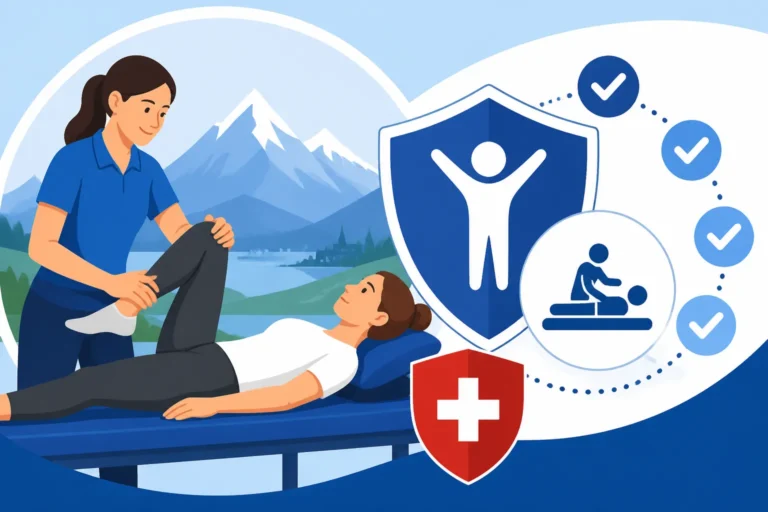
Furthermore, UVG covers things that basic health insurance often restricts. For example, UVG will pay for a semi-private or private room in the hospital if it is medically necessary for your recovery, and it is much more generous with physiotherapy and rehabilitation. While Finding Medical Care in Switzerland: Doctors, Specialists, and Referrals is easy, getting that care paid for in full is only possible through the accident insurance framework.
| Feature | Basic Health Insurance (KVG) | Accident Insurance (UVG) |
|---|---|---|
| Deductible (Franchise) | CHF 300 to CHF 2,500 | CHF 0 |
| Co-payment (Selbstbehalt) | 10% (up to CHF 700/year) | CHF 0 |
| Hospital Ward | General (Multi-bed) | General (but higher flexibility) |
| Salary Loss | None (unless private policy) | 80% of salary (up to limit) |
| Medication | List of Specialties (limited) | Full coverage of related meds |
| Ambulance | 50% up to CHF 500/year | 100% of necessary transport |
Salary Continuation and Long Term Disability
The UVG doesn't just pay the doctor; it keeps your lights on. If you are unable to work for an extended period, the 80% daily allowance continues until you are fit to return to work or until an invalidity pension kicks in. This is a massive relief for expat families who may not have a local support network to fall back on. The maximum insured salary for these calculations is currently 148,200 CHF per year. If you earn more than this, your 80% is calculated based on this cap unless your employer has a "supplementary" UVG policy (UVG-Z).
In the tragic event that an accident leads to permanent disability, UVG provides an invalidity pension. This is often coordinated with the 1st Pillar (AHV/IV) and 2nd Pillar (LPP/BVG) systems. It’s a complex web, but it ensures that someone who moved to Zurich for a high-flying tech job isn't left destitute after a car crash. For those with very high salaries or international lifestyles, checking if Cigna Global can provide an additional layer of disability protection is a smart move.
Medication and Medical Aids
When you are under the UVG umbrella, the pharmacy becomes a much friendlier place. Necessary painkillers, antibiotics, and medical aids like braces, crutches, or even wheelchairs are covered 100%. If you need specific supplements for bone health during recovery, you can often find them on iHerb at a better price, but always check with your UVG insurer first—they might just pay for the prescription version entirely at the local Apotheke.
It’s important to note that the insurer has the right to choose the most "economical" treatment. This usually means they will push for generics. However, compared to the standard KVG system where you might pay a 20% co-pay for brand-name drugs, the UVG remains the superior financial option. Just make sure your doctor marks the prescription clearly as "Unfall" (Accident) so the pharmacy knows which system to bill.
High Risk Activities and Potential Benefit Cuts
As mentioned earlier, the "Wagnisse" or hazardous activities clause is the only real "gotcha" in the UVG system. The Swiss believe in personal responsibility. If you decide to go "off-piste" skiing in a high-risk avalanche zone without a guide or safety gear, you are effectively telling the insurer that you are willing to take the financial risk along with the physical one. This is a common point of friction for expats who come from cultures where "full coverage" means "full coverage regardless of stupidity."
The cuts usually apply to the cash benefits—the money you receive to replace your salary. Your medical bills (surgeons, hospital stays, etc.) are almost always paid in full because the Swiss state doesn't want hospitals to go unpaid. However, losing 50% of your income for six months because of a reckless dare is a high price to pay. Before you try that "extreme" mountain bike trail in Graubünden, make sure you know where the line is drawn.
Defining Gross Negligence
Gross negligence (Grobe Fahrlässigkeit) is slightly different from hazardous actions. This refers to a failure to take basic precautions that any reasonable person would take. Examples include driving while heavily intoxicated, speeding excessively, or ignoring clear safety warnings at a public pool. In these cases, the insurer can reduce the daily allowance. For families, this can be devastating, which is why Emergency Medical Services: Ambulances, REGA, and Crisis Protocols should always be used in tandem with responsible behavior.
Interestingly, for occupational accidents, the rules are even stricter. If you ignore a safety protocol at your factory job in Zug and get injured, the insurer will still pay, but your employer might face legal consequences, and your future with the company could be at risk. The Swiss take "Arbeitssicherheit" (work safety) very seriously. It’s not just about the insurance; it’s about the cultural expectation of precision and care.
Supplemental Accident Insurance (UVG-Z)
Many top-tier Swiss employers provide what is called UVG-Z (Zusatzversicherung). This is a private supplement to the mandatory UVG. It usually covers the gap between the 80% mandatory daily allowance and 100% of your actual salary, even if you earn above the 148,200 CHF cap. It also often grants you access to semi-private or private hospital wards as a standard benefit, rather than just when "medically necessary."
If you are negotiating a job offer, always ask about UVG-Z. It’s a "silent" benefit that doesn't show up in your base salary but can be worth thousands of francs if you ever have a major mishap. For those whose employers don't offer this, you can sometimes add similar riders to your Supplementary Health Insurance (VVG): What It Covers and When to Buy It. In a country where medical costs are among the highest in the world, having this "extra" layer of armor is never a bad idea.
What Happens When You Stop Working or Change Jobs
One of the biggest risks for expats is the gap between jobs. When you leave an employer, your UVG coverage (both BU and NBU) ends exactly 31 days after your last day of work. If you take a two-month "sabbatical" to travel through the Alps before starting your next role, you are uninsured for accidents during that second month. This is where many people fall through the cracks and end up with massive bills from a simple hiking trip.
To solve this, Switzerland offers "Abredeversicherung" (interim insurance). You can extend your NBU coverage for up to six months by paying a monthly premium (usually around 65-100 CHF) to your former employer's insurer. You must do this before the initial 31-day grace period expires. It is one of the most important administrative tasks to complete when Resigning from a Swiss Job: Notice Periods and Handover Protocols. Don't assume your next job will retroactively cover you; it won't.
Coverage for Students and Retirees
If you aren't working—perhaps you’re a student at ETH Zurich or a retiree enjoying the quiet life in Ticino—you aren't part of the UVG system. Instead, you must include "accident coverage" in your basic health insurance (KVG). This means you will be subject to your deductible and the 10% co-payment for any accident. This is a significant financial difference that surprises many who are used to the "free" accident cover of the workforce.
Students, in particular, need to be careful. While they are often covered by their parents' insurance in other countries, in Switzerland, everyone is an individual unit. If a student is working a part-time job at a café for more than eight hours, they get the UVG benefits. If they aren't, they are on the hook for their deductible. It’s always worth checking the "accident" box on your health insurance application just to be safe.
Reporting the Accident: A Step-by-Step Guide
If the worst happens and you have an accident, the process is quite mechanical. First, get medical help. Tell the doctor or hospital immediately that this was an "Unfall" (accident). They will ask for your employer's name and their insurer. Second, notify your employer. They have a legal obligation to provide you with an accident report form or an online link.
Third, the insurer will issue an "Accident Number" (Schadennummer). This number is your magic key. Every doctor visit, every pharmacy trip, and every physio session related to that injury must be tagged with this number. If you follow this process, the bills will magically disappear into the insurer's portal, and you can focus on your recovery. I often tell my friends to keep a small first-aid kit with items from iHerb in their car or backpack, but the "Accident Number" is the most important thing to carry in your wallet during a Swiss recovery.
Mandatory Disclaimer
This guide is intended for informational purposes only and does not constitute legal or professional insurance advice. Swiss insurance laws (UVG and KVG) are subject to change, and specific cantonal regulations or individual employer contracts may vary. Always consult with your HR department, your insurance provider, or a qualified legal expert regarding your specific coverage and obligations. The author and publisher are not liable for any financial or medical consequences resulting from the use of this information.