How to Read a Swiss Medical Bill (Rückforderungsbeleg) and Claim Refunds
Standing at your mailbox and pulling out a heavy envelope from a Swiss laboratory or a specialist's office is a rite of passage every expat undergoes. I remember my first year in Basel, staring at a three-page document filled with five-digit codes and "Taxpoints," convinced I was being overcharged for a simple blood test. This guide will dismantle the confusion surrounding the Rückforderungsbeleg, showing you exactly how to decode your medical bills and ensure you get every franc back that you are owed.
Anatomy of the Rückforderungsbeleg
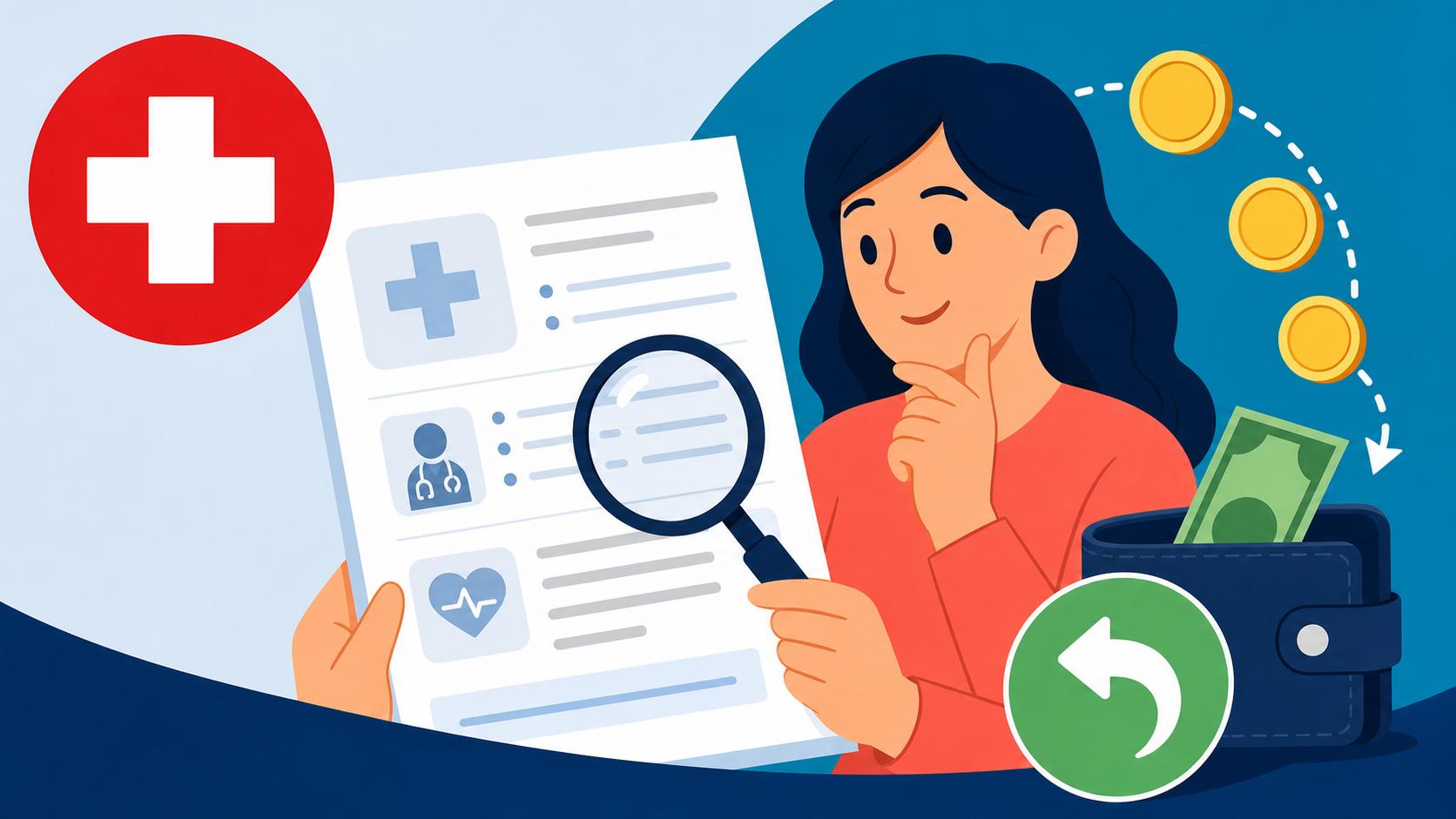
The word itself—Rückforderungsbeleg—literally translates to "refund claim voucher." In the Swiss healthcare system, transparency is a legal requirement, which is why your bill looks more like a technical manual than a simple invoice. Every single action a doctor takes, from a five-minute phone call to the use of a sterile needle, is recorded as a specific tariff code.
Understanding the Header and Patient Data
The top section of your bill contains the administrative essentials. You will see your name, date of birth, and your insurance card number (VEKA). It is vital to check that your insurance number is correct. If the doctor’s office has an outdated card on file, the electronic claim might be rejected immediately. You will also see the "GLN" number of the doctor and the "ZSR" number, which is their unique registry number for Swiss health insurers.
If you have recently moved or changed your basic insurance plan, perhaps after Understanding KVG/LAMal: Mandatory Basic Health Insurance Explained, you must ensure the billing date aligns with your active coverage. I once had a bill rejected because the doctor’s office used my old insurance details from three years prior, leading to a month of back-and-forth phone calls that could have been avoided with a quick glance at the header.
Decoding TARMED and TARDOC Codes
For decades, the TARMED system governed how outpatient services were billed. However, as of 2026, the transition to the new TARDOC and outpatient flat-rate system has changed how these codes appear. Under each date of service, you will see a list of codes (e.g., 00.0010 for a basic consultation). Next to these codes is the "Taxpoint" value (Taxpunkte).
The Swiss system works by assigning a certain number of points to a medical act. Each canton has a specific "Taxpoint Value" (Taxpunktwert), usually around CHF 0.82 to CHF 1.00. The cost of the service is the points multiplied by the value. If you feel a consultation was unusually expensive, check the time-based codes. Doctors bill in 5-minute increments; if you were in the room for 10 minutes but see four units of a 5-minute code, that is a red flag you should discuss with the practice manager.
The Role of the QR-Bill
Since the phasing out of the old orange and red payment slips, all Swiss medical bills now come with a QR-IBAN section at the bottom. This is the part you use to pay the doctor if you are under the Tiers Garant system. You can simply scan this with your banking app. Remember, the Rückforderungsbeleg is often a separate page from the actual invoice (the bill you pay), but many modern practices combine them into one document where the top is the medical breakdown and the bottom is the payment slip.
Tiers Garant vs Tiers Payant: Who Pays Whom
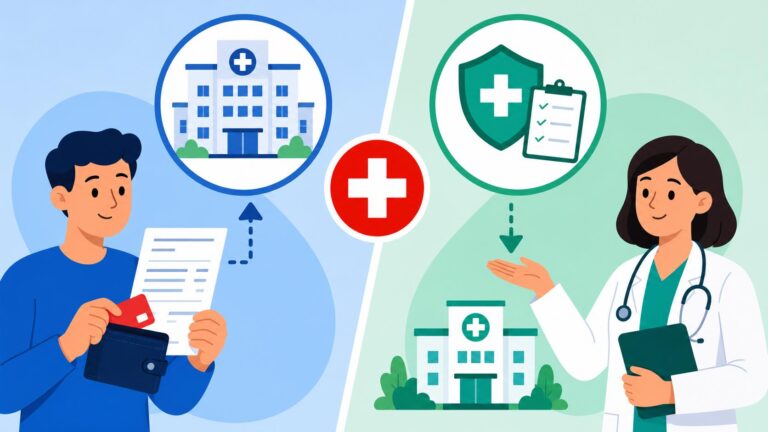
One of the most confusing aspects for newcomers is why some bills arrive at their door while others go straight to the insurance company. This depends entirely on the billing model agreed upon between the healthcare provider and the insurer.
The Tiers Garant Model
In this model, the doctor sends the bill directly to you. You are legally responsible for paying the doctor within the specified timeframe (usually 30 days). Once you pay, you send the Rückforderungsbeleg to your insurance company to claim your refund. This is common with independent specialists and GPs in many cantons. For those who find this cash-flow burden difficult, it is worth Finding Medical Care in Switzerland: Doctors, Specialists, and Referrals who operate on the alternative model.
The Tiers Payant Model
In the Tiers Payant system, the doctor sends the bill directly to your insurance company. The insurer pays the doctor and then sends you a statement (Leistungsabrechnung) showing how much of that bill was covered and how much will be deducted from your franchise or copay. Pharmacies almost always work on this model. If you are curious about which providers do this, you can read more about Tiers Payant: Which Swiss Insurances Pay the Pharmacy Directly? to help manage your monthly budgeting.
Why Your Choice of Insurance Matters
If you are an international expat or a frequent traveler, you might be using a global provider like Cigna Global. These international plans often have their own specific claim forms and may not use the standard Swiss Rückforderungsbeleg format. However, if you are a resident, you must have a Swiss KVG plan. The efficiency of your refund depends heavily on your insurer’s digital tools. Most major insurers now have apps where you simply take a photo of the bill, and the refund is processed within days.
| Term on Bill | English Meaning | What it Means for You |
|---|---|---|
| Rechnungsbetrag | Invoice Amount | The total cost of the treatment. |
| Franchise | Deductible | The amount you pay out of pocket before insurance kicks in. |
| Selbstbehalt | Copay | Your 10% contribution (up to CHF 700/year). |
| Taxpunktwert | Taxpoint Value | The monetary value of one medical point in your canton. |
| Behandlungsdatum | Treatment Date | Essential for checking if you were covered at that time. |
The Math Behind the Refund: Franchise and Copay
The most common complaint I hear from fellow expats is: "I sent my bill to the insurance, but they didn't send me any money!" This usually happens because the person hasn't met their "Franchise" yet.
Meeting Your Annual Franchise
When you moved to Switzerland, you chose a franchise between CHF 300 and CHF 2,500. Until your total medical bills for the calendar year exceed this amount, the insurance will not pay you a single rappen. They will simply "count" the bill toward your total. If you have a high franchise, you should be prepared to pay for all your doctor visits out of pocket for the first few months (or the whole year). Understanding How to Choose the Right Deductible (Franchise) for Your First Year is the best way to avoid this financial shock.
The 10 Percent Copay (Selbstbehalt)
Once you pass your franchise, the insurance pays 90% of the bills, and you pay 10%. This 10% is called the Selbstbehalt. It is capped at CHF 700 per year for adults. So, if you have a massive hospital stay that costs CHF 50,000, once you've paid your franchise and your CHF 700 copay, the insurance covers everything else at 100%. To keep track of these numbers, you should regularly check your Out-of-Pocket Maximums: Calculating Your True Annual Healthcare Costs.
Non-Covered Items and OTC Medication
Be careful when looking at your bill for items marked as "Non-obligatory." Standard Swiss basic insurance is very specific about what it covers. If your doctor prescribes certain vitamins or over-the-counter supplements, these might appear on your bill but will be rejected for a refund. For these types of health needs, many expats save money by ordering directly from sites like iHerb for their supplements and health products rather than paying the high Swiss pharmacy markup. Always check Pharmacies and Medication: Prescriptions, Costs, and OTC Regulations to see what requires a "Magistral" formula to be covered.
Step-by-Step Guide to Claiming Your Refund
Once you have the Rückforderungsbeleg in your hand and you have paid the doctor, follow these steps to get your money back.
Step 1: Verification
Check the codes and dates. Does the date of the "Consultation" match the day you actually saw the doctor? If you had a 15-minute chat but are being billed for a 45-minute "intensive consultation," call the practice immediately. Doctors are human and administrative errors happen frequently in busy Swiss clinics.
Step 2: Digital Submission (The Preferred Method)
Almost every Swiss insurer (Helsana, CSS, Sanitas, Swica, etc.) has a mobile app.
- Open the app and select "Submit Bill" (Rechnung einreichen).
- Take a clear photo of the entire Rückforderungsbeleg. Make sure the QR code and the TARMED/TARDOC codes are legible.
- Submit.
You will usually receive a notification within 48 hours that the bill is being processed.
Step 3: Physical Submission
If you prefer the old-school way or have an insurer without a robust app, you will need to mail the physical document. You should have received a sheet of "Claim Labels" (Klebietiketten) when you first signed up. If you missed the Mandatory Registration: How to Sign Up for Health Insurance Within 90 Days window or just lost your labels, you can usually print them from your insurer's portal. Stick one onto the bill and mail it to the address provided by your insurer. Note: You should keep a copy or a photo of the bill for your records before mailing the original.
Step 4: Reviewing the Leistungsabrechnung
About a week or two later, you will receive a "Benefit Statement" (Leistungsabrechnung). This document explains the math:
- Total Bill Amount
- Minus Franchise (if not yet met)
- Minus 10% Copay
- Final Refund Amount
If the refund is CHF 0 because of your franchise, don't throw the document away. It is your proof for tax purposes at the end of the year, as medical expenses exceeding a certain percentage of your income can sometimes be deducted.
Common Pitfalls and How to Avoid Them
Even after years in the country, I still occasionally trip up on the bureaucracy. Here are the things that usually go wrong for expats.
The 90-Day Rule
While you have up to two years to claim a refund for a medical bill in Switzerland, waiting that long is a bad idea. If your insurance company changes or your employer's accident insurance coverage shifts, a late bill can become a nightmare to process. I recommend a "Sunday Admin" habit: scan every medical bill as soon as you pay it.
Laboratory Bills
Often, you will receive a separate bill from a lab (like Viollier or Unilabs) because your doctor sent your blood work away. Many expats ignore these, thinking they are duplicates of the doctor's bill. They are not. If you don't pay the lab bill, you will eventually receive a "Mahnung" (reminder) with a late fee. Treat lab bills exactly like doctor's bills: pay them and submit the Rückforderungsbeleg.
Accident Billing (UVG)
If your visit was due to an accident, the billing is different. In Switzerland, accident insurance (UVG) is usually covered by your employer if you work more than 8 hours a week. Accident insurance has no franchise and no copay. If you see "Unfall" (Accident) on your bill, make sure the doctor has your employer’s accident insurance number, not just your health insurance number. This ensures the bill is covered at 100% from the first franc.
Helpful Tips for Managing Healthcare Costs
Managing the flow of paper is half the battle. To keep your costs down and your stress levels low, consider these strategies.
- Go Digital Early: If your insurer offers a "Telmed" model, use it. You often get a discount on your premiums, and the digital paper trail for your billing is much cleaner.
- Generic vs. Brand Name: At the pharmacy, always ask for the "Generikum." The copay for brand-name drugs is often 20% instead of 10% in Switzerland to encourage the use of cheaper alternatives.
- Supplementary Insurance: If you find the basic KVG coverage too restrictive, you might look into Supplementary Health Insurance (VVG): What It Covers and When to Buy It. This can cover things like private hospital rooms or alternative medicine that won't show up on a standard Rückforderungsbeleg.
- Emergency Billing: Hospital emergency rooms are the most expensive way to get care. If it’s not life-threatening, use a "Permanence" (walk-in clinic). The billing codes are significantly lower, saving you a lot of franchise money.
Important Disclaimer
The information provided in this guide is for informational purposes only and does not constitute legal or financial advice. The Swiss healthcare system and its billing regulations (TARMED/TARDOC) are subject to change by federal and cantonal authorities. Always consult with your insurance provider or a certified insurance advisor regarding your specific policy and coverage details. Ensure you verify all billing statements for accuracy and contact the healthcare provider directly if you suspect an error. All information is based on the 2026 Swiss healthcare framework.