Emergency Rooms in Switzerland: Triage, Waiting Times, and Billing
Finding yourself in a medical crisis in a foreign country is a visceral, heart-pounding experience that strips away your confidence. I still vividly remember the night I stood shivering outside a Zurich hospital with a high-fevered child, paralyzed because I didn't know if I should walk in or call a specific number first. This guide demystifies the Swiss emergency room experience, from the triage desk to the final bill, so you can focus on healing rather than bureaucracy.
The Swiss Emergency Landscape: ER vs. Walk-In Clinics
One of the first things you realize after moving here is that the Swiss "Notfall" (Emergency) system is tiered. Unlike many countries where the hospital ER is the only port of call after 6:00 PM, Switzerland utilizes a robust network of "Permanence" clinics or walk-in centers. Understanding the distinction is the difference between a two-hour wait and a six-hour ordeal.
When to Choose a Permanence Clinic
Permanence clinics, such as the ones found at major train stations like Zurich HB or Geneva Cornavin, are designed for non-life-threatening emergencies. Think of things like deep cuts needing stitches, suspected fractures, or severe allergic reactions that are not yet causing respiratory distress. I have found these clinics to be absolute lifesavers for those "in-between" moments when your Finding Medical Care in Switzerland: Doctors, Specialists, and Referrals process hasn't yet landed you a family doctor with open slots.
These clinics are staffed by experienced physicians and have X-ray facilities on-site. The beauty of the Permanence is that they are generally faster than a major university hospital. However, they do have closing times—usually around 10:00 PM or midnight, though some in major hubs are open 24/7. If you are a Cigna Global policyholder, many of these private clinics are part of their direct-billing network, making the administrative side much smoother.
When to Head Straight to the Hospital Notfallstation
If you are dealing with chest pain, symptoms of a stroke, severe trauma, or complications from pregnancy, the hospital ER (Notfallstation) is the only place to be. Major facilities like the University Hospital Zurich (USZ) or the Hôpitaux Universitaires de Genève (HUG) have specialized departments. For parents, it is crucial to know that pediatric emergencies are often handled in separate buildings or dedicated children's hospitals.
Before you drive yourself, remember to check Emergency Medical Services: Ambulances, REGA, and Crisis Protocols to see if professional transport is safer. In Switzerland, the hospital ER is a highly high-tech environment, but it is also the most expensive and busiest tier of the system. If you arrive there with a minor ailment, the staff will be polite but you will be placed at the bottom of the priority list, which can lead to a very long evening in a sterile waiting room.
Understanding the Role of the On-Call Doctor
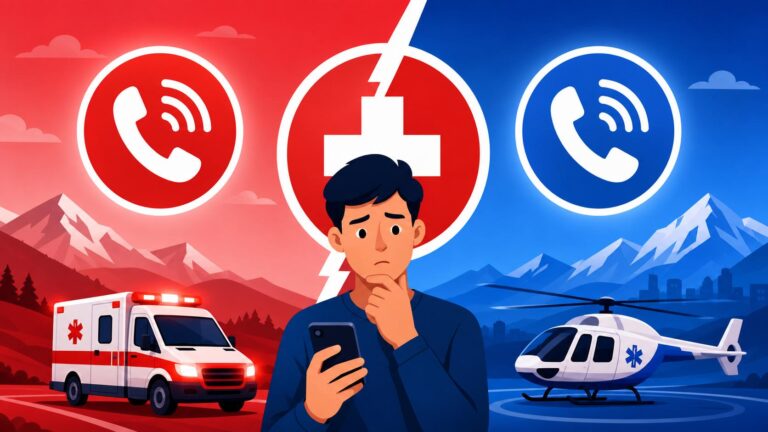
In many cantons, there is a middle ground: the "Notfallarzt" or on-call doctor service. By calling the cantonal emergency medical number (which differs from the 144 ambulance line), you can speak with a triage nurse who may dispatch a doctor to your home or direct you to a specific night-shift practice. This is often the most "Swiss" way to handle an urgent but stable situation. It keeps the ERs clear for true life-and-death cases and saves you a trip in the middle of the night.
The Triage Process: How Swiss Hospitals Prioritize
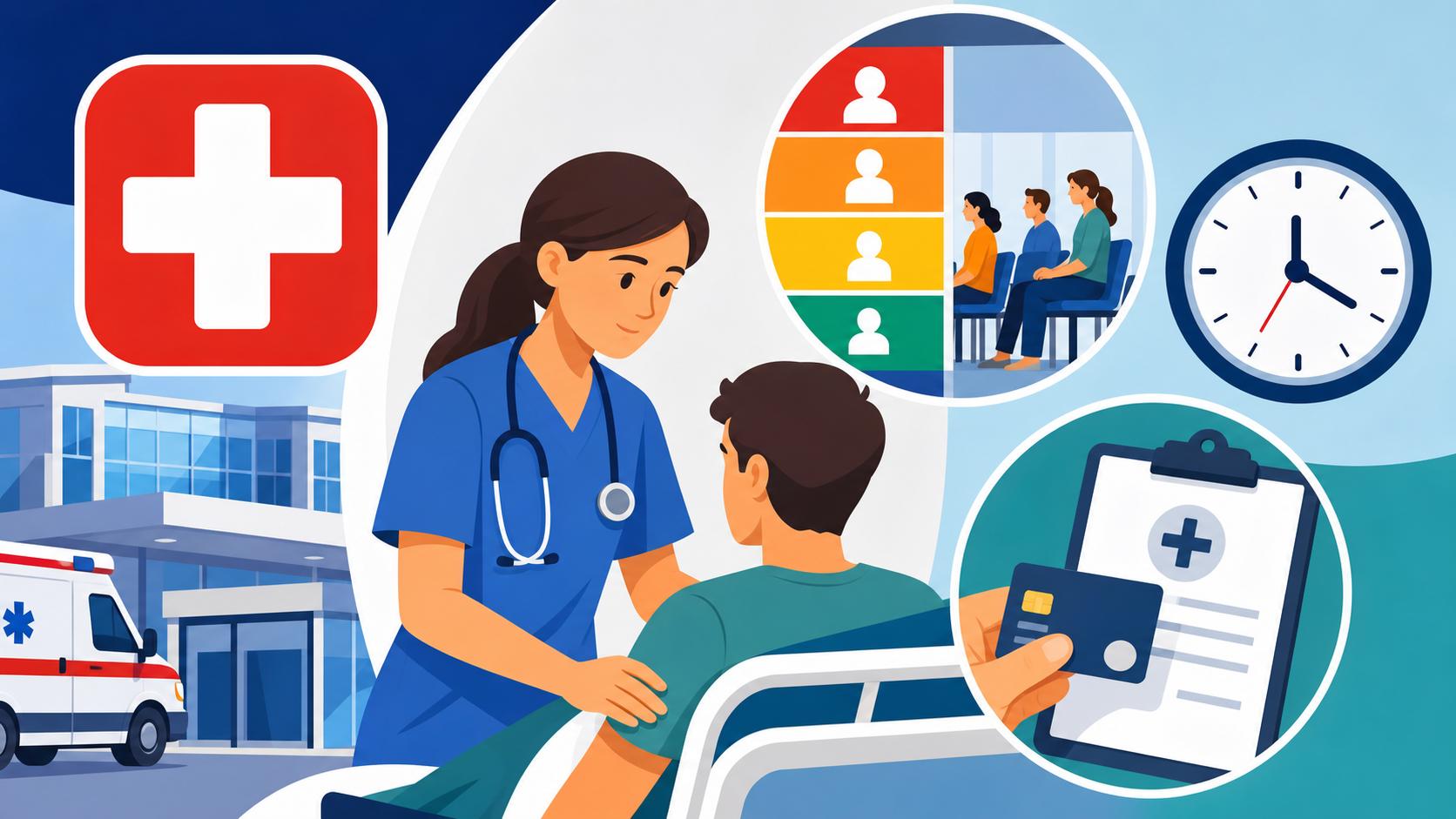
Once you step through the sliding glass doors of a Swiss ER, you will be greeted by a triage nurse. This is not just a check-in clerk; they are highly trained specialists who determine your "urgency code" based on the Swiss Emergency Triage Scale (SETS).
The Five Levels of Triage
Switzerland generally follows a five-level priority system. Level 1 is a "Life Threat," where you are whisked into a resuscitation bay immediately. Level 2 is "Emergent," meaning you should be seen within 20 minutes. Levels 3 through 5 cover "Urgent" to "Non-Urgent" cases. If you find yourself sitting in the waiting room for four hours while others who arrived after you are called in, it is because they have been assigned a higher SETS level.
It is important to be extremely clear and literal when describing your symptoms. In Swiss culture, stoicism is common, but the ER is the one place where you should not downplay your pain. If you have international coverage through Cigna Global, keep your digital card ready, as the triage staff will often ask for insurance details immediately after assessing your clinical stability.
Language Barriers and Communication
While most doctors in Swiss cities speak excellent English, the triage nurses and administrative staff might only speak the local language (German, French, or Italian). If your German is shaky, I recommend having a few key phrases written on your phone: "Ich habe starke Schmerzen" (I have severe pain) or "Ich kann nicht atmen" (I cannot breathe).
Don't be afraid to ask for a translator or a doctor who speaks English. In my experience at the Zurich Expat Healthcare Guide: Hospitals, Clinics, and Emergency Contacts locations, the staff is used to international residents, but the environment is high-stress. Being prepared with your medical history and a list of current medications is essential. This is where a quick check on iHerb for your regular supplements can help you keep an accurate list for the doctors, ensuring there are no contraindications with emergency meds.
Documentation and Initial Registration
The administrative side of triage involves presenting your Swiss health insurance card (VeKa). This card contains your insurance number and basic details. If you are a new arrival and don't have your card yet, a copy of your policy or even your work contract and insurance application can suffice. They need to know who to bill. For third-country nationals or those on temporary assignments, having a printout of your coverage details is a massive stress-reducer during the registration phase.
Navigating Waiting Times in Major Cities
Waiting times in Swiss ERs are a frequent topic of expat frustration. We expect "Swiss efficiency" to apply to the hospital, but the reality is that the system is under significant pressure, especially in cities like Basel, Geneva, and Zurich.
Real-Time Wait Dashboards
Several Swiss hospitals have embraced technology to manage expectations. In some cantons, you can actually check a live "Wait Time" dashboard on the hospital's website before you leave your house. For instance, some pediatric emergencies in Zurich provide live updates on how many patients are in the queue and the estimated wait time for non-urgent cases.
I always suggest checking these dashboards if you have a choice between two hospitals. A twenty-minute drive to a slightly further facility might save you three hours of sitting in a waiting room. This is a crucial strategy for those navigating the Basel Expat Healthcare Guide: Medical Networks and Cross-Border Options where you might have multiple facility choices.
Peak Hours and Seasonal Surges
Avoid the ER on Monday mornings and Friday evenings if at all possible. Monday mornings are notorious because people wait through the weekend with an illness, only to realize they can't go to work. Friday evenings see a spike in "pre-weekend" anxiety and accident-related injuries.
Winter is also "Grip" (flu) and "Ski Accident" season. If you are heading to the ER in an Alpine canton during February, be prepared for a crowd. The "Notfall" will be packed with people who didn't follow the advice in REGA Membership: Why Expats Need Air Rescue Insurance in the Alps and are now dealing with the aftermath of a mountain mishap. During these times, bringing a portable charger, a bottle of water, and some light snacks is a veteran move.
The "Permanence" Alternative Revisited
If the wait at the University Hospital is over four hours, check the nearest Permanence. I once saved an entire night by leaving a crowded hospital waiting room and taking a tram to a private walk-in clinic. Since my insurance had a high franchise, the cost difference was negligible, but the time saved was priceless. Always keep some basic recovery items from iHerb, like electrolytes or ginger tea, at home so that once you are discharged, you don't have to go hunting for supplies.
The Financial Reality: Billing and Insurance
The Swiss healthcare system is world-class, but it is not "free" at the point of use. The bill you receive after an ER visit can be a source of major sticker shock if you don't understand the mechanics of the system.
Tiers Garant vs. Tiers Payant
In the Swiss emergency room, you will encounter two billing systems. "Tiers Payant" means the hospital bills the insurance company directly, and the insurance company then bills you for your share. "Tiers Garant" means the hospital sends the bill directly to you. You pay it, then send the receipt to your insurer for reimbursement.
Most major public hospitals use Tiers Payant for the basic KVG (mandatory) insurance. However, if you have supplementary insurance or are using a private clinic, you might get a bill for several hundred (or thousand) francs in the mail three weeks later. Understanding How to Read a Swiss Medical Bill (Rückforderungsbeleg) and Claim Refunds is vital so you don't accidentally pay for something your insurer should have covered.
The Role of the Franchise and Copay
Your ER visit will be subject to your "Franchise" (deductible). If you have the common expat franchise of CHF 2,500, you will likely be paying the entire cost of the ER visit out of pocket unless you have already hit your limit for the year. An average ER visit for something like a few stitches and an X-ray can easily run between CHF 500 and CHF 1,200.
On top of the franchise, you are responsible for a 10% "Selbstbehalt" (copay), up to a maximum of CHF 700 per year for adults. It is a complex calculation, which is why The Swiss Franchise System: How Deductibles and Copays Work is one of the most important things to read before you ever set foot in a hospital.
Hidden Costs: Ambulances and Night Surcharges
Many expats are shocked to find that ambulances are not fully covered by basic insurance. Generally, KVG only covers 50% of an ambulance ride, up to a limit of CHF 500 per year. Since a single ride can cost CHF 1,000, you will be left with a significant bill. See Does Basic Swiss Insurance Cover Ambulance Rides? The 50% Rule Explained for the full breakdown. Additionally, hospitals apply "night and weekend" surcharges to the TARMED (the national medical tariff) rates. Seeing a doctor at 3:00 AM costs significantly more than seeing the same doctor at 3:00 PM.
| Service Type | Estimated Cost (CHF) | Insurance Coverage (KVG) | Typical Wait Time |
|---|---|---|---|
| Permanence / Walk-in | 200 – 500 | 90% after Franchise | 30 – 90 minutes |
| Hospital ER (Minor) | 500 – 1,200 | 90% after Franchise | 2 – 6 hours |
| Hospital ER (Major) | 2,000 – 5,000+ | 90% after Franchise | Immediate (Triage 1) |
| Ambulance Transport | 800 – 1,500 | 50% (capped at 500/yr) | 8 – 15 minutes |
| Night/Weekend Surcharge | +50 – 150 | 90% after Franchise | N/A |
Practical Tips for a Smooth ER Visit
When the adrenaline is flowing, it’s easy to forget the basics. Following a simple checklist can change the entire trajectory of your ER experience.
What to Bring to the Notfallstation
Never leave for the ER without your "Emergency Kit." This should include:
- Your health insurance card (VeKa) and any supplementary cards (like Cigna Global).
- Your B or C permit (or passport).
- A list of all medications and allergies.
- A phone charger (ER waits are long).
- A small amount of cash or a credit card for the hospital parking garage, which can be surprisingly expensive.
If you have kids, bring a "distraction bag." Swiss ERs usually have a few wooden toys, but in a post-pandemic world, many have been removed. Having a tablet, a favorite stuffed animal, and some snacks will keep the peace. Speaking of snacks, after you get home, I often find that a quick order of soothing teas or health-recovery snacks from iHerb is a great way to restock your pantry while you recover.
The Discharge and Prescription Process
When you are discharged, the doctor will give you a "Bericht" (report). Keep this! You will need to give a copy to your family doctor. They will also give you a prescription if needed. If it is the middle of the night, you will need to find a "Notfallapotheke" (Emergency Pharmacy). These pharmacies charge a "night fee" (usually around CHF 20-50) just for opening the door. You can find the nearest one by checking Pharmacies (Apotheken) After Hours: Finding Emergency Medication.
Follow-Up Care and the "Hausarzt"
The ER is for stabilization, not long-term care. Almost every discharge instruction will include "Follow up with your Hausarzt in 3 days." If you don't have a family doctor yet, the hospital might give you a list of local practitioners. It is your responsibility to make this appointment. If you ignore the follow-up and end up back in the ER for the same issue, your insurance might question the "necessity" of the second visit, potentially leading to billing disputes.
Navigating Specific Emergencies: Dental and Pediatric
Not all emergencies are medical in the traditional sense. Dental pain can be just as debilitating, and the rules for children are different.
Dental Emergencies: A Different Billing World
Dental care in Switzerland is generally not covered by basic KVG insurance. If you have a dental emergency (a knocked-out tooth or an abscess), you should call a dedicated emergency dentist rather than going to the hospital ER. Hospital ERs are rarely equipped to handle dental trauma unless it involves a broken jaw. The costs for emergency dental work are high and usually must be paid on the spot or via a bill sent shortly after. For more on this, read Dental Care in Switzerland: Costs, Insurance Reality, and Alternative Options.
Pediatric Emergencies and the "Kinderspital"
If you have children, find the nearest "Kinderspital" (Children's Hospital) now. Don't wait for an emergency. These facilities are designed specifically for little ones, with smaller equipment and specialized pediatricians. The atmosphere is much less intimidating than a general hospital. In Zurich, the Eleonorenstiftung (Kinderspital Zurich) is the gold standard. They have their own triage system and often have much better facilities for parents who need to stay overnight with their child.
Psychosocial and Mental Health Emergencies
Switzerland takes mental health seriously. If you or a loved one is experiencing a psychiatric crisis, major hospitals have a "Kriseninterventionszentrum" (Crisis Intervention Center). You do not need a referral to show up there. These centers are staffed 24/7 with psychiatrists and psychologists. The costs are covered by basic insurance, though the usual franchise and copay rules apply. For more information on accessing this type of care, see Mental Health in Switzerland: Accessing Therapists and Psychiatric Care.
Important Medical Disclaimer
The information provided in this article is for educational and informational purposes only and is based on personal experiences and general knowledge of the Swiss healthcare system. It is not intended as medical advice. In the event of a real-life medical emergency, always dial 144 in Switzerland immediately or head to the nearest emergency facility. Healthcare regulations, insurance laws, and facility protocols can change; always verify current procedures with your insurance provider and local health authorities.