Lake Lucerne: Cruises, Mountains, and the Swiss Path
Oh, Lake Lucerne! If there’s one place in Switzerland that consistently manages to take my breath away, even after all these years, it's the Vierwaldstättersee. Many of us expats arrive here, drowning in administrative paperwork and cultural quirks, only to realize there’s a whole country of unparalleled beauty waiting to be discovered. But where do you even begin when every postcard looks like a dream? Well, let me tell you, tackling Lake Lucerne is an absolute must, and this guide is going to walk you through its iconic cruises, majestic surrounding mountains, and the historically rich Swiss Path, ensuring you experience it like a seasoned local, not just a bewildered tourist.
Cruising the Crystal Waters: The Iconic Lake Lucerne Boat Trips
One of the most serene and undeniably Swiss experiences you can have is a boat trip on Lake Lucerne. It’s not just a means of transport; it’s a journey through stunning landscapes, past charming lakeside villages, and into the heart of Swiss history. Many of you might be scratching your heads, wondering if it's "worth the money" or "how to even pick a route," and I totally get it. The options can seem endless, but trust me, there's a magic to these waters that makes it an unforgettable day out, whether you're a fresh arrival or a seasoned resident.
Paddle Steamer vs. Modern Yachts: Choosing Your Vessel
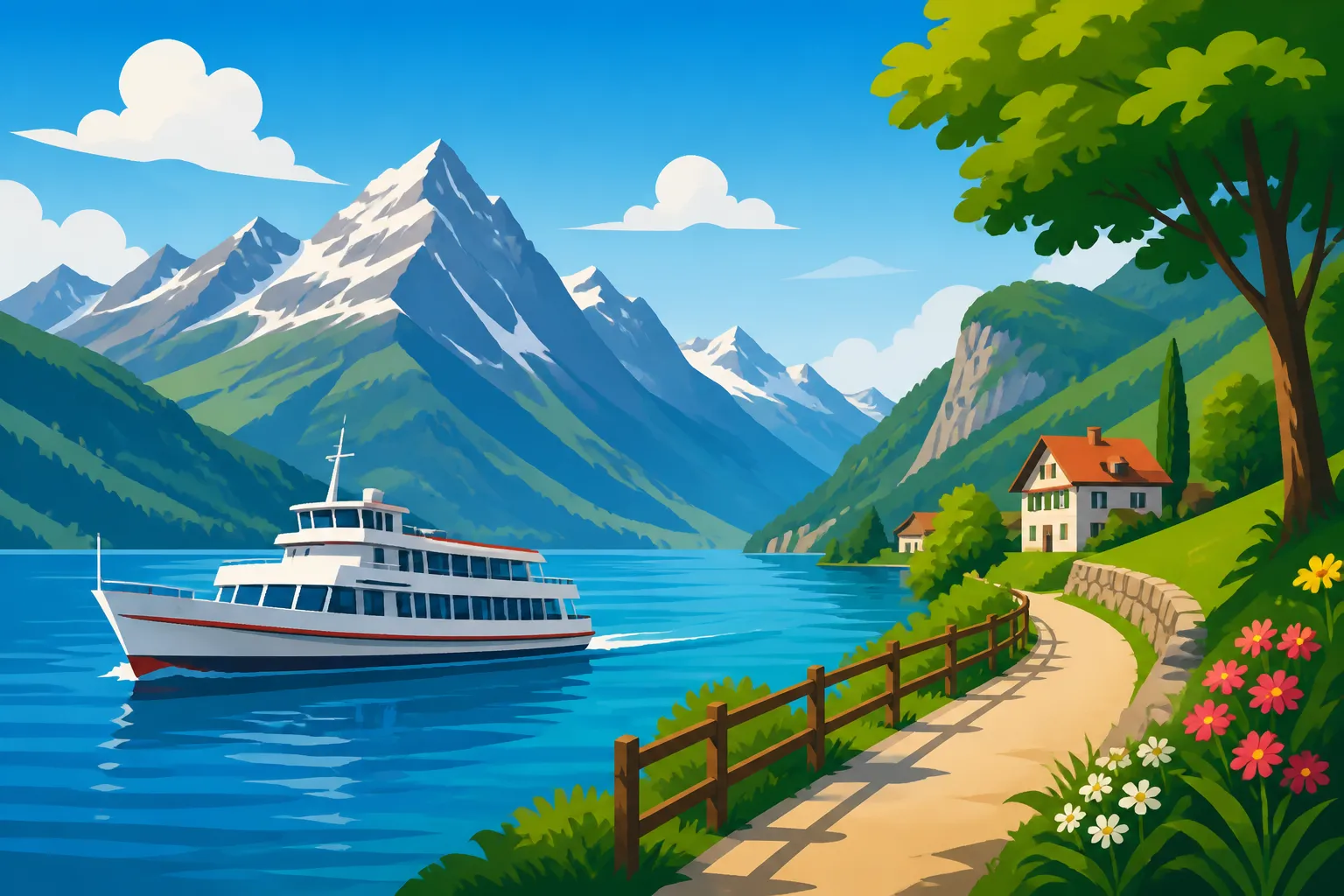
When you walk along the bustling promenade in Lucerne, you’ll see a fleet of boats waiting. You've got a choice between the stately, old-school paddle steamers and the sleek, modern motor vessels. Each offers a different vibe, and honestly, both are fantastic depending on what you're looking for.
The paddle steamers, like the Stadt Luzern or the Uri, are a true throwback. They date back to the late 19th and early 20th centuries and have been meticulously maintained. Stepping aboard one feels like stepping into a bygone era of elegance. You can hear the rhythmic chug of the engine and watch the massive paddle wheels churn through the water. There's usually a lovely first-class salon, often with intricate wood paneling and art nouveau details, and a restaurant serving proper meals, sometimes even themed brunches or fondue cruises. For those of you who appreciate a bit of nostalgia and a slower, more romantic pace, this is absolutely the way to go. You can even sometimes sneak a peek at the engine room – a real treat for the curious! The open deck offers fantastic photo opportunities, and the gentle sway of the boat is incredibly relaxing. I remember taking my parents on one, and they were utterly charmed, spending most of the journey just gazing at the passing scenery, occasionally popping into the restaurant for a hot chocolate with a view.
Then there are the modern motor vessels. These are faster, often more spacious, and sometimes offer more panoramic windows and open-air decks for unobstructed views. They are efficient and comfortable, perfect if you’re trying to cover more ground or simply want a quick, smooth ride to your destination. They also tend to have contemporary amenities and sometimes even offer self-service catering. While they might lack the vintage charm of the paddle steamers, they are incredibly practical and still provide those breathtaking lake and mountain vistas. If you're travelling with kids who might get antsy on a slower boat, or if you're on a tight schedule to connect with a mountain railway, the modern vessels might be your best bet. Don't worry, the views are just as stunning, regardless of the boat's age! The key here is to check the timetable (Schifffahrtsgesellschaft des Vierwaldstättersees, or SGV, runs them all) to see which type of boat is on your desired route at your preferred time. You can check schedules and even book tickets through platforms like Omio or directly with SGV. Many passes, including The Half-Fare Travelcard (Halbtax): The Must-Have Pass for Swiss Residents and SBB Travelcards: Is the Generalabonnement (GA) Worth the CHF 4000+ Cost?, give excellent discounts on these lake cruises, making them much more affordable than you might initially think.
Popular Lake Routes and Scenic Highlights
Lake Lucerne is shaped somewhat like a dragon, with many arms and bays, each offering unique scenery. You could spend days exploring it all, but some routes are quintessential.
One of the most popular is the trip from Lucerne to Flüelen at the very southern end of the lake. This route takes you through the most dramatic scenery, passing historical sites like the Rütli Meadow, where legend says the Swiss Confederation was founded, and Tell's Chapel, honoring the folk hero William Tell. The lake here narrows, feeling more like a fjord with towering cliffs and dense forests. The boat will often stop at charming villages such as Weggis, known for its mild climate and palm trees, and Vitznau, the starting point for the Rigi cogwheel railway. This full trip can take around 2.5-3 hours one way, and it’s a brilliant way to see a significant chunk of the lake's grandeur. You can easily combine this with a mountain excursion, which we'll talk about shortly, truly embracing the idea of Combining Boat and Train Trips on Swiss Lakes.
Another fantastic option is the loop around the Horw Peninsula or a shorter trip towards Kehrsiten, which is the ferry point for Mount Bürgenstock. These offer quicker scenic glimpses if you're short on time but still want to feel the lake breeze. The trips to Weggis and Vitznau are also very popular, especially as starting points for exploring Mount Rigi. Imagine cruising across, disembarking, and then ascending a mountain, all within a single morning! It’s this seamless integration of lake and mountain that makes Lucerne so special. The villages along the route, from Brunnen to Beckenried, each have their own charm, often with lovely lakeside promenades, traditional restaurants, and small, family-run hotels. Don't be afraid to hop off at a random stop and explore for an hour or two, grabbing a coffee or an ice cream by the water.
Ascending the Peaks: Mountains Surrounding Lake Lucerne
Now, you can’t fully appreciate Lake Lucerne without also looking up. The mountains cradling its waters are not just beautiful backdrops; they are destinations in themselves, offering panoramic views that will make you feel like you're on top of the world. For many of us expats, the sheer number of mountain excursions can be overwhelming, and figuring out which one to tackle first, especially with kids or on a budget, is a real puzzle. But these mountains are surprisingly accessible, and each offers a unique experience.
Mount Rigi: The Queen of the Mountains
Ah, Rigi, affectionately known as the "Queen of the Mountains." If you’re looking for a classic Swiss mountain experience with breathtaking 360-degree views, this is it. Rigi stands proudly, offering vistas of Lake Lucerne, Lake Zug, and the surrounding Alps. What makes Rigi truly special is its accessibility and the variety of ways to reach its summit. It was, in fact, the first mountain railway in Europe!
You can ascend Rigi from several points, creating various "round trip" options that are incredibly popular. The classic Rigi round trip usually involves:
- A boat trip from Lucerne across the lake to Vitznau or Weggis.
- From Vitznau, you take the historic cogwheel railway (Rigi Bahnen) straight up to Rigi Kulm. This bright red train slowly chugs its way up, offering increasingly spectacular views.
- From Weggis, you take a cable car up to Rigi Kaltbad, a lovely plateau with a mineral bath and wellness center (perfect for unwinding!), and then another short cogwheel train to the top.
- To complete the loop, you can often descend via a different route, perhaps taking the aerial cable car from Kräbel down to Goldau, where you can catch a train back to Lucerne.
The summit, Rigi Kulm (1,797 m / 5,896 ft), offers an unparalleled panorama. On a clear day, you can see 13 lakes and countless peaks. It's truly stunning. There are well-maintained walking paths at the top, ranging from easy strolls to more challenging hikes. You can grab a meal at one of the mountain restaurants, or better yet, pack a picnic and find a scenic spot to enjoy your sandwiches with a view that postcards can only dream of capturing. For more details on this specific gem, you might want to read Rigi, Queen of the Mountains: Easy Alpine Access from Lucerne.
Mount Pilatus: The Dragon Mountain
Mount Pilatus is another absolute legend in the Lucerne region, known for its dramatic, jagged peaks and fascinating folklore about dragons and spirits. It’s slightly more adventurous than Rigi, making for a truly memorable day out. Its proximity to Lucerne makes it another popular choice for a day trip.
The "Golden Round Trip" is the quintessential Pilatus experience and definitely the one I recommend for first-timers. It typically includes:
- A relaxing boat trip from Lucerne to Alpnachstad.
- From Alpnachstad, you board the world's steepest cogwheel railway, a marvel of engineering with gradients of up to 48%! This train ride itself is an adventure, hugging the cliffs as it slowly ascends to Pilatus Kulm.
- At Pilatus Kulm (2,128 m / 6,982 ft), you'll find panoramic viewing platforms, several restaurants, and even a hotel where you can stay overnight (imagine waking up to those views!). There are also short, easy walking trails, including a "Dragon's Path" that tells some of the mountain's legends.
- For the descent, you usually take a series of aerial cable cars and gondolas down to Kriens, a suburb of Lucerne, from where a short bus ride brings you back to the city center.
The views from Pilatus are astounding, especially looking back down at Lake Lucerne and the surrounding alpine landscape. You'll feel a real sense of accomplishment just getting up there. It's a fantastic combination of lake, rail, and cable car, giving you a full spectrum of Swiss transport experiences. If you're pondering this adventure, check out Mount Pilatus from Lucerne: The World's Steepest Cogwheel Railway for a deeper dive. Platforms like GetYourGuide offer combined tickets for these round trips, which can sometimes simplify planning and potentially save you a few francs.
Other Notable Peaks and Perspectives
While Rigi and Pilatus often steal the spotlight, Lake Lucerne is surrounded by other fantastic mountains that offer different perspectives and activities.
Mount Titlis, though a bit further out from Lucerne (requiring a train to Engelberg first), is another iconic option, especially if you're craving year-round snow and glacier experiences. It boasts the world's first revolving cable car, the Titlis Rotair, and a thrilling Cliff Walk suspension bridge. It's a full-day excursion but delivers truly alpine views. You can find more information about this incredible journey in Mount Titlis: Year-Round Snow and the Rotating Cable Car.
Closer to home, the Bürgenstock Resort sits majestically above the lake, reachable by a funicular from Kehrsiten (which you reach by boat). It offers luxury, incredible views from the Hammetschwand Lift (Europe's highest outdoor elevator), and lovely walking trails. It's a great option if you're looking for something a bit more upscale or want to combine stunning nature with fine dining or a spa experience.
For hikers, mountains like Stoos (Fronalpstock) and Klewenalp offer incredible trails and often less crowded experiences. Stoos, for instance, has the steepest funicular in the world, a marvel in itself, leading to a car-free village and access to the panoramic ridge walk of Fronalpstock. These mountains cater to all levels, from Swiss Hiking for Beginners: Trail Grades and the SAC System to experienced mountaineers. Remember to pack accordingly; often what you need for a lake cruise isn't quite enough for a high-altitude hike. Always check What to Pack for a Day Trip to the Swiss Alps before heading out.
Walking Through History: The Swiss Path (Weg der Schweiz)
Beyond the shimmering lake and towering peaks, Lake Lucerne holds a significant place in Swiss history. The 'Weg der Schweiz,' or Swiss Path, is a magnificent hiking trail that encircles the southern arm of Lake Lucerne, offering not just stunning scenery but also a deep dive into the nation's origins. For expats, it’s a wonderful way to connect with the local culture and history beyond the usual tourist spots, often without the same crowds you might find at the most famous summits.
The Path of History: Sections and Significance
The Swiss Path is more than just a trail; it's a symbolic route created in 1991 for the 700th anniversary of the Swiss Confederation. It’s 35 kilometers (about 22 miles) long and divided into 27 sections, each sponsored by a Swiss canton. What I love about it is that each canton has contributed something unique to its section, reflecting their identity, history, or natural environment. It's truly a journey through the heart and soul of Switzerland.
The path starts at the Rütli Meadow, a legendary place where the oath of confederation was supposedly sworn in 1291, laying the foundation for modern Switzerland. From there, it winds its way along the eastern shore, through beautiful forests, along lakeside promenades, and past historical monuments like Tell's Chapel near Sisikon, which commemorates William Tell’s escape from Gessler’s boat. The path then crosses to the western shore, continuing through areas like Morschach and Seelisberg, offering spectacular views across the lake and towards the peaks of Rigi and Pilatus.
What’s great about the Swiss Path is that you don’t have to do it all at once. Many sections are easily accessible by public transport – boat, bus, or train – allowing you to pick and choose shorter, manageable walks that suit your fitness level and available time. It’s perfect for a leisurely afternoon stroll or a full-day hike. The trail is generally well-maintained and clearly marked, making it easy to navigate even for casual walkers. It's largely flat in sections along the lake, while other parts involve gentle ascents through forests or over hills. Always check the official website for current trail conditions, especially in shoulder seasons.
Combining Hiking with Boat Trips and Picnics
One of the best ways to experience the Swiss Path is to integrate it with a boat trip on Lake Lucerne. This creates an incredibly dynamic day out, allowing you to appreciate the scenery from both land and water. Imagine taking a boat from Lucerne to, say, Brunnen, hiking a scenic section of the Swiss Path from Brunnen to Sisikon (about 1.5-2 hours of walking), and then catching another boat back to Lucerne, perhaps with a stop in Weggis for a coffee. This kind of flexibility is what makes Swiss travel so enjoyable and something you absolutely need to leverage.
Many sections of the path pass through charming villages where you can stop for a meal, but I highly recommend packing a picnic. Switzerland is dotted with incredible spots to Picnicking in Switzerland: Where to Buy Supplies and Sit, and the Swiss Path offers countless benches and designated picnic areas, often with fire pits (Grillstellen) ready for a proper Swiss barbecue. Grabbing some local cheese, fresh bread, and fruit from a Coop or Migros beforehand (or even a local market if you’re lucky enough to find one open) and finding a secluded spot with a lake view is an experience in itself. It's moments like these that truly make you feel like you're living the Swiss dream, far from the daily grind of figuring out your latest tax bill. The path is generally considered easy to moderate, suitable for families, and offers plenty of opportunities to just sit, relax, and soak in the majestic landscape. Don't forget to keep an eye out for informational plaques along the way, detailing the historical significance of the area or facts about the sponsoring cantons.
Planning Your Lake Lucerne Adventure: Practical Tips for Expats
Navigating the multitude of transport options, figuring out what's covered by your travel pass, and budgeting for Swiss excursions can feel like a labyrinth, especially when you're still getting used to the local way of doing things. But don't let that deter you! Lake Lucerne is one of the most rewarding regions to explore, and with a few savvy tips, you can make the most of your visit without unnecessary stress.
Transport Passes and Discounts
Switzerland is renowned for its excellent public transport system, but it can be pricey. As an expat, you’ll quickly learn that investing in a travel pass is usually the smartest move.
The Half-Fare Travelcard (Halbtax-Abo) is, in my opinion, an absolute must-have for anyone living in Switzerland. It gives you 50% off virtually all train, bus, boat, and most mountain railway tickets. For trips around Lake Lucerne and up the surrounding mountains, this discount makes a huge difference. For example, a full-price round trip up Pilatus can be well over CHF 70, but with a Half-Fare card, it’s halved. The annual cost of the Half-Fare card is usually recouped after just a few major excursions. You can find more about it here: The Half-Fare Travelcard (Halbtax): The Must-Have Pass for Swiss Residents.
If you plan to travel extensively, particularly for longer trips or multiple mountain excursions, the General Abonnement (GA) might be worthwhile. This provides unlimited travel on most public transport networks, including boats and many mountain railways. It's a significant investment, but for some, the freedom it offers is invaluable. Read more about it in SBB Travelcards: Is the Generalabonnement (GA) Worth the CHF 4000+ Cost?. For visitors or those on very short stays, the Swiss Travel Pass (often purchased through GetYourGuide or Omio) can offer similar benefits to a GA, often including museum entries. Always compare costs based on your planned itinerary, but for residents, the Half-Fare is almost always the starting point.
For day trips specifically, also keep an eye out for Saver Day Passes (Spartageskarte) on the SBB website or app. These can offer incredibly cheap tickets if you book far in advance and are flexible with your travel times. It's a bit like playing the lottery, but when you win, you win big!
Best Time to Visit and What to Expect
Lake Lucerne is beautiful year-round, but the "best" time really depends on what you want to do.
- Summer (June-August): This is peak season, and for good reason. The weather is generally warm and sunny, perfect for boat trips, swimming in the lake, and high-altitude hiking. All mountain railways and cable cars are fully operational. However, it also means crowds, especially at popular spots like Lucerne city center, Pilatus, and Rigi. If you're visiting in summer, try to start your excursions early in the morning to beat the rush. Day Trips by Train: The Best Swiss Destinations Within Two Hours often involve early starts for this very reason.
- Spring (April-May) & Autumn (September-October): These shoulder seasons are often my favorite. The crowds are thinner, the prices can be slightly lower (especially for accommodation on Booking.com), and the scenery is absolutely stunning. In spring, you get blooming flowers and fresh green landscapes. In autumn, the foliage around the lake and on the mountain slopes turns into a spectacular riot of reds, oranges, and yellows – truly breathtaking. Be aware that some mountain railways might have short maintenance closures in late autumn or early spring, so always check schedules beforehand. The weather can be more unpredictable, so pack layers!
- Winter (November-March): While you might not be swimming, a winter visit to Lake Lucerne is incredibly atmospheric. The snow-capped mountains create a dramatic contrast with the dark lake waters. Rigi and Pilatus are still accessible, offering winter hiking, snowshoeing, and sometimes even sledding. Lucerne's Christmas market is charming, and a cozy boat ride with a warm drink while gazing at the frosty landscape is pure magic. Just be sure to dress warmly!
Expect impeccable cleanliness everywhere, efficient public transport (usually running like clockwork), and a general sense of order. People are generally polite and reserved. Don't be surprised if locals prefer to keep to themselves on public transport; it's not rudeness, just cultural norm.
Accommodation and Dining
Lucerne itself has a wide range of hotels, from luxurious lakeside properties to more budget-friendly options in the Old Town. If you're looking to stay overnight, I recommend booking well in advance, especially during peak season. Websites like Booking.com are your best friend for finding something that fits your needs and budget. Alternatively, consider staying in one of the charming lakeside villages like Weggis or Vitznau, which offer a more tranquil experience away from the city bustle. They're still well-connected by boat and sometimes by train or bus to Lucerne.
When it comes to dining, Lucerne offers everything from traditional Swiss restaurants serving fondue and raclette (delicious, but can be pricey!) to international cuisine. On the mountains and along the Swiss Path, you’ll find plenty of "Berghäuser" (mountain restaurants) offering hearty Swiss fare – think Rösti, sausages, and warming soups. Don't forget to explore the local specialties! The region around Lucerne has its own unique culinary delights. For more on this, check out Swiss Food and Drink Culture: Regional Specialties and Dining Etiquette. As mentioned before, packing a picnic is always a great option to save money and enjoy the scenery more intimately.
Beyond the Postcard: Hidden Gems and Local Insights
You've done the main attractions, seen the highlights, and perhaps even started to feel like you're getting the hang of things. But Switzerland, and especially the Lake Lucerne region, has a knack for hiding little treasures just off the beaten path. For us long-term expats, finding these quieter, more authentic spots is part of the joy of living here, and I'm happy to share a few insights to elevate your experience from 'tourist' to 'temporary local'.
Quaint Villages and Lakeside Retreats
While Lucerne city is undoubtedly beautiful, take some time to explore the smaller villages dotted around the lake. These often offer a more authentic and relaxed vibe, where you can observe daily Swiss life away from the souvenir shops.
- Weggis: Known as the "Riviera of Central Switzerland" due to its mild climate, it's famous for its palm trees and beautiful rose gardens. It’s a wonderful spot for a leisurely stroll along the lake promenade, enjoying a coffee, or simply relaxing by the water. You can reach it easily by boat from Lucerne and it’s a direct cable car connection to Rigi Kaltbad.
- Vitznau: This picturesque village is the main starting point for the Rigi cogwheel railway. It has a charming harbor and several excellent hotels and restaurants right on the lake. It's quieter than Lucerne but offers incredible views and a direct connection to the Queen of the Mountains.
- Brunnen: Located at the northern end of the "Urnersee" (the fjord-like southern arm of Lake Lucerne), Brunnen is strategically important and historically significant. It’s a great base for exploring the Swiss Path and offers spectacular views towards the Uri Alps. The town itself has a lovely promenade and a relaxed atmosphere. It's easily accessible by boat or train.
- Gersau: Once the smallest independent republic in the world for over 400 years, Gersau is a charming, sun-drenched village nestled on the southern slope of Mount Rigi. It's often overlooked by tourists rushing to Vitznau or Weggis, making it a peaceful retreat with beautiful lake views and a sense of unique history.
Take a boat to one of these villages, spend a few hours wandering, enjoy a meal at a local restaurant, and simply soak in the tranquility. It’s often in these quieter moments that you truly appreciate the beauty and charm of Switzerland.
Lesser-Known Hikes and Viewpoints
Beyond the well-trodden paths of Pilatus and Rigi, there are countless other trails and viewpoints around Lake Lucerne that offer stunning scenery with fewer crowds. These are the kinds of spots that make you feel like you've discovered something truly special, a secret whispered by the mountains.
- Bürgenstock Peninsula Walks: Even if you don't stay at the luxurious Bürgenstock Resort, you can take a boat to Kehrsiten and then the funicular up to the resort area. From there, you can hike along the cliff path (Felsenweg) to the Hammetschwand Lift. The path itself offers vertigo-inducing views of the lake below, and the lift (which requires a separate ticket, but is worth it for the experience!) takes you to an even higher viewpoint. It's a truly spectacular walk, often less crowded than the main mountain peaks.
- The Klewenalp-Stockhütte region: Accessible via cable car from Beckenried (a lovely village on the south shore of the lake), this area offers fantastic hiking for all levels, including a popular family-friendly circular trail and stunning views across the lake and towards the Bernese Alps. In winter, it's also a great spot for skiing and sledding.
- Seelisberg: This charming village, perched high above the Urnersee, is accessible by a funicular from Treib (which is a boat stop). It’s famous for its views of the Rütli Meadow and the surrounding historical landscape. There are lovely walks in the area, including sections of the Swiss Path, and a small lake, Seelisbergsee, perfect for a quiet picnic or a dip on a warm day.
Exploring these spots requires a little more planning, often involving multiple modes of transport, but the reward is immense: stunning views, peaceful trails, and a deeper connection to the Swiss landscape and its stories. You can often piece together these journeys using the SBB app, which is fantastic for planning any public transport journey in Switzerland, and sometimes booking specific mountain passes or activities via platforms like GetYourGuide or Booking.com for accommodation in the smaller towns.
| Mountain Excursion | Travel Time from Lucerne (approx.) | Main Attraction(s) | Estimated Full Price (Round Trip, adult, no pass) | Best For |
|---|---|---|---|---|
| Mount Rigi | 1.5 – 2 hours | 360° panoramic views, historic cogwheel, wellness bath | CHF 72 – 90 (depending on route) | Classic Swiss views, easy hiking, wellness, multi-modal transport |
| Mount Pilatus | 1 – 1.5 hours | World's steepest cogwheel, Dragon's Path, thrilling cable cars | CHF 78 – 85 | Adventure, dramatic cliffs, unique railway experience |
| Bürgenstock | 1 hour | Luxury resort, Hammetschwand Lift, cliff walk, lake views | CHF 70 – 80 (incl. boat, funicular, lift) | Upscale experience, spectacular views, fine dining |
| Mount Titlis | 2 – 2.5 hours | Year-round snow, glacier cave, Cliff Walk, revolving cable car | CHF 96 – 100+ (incl. train to Engelberg) | Glacier experience, high-alpine thrills, winter sports |
| Stoos/Fronalpstock | 1.5 hours | World's steepest funicular, ridge walk, car-free village | CHF 46 – 50 (excl. train to Schwyz/Arth-Goldau) | Unique transport, family-friendly hikes, peace and quiet |
Note: Prices are approximate for 2026 and can vary. Always check official websites for current rates and special offers. Half-Fare and GA passes significantly reduce these costs.
Disclaimer
Please remember that travel information, prices, and schedules in Switzerland can change. Always check the official websites of the transportation companies (SBB, SGV, Pilatus Bahnen, Rigi Bahnen, Titlis Bahnen, etc.) for the most up-to-date information before planning your trip. While I strive to provide accurate advice, I am not a financial or legal expert, and this guide is for informational purposes only. Enjoy your adventures around Lake Lucerne!