Mount Titlis: Year-Round Snow and the Rotating Cable Car
Alright, let's talk about Mount Titlis, shall we? You've probably heard the name thrown around, maybe seen some stunning photos of that insane suspension bridge, and thought, "That looks incredible, but also, how complicated is it to get there, and will it bankrupt me?" Believe me, navigating the sheer number of Swiss mountain excursions, all with their unique cable cars, pricing structures, and potential hidden costs, can feel like climbing Everest before you even leave your apartment. This guide is going to strip away all that stress and walk you through everything you need to know to conquer Mount Titlis, from the journey up to enjoying the year-round snow, without any nasty surprises.
Planning Your Titlis Adventure: Getting There and Ticket Logistics
Getting to Mount Titlis isn't just about reaching the peak; it's an adventure in itself, starting from the moment you step onto a train. The journey from wherever you are in Switzerland to Engelberg, the charming village at the base of Titlis, is usually smooth, but the ascent itself involves a few different stages of cable cars. Understanding this, and how to snag the best ticket deal, is half the battle.
The Journey to Engelberg
Your trip truly begins with a scenic train ride to Engelberg. If you're coming from a major hub like Zurich or Bern, you'll likely connect through Lucerne. The train from Lucerne to Engelberg is a picturesque 45-minute journey, winding through valleys and past traditional Swiss chalets. It’s lovely, but don't get too comfortable, because once you arrive in Engelberg, you're only at the first stage of your ascent.
Now, about those tickets. Switzerland's public transport system is phenomenal, but it comes at a price, especially for mountain excursions. If you're a resident or planning multiple trips, investing in a Half-Fare Travelcard (Halbtax) is often a no-brainer. This card genuinely cuts your public transport costs, including many mountain railways and cable cars, by a whopping 50%. Seriously, it's a game-changer. For tourists, or those making a one-off trip, consider a Saver Day Pass (Spartageskarte): How Residents Save on Day Trips if you book far enough in advance, or even a regional pass if you're exploring the Lucerne area extensively. You can find and book your train tickets, often including the cable car portion, through the SBB website or via platforms like Omio, which can sometimes offer combined deals or make booking across different modes of transport a bit simpler. Just make sure to read the fine print about what's included!
Navigating the Cable Cars: Engelberg to the Summit
Once you disembark the train in Engelberg, the Titlis cable car station is a pleasant 10-minute walk through the village. From here, the ascent unfolds in three stages, each offering its own unique perspective and level of excitement.
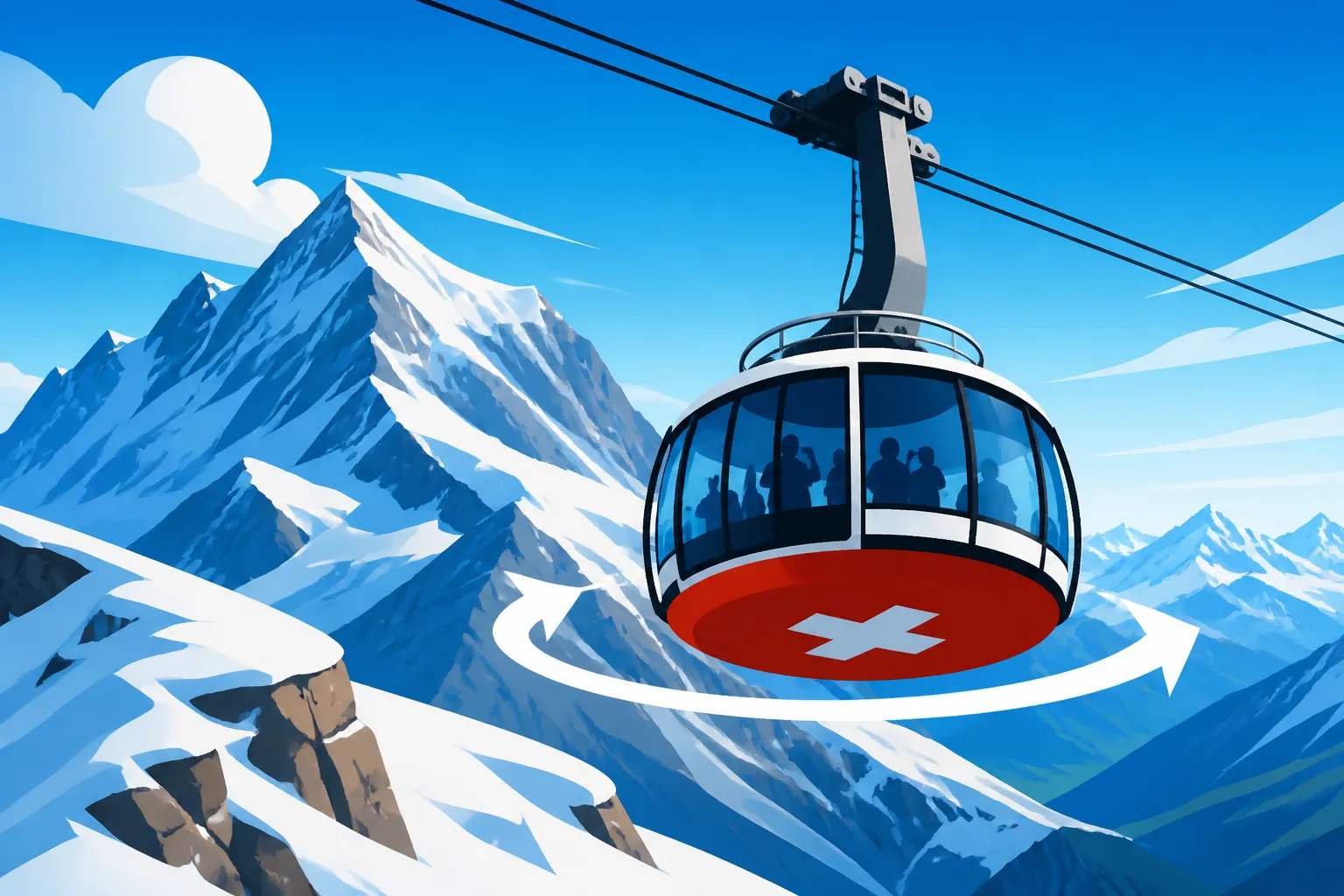
First up is the gondola from Engelberg to Trübsee. This is a comfortable ride, giving you lovely views of the valley below. Trübsee itself is a beautiful alpine lake, and if you have time on your way down, it's worth exploring. There are hiking trails, rowboats, and even a "Smuggler's Trail" for kids. The second stage takes you from Trübsee to Stand, a mid-station where you switch to the star of the show: the Titlis Rotair. This isn't just any cable car; it's the world's first revolving cable car. As you ascend, the cabin slowly rotates 360 degrees, giving everyone breathtaking panoramic views of the ice crevasses, towering peaks, and deep valleys. It's truly a marvel of engineering and an experience you won't forget. Finally, the Rotair delivers you to Klein Titlis, the summit station, at a staggering 3,020 meters above sea level. This multi-stage ascent ensures you're treated to continuously evolving scenery, making the journey part of the destination.
Ticket Options and Discounts
The cost of a Titlis ticket can feel steep, especially if you're paying the full adult fare. However, there are several ways to make it more manageable. A standard return ticket from Engelberg to Mount Titlis costs around CHF 96. This is where those savvy Swiss travel cards come into play.
| Ticket Type | Price (approx. return from Engelberg) | Typical Discount | Best For |
|---|---|---|---|
| Standard Adult Ticket | CHF 96 | N/A | International tourists without other passes. |
| Half-Fare Card (Halbtax) Holder | CHF 48 | 50% | Residents or frequent visitors, combining Titlis with other public transport. |
| GA Travelcard (Generalabonnement) Holder | Free | 100% | Residents who travel extensively on public transport and mountains. |
| Swiss Travel Pass Holder | Free | 100% | Tourists with an all-inclusive pass for Switzerland. |
| Children (6-15 years) | CHF 48 (or free with Junior Card) | 50% | Families, especially if kids have a Traveling with Children: The SBB Junior Travelcard for CHF 30/Year. |
| Group Rates (10+ people) | Varies | Small discount | Organized tours or larger families/friends traveling together. |
As you can see, if you have a The Half-Fare Travelcard (Halbtax): The Must-Have Pass for Swiss Residents or a SBB Travelcards: Is the Generalabonnement (GA) Worth the CHF 4000+ Cost? (for us long-term residents, it's often a no-brainer), your ticket price drops significantly. For families, the Junior Travelcard means children travel free or at a hugely reduced rate when accompanied by a parent with a valid ticket. These passes seriously offset the individual ticket costs, especially when you factor in other trips like Mount Pilatus from Lucerne: The World's Steepest Cogwheel Railway or Rigi, Queen of the Mountains: Easy Alpine Access from Lucerne. It's always a good idea to check the Titlis website directly for the most up-to-date pricing and any special offers. Buying tickets online in advance can also sometimes save you a few francs and, more importantly, save you time queuing at the ticket office, which can be a real pain during peak season.
The Ascent to Eternity: Experiencing the Rotair and Glacier World
Reaching the summit of Mount Titlis isn't just about the views; it's about stepping into a world of eternal ice and exhilarating activities that are unlike anything you'll find at lower altitudes. The air is crisp, the snow glistens, and the sense of being on top of the world is palpable.
The World's First Rotating Cable Car: Titlis Rotair
After switching from the smaller gondolas at the Stand station, you'll enter the famous Titlis Rotair. This isn't just a gimmick; it's a marvel of engineering that truly enhances the experience. The cabin itself is quite spacious, allowing everyone to comfortably stand and gaze out the windows. As it ascends, the entire cabin slowly rotates, offering a full 360-degree panorama of the surrounding alpine landscape. You'll see dramatic cliffs, deep crevasses, and the distant peaks of the Central Swiss Alps.
What’s truly unique is that you don't have to jostle for a window spot; everyone gets a turn at every angle. It’s a moment to truly appreciate the sheer scale of the mountains and the raw power of nature. For a long-time expat like me, who's seen countless mountain views, the Rotair still manages to impress. It takes away the stress of trying to pick "the best side" of the cable car and just lets you soak in the grandeur as it unfolds around you. This ascent is the perfect prelude to the icy wonders awaiting you at the top.
The Glacier Cave and Titlis Cliff Walk
Once you step out of the Rotair at Klein Titlis, you're immediately immersed in a winter wonderland, even in the middle of summer. One of the first things you should do is explore the Glacier Cave. This ancient ice tunnel winds its way some 150 meters through the heart of the glacier. The ethereal blue light, the icy sculptures, and the constant chill make it an otherworldly experience. It's kept at a constant -1.5°C, so even if it's baking hot down in Lucerne, you'll want to have those layers with you. It’s a truly unique way to connect with the ancient ice that forms these mountains.
Next, if you're brave enough, it's time for the Titlis Cliff Walk. This is Europe's highest suspension bridge, stretching for 100 meters across a dizzying chasm, with a staggering 500-meter drop below. Walking across it is an adrenaline rush, for sure! The views are absolutely phenomenal, but it’s not for the faint of heart or those with a fear of heights. Even if you're usually fine, that first step onto the swaying bridge can make your stomach drop. But push through it, because the feeling of accomplishment and the incredible photographs you'll get are absolutely worth it. It’s completely safe, built to withstand immense forces, but that doesn't stop your mind from playing tricks on you up there!
The Ice Flyer and Glacier Park
Beyond the bridge and cave, the fun continues with the Ice Flyer chairlift. This open chairlift literally glides over the glacier, giving you unparalleled views of the ice in all its glory. It's a fantastic way to appreciate the scale of the glacier and spot some of the deeper crevasses. Don't worry, it's a slow, gentle ride, perfect for taking photos.
The Ice Flyer drops you off at the Glacier Park, which is a hub of year-round snow activities. In winter, this area is a gateway to ski slopes and snowshoeing trails. But even in summer, the Glacier Park offers opportunities for snow tubing, sliding down gentle slopes, and just generally playing around in the snow. It’s a huge hit with families and anyone who just wants to feel like a kid again. You can rent snow tubes and other equipment directly at the park. It’s an unexpected joy to be having a snowball fight in July! Remember, even on sunny days, the UV reflection off the snow is intense, so sunglasses and high-factor sunscreen are absolutely non-negotiable.
Year-Round Thrills: Activities on Mount Titlis for Every Season
One of the great things about Mount Titlis is that it truly offers something for everyone, no matter the time of year. While the core glacier experiences are always there, the specific activities you can enjoy shift wonderfully with the seasons, making it a destination worth revisiting.
Winter Wonderland: Skiing, Snowboarding, and Sledding
When the snow blankets the entire region, Mount Titlis transforms into a prime winter sports destination. The area around Engelberg and up on the glacier offers a fantastic mix of slopes for all abilities, from gentle beginner runs to more challenging pistes. The glacier itself provides guaranteed snow, even when lower resorts might be struggling, making it a reliable choice for early or late-season skiing.
The main ski area, Titlis-Engelberg, boasts over 82 kilometers of pistes. You'll find ski and snowboard rentals readily available in Engelberg village, and there are numerous ski schools offering lessons for all ages and skill levels. If you're a beginner, this could be your chance to try out Skiing for Beginners in Switzerland: Lessons, Gear, and Resorts with breathtaking backdrops. Beyond traditional skiing, you can also try snowshoeing through marked trails, or for a bit of classic Swiss fun, grab a sled and zoom down one of the designated sledding runs. There's a real buzz during winter, with cozy mountain restaurants serving up hearty Swiss fare to warm you up after a day on the slopes. Just be prepared for potential crowds, especially during Swiss school holidays.
Summer Splendor: Hiking, Boating, and Alpine Views
While winter boasts snow sports, summer on and around Mount Titlis offers its own unique charm and a completely different array of activities. The glacier summit remains an icy spectacle, but as you descend to Trübsee and Engelberg, the landscape bursts into vibrant greens.
At Trübsee, the crystal-clear alpine lake becomes the focal point. You can rent rowboats for a tranquil paddle, or simply relax by the shore, soaking in the views. Several easy to moderate hiking trails branch out from Trübsee, including the "Lake Trail," which is perfect for families. For those seeking more challenging treks, the trails higher up around Stand and towards the Rotair station offer spectacular views and a true taste of alpine hiking. Remember to check the trail conditions before you set out, especially early in the summer, as higher paths might still have snow or ice. You can find excellent advice on Swiss Hiking for Beginners: Trail Grades and the SAC System and how to properly prepare for mountain excursions. The contrasts are incredible: you can be hiking through lush meadows in the morning and playing in perpetual snow on the glacier in the afternoon.
Photography Hotspots and Panoramic Views
No matter the season, Mount Titlis is a photographer's dream. Every turn, every cable car ride, offers a new vista begging to be captured. The revolving Rotair provides a moving canvas of the landscape, perfect for time-lapse videos or panoramic shots.
At the summit, the Titlis Cliff Walk is an obvious highlight for dramatic photos, especially with the sheer drop below and the glacier stretching into the distance. The Glacier Cave, with its otherworldly blue light, also provides unique photo opportunities. For something truly special, try to capture the Ice Flyer chairlift gliding over the pristine white expanse of the glacier. Even the journey down, particularly the section from Trübsee to Engelberg, offers charming shots of the verdant valley, traditional wooden chalets, and the glistening lake. Just make sure your phone or camera battery is fully charged, as the cold can drain them surprisingly quickly. And for safety, please, please stay on marked paths and behind safety barriers; no photo is worth risking your life over.
Navigating the Costs: Budgeting for Your High-Altitude Excursion
Let's be real, Switzerland isn't exactly known for being a budget-friendly destination, and mountain excursions are often one of the priciest activities on offer. Mount Titlis is no exception, but with a bit of savvy planning, you can absolutely enjoy the experience without feeling like you've signed over your firstborn.
Ticket Prices and How to Save
We've already touched on the main ticket costs, but it bears repeating: your biggest single expense will likely be the cable car ticket itself. As mentioned, if you're a resident or planning multiple trips, the Half-Fare Card is almost always worth it. It’s an investment that pays off quickly, especially when you consider that a round trip to Titlis alone is nearly CHF 100 without it. If you're a tourist, seriously consider the Swiss Travel Pass for Tourists vs Residents: Which Swiss Pass Suits You which offers free travel on most public transport and many mountain excursions, or significant discounts on others.
Another excellent option for tourists and even some residents is the Saver Day Pass (Spartageskarte): How Residents Save on Day Trips. If you plan your trip well in advance and buy a Saver Day Pass for your desired travel day (covering the train journey to Engelberg), you can combine that with your Half-Fare discount on the Titlis cable car. This layered approach to discounts is key to unlocking more affordable travel in Switzerland. Don't just show up and buy a full-price ticket; that’s where the budget really takes a hit. Always check the Titlis website for specific package deals, especially off-season or during shoulder months, as they sometimes run promotions.
Food, Drinks, and Souvenirs at the Summit
Once you’re up at Klein Titlis, you'll find a few options for food and drink, but brace yourself for mountain pricing. There's the self-service Panorama Restaurant and a rather cozy snack bar. Expect typical Swiss mountain fare: Rösti, sausages, soups, and plenty of hot chocolate. A simple meal can easily set you back CHF 20-30 per person.
My veteran expat tip? Pack a picnic! Seriously. Grab some sandwiches, snacks, fruit, and a thermos of coffee or tea from a Coop or Migros down in Engelberg or Lucerne. There are plenty of spots, both indoors and out (weather permitting), where you can enjoy your own food with million-dollar views, without the mountain premium. Plus, a packed lunch lets you spend more time enjoying the activities rather than queuing for food. If you absolutely must buy something, maybe just grab a coffee or a warm drink to warm your hands. As for souvenirs, there's a Titlis shop at the summit, but honestly, you'll find similar (and often cheaper) Swiss souvenirs in Engelberg or Lucerne. Save your francs for experiences, not overpriced trinkets!
Accommodation and Other Regional Expenses
If you decide to make your Titlis trip more than just a day excursion, Engelberg offers a range of accommodation, from charming guesthouses to larger hotels. While not as expensive as, say, Zermatt or St. Moritz, it's still Switzerland, so plan your budget accordingly. Platforms like Booking.com can help you find options and compare prices, often with guest reviews to help you pick the right fit.
Other expenses might include equipment rentals if you're skiing or snowboarding, or perhaps purchasing some proper winter gear if you underestimated the cold (don't worry, we've all been there!). If you're visiting in summer, you might consider renting a boat on Trübsee or enjoying some of the other activities in the valley. Remember that even seemingly small things, like a bottle of water or a chocolate bar, can add up quickly. A good rule of thumb for any day trip in Switzerland is to overestimate your budget slightly, just to be safe. It’s better to have a few francs left over than to be caught short!
Beyond the Summit: Exploring Engelberg and Surrounding Wonders
While the glacial wonderland of Mount Titlis is undoubtedly the main draw, don't make the mistake of rushing straight back to your starting point. The charming village of Engelberg and the wider Lucerne region offer plenty of their own unique attractions that are well worth exploring, rounding out your alpine adventure beautifully.
The Charms of Engelberg Village
After descending from the icy heights of Titlis, take some time to wander through Engelberg. This traditional Swiss alpine village is nestled in a stunning valley, surrounded by towering peaks, and it exudes a quiet, serene charm. It's far less bustling than some of the larger mountain resorts, offering a more authentic Swiss feel.
One of the village's highlights is the Benedictine Monastery, a beautiful and historic abbey that has been central to Engelberg's identity for centuries. You can often visit the abbey church and sometimes even explore parts of the monastery. There are also several lovely shops selling local produce, handcrafted souvenirs, and excellent Swiss cheese. Grab a coffee at a local café, enjoy a leisurely lunch, or simply stroll along the Engelberger Aa river, taking in the fresh mountain air and the picturesque surroundings. It’s a wonderful contrast to the high-altitude thrills and allows you to experience the slower pace of Swiss village life.
Trübsee: A Mid-Mountain Oasis
Remember Trübsee from your ascent? This beautiful alpine lake, located at 1,796 meters above sea level, is definitely worth a dedicated stop on your way down. It's a true mid-mountain oasis, particularly vibrant in summer. You can easily spend an hour or two here, or even half a day if you're keen on exploring.
The "Lake Trail" around Trübsee is an easy, flat walk that offers stunning reflections of the surrounding mountains on calm days. For families, the "Smuggler's Trail" provides interactive elements and games. You can rent rowboats in summer and glide across the pristine waters, or simply find a bench and enjoy the tranquility. There's also a cozy restaurant, the Berghotel Trübsee, which serves delicious meals with lake views. In winter, Trübsee transforms into a snow playground, with designated areas for sledding and snowshoeing. It's a versatile spot that provides a wonderful break between the village and the glacier.
Day Trips from the Lucerne Region
Engelberg itself is easily accessible from Lucerne, making it a perfect Day Trips from Zurich: Rhine Falls, Rapperswil, and Lucerne or Geneva, for that matter. Once you're done with Titlis and Engelberg, Lucerne itself is a gem, famous for its Chapel Bridge (Kapellbrücke), Lion Monument, and stunning lake.
If you have extra days, the Lucerne region is packed with other incredible mountain and lake experiences. Consider a visit to Mount Pilatus from Lucerne: The World's Steepest Cogwheel Railway, or the majestic Rigi, Queen of the Mountains: Easy Alpine Access from Lucerne, both of which offer different but equally spectacular perspectives of the Central Swiss Alps. You can also take a leisurely boat cruise on Lake Lucerne, admiring the charming lakeside towns and historic sites. Combining your Titlis trip with an exploration of Lucerne and its surroundings is a fantastic way to maximize your time and truly immerse yourself in the heart of Switzerland. Booking these additional tours or activities can often be done easily through sites like GetYourGuide, where you can compare options and reviews.
Essential Tips for a Smooth Trip: Packing, Safety, and Language
A trip to Mount Titlis is generally straightforward, but like any high-altitude adventure in Switzerland, a little preparation goes a long way. Being ready for changeable weather, understanding basic safety, and knowing what to expect can turn a good trip into an unforgettable one.
What to Pack: Layer Up, It's the Alps!
This is perhaps the most crucial advice for any Swiss mountain excursion: dress in layers! Even if it's a scorching hot summer day in the lowlands, the summit of Mount Titlis, at over 3,000 meters, will be chilly, windy, and potentially icy. The weather can change in a heartbeat, with bright sunshine quickly giving way to clouds, fog, or even a sudden snow flurry.
My typical packing list, no matter the season, includes:
- Base layer: A comfortable t-shirt or long-sleeve top.
- Mid-layer: A fleece or light sweater for warmth.
- Outer layer: A waterproof and windproof jacket. This is non-negotiable up high.
- Trousers: Comfortable trousers, ideally water-resistant. Jeans are not ideal if they get wet.
- Footwear: Sturdy, closed-toe shoes with good grip. Hiking boots are best, but robust sneakers can work in summer if you're not planning serious hiking.
- Accessories: Hat, gloves (even in summer!), sunglasses (critical for glacier glare), and high-factor sunscreen. The UV radiation is much stronger at altitude, especially with reflection off the snow.
- Backpack: To carry your layers as you peel them off or put them back on, and your packed picnic!
Trust me, you'll be thankful for those gloves when you're walking the Cliff Walk or playing in the Glacier Park. For a more comprehensive guide, check out my post on What to Pack for a Day Trip to the Swiss Alps.
Mountain Safety and Health Considerations
Safety on Mount Titlis is generally excellent, with well-maintained infrastructure and clear signage. However, it's a high-altitude environment, and there are a few things to keep in mind.
- Altitude Sickness: While 3,020 meters isn't extremely high, some people can experience mild symptoms like headaches, dizziness, or shortness of breath. Take it easy, move slowly, and stay hydrated. If you start to feel unwell, descend to a lower altitude.
- Staying on Paths: Especially near the glacier, always stay on marked paths and behind safety barriers. Glaciers have hidden crevasses, and venturing off-piste can be extremely dangerous.
- Weather Awareness: Check the weather forecast for Mount Titlis specifically before you go, not just for the valley. Mountain forecasts can be notoriously fickle, so be prepared for anything. You can often find webcams on the Titlis website for real-time conditions.
- Emergency: In case of a serious emergency, the Swiss emergency number for mountain rescue is 1414 (REGA). You can also find help at the summit station. For general medical emergencies, it's 144. Knowing Emergency Numbers 144 vs 112: Which to Call in a Swiss Medical Crisis is always smart.
Language and Local Etiquette
While you'll find English widely spoken by staff at the Titlis summit and in many shops and restaurants in Engelberg, especially given its popularity with international tourists, it's always appreciated to know a few basic German phrases. Engelberg is in the German-speaking part of Switzerland (specifically, in Obwalden canton). A friendly "Grüezi" (hello), "Danke" (thank you), and "Bitte" (please/you're welcome) will go a long way.
Swiss etiquette generally revolves around respect, order, and quiet. When on the cable cars or at the summit, be mindful of others, especially during busy periods. Don't block pathways for photos, and clean up after yourself. On public transport, speak in a quiet voice, particularly on the train to Engelberg. Embrace the "Swissness" of it all – the efficiency, the beauty, and the calm – and you’ll have a truly enjoyable and respectful experience.
Disclaimer
Please remember that the information provided in this guide is for general informational purposes only and is subject to change. While I strive to keep everything as up-to-date as possible, prices, opening hours, and regulations in Switzerland can shift. Always check the official websites for Mount Titlis, SBB, and any other relevant service providers for the most current and accurate information before planning your trip. Travel safely and enjoy your Swiss adventure!