Lake Lugano and Lake Maggiore: The Southern Lakes Explained
Venturing beyond the familiar German, French, or even Romandie regions of Switzerland can feel like stepping into an entirely different country, especially when you head south. Many expats, myself included, arrive here completely unprepared for the administrative hurdles and cultural quirks, and then the idea of exploring feels overwhelming. But if you’re longing for a taste of Mediterranean flair without actually leaving Switzerland, our stunning southern lakes, Lugano and Maggiore, offer a vibrant, palm-lined escape. This comprehensive guide will walk you through everything you need to know about these beautiful bodies of water and their surrounding towns, helping you discover their unique charms and navigate the logistics like a seasoned local.
Discovering Switzerland's Italian-Speaking South
Switzerland, as you quickly learn, is a country of many facets, languages, and cultural identities. While most expats settle into the German or French-speaking parts, the canton of Ticino offers a truly distinct experience. Here, Italian is the primary language, the architecture takes on a warmer, pastel hue, and the pace of life seems to slow down, inviting you to savour every moment, much like its southern neighbours. It’s a wonderful contrast to the punctual, often reserved nature found further north, providing a delightful respite when you crave a bit more dolce vita.
The Unique Charm of Ticino
Ticino, the only canton where Italian is the sole official language, truly feels like a pocket of Italy nestled within the Swiss Alps. The climate is noticeably milder, with abundant sunshine that nurtures palm trees, camellias, and citrus fruits – a stark departure from the rugged alpine landscapes or the disciplined urban sprawls many of us are used to. This unique microclimate and cultural blend have shaped the region into a popular destination for both Swiss residents seeking a warmer escape and international visitors drawn to its charm.
For expats, exploring Ticino is an incredible opportunity to experience another side of Switzerland, one that challenges common stereotypes. You'll find the cuisine is richer, featuring pasta, risotto, and polenta more prominently than Rösti or cheese fondue. The architecture, particularly around the lakefronts of Lugano, Locarno, and Ascona, reflects Italian influences with charming promenades, colorful buildings, and bustling piazzas where people gather for their aperitivo at sunset. It’s a region that actively encourages you to slow down, perhaps even embrace a spontaneous train journey on Omio to an unknown village, and truly soak in the ambiance.
Why the Southern Lakes are a Must-Visit for Expats
As an expat living in Switzerland, it's easy to get caught up in the daily grind, the constant deciphering of local customs, and perhaps even the occasional bout of homesickness. The Southern Lakes offer a fantastic antidote to all of that. They provide an accessible "holiday from your holiday" – a chance to feel like you've jetted off to a different country without the hassle of flights or extensive border checks. The change of scenery, the warmth, the food, and the melodic Italian language can be incredibly refreshing.
Whether you're looking for vibrant city life, tranquil lakeside villages, or dramatic mountain backdrops, these lakes deliver. They are perfect for a long weekend escape, offering a blend of cultural experiences, outdoor activities, and pure relaxation. Plus, it's an excellent opportunity to practice any Italian you might be learning or simply enjoy the feeling of being somewhere distinctively different from your usual Swiss stomping ground. For practical tips on exploring the wider region, you might find our guide to Exploring Lugano and Ticino: Switzerland's Italian-Speaking South particularly helpful.
Lake Lugano: The Mediterranean Vibe
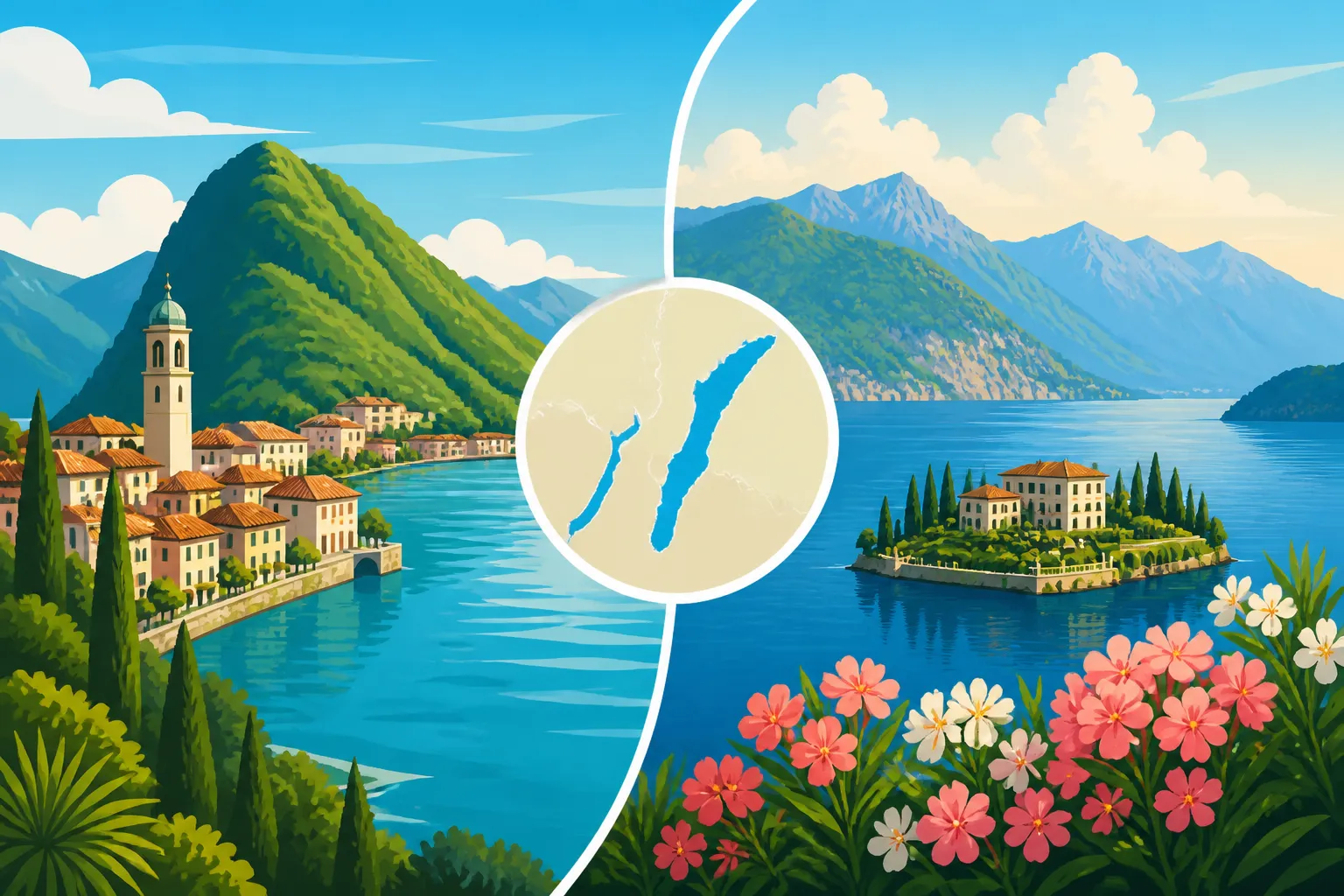
Lake Lugano, or Lago di Lugano as it's known locally, straddles the border between Switzerland and Italy, though its primary access points and the most prominent city, Lugano, are firmly in Ticino. It's renowned for its distinctly Mediterranean climate, steep forested slopes plunging into deep blue waters, and charming, vibrant towns that feel more Italian than Swiss. The city of Lugano itself, with its elegant arcades, palm-lined promenades, and bustling piazzas, serves as the economic and cultural heart of the region.
Lugano City and Lakeside Towns
The city of Lugano is often described as Switzerland's "Little Rio de Janeiro" due to its stunning setting between two small mountains, Monte Brè and Monte San Salvatore, which rise dramatically from the lake's shores. The views from the top of either mountain are simply breathtaking and easily accessible by funicular or cable car. Strolling along the Lungolago (lakeside promenade) is a pure delight, especially on a sunny day. You’ll see locals enjoying gelatos, tourists taking photos, and the occasional swan gliding gracefully on the water.
Beyond the main city, the lake is dotted with smaller, equally charming towns. Gandria, for instance, is a picturesque ancient fishing village clinging to the mountainside, reachable by boat or a scenic lakeside path. Its narrow, winding alleys and traditional stone houses feel like a step back in time. Morcote, often voted one of Switzerland's most beautiful villages, boasts stunning architecture, the famous Santa Maria del Sasso church, and an idyllic park. Each of these towns offers a quieter, more intimate experience of Lake Lugano, perfect for an afternoon wander or a leisurely meal by the water.
Activities and Attractions Around Lake Lugano
Lake Lugano is not just about pretty views; it offers a plethora of activities for every taste. For art lovers, the MASI (Museo d’arte della Svizzera italiana) in Lugano offers impressive collections. History buffs will appreciate the Museo delle Culture. If you're travelling with family, the Swissminiatur in Melide is an absolute must-see – a delightful miniature park showcasing Switzerland's most famous landmarks.
Outdoors, the options are endless. Hiking trails crisscross the surrounding mountains, offering varying degrees of difficulty and unparalleled panoramic views. Water sports are popular in summer, from paddleboarding and kayaking to swimming in designated lakeside lidos (beaches). Boat trips are perhaps the best way to truly appreciate the lake's beauty, whether it's a public ferry ride exploring different villages or a private rental. For something a bit more organized, you can often find guided tours or experience bookings on platforms like GetYourGuide that cater to various interests around the lake. Don't forget to indulge in the local Ticinese cuisine – a delightful fusion of Swiss quality and Italian passion.
Lake Maggiore: Grandeur and Island Charms
Spanning Switzerland and Italy, Lake Maggiore (Lago Maggiore) is the second-largest lake in Italy and the largest in Southern Switzerland. Its Swiss side, featuring the vibrant towns of Locarno and Ascona, offers a sophisticated yet relaxed atmosphere. The lake is known for its dramatic mountain setting, lush sub-tropical gardens, and the famous Borromean Islands on the Italian side, which are a must-visit.
Locarno, Ascona, and the Swiss Riviera
Locarno is the largest town on the Swiss side of Lake Maggiore, famous for its annual international film festival, which transforms the Piazza Grande into an open-air cinema. It has a beautiful old town with narrow cobblestone streets, charming shops, and restaurants. The Castello Visconteo, with its rich history, is also worth a visit. From Locarno, you can take a cable car up to the Madonna del Sasso pilgrimage church, offering stunning views of the city and lake, and continue even further up to Cardada Cimetta for hiking trails and breathtaking panoramas.
Just a short walk or boat ride from Locarno, Ascona is a gem often referred to as the "Pearl of Lake Maggiore." It's renowned for its mild climate, the picturesque lakeside promenade lined with cafes and art galleries, and its vibrant artistic community. Ascona's narrow streets, charming boutiques, and excellent restaurants make it a perfect place for a leisurely stroll and a delicious meal. Both towns embody a relaxed elegance, offering a blend of culture, shopping, and scenic beauty that makes you feel truly on holiday.
The Borromean Islands: A Cross-Border Delight
While primarily in Italy, no discussion of Lake Maggiore is complete without mentioning the captivating Borromean Islands. These islands – Isola Bella, Isola Madre, and Isola dei Pescatori – are easily accessible by public ferry from Locarno and Ascona (though they will be international trips, so be mindful of any specific customs rules, though generally seamless for EU/EFTA residents).
- Isola Bella is famous for its stunning Baroque palace and its elaborate Italianate gardens, which are a masterpiece of terracing and statuary. Walking through these gardens, with their white peacocks roaming freely, feels like stepping into a dream.
- Isola Madre is the largest of the islands, known for its magnificent botanical gardens, which house rare plants, exotic birds, and a beautiful 16th-century palace. It offers a more serene and natural experience.
- Isola dei Pescatori (Fishermen's Island) is the only one of the three that is permanently inhabited. It's a charming, rustic village with narrow alleys, traditional houses, and excellent fish restaurants serving fresh catches from the lake. It’s perfect for a stroll and a delightful lunch.
Visiting these islands makes for an unforgettable day trip and is highly recommended. Just check the ferry schedules and ensure you have enough time to explore each one adequately. Remember that if you have a European Health Insurance Card (EHIC) Equivalent for Swiss Residents, it's always wise to carry it for any cross-border travel, even for a day trip.
Getting There and Around the Southern Lakes
One of the great joys of living in Switzerland is the unparalleled public transport system. Reaching the Southern Lakes from anywhere in the country is surprisingly straightforward, and once you're there, getting around is a breeze without needing a car. However, some planning is definitely advised, especially if you're venturing across the border.
Public Transport Connectivity
Both Lugano and Locarno are well-connected by train to major Swiss cities. From Zurich, for example, the scenic journey typically takes around 2-2.5 hours to Lugano, often passing through the impressive Gotthard Base Tunnel, or slightly longer if you opt for the more scenic Gotthard Panorama route. From Geneva, expect a journey of about 4-5 hours. You can easily check schedules and book tickets via the SBB website or apps, or use international platforms like Omio which aggregates various transport options.
Once you arrive, local buses and boats become your best friends. The local bus networks in Lugano (TPL) and Locarno/Ascona (FART) are efficient, connecting you to all the main attractions and surrounding villages. More importantly, the lake boats are not just tourist attractions but vital modes of transport. They offer stunning perspectives of the landscape and are an enjoyable way to hop between lakeside towns. If you have a SBB Travelcards: Is the Generalabonnement (GA) Worth the CHF 4000+ Cost? or The Half-Fare Travelcard (Halbtax): The Must-Have Pass for Swiss Residents, remember these are often valid on many local bus and boat services, offering significant savings. Always double-check validity before you travel.
Navigating the Cross-Border Experience
When visiting Lake Lugano or Lake Maggiore, you'll inevitably encounter the Swiss-Italian border. For most EU/EFTA citizens and those with Swiss residence permits, crossing the border is usually seamless, often just a change in phone network provider. However, it’s always good practice to carry your passport or Swiss ID card, especially if you plan to venture deeper into Italy beyond the immediate lakeside towns.
For Lake Maggiore, if you plan to visit the Borromean Islands, you will officially be entering Italy. The ferries depart frequently from both the Swiss and Italian sides. There's usually no formal passport control for day trips, but being prepared is key. Be aware that currency will switch to Euros on the Italian side, though many establishments near the border might accept Swiss Francs at a less favourable exchange rate. It's often easier to carry some Euros or use a multi-currency card. For more extensive cross-border travel, our guide on Cross-Border Trips: Visiting Milan and Lake Como from Switzerland offers additional insights.
Activities and Experiences Tailored for Expats
As expats, our travel motivations sometimes differ from short-term tourists. We’re often looking for deeper cultural immersion, practical experiences, or just a change of pace from our everyday Swiss lives. The Southern Lakes offer just that, providing ample opportunities to engage with the local culture, explore nature, and indulge in some well-deserved relaxation.
Cultural Immersion and Culinary Delights
The Italian-speaking part of Switzerland is a culinary haven. Forget the Swiss German interpretations of pizza; here, you'll find authentic Italian flavors. Seek out a grotto (a traditional rustic restaurant, often nestled in the hills), where you can enjoy Ticinese specialties like polenta e brasato (polenta with braised beef), risotto ai funghi (mushroom risotto), and locally produced wines. The pace of dining is slower, designed for enjoyment and conversation. Don't shy away from trying the local aperitivo ritual before dinner, where a drink often comes with a generous spread of snacks.
Beyond food, engage with the local culture by visiting one of the many markets, such as the Saturday market in Lugano or the Tuesday market in Locarno, where you can buy local produce, cheeses, and crafts. Listen to the melodic Italian spoken around you, and perhaps try out a few phrases. You'll find the locals are generally warm and appreciative of any effort to speak their language. These experiences offer a genuine glimpse into the Ticinese way of life, distinct from what you might be accustomed to in Zurich or Geneva.
Outdoor Adventures and Relaxation
The Southern Lakes region is an outdoor playground, perfect for both adrenaline junkies and those seeking serene relaxation.
- Hiking: The hills and mountains surrounding both lakes offer countless hiking trails. From easy lakeside strolls to challenging alpine treks up Monte San Salvatore or Monte Tamaro (which also boasts a fantastic adventure park with a thrilling toboggan run), there's something for everyone.
- Water Sports: During the warmer months, the lakes come alive with swimming, paddleboarding, kayaking, and even sailing. Many towns have well-maintained lidos with swimming areas, changing rooms, and sometimes even restaurants.
- Gardens and Parks: Don't miss the chance to explore the region's stunning botanical gardens, like the Parco Ciani in Lugano, the Parco delle Camelie in Locarno, or the famous gardens on the Borromean Islands. These oases of exotic plants thrive in the mild climate and offer peaceful retreats.
- Boat Trips: A boat trip on either lake is practically mandatory. Whether it's a short ferry ride to a nearby village or a longer scenic cruise, the perspective from the water is incomparable. Many tour operators also offer specialized cruises, which you can often pre-book through platforms like GetYourGuide for convenience.
After a day of exploring, there are several wonderful spas and thermal baths in the region where you can unwind and rejuvenate, embracing the dolce far niente – the sweetness of doing nothing.
Planning Your Visit: Essential Tips for Expats
A successful trip to Lake Lugano or Lake Maggiore, particularly as an expat still navigating the quirks of Switzerland, often comes down to savvy planning. From where you lay your head to how you manage your budget, a few insider tips can make all the difference.
Accommodation Choices and Booking Strategies
The Southern Lakes offer a wide range of accommodation, from luxurious five-star hotels with lake views to charming boutique guesthouses and more budget-friendly options. In Lugano and Locarno, you'll find larger hotels, while Ascona and the smaller lakeside villages might offer more intimate settings.
When booking, consider what kind of experience you're after. Do you want to be in the heart of the action, close to restaurants and shops, or prefer a quieter retreat away from the hustle and bustle? Platforms like Booking.com are excellent resources for finding options and often provide reviews from other travellers, which can be invaluable. During peak season (summer and major festivals), accommodation can book up quickly and prices tend to be higher, so planning ahead is crucial. Don't forget to check if your chosen accommodation offers the Ticino Ticket, a fantastic benefit that provides free public transport and discounts on many attractions within the canton during your stay.
Budgeting for a Southern Swiss Escape
Let's be real: Switzerland isn't exactly known for its bargain prices. While the Southern Lakes offer a taste of Italy, the prices for accommodation, dining, and activities generally remain Swiss-level. Here's how to manage your budget:
- Accommodation: As mentioned, book in advance for better rates. Consider self-catering apartments if you plan a longer stay, as eating out three times a day can quickly add up.
- Food: Embrace picnics! Stock up on fresh bread, cheese, and local produce from a Coop or Migros, find a scenic spot by the lake, and enjoy. Eating at a grotto is a wonderful experience, but might be a bit pricier than a simple trattoria. Look for menu del giorno (daily menu) deals for lunch, which often offer excellent value.
- Transport: Maximize your SBB Half-Fare Travelcard (Halbtax) or GA. If you don't have one, consider a Saver Day Pass for long-distance train travel. Once there, walking and using the Ticino Ticket can keep local transport costs down.
- Activities: Many outdoor activities like hiking and swimming are free. Factor in costs for mountain railways, boat trips, and museum entries. Look for package deals or discounts, especially if you have the Ticino Ticket. For a more in-depth look at managing your expenses, our article on Budget Travel in Switzerland: Seeing the Country Without Overspending might be useful.
Language and Local Etiquette
While Ticino is Italian-speaking, many people in the main tourist areas (especially in Lugano and Locarno) speak German, French, and English, so don't fret if your Italian is rusty or non-existent. However, making an effort with a few basic Italian phrases like Buongiorno (Good day), Grazie (Thank you), and Per favore (Please) will always be appreciated.
Like the rest of Switzerland, punctuality is generally valued, though perhaps slightly less rigid than in the German-speaking cantons. Sundays are traditionally quiet, with most shops closed, so plan your grocery shopping accordingly. Embrace the relaxed pace, enjoy the sunshine, and immerse yourself in this unique blend of Swiss efficiency and Italian charm. For a broader understanding of Swiss social norms, check out Swiss Customs and Etiquette: Social Norms Every Newcomer Should Know.
| Feature | Lake Lugano | Lake Maggiore |
|---|---|---|
| Main Cities/Towns | Lugano, Gandria, Morcote, Melide | Locarno, Ascona, Brissago (Swiss side) |
| Primary Language | Italian (Canton Ticino) | Italian (Canton Ticino for Swiss side) |
| Vibe | Bustling, Mediterranean, urban elegance | Sophisticated, artistic, grander landscapes |
| Key Attractions | Monte San Salvatore, Monte Brè, Parco Ciani, Swissminiatur | Madonna del Sasso, Ascona Old Town, Borromean Islands (Italy) |
| Cross-Border Access | Mostly Swiss, but southern parts extend into Italy | Swiss side and extensive Italian side, easy ferry to Borromean Islands |
| Accessibility by SBB | Excellent direct connections to Lugano | Excellent direct connections to Locarno |
| Cuisine Highlights | Ticinese specialties, authentic Italian | Ticinese specialties, fresh lake fish |
| Best For | City breaks, lively atmosphere, short hikes | Artistic retreats, garden visits, island hopping |
Disclaimer
Please note that while I strive to provide accurate and up-to-date information, details such as opening hours, prices, and specific regulations can change. Always verify information with official sources or local providers before making plans. Travel advice and recommendations are based on general expat experiences and should not be taken as legal or financial counsel.