Cheapest Months to Ski in Switzerland
Oh, the sheer joy of carving down pristine Swiss slopes, feeling that crisp mountain air on your face… it's truly a dream, isn't it? But then the reality hits: a day on the slopes in Switzerland can feel like you're buying a small car. Many expats, myself included, arrive here with visions of endless, affordable winter sports, only to be shell-shocked by the prices. The good news? You absolutely can ski in Switzerland without entirely emptying your savings account. The trick lies in knowing when to go, and that's exactly what we're going to dive into today – helping you pinpoint the cheapest months to hit those iconic Swiss pistes.
Understanding the Swiss Ski Season Landscape
Before we talk about saving money, let's get a handle on how the Swiss ski season generally unfolds. It’s not just one continuous period; it has distinct phases, each with its own pricing structure for lift passes, accommodations, and even ski lessons. Understanding these cycles is your first step to being a savvy, budget-conscious skier.
Peak Season: When Everyone Wants to Be There
The absolute peak of the Swiss ski season typically runs from late December through early January, especially over Christmas and New Year's, and then again during the main European school holidays in February. During these weeks, resorts are bustling, the atmosphere is festive, and every hotel, restaurant, and ski rental shop knows they can charge a premium. This is when the demand is highest, and availability is tight. Think of it like trying to book a hotel in Paris during Fashion Week – you’re going to pay top franc.
For example, imagine a family from Zurich or Geneva deciding to spend their Christmas break in Zermatt. They’re planning weeks, if not months, in advance, and they're willing to pay for that magical, snowy holiday experience. This is when lift passes are at their highest daily rates, accommodation requires minimum stays and hefty price tags, and even the queues for the gondolas are longer. If you’re trying to stretch your budget, this is definitely the time to avoid. The ambiance is wonderful, no doubt, but your wallet will feel a significant strain.
Shoulder Seasons: A Glimmer of Hope
Just outside the peak times, you’ll find what are known as the "shoulder seasons." These include the weeks immediately preceding Christmas, the periods between New Year's and mid-February, and then the weeks after the February school holidays. While still busy and generally great for snow, prices tend to ease slightly from their absolute peak. You might find a few more deals on chalets or apartments, and daily lift pass prices might drop a fraction.
However, even in the shoulder season, you’re still likely to encounter higher prices than you might hope for. It's a bit like driving during rush hour – it's not as bad as a complete standstill, but you're definitely not cruising. For expats trying to balance enjoying the Swiss lifestyle with managing expenses, even the shoulder season often requires a careful look at the budget. You might save a few hundred francs over a week, but it won't be a dramatic difference compared to the true off-peak periods we'll discuss next.
The Sweet Spot for Savings: January and March/April
Now, for the really good stuff! If you're looking to minimize your costs, there are two distinct windows that consistently offer better value for skiing in Switzerland: the mid-to-late January period and then again from mid-March through the end of the season in April. These are your best bets for experiencing those legendary Swiss slopes without suffering too much financial vertigo.
Mid-to-Late January: The Post-Holiday Lull
After the Christmas and New Year's revelry dies down, and before the main European school holidays kick in (which often fall in February), there's a precious window in mid-to-late January. This is typically from the second week of January until roughly the end of the month. During this period, most people have returned to work and school, meaning the slopes are noticeably quieter, and critically, prices drop significantly.
You'll find that many resorts, especially those popular with families, see a substantial dip in demand. This translates directly into more affordable accommodation, including chalets, hotels, and even apartments on platforms like Booking.com. You might secure deals that would be unthinkable just two weeks prior. Lift passes, while still Swiss-priced, will often be at their lowest seasonal rates. Moreover, ski schools sometimes offer promotions during this lull, and you'll find fewer queues, giving you more actual skiing time for your money. The snow conditions in January are usually excellent, with fresh powder often falling, making it a truly fantastic time to ski if you can manage it. Think crisp, cold air, beautiful sunshine, and wide-open pistes. It’s a bit of a local secret, often passed around by seasoned expats and Swiss residents who know how to avoid the crowds and costs.
Mid-March to April: Spring Skiing Bargains
The other prime time for budget-friendly skiing is from mid-March right through to the end of the season, which for high-altitude resorts can extend well into April or even early May. This is the era of "spring skiing." While some lower-lying resorts might start closing their doors, the higher resorts like Zermatt, Saas-Fee, Verbier, or Flims Laax often boast excellent conditions, especially in the mornings, and significantly lower prices.
The advantages here are numerous. The days are longer, the sun is stronger (don't forget your high-factor sunscreen!), and the atmosphere is wonderfully relaxed. It's less about deep powder and more about perfectly groomed pistes that soften up by midday, creating enjoyable "firn" snow. Crucially, prices for everything – lift passes, accommodation, and even food at mountain restaurants – tend to be much more reasonable. You can often snag fantastic package deals. Plus, with the warmer temperatures, you might even enjoy an outdoor lunch in a t-shirt, something unheard of in the depths of winter! For families, it’s a brilliant time as the conditions are often more forgiving for beginners, and the less harsh weather makes for a more pleasant overall experience. If you’re flexible and don't mind slightly softer snow in the afternoons, this period offers incredible value. To maximize savings, consider resorts that are known for their extended seasons, ensuring reliable snow cover even late in the spring.
| Cost Factor | Peak Season (Dec 20 – Jan 7 / Feb) | Mid-Jan & Mid-March to April | Notes |
|---|---|---|---|
| Lift Pass (Daily) | CHF 80-120+ | CHF 60-95 | Prices can vary wildly by resort and demand. Booking online in advance often saves more. |
| Accommodation (Nightly) | CHF 200-500+ (Mid-range hotel) | CHF 120-300 | Look for apartments/chalets, especially via Booking.com, for better group value. |
| Ski Lessons (Group Full Day) | CHF 100-150 | CHF 80-120 | Availability is higher in off-peak. Check for multi-day package discounts. |
| Ski Rental (Daily) | CHF 50-70 | CHF 40-60 | Renting for multiple days or a full week often provides significant savings. |
| Restaurant Meal (Mountain) | CHF 30-50+ (Main course) | CHF 25-45 | Still expensive, but menus might be slightly adjusted. Packed lunches are your best friend. |
Beyond the Calendar: Smart Strategies for Saving Money on Your Ski Trip
Knowing the cheapest months is a huge win, but there are even more layers to peeling back those Swiss ski costs. As an expat who’s learned the hard way (and sometimes the frugal way!), here are some tried-and-true tactics to make your ski budget go further, no matter when you decide to hit the slopes.
Choosing the Right Resort and Accommodation Wisely
Not all Swiss ski resorts are created equal when it comes to price. While the big names like Zermatt, Verbier, and St. Moritz offer incredible experiences, they also come with equally incredible price tags. For budget-conscious skiing, look towards lesser-known, often more family-oriented resorts. Think about places like Lenzerheide, Arosa, Engelberg, or some of the smaller, charming spots in Valais or Vaud. These resorts often have excellent infrastructure, beautiful pistes, but without the premium pricing of their superstar neighbors. You might even find that some offer better value for money through ski pass deals like the Magic Pass vs Individual Ski Resort Passes in Switzerland.
When it comes to accommodation, booking well in advance, even for the cheaper months, is always a good strategy. Utilize platforms like Booking.com to compare prices for hotels, apartments, and chalets. Consider staying in a village just outside the main resort area, which can significantly cut down on lodging costs. Often, these smaller towns are well-connected by public transport to the main ski lifts. For example, if you’re looking for Beginner-Friendly Ski Resorts Near Zurich, you might find better deals in a slightly further-out village that's still within easy commuting distance. Hostels or budget guesthouses can also be fantastic options, especially if you're traveling solo or with a small group of friends.
Savvy Travel and Gear Management
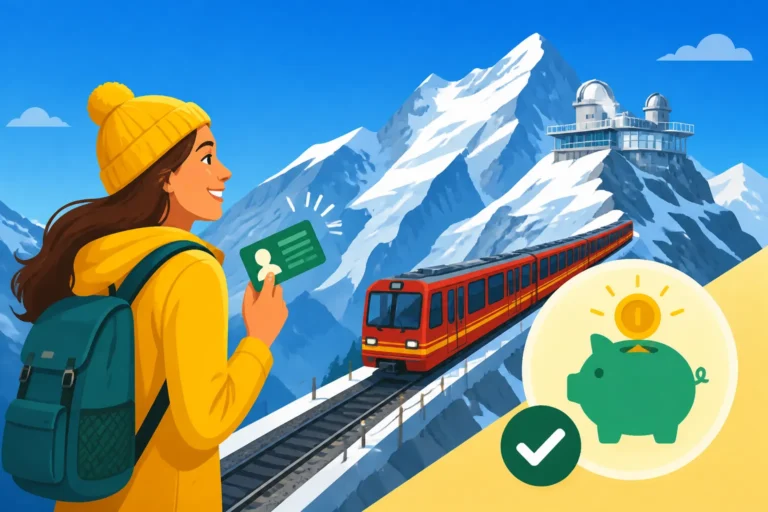
The cost of getting to the resort and equipping yourself can quickly add up. If you're relying on public transport, which is highly recommended in Switzerland (it's simply fantastic!), definitely look into options for Reaching Ski Resorts by Train and Bus Without a Car. Use Omio to compare train and bus routes and snag those "Supersaver" tickets, which can offer significant discounts if booked far enough in advance. Traveling during off-peak hours (mid-week, outside rush hour) can also sometimes yield cheaper fares. If you have an SBB Half-Fare Card, that's already a significant saving!
For gear, renting in Switzerland can be expensive, but it’s often more convenient than lugging your own. Check out our guide on Renting Ski Equipment in Switzerland: Costs and Where to Book for detailed tips. If you're skiing for more than a few days, consider renting from a sports shop in a larger city before you get to the resort – prices can sometimes be lower. Alternatively, if you plan to ski regularly, buying second-hand equipment at a local Brocki (thrift store) or online platforms can be a very economical long-term solution. Don't forget that things like helmets and goggles are often cheaper to buy than rent repeatedly.
Maximizing Your Ski Day and Avoiding Hidden Costs
Once you’re on the slopes, there are still ways to be thrifty. First and foremost, avoid eating every meal at mountain restaurants. While the views are spectacular, the prices are equally so. Pack your own sandwiches, snacks, and drinks. Most resorts have picnic areas or benches where you can enjoy your lunch with a million-dollar view for a fraction of the cost. A flask of hot tea or chocolate can be a lifesaver (and a budget-saver!).
If you're looking for lessons, group lessons are always more cost-effective than private ones. Check out options on GetYourGuide or directly with the resort's ski school, and look for packages that combine lift passes and lessons if available. Our guide on Ski Lessons in Switzerland: Group vs Private and Prices has more detailed information. Also, consider the duration of your trip. Sometimes, a two-day trip can be disproportionately more expensive than a three-day or even four-day trip when you factor in lift pass and accommodation bundles. Always compare the multi-day pass prices, as the per-day cost often decreases with longer passes.
Lesser-Known Gems and Family-Friendly Finds for Value
While the big names dominate the postcards, Switzerland is dotted with countless smaller, charming, and often much more affordable ski areas that expats often overlook. These are the places where you can truly get more bang for your buck, especially during those sweet spot months of January and March/April.
Canton Valais: Beyond Zermatt and Verbier
Everyone knows Zermatt and Verbier, but Valais is a huge canton with dozens of other fantastic ski resorts that are far more wallet-friendly. Think about places like Grächen, Arolla, or Anzère. These villages offer excellent skiing, often with stunning views, but at a fraction of the cost. Grächen, for example, is incredibly family-friendly, with specific zones for kids and well-maintained slopes. You’ll find that accommodation here is more geared towards local Swiss families, meaning less exorbitant prices. Lift passes are also generally lower, making it a great option for an extended stay without breaking the bank. The atmosphere is often more authentic and laid-back, providing a different, but equally enjoyable, Swiss experience.
Access can sometimes be a bit more challenging than the major hubs, requiring an extra bus connection after the train, but the savings are usually well worth the minor inconvenience. These resorts also tend to have a strong local culture, offering a different flavor than the more international, glitzy spots. Before heading out, always check their specific websites for deals, as many smaller resorts offer early-bird discounts or off-peak packages. These hidden gems are perfect if you're looking for Affordable Ski Areas in Switzerland for Locals on a Budget.
Eastern Switzerland: Graubünden's Other Mountains and Appenzell
Graubünden is famous for Davos and St. Moritz, but it's also home to some incredibly beautiful and more affordable areas. Consider resorts like Savognin or Obersaxen Mundaun. These areas offer vast, well-groomed pistes, often with fewer crowds than the larger resorts. They’re popular with Swiss internal tourists, which means prices tend to be more stable and slightly lower. The ski schools are excellent, and the atmosphere is welcoming.
Further north, the Appenzellerland region, while smaller in scale, offers some charming and very budget-friendly options, particularly for beginners or those seeking a relaxed day on the slopes. Places like Ebenalp or Kronberg might not have the vertical drop of a Verbier, but they provide lovely, accessible skiing, often paired with traditional Swiss hospitality and significantly lower prices. These are excellent choices for a spontaneous day trip, especially when looking for Beginner-Friendly Ski Resorts Near Zurich or simply wanting a change of scenery from the bigger names. You might even find opportunities for Snowshoeing and Winter Hiking in Switzerland for Non-Skiers to round out your winter adventure!
Disclaimer
Please remember that while I strive to provide accurate and up-to-date information based on my experiences and available data, prices and regulations in Switzerland can change rapidly. Always double-check current prices, booking conditions, and any specific requirements directly with service providers, resorts, or official websites before making any travel or financial commitments. This guide is for informational purposes only and does not constitute financial or legal advice.