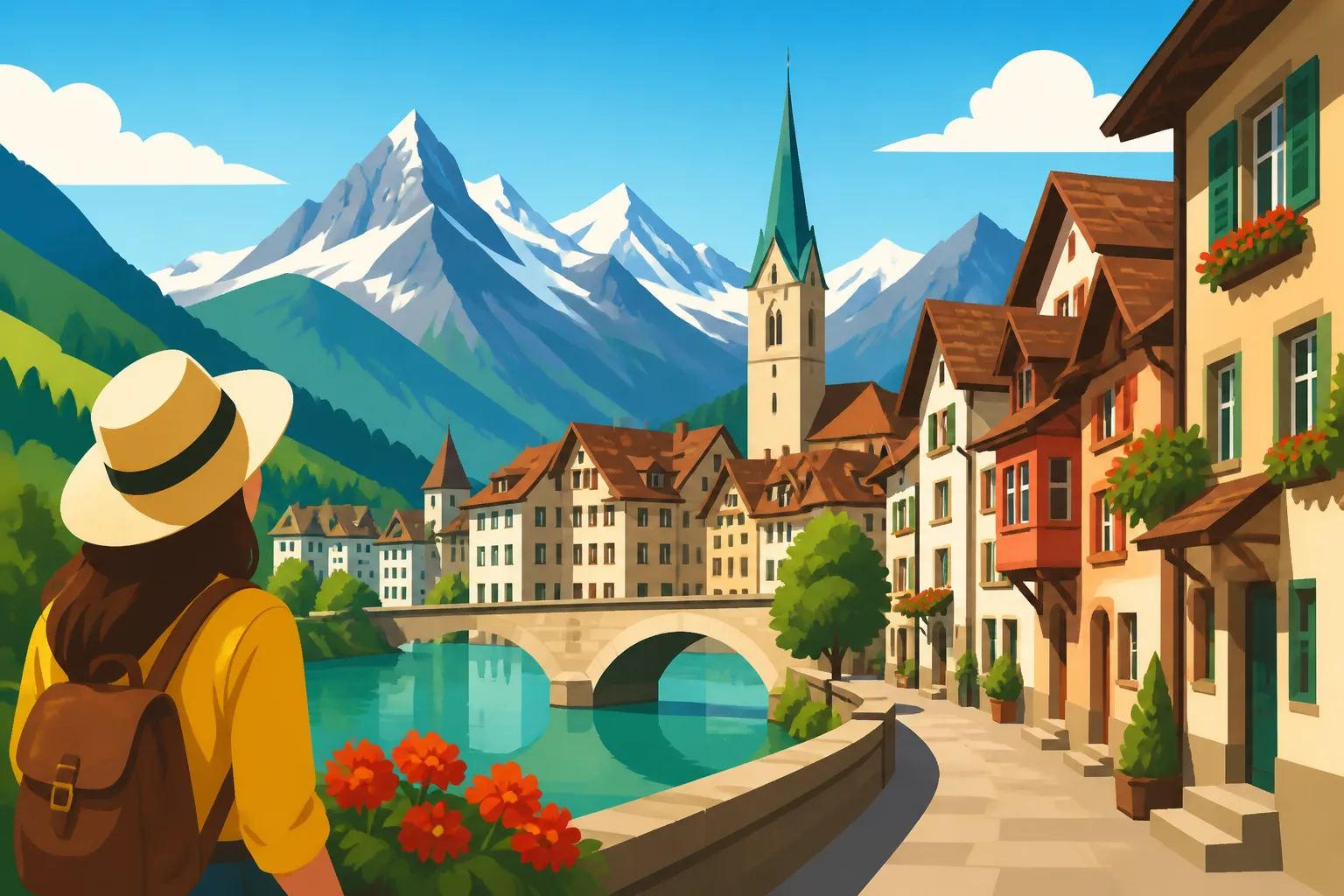
Historic Old Towns to Explore in Switzerland
It's easy to fall into the trap of only seeing Switzerland through the lens of its breathtaking mountains and serene lakes. And don't get me wrong, those iconic vistas are absolutely worth every single postcard. But for us expats, once you've settled in and navigated the initial maze of permits and banks, there's a deeper, richer layer of Switzerland waiting to be discovered: its incredible, utterly charming historic old towns. This guide is all about taking you off the well-trodden paths (or sometimes, right into the heart of them, but with a new perspective!) to truly experience the stories etched into these ancient cobblestones.
Why Switzerland's Old Towns Are More Than Just Pretty Postcards
When you first arrive, Switzerland can feel so modern, so efficient, sometimes even a little… sterile. But step into one of its Altstädte (old towns), and you're instantly transported. It's not just about looking at old buildings; it's about feeling the centuries of history under your feet, understanding how people lived, worked, and built lives in a way that resonates with your own journey of settling here. These aren't mere museum pieces; they're vibrant, beating hearts of their communities, often a delightful (and sometimes frustrating, let's be honest!) mix of ancient charm and contemporary Swiss life.
A Tapestry of History and Architecture
Each historic old town in Switzerland is a living textbook of European history. You'll find echoes of Roman settlements, the strategic strongholds of medieval knights, the sober elegance of Reformation-era guild houses, and the more ornate flourishes of Baroque influence. It's a truly fascinating architectural tapestry.
Take, for instance, the evolution of a typical Swiss town square. What might have started as a simple marketplace in the Roman era, then fortified with walls and towers in the Middle Ages, later saw grander municipal buildings and ornate fountains added during periods of prosperity. The houses themselves tell stories; you'll often see facades adorned with intricate frescoes depicting legends, coats of arms, or scenes from daily life centuries ago. These weren't just for decoration; they were often status symbols or ways to identify trades in a time before house numbers were common.
The cobblestone streets, though tough on heels, are authentic to the core, worn smooth by generations of footsteps, horse hooves, and now, your own adventurous strides. You'll notice the distinctive architectural nuances that reflect Switzerland's unique position at the crossroads of Europe. In the German-speaking cantons, you'll see more timber-framed houses and grand, solid stone structures. In the French-speaking Romandie, there's a delicate elegance, often with narrower streets and more subtle ornamentation. And down in Ticino, the Italian influence shines through with sun-drenched piazzas and buildings in warm Mediterranean hues. It's a constant reminder that this small country is a melting pot, and understanding these regional differences is key to appreciating Switzerland's Four Language Regions: Culture, Customs, and Travel.
Beyond the Touristic Facade: Living History
What often surprises newcomers is that these old towns aren't just preserved historical sites for tourists to gawk at; they are dynamic, lived-in spaces. People still reside in those centuries-old apartments, run modern businesses out of ancient storefronts, and their children attend schools just steps away from medieval city walls. This is where the true magic lies for us expats – you get to experience the authentic flow of Swiss life interwoven with its rich past.
Wander down a side alley, and you might stumble upon a tiny, family-run bakery that's been making the same artisanal bread for generations, its scent mingling with the crisp Alpine air. You'll find independent boutiques selling handcrafted goods, quiet cafes where locals sip their morning coffee, and charming little squares hosting weekly farmers' markets. This isn't just about ticking off landmarks; it's about soaking in the atmosphere, perhaps grabbing a coffee at a cafe that's existed for a century, or finding a unique souvenir from a shop that's dodged the big chains.
It’s about feeling a sense of connection to a place that has seen so much history, yet continues to thrive. While tour operators like GetYourGuide offer fantastic structured walks that reveal hidden secrets and historical anecdotes, there's also immense joy in simply letting yourself get lost. Just drift, explore the narrow lanes, peek into courtyards, and discover your own little slice of Swiss history. It's in these moments that you truly start to feel less like a tourist and more like a local, understanding the rhythm of life here.
Must-Visit Historic Old Towns and Their Unique Charms
Now, let's get down to some specifics. Switzerland is absolutely brimming with beautiful Altstädte, and picking just a few is tough! But these are some of the standouts that offer a fantastic blend of history, charm, and a truly Swiss experience.
Bern: The UNESCO Capital of Arcades and Bears
Ah, Bern. It's not just the federal capital; it's a UNESCO World Heritage site, and for good reason. The entire Old Town is practically an open-air museum, nestled gracefully in a loop of the turquoise Aare River. As an expat, I always recommend Bern as one of the first old towns to explore because it perfectly encapsulates that unique Swiss blend of grand history and everyday charm.
What strikes you first are the medieval arcades, known as Lauben, which stretch for kilometers. These covered walkways are a shopper's paradise, offering shelter from both sun and rain, housing a delightful mix of traditional shops, modern boutiques, and cozy cafes. Imagine strolling along, protected from the elements, pausing to admire a medieval fountain with its colorful statue, and then ducking into a small shop that sells local crafts.
The iconic Zytglogge (Clock Tower) is a must-see. Every hour, a charming mechanical show plays out, complete with dancing figures, making it a focal point for locals and visitors alike. Just a short walk from there, you’ll find the impressive Bundeshaus, Switzerland’s Parliament Building, which perfectly blends into the old town architecture. And of course, you can't visit Bern without seeing its namesake, the bears, enjoying their spacious habitat in the BärenPark right by the river. It’s a wonderful example of a city that cherishes its past while embracing the present. Getting lost in Bern's winding streets is a truly enriching experience for anyone wanting to delve into the essence of Swiss urban history. For a broader overview of the capital, check out Swiss Cities Guide: Zurich, Geneva, Basel, Bern, and Beyond. When considering accommodation for your trip, remember to check platforms like Booking.com for options right in the heart of the old town.
Lucerne: Where Lake Meets Mountains and Medieval Bridges
Lucerne, or Luzern, often feels like a postcard brought to life. Nestled on the shores of Lake Lucerne and framed by majestic mountains like Pilatus and Rigi, its old town is incredibly picturesque. It's another absolute gem, and a fantastic place for a day trip or a longer stay.
The star attraction, without a doubt, is the Chapel Bridge (Kapellbrücke), Europe's oldest surviving wooden covered bridge. Walking across it, admiring the 17th-century interior paintings depicting Lucerne’s history and patron saints, is an experience you won't forget. Right next to it stands the Water Tower, a former prison and torture chamber, adding another layer of intrigue.
Beyond the bridge, Lucerne's Old Town is a labyrinth of charming squares, like Weinmarkt and Hirschenplatz, adorned with beautifully painted historic facades. Many of these paintings illustrate the stories of the buildings or the trades once carried out within them. Don't miss the Museggmauer, the intact city wall with its nine towers, some of which you can even climb for panoramic views of the city, lake, and mountains. The combination of its stunning natural setting and its impeccably preserved medieval core makes Lucerne truly special. You can learn more about making the most of your visit in Exploring Lucerne: Old Town, Lake Cruises, and Mount Excursions.
Stein am Rhein: A Fairy Tale on the Rhine
If you're looking for a fairy-tale experience, look no further than Stein am Rhein. This small, incredibly well-preserved medieval town in northeastern Switzerland, where Lake Constance empties into the Rhine, is famous for its vibrantly frescoed buildings. Honestly, photos barely do it justice; you have to see it to believe it.
The main square, Rathausplatz, is the absolute highlight, surrounded by houses with facades painted with incredible detail, depicting scenes from history, mythology, or daily life. It feels like stepping onto a movie set, but it’s real, and people live there! The narrow cobbled streets winding away from the square are equally charming, filled with small artisan shops and quaint eateries.
Overlooking the town is Hohenklingen Castle, which offers magnificent views and a lovely restaurant. A walk up to the castle provides a fantastic perspective on the town and the shimmering river. Stein am Rhein is a truly unique place that embodies the quaint charm of medieval Europe with an artistic flair. It’s easily combined with a visit to the Rhine Falls, as mentioned in Day Trips from Zurich: Rhine Falls, Rapperswil, and Lucerne.
Gruyères: The Medieval Home of Cheese
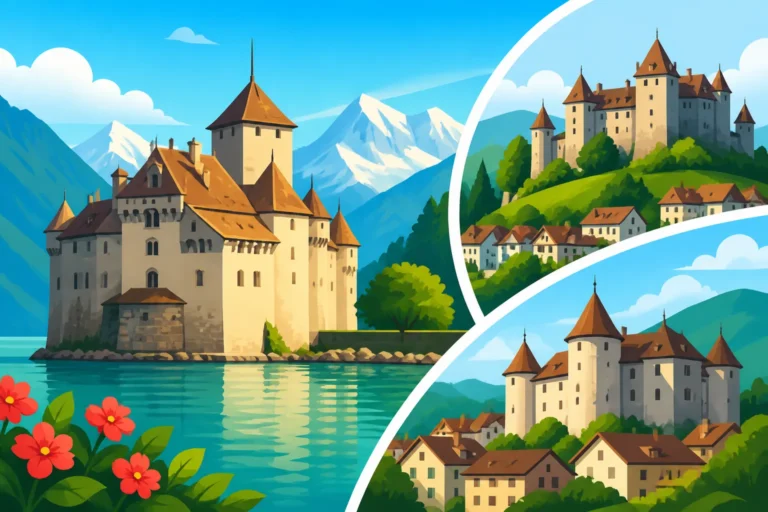
Switching over to the French-speaking region, the village of Gruyères is a name most Swiss residents know for its world-famous cheese, but the village itself is a captivating medieval marvel. Perched on a hill with a dramatic castle at its peak, the entire settlement is car-free and feels completely untouched by time.
Walking through the single main street of Gruyères, you’ll be surrounded by charming shops selling local delicacies, traditional restaurants serving up fondue and raclette, and the distinct aroma of cheese. The imposing Château de Gruyères, a magnificent castle dating back to the 13th century, is well worth exploring, offering insights into the counts who once ruled the region and providing breathtaking views of the surrounding Fribourg countryside.
For a quirky contrast, just a short walk from the medieval charm, you’ll find the HR Giger Museum, dedicated to the surrealist artist who designed the creature in the Alien films. It’s an unexpected but fascinating juxtaposition of ancient and avant-garde. Gruyères is a delightful escape, offering a taste of authentic Swiss history, culture, and, of course, delicious cheese. You can learn more about planning a trip to this region in Day Trips from Geneva: Montreux, Gruyères, and the Lavaux Vineyards.
Practical Tips for Exploring Swiss Old Towns
Exploring these historic gems should be an enjoyable experience, not another bureaucratic hurdle! After years of living here, I’ve picked up a few pointers that can make your visits smoother and more rewarding.
Getting There and Getting Around
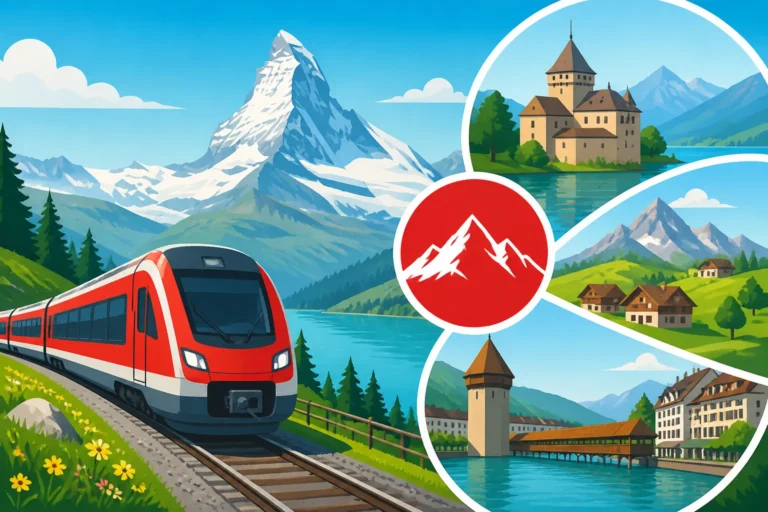
One of the great joys of living in Switzerland is its unparalleled public transport system. Forget the stress of parking in narrow, ancient streets – the train will get you there. Swiss Federal Railways (SBB) is incredibly efficient and connects even the smallest towns. I swear by it. You can plan your entire journey, from home to the heart of the old town, often with just one or two changes. Platforms like Omio are great for checking schedules and even booking tickets if you don't have a travel pass.
Once you arrive, most old towns are entirely pedestrianized or have very limited vehicle access, which is fantastic for leisurely exploration. However, those charming cobblestone streets are not kind to flimsy footwear. Do yourself a favor and wear comfortable, sturdy shoes – your feet will thank you after a full day of wandering. If you're planning multiple trips across Switzerland, seriously consider getting The Half-Fare Travelcard (Halbtax): The Must-Have Pass for Swiss Residents; it pays for itself quickly, making those spontaneous old town adventures much more affordable. For a deeper dive into traversing the country, make sure to read Switzerland by Train: The SBB Network, Scenic Routes, and Day Trips.
Embracing the Local Vibe and Avoiding Tourist Traps
It's easy to stick to the main thoroughfares, but the real charm of Swiss old towns often lies in their hidden corners. Dare to venture down those narrow, unmarked alleys. You might discover a tiny artisan workshop, a local's favorite café, or a picturesque courtyard you wouldn't otherwise see. These are the places that offer an authentic glimpse into local life, far from the mass-produced souvenirs.
When it comes to food, while the main squares might have tempting restaurants, try to find a smaller, less prominent eatery for a more authentic and often more affordable meal. Or, even better, grab some delicious local bread, cheese, and cured meats from a bakery or a grocery store like Coop or Migros (check out Grocery Shopping: Coop, Migros, Aldi, Lidl, and Denner Compared for options), find a quiet spot by a fountain or a river, and enjoy your own little picnic. It's a wonderful way to soak in the atmosphere and feel more connected to the place.
Remember that Swiss etiquette applies even in these charming settings. Respect quiet hours, especially on Sundays, when many old towns can feel eerily peaceful. That's part of the charm, but also a cultural norm to be aware of, as discussed in Swiss Customs and Etiquette: Social Norms Every Newcomer Should Know. Don't be afraid to try out a few basic German, French, or Italian phrases; a simple "Grüezi," "Bonjour," or "Buongiorno" goes a long way.
Planning Your Visit: Timing and What to Expect
The best time to visit really depends on what you're looking for. In summer, the old towns are vibrant with outdoor cafes, street performers, and often open-air markets. Spring brings blossoms and a pleasant mildness, while autumn offers stunning foliage, especially in towns nestled by mountains or rivers. Winter, particularly during Advent, transforms many old towns into magical scenes with festive lights and Swiss Christmas Markets: The Best in Zurich, Basel, and Montreux, creating a truly enchanting atmosphere. For a full picture of annual events, consult Swiss Festivals and Traditions: A Year-Round Cultural Calendar.
Be prepared for crowds, especially on weekends or during major festivals. If you prefer a quieter experience, try visiting on a weekday morning. Keep in mind that many smaller shops and attractions might be closed on Sundays, so plan your retail therapy for another day. You can get an idea of typical opening hours by checking What Shops Are Open on Sundays in Switzerland?.
If you're planning an overnight stay, especially in popular towns like Lucerne or Bern, booking your accommodation in advance, particularly through sites like Booking.com, is highly recommended to secure the best spots and prices. Remember that while Switzerland can be expensive, exploring its old towns can be done on various budgets. For tips on managing costs, take a look at Budget Travel in Switzerland: Seeing the Country Without Overspending. Don't forget to indulge in some local cuisine while you're there; exploring Swiss Food and Drink Culture: Regional Specialties and Dining Etiquette can enhance your experience.
| Old Town | Main Language | Key Feature | Best For | Approximate Train Time from Zurich (one-way) |
|---|---|---|---|---|
| Bern | German | UNESCO arcades, Zytglogge, Bear Park | History buffs, shopping, river walks | 1h 15m |
| Lucerne | German | Chapel Bridge, painted facades, lake views | Romantic strolls, mountain excursions | 45-50m |
| Stein am Rhein | German | Frescoed houses, riverside charm | Fairytale aesthetics, scenic walks | 1h 05m |
| Gruyères | French | Medieval castle, cheese production | Foodies, castle lovers, unique art | 2h 20m (via Fribourg/Bulle) |
| Fribourg | French/German | Gothic cathedral, medieval bridges, bi-lingual | Medieval architecture, cultural exploration | 1h 30m |
| Solothurn | German | Baroque architecture, St. Ursen Cathedral | Baroque art, "number 11" fascination | 40-50m |
(Please note: Train times are approximate and can vary based on specific connections and time of day.)
Disclaimer
The information provided in this guide is intended for general informational purposes only and is based on typical expat experiences and publicly available data as of 2026. While we strive to keep the content accurate and up-to-date, circumstances, regulations, and availability can change rapidly in Switzerland. We strongly recommend verifying all details, especially concerning travel schedules, opening hours, and specific cultural norms, with official sources or local providers before making any decisions or plans. This guide does not constitute professional advice, and individual experiences may vary.