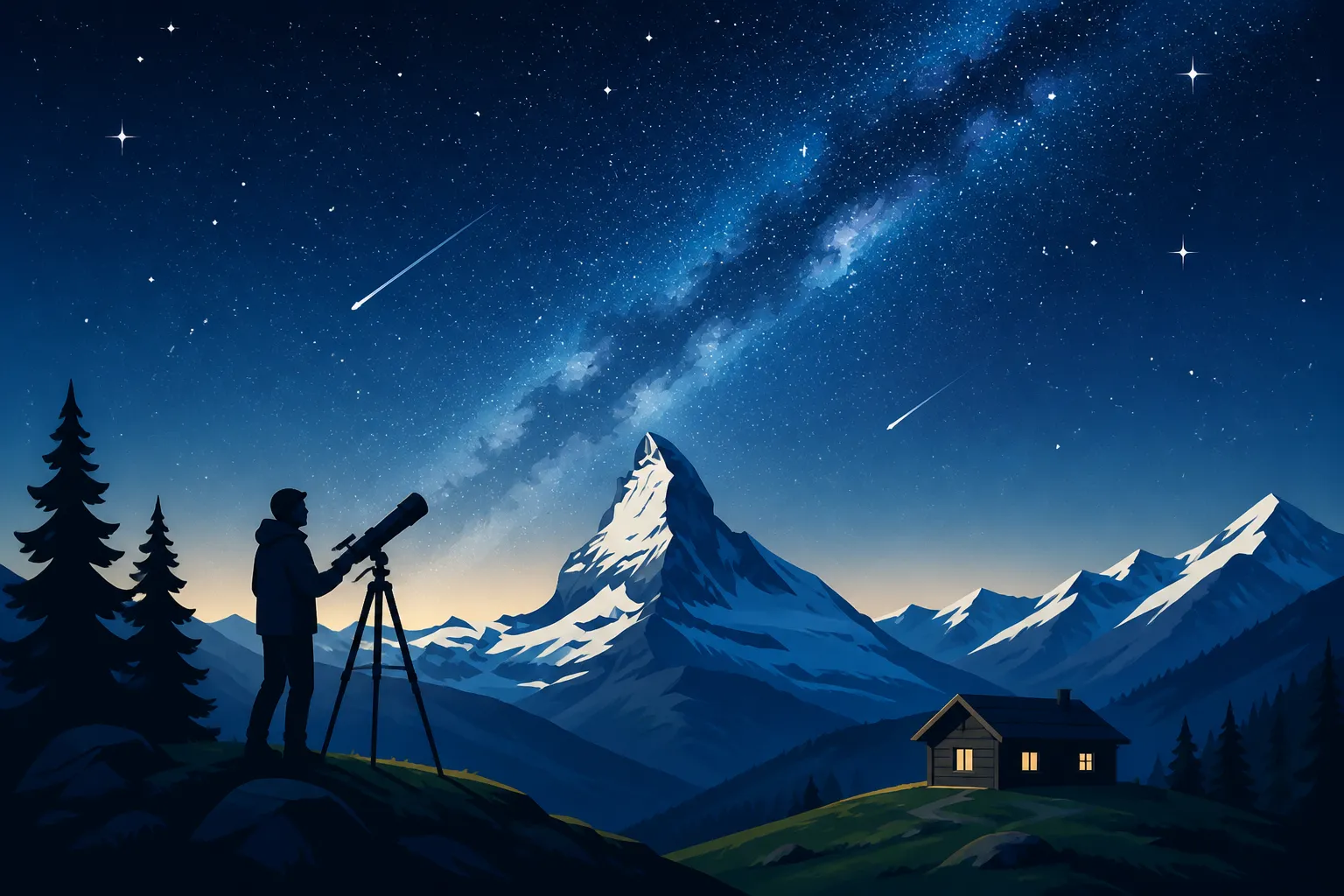
Stargazing and Dark-Sky Spots in Switzerland
You've just moved to Switzerland, and after a long week of navigating bureaucracy, Swiss German, and the cost of groceries, you finally look up at night. What you expect are dazzling, star-filled skies, given all those pristine mountains, right? Only to find… well, a lot of urban glow. It's a bit of a letdown, I know. City life, even in beautiful Swiss cities, means light pollution is a real thing. But don't despair! This guide is here to tell you that incredible stargazing is absolutely possible in Switzerland, if you know where to look. We'll dive into the best dark-sky spots, how to get there, and what you need to prepare for an unforgettable celestial experience.
Why Switzerland is a Prime Stargazing Destination (and Its Challenges)
Switzerland often conjures images of majestic mountains, crystal-clear lakes, and fresh alpine air. And while the natural beauty is undeniable, many expats quickly realize that not every night sky is a pristine canvas of stars. However, with a bit of planning and venturing into the right areas, you'll discover why it truly is a hidden gem for astronomers and casual stargazers alike.
The Alpine Advantage and Clear Air
The sheer altitude of many Swiss regions is a game-changer for stargazing. When you're thousands of meters above sea level, you're literally above a significant portion of the Earth's atmosphere. This means less atmospheric interference, fewer air pollutants, and generally drier air, all of which contribute to clearer, sharper views of the night sky. Think about those crisp, clear winter nights or the high summer evenings in the Valais or Engadine – the air feels different, doesn't it? That's what your eyes (and binoculars!) will appreciate.
Beyond just altitude, Switzerland's commitment to environmental quality means that even in lower mountain regions, the air quality can be surprisingly good compared to other densely populated European countries. This translates to less haze and particulate matter scattering light, letting more photons from distant stars reach your eager eyes. It's not just about what you see but also about the clarity of that vision, and the Alps provide a fantastic natural observatory. You might even feel like you're in a completely different world compared to your daily life in one of the bustling Swiss cities.
Light Pollution Reality: Where the Glow Lingers
Now, let's be realistic. While Switzerland boasts incredible natural landscapes, it's also a highly developed country with a dense population in certain areas. This means light pollution is a very real challenge, particularly in the Swiss plateau, which stretches from Lake Geneva to Lake Constance and is home to major urban centers like Zurich, Bern, Basel, and Geneva. Trying to spot nebulae from a park in Zurich is, frankly, going to be a futile exercise. The glow from streetlights, office buildings, and residential areas can wash out all but the brightest stars, making those awe-inspiring Milky Way views impossible without escaping the city limits.
Even in many valleys within the Alps, towns and villages contribute to local light pollution, so simply being "in the mountains" isn't a guarantee of a truly dark sky. You really need to seek out locations that are intentionally dark, or naturally isolated. This can be frustrating, especially when you're imagining untouched wilderness, but it's important to set expectations. The good news is, Switzerland has some incredible initiatives and naturally protected areas that are fighting this light pollution, preserving pockets of true darkness for us all to enjoy. It just takes a bit more effort than stepping into your backyard.
Top Dark-Sky and Stargazing Locations in Switzerland
So, where do you go to escape the perpetual twilight of the city and truly marvel at the cosmos? Switzerland, despite its density, has some remarkable spots that are actively protecting their night skies or are naturally isolated enough to offer breathtaking views.
Officially Recognized Dark-Sky Areas
While Switzerland doesn't have a vast network of officially certified International Dark Sky Parks like some other countries, several regions are renowned for their low light pollution and active efforts to preserve their night skies. These are your best bets for serious celestial viewing.
One of the most notable regions is the Jura Vaudois Nature Park. Nestled in the Jura Mountains, this area, especially around Sainte-Croix/Les Rasses, is a fantastic location. The park actively promotes light pollution reduction and offers some of the darkest skies accessible from the French-speaking part of Switzerland. It's home to several observatories, like the Astro-Observatoire des Monts (AOM) near La Chaux-de-Fonds, which often host public viewing nights. Imagine standing there, crisp air filling your lungs, and the Milky Way stretching overhead – it's truly magnificent. You might even find guided tours and specific events organised there, which can be a great way to meet fellow enthusiasts. For those looking to explore the natural beauty of the area during the day, remember that there are plenty of options for Hiking in the Lavaux Vineyard Terraces Above Lake Geneva which isn't far away.
Another incredible area is the Valais, particularly higher up in remote valleys like the Val d'Anniviers (think around Grimentz or Chandolin) or parts of the Goms valley. These regions, with their high-altitude villages and minimal industrial development, offer stunning dark skies. The dryness of the air in the inner Valais also contributes to excellent viewing conditions. While not "officially" designated, these areas are known amongst local astronomers. You'll often find that the smaller, more traditional mountain villages have far less artificial lighting, preserving the natural darkness.
In the German-speaking part, the Grisons (Graubünden) canton holds immense potential. Remote valleys such as the Val Müstair or the higher elevations of the Engadine around places like S-chanf or Pontresina offer incredibly clear and dark skies, especially on clear winter nights. The canton's sparse population density in these high regions means fewer light sources to contend with. If you're planning a trip to this area, why not combine it with a visit to the Swiss National Park in Graubünden: Rules and Trails during the day? The beauty of these places is that they offer so much more than just night skies.
Hidden Gems and Mountain Retreats
Beyond the more recognized areas, Switzerland is dotted with countless hidden spots that offer spectacular stargazing opportunities if you're willing to venture a little further.
- Simplon Pass (Valais): This high mountain pass, straddling the border with Italy, offers breathtaking views day and night. The altitude and relative isolation mean light pollution is minimal. It's easily accessible by car, but be prepared for cold temperatures, even in summer. The dramatic landscapes during the day provide a stunning backdrop for the night sky.
- Grimsel Pass (Bernese Alps): Another iconic alpine pass, the Grimsel is a fantastic choice, especially in summer when the roads are open. The surrounding granite peaks and high elevation create a truly dark environment. There are even a few mountain hotels or SAC (Swiss Alpine Club) huts nearby if you want to make a weekend of it. This area is definitely one of those perfect spots for Stargazing and Dark-Sky Spots in Switzerland.
- The Emmental Valley (Bern): While not as high-altitude as the passes, parts of the Emmental, especially away from the main towns, offer surprisingly good dark skies. Its rolling hills and traditional farmhouses mean fewer concentrated light sources. It's a charming area to explore during the day, with its famous cheese and picturesque landscapes, and then settle down for some celestial viewing at night.
- Observatories Open to the Public: Keep an eye out for local observatories. Many, like the public observatories in Épendes (Fribourg) or Uranus in Falera (Grisons), host regular public viewing nights. These are fantastic for beginners, as you get to use powerful telescopes and often have knowledgeable guides explaining what you're seeing. A quick search on GetYourGuide might even reveal some organized stargazing tours or observatory visits that bundle transport or other experiences.
Canton-Specific Recommendations
Each canton holds its own charm, and for stargazing, some truly stand out.
In Vaud, beyond the Jura Vaudois, consider the Vallée de Joux. This high valley, known for its watchmaking heritage, has a unique microclimate and is surrounded by dense forests, helping to block out distant light. The large lake, Lac de Joux, also provides a vast, dark expanse. You could combine a stargazing trip with exploring the UNESCO World Heritage Sites in Switzerland Worth Visiting, as the Lavaux vineyards are also in Vaud.
For Grisons, think about the remote parts of the Albula Valley or the areas around Disentis/Mustér. The mountainous terrain naturally shields these areas from light spillover. Many mountain railways and cable cars lead to elevated points that are perfect for getting above any local village glow, which you can research on the Mountain Railways and Cable Cars: Reaching Switzerland’s Peaks guide.
In the Bernese Oberland, while popular tourist spots like Interlaken have too much light, if you venture into less-developed side valleys or higher alpine regions accessible by cable car (like areas above Hasliberg or the more remote parts of Lauterbrunnen Valley away from the villages), you'll find much darker skies. Just be aware that access can be challenging in winter, as covered in our Winter Travel Tips: Staying Safe and Warm in the Swiss Alps guide.
Planning Your Swiss Stargazing Adventure
A successful stargazing trip requires a bit of planning, especially in a mountainous country like Switzerland where weather can change in a heartbeat.
Best Time to Go: Seasons, Moon Phases, and Weather
Timing is everything when it comes to night sky photography or simply enjoying the stars.
- Moon Phase is Crucial: The most important factor is the moon. A bright full moon can single-handedly ruin a dark-sky experience, washing out fainter objects. Aim for the new moon phase – ideally, the week leading up to and the week after the new moon, when the moon is either not visible or a thin crescent. Check a lunar calendar before you plan your trip!
- Seasons:
- Summer (June-August): While summer nights are shorter and can be warmer, making it more comfortable, the astronomical twilight means the sky doesn't get truly dark until quite late. However, this is also when many mountain roads and cable cars are open, making remote access easier. You might also find special Summer Events Calendar: Open-Airs and Town Festivals in Switzerland which could include evening activities.
- Autumn (September-November): Often considered prime stargazing season. Nights are longer, the air is often crisp and clear, and temperatures are still manageable. The Milky Way is beautifully positioned in the early evening.
- Winter (December-February): The longest and darkest nights, offering spectacular views of constellations like Orion and the Pleiades. The cold, dry air often leads to incredibly sharp views. However, accessibility to high mountain passes is limited, and you'll need serious winter gear. Check out our advice on Weather and Geography: Föhn Winds, Winter Readiness, and Alpine Living for insights into winter conditions.
- Spring (March-May): A transitional period. Nights lengthen, and weather can be unpredictable, but late spring can offer good conditions as the snow recedes from lower passes.
- Weather Conditions: Always, always check the weather forecast for your specific location. Look for clear skies, low humidity, and minimal cloud cover. Websites like MeteoSwiss (the official Swiss meteorology service) or specific astronomy forecasting sites can be invaluable. Even a tiny cloud can obscure your view!
Essential Gear and Preparations
You don't need a fancy telescope to enjoy stargazing, but a few items will greatly enhance your experience.
- Warm Clothing: Even in summer, mountain nights get cold, often dipping close to freezing. Layer up! Think thermal underwear, fleece, a good waterproof/windproof jacket, hat, gloves, and thick socks. Trust me, nothing ruins a stargazing session faster than being uncomfortably cold.
- Red-Light Flashlight: This is critical. White light ruins your night vision, which can take 20-30 minutes to fully adapt to the dark. A red-light flashlight (or a regular flashlight with a red filter) allows you to see without compromising your dark adaptation or disturbing others.
- Binoculars or Telescope: Even a simple pair of 7×50 or 10×50 binoculars will reveal far more than the naked eye, bringing clusters, nebulae, and galaxies into view. If you have a telescope, even better!
- Star Charts/Apps: A planisphere (a circular star chart) or a good stargazing app like Stellarium, SkyView Lite, or Star Walk 2 can help you identify constellations, planets, and deep-sky objects. Many apps have a "night mode" with red text to protect your night vision.
- Foldable Chair or Blanket: You'll be spending a lot of time looking up, so comfort is key.
- Hot Drinks and Snacks: A thermos of tea, coffee, or hot chocolate is a lifesaver on chilly nights.
- Power Bank: For your phone or any electronic devices.
- First Aid Kit: Especially if you're venturing into remote areas.
Accommodation and Accessibility
Getting to these dark-sky spots requires careful consideration of transport and where you'll lay your head.
- Public Transport (SBB): Switzerland's public transport system is legendary, and the Switzerland by Train: The SBB Network, Scenic Routes, and Day Trips guide is your friend. Many mountain regions are accessible by train and post bus. For example, you can take a train to a valley town and then a bus further into a remote area. Always check the last connections back, as night services are limited. Omio can be useful for planning these journeys and comparing options, especially for longer distances or cross-canton trips.
- Car: For ultimate flexibility, a car is often best, allowing you to reach higher passes or very remote spots not served by public transport. Ensure your car is in good condition, especially if driving on mountain roads at night, and always fill up your tank before heading to isolated areas. If you're renting, check our guide on Renting a Car for Swiss Road Trips: What to Know.
- Accommodation:
- Mountain Huts (SAC Huts): These are perfect for deep immersion. Many Swiss Alpine Club (SAC) huts are in incredibly remote locations with zero light pollution. Book well in advance, especially for weekends. They're basic but offer an authentic alpine experience. You can find more on this in guides like Booking Hotels in Switzerland: Best Times and Platforms, though SAC huts are a specific category.
- Remote Hotels/Guesthouses: Look for smaller hotels in villages known for their dark skies (e.g., in Val d'Anniviers, Engadine, or the Jura). Check reviews for mentions of night sky views. Websites like Booking.com are excellent for finding options, but be sure to filter for remote locations or specific villages.
- Camping: If permitted and you have the right gear, camping offers the ultimate freedom to choose your spot (within legal limits, of course – wild camping is often restricted).
Etiquette and Safety Under the Stars
Enjoying Switzerland's dark skies comes with responsibilities, both for your safety and for preserving these precious environments for everyone.
Respecting Nature and Local Rules
When you visit a dark-sky location, remember you're often in a sensitive natural area.
- Leave No Trace: Pack out everything you pack in. This means all your trash, food wrappers, empty bottles – everything. Swiss landscapes are pristine because everyone respects this rule. Our Swiss Everyday Rules: Recycling, Quiet Hours, and Neighborhood Etiquette guide delves into similar expectations.
- Noise Considerations: Be mindful of other people who might be stargazing, or simply enjoying the peace and quiet. Keep voices low, and avoid loud music. The tranquility of these places is part of their magic.
- Protect Wildlife: You're in their home. Avoid disturbing animals. Keep your red light pointed down and away from any suspected animal habitats.
- Adhere to Local Regulations: Some areas might have specific rules about where you can go at night, especially in nature reserves. Always check for signs or local information.
Staying Safe in Remote Alpine Environments
Stargazing often means venturing into remote, high-altitude, and potentially rugged terrain at night. Safety is paramount.
- Inform Someone: Always tell someone where you are going and when you expect to return. This is non-negotiable, especially if you're going alone.
- Dress Appropriately: As mentioned, temperatures drop dramatically at night, even in summer. Hypothermia is a real risk. Layers, waterproofs, hats, and gloves are a must.
- Proper Footwear: Even if it seems like a flat path, walking in the dark can be tricky. Sturdy, closed-toe shoes with good grip are essential.
- Stay on Marked Paths: In the dark, it's incredibly easy to lose your way or accidentally step off a safe path onto dangerous terrain. Stick to clearly defined trails, especially if you're not intimately familiar with the area.
- Battery Life: Ensure your phone is fully charged, and carry a power bank. In an emergency, your phone could be your lifeline.
- Emergency Numbers: Know Switzerland's emergency numbers: 144 for ambulance, 117 for police, 118 for fire, and 1414 for REGA (Swiss Air-Rescue). Consider becoming a REGA Membership: Why Expats Need Air Rescue Insurance in the Alps patron for peace of mind.
- Acclimatization: If you're going to a very high altitude (over 2,000m), be aware of the symptoms of altitude sickness, especially if you've come from sea level. Stay hydrated.
Avoiding Light Contamination
To ensure the dark-sky experience remains truly dark, everyone needs to do their part to minimize light contamination.
- Use Red Light Only: We've said it before, but it bears repeating. Only use red-light flashlights. Turn off your white-light flashlight or phone screen completely when you arrive and only use red light when absolutely necessary.
- Shield Car Headlights: If driving, park your car so that your headlights don't shine into the viewing area when you arrive or leave. Turn off interior lights.
- Minimize Phone Use: The bright screen of a phone will instantly ruin your night vision and disturb others. If you must use it, dim the screen to the absolute minimum and ideally use a red-light filter app.
- Educate Others: If you see someone using a bright white light, politely explain why it's disruptive. Most people are simply unaware.
By following these guidelines, you're not only enhancing your own stargazing experience but also contributing to the preservation of Switzerland's precious dark skies for future generations. It's a collective effort, and one that makes those moments under the vast cosmos all the more special.
| Dark-Sky Spot | Canton | Accessibility (Main) | Best Season | Notable Features |
|---|---|---|---|---|
| Val d'Anniviers | Valais | Car / PostBus | Autumn, Winter | High altitude, traditional villages, dry air |
| Sainte-Croix/Les Rasses | Vaud | Car / Train | All year | Jura mountains, observatories, light reduction efforts |
| Simplon Pass | Valais | Car | Summer, Autumn | High mountain pass, dramatic landscapes |
| Grimsel Pass | Bern | Car | Summer, Autumn | Alpine pass, granite peaks, remote huts |
| Val Müstair | Grisons | Car / PostBus | All year | UNESCO Biosphere Reserve, very remote |
| Emmental Valley | Bern | Car | All year | Rolling hills, low population density |
Disclaimer
The information provided in this guide is for general informational purposes only and does not constitute professional advice. While we strive to provide accurate and up-to-date information, circumstances in Switzerland can change rapidly. Always verify specific details such as opening hours, transportation schedules, and local regulations before making plans. Stargazing in remote or high-altitude areas carries inherent risks; always prioritize your safety and be prepared for changing weather conditions. We strongly recommend checking official local sources for the most current and comprehensive information.