Visiting Swiss Distilleries: Absinthe in Val-de-Travers
For many of us who've moved to Switzerland, the image of "Swiss culture" often conjures up pristine mountains, rich chocolate, and the ubiquitous cheese fondue. But nestled away in the serene Canton of Neuchâtel, there's a clandestine, almost mythical side to Swiss heritage that whispers of something a little more, shall we say, spirited: absinthe. If you've ever heard whispers of the "Green Fairy" and wondered how on earth to uncover her secrets in her very birthplace, this guide is your personal journey into the heart of Val-de-Travers, where absinthe isn't just a drink – it's a living legend.
The Mystique of Absinthe and Its Swiss Roots
Let's be honest, for years, the word "absinthe" probably brought to mind images of bohemian artists, wild parties in Belle Époque Paris, and perhaps a touch of madness. It certainly did for me! It's understandable if you arrived in Switzerland thinking this potent spirit was still firmly in the realm of illegal curiosities. But that's where the story gets truly Swiss: forbidden for nearly a century, absinthe has made a triumphant return, and nowhere is its spirit more alive than in its original home, Val-de-Travers.
A Brief History of the Green Fairy's Banishment and Return
The tale of absinthe in Switzerland is one of passion, prohibition, and eventual vindication. Originating as a medicinal elixir in the late 18th century in Couvet, a charming village in Val-de-Travers, it quickly transformed into a popular alcoholic beverage. Its rise was meteoric, spreading from Swiss valleys across France and beyond, becoming the drink of artists, writers, and thinkers. Think Oscar Wilde, Edgar Allan Poe, Van Gogh – they all indulged in the Green Fairy.
However, its popularity was also its downfall. Associated with societal decay, violence (a highly publicized murder in Switzerland by an absinthe drinker became a key turning point), and alleged hallucinogenic properties (which were largely exaggerated due to poor quality imitations and excessive alcohol consumption), absinthe faced fierce opposition. In 1910, following a national referendum, Switzerland banned its production and sale entirely. Imagine that – a complete ban on a national drink! It remained a forbidden fruit for nearly a century, relegated to clandestine distilleries in the very valley where it was born, lovingly dubbed "La Bleue" for its clear appearance, to avoid detection by authorities. This period of prohibition, far from extinguishing the flame, only deepened the mystique, creating a subculture of secret production and consumption.
Then, finally, in 2005, after extensive lobbying and a reassessment of its actual chemical properties, the ban was lifted. The Green Fairy was legally reborn in Switzerland, leading to a renaissance in Val-de-Travers. This means that as an expat, you get to witness and taste a piece of history that was literally underground for generations. It’s a truly unique aspect of Swiss culture often overlooked, and definitely worth exploring.
Why Val-de-Travers is the Absinthe Capital of the World
If absinthe is the queen of spirits, then Val-de-Travers is her royal court. This picturesque valley, nestled in the Jura mountains near the French border, isn't just a place where absinthe is made; it's the place. It's where it all began, and it's where the tradition was meticulously preserved through nearly 100 years of prohibition.
The reasons for this deep connection are manifold. Firstly, the unique terroir of the valley provides the perfect conditions for growing the essential botanicals, especially the highly prized Artemisia absinthium, or grand wormwood, which gives the spirit its characteristic bitterness and aroma. Local farmers have passed down the knowledge of cultivating these herbs for centuries. Secondly, the underground networks of clandestine distillers during the ban fostered a fierce loyalty and a deep-seated pride in their craft. They literally risked arrest to keep the tradition alive. These "clandestine" spirits, often clear and known locally as "La Bleue" or "La Blanche," were made with the same passion and often superior ingredients as their pre-prohibition ancestors, just without the artificial coloring.
Today, this rich history means that visiting Val-de-Travers isn't just about tasting absinthe; it's about immersing yourself in a community that has absinthe woven into its very identity. From the official Maison de l'Absinthe museum in Môtiers to the numerous small, artisanal distilleries, the valley breathes the Green Fairy. You'll find absinthe-infused chocolates, local cheeses, and even the water fountains in some villages are shaped like absinthe spoons! It's a testament to resilience and tradition, and a wonderful day trip for anyone wanting to truly understand the nuances of Swiss culture beyond the usual clichés.
Planning Your Trip to Val-de-Travers: Logistics and What to Expect
Venturing into the Val-de-Travers might feel like a journey off the beaten path, and in some ways, it is – but that's precisely what makes it so charming and authentic. As an expat, you're probably used to the hyper-efficiency of the Swiss public transport system, and you'll be pleased to know it serves this region well. However, getting around locally has its quirks.
Getting There: Public Transport vs. Car
By Public Transport:
Switzerland's public transport network is legendary, and it will get you to Val-de-Travers without a hitch. Your main destination will likely be Môtiers (NE), Fleurier, or Couvet.
- From Zurich or Bern: You'll typically take a train to Neuchâtel, then transfer to a regional train line (often operated by Transports Publics Neuchâtelois – transN) heading towards Fleurier or Buttes. The journey offers stunning views, especially as you descend into the Neuchâtel region.
- From Geneva or Lausanne: Direct trains to Neuchâtel are plentiful, making the connection straightforward.
I always recommend checking your journey on the SBB website or app. If you're planning on making several trips around Switzerland, investing in a The Half-Fare Travelcard (Halbtax): The Must-Have Pass for Swiss Residents is a game-changer, cutting ticket prices in half. Even better, a SBB Travelcards: Is the Generalabonnement (GA) Worth the CHF 4000+ Cost? would give you unlimited travel, though for a single trip, a Half-Fare is usually sufficient. Tools like Omio can also be incredibly useful for comparing routes and ticket prices, especially if you're coming from further afield or looking for connections that might involve a bus leg.
By Car:
Driving offers unparalleled flexibility, especially if you want to hop between the various distilleries and charming villages at your own pace. The journey through the Jura mountains is scenic, and parking is generally easy to find in the smaller towns.
- From major cities: Head towards Neuchâtel, then follow signs for Val-de-Travers. The roads are well-maintained, but be prepared for winding mountain passes if you're coming from certain directions.
- Rental cars: If you don't own a car, consider renting one for the day. This is particularly appealing for groups or families. Just remember that Driving in Switzerland: Licenses, Buying Cars, and Strict Traffic Laws are strictly enforced, so be mindful of speed limits and parking regulations.
While public transport is excellent, a car truly lets you explore the hidden corners of the valley, stopping at local cheese farms or scenic viewpoints spontaneously. It depends on your preference for structure versus spontaneity!
Choosing Your Distillery Tour: Small Batches to Bigger Operations
This is where the real fun begins! Val-de-Travers boasts a fantastic array of distilleries, each with its own story and style. From small, family-run operations reviving ancient recipes to slightly larger, modern establishments, you'll find a welcoming atmosphere at all of them.
- Maison de l'Absinthe (Môtiers): This is your essential first stop. More than just a distillery, it's a museum dedicated to the history of absinthe, housed in a beautiful old building. They offer guided tours, historical exhibits, and of course, tastings. It's a great place to get your bearings and understand the full story before diving into production sites. You can also often book tasting experiences here that showcase various local absinthes.
- Distillerie Artemisia (Môtiers): A renowned producer, often credited with being instrumental in the absinthe revival. Their La Clandestine absinthe is famous worldwide and a fantastic example of a traditional "Bleue." They offer tours and tastings, usually by appointment, giving you insight into their production methods and the subtle art of distillation.
- Absintherie Les Ponts-de-Martel: While not directly in Val-de-Travers, it's a very short drive or train ride away and offers another unique perspective, often showcasing a more traditional, rustic approach to absinthe making.
- Other smaller producers: Don't be afraid to look for the smaller, less advertised places. Many locals distill small batches, and some are open for visits by appointment. A quick search online for "distillerie artisanale Val-de-Travers" might yield some hidden gems. These often provide the most personal and authentic experience, where you might even meet the distiller themselves.
It's highly advisable to book your distillery tours and tastings in advance, especially for smaller establishments or if you plan to visit on a weekend. While GetYourGuide might offer some curated tour options, often the best experience is booking directly with the distilleries themselves, which allows for a more personalized interaction and ensures you're supporting local businesses directly. Don't forget to check their websites for opening hours and specific tour details.
Where to Stay and Eat in the Val-de-Travers
After a day of exploring and sampling, you might want to linger in the valley. There are several lovely options for accommodation and dining that will let you truly soak in the local atmosphere.
Accommodation:
Val-de-Travers isn't teeming with large hotel chains, and that's part of its charm. You'll find quaint guesthouses, charming B&Bs, and smaller, locally-run hotels.
- Hôtel de l'Aigle (Couvet): A historic hotel with a fantastic restaurant, known for its traditional cuisine and warm hospitality. It's a great base for exploring the area.
- Hôtel La Maison du Directeur (Môtiers): Located near the Maison de l'Absinthe, this former director's house offers comfortable rooms and a good restaurant.
- Local B&Bs: Many villages have delightful bed and breakfasts that provide a more personal touch and often include a hearty Swiss breakfast. Websites like Booking.com are excellent for finding these smaller, independent options. Just be sure to filter for "Val-de-Travers" or specific villages like Môtiers, Fleurier, or Couvet.
Dining:
The food scene in Val-de-Travers is all about hearty, local, and authentic Swiss cuisine. Given the absinthe connection, you might even find dishes infused with the spirit!
- Traditional Swiss fare: Expect dishes like fondue, raclette, and various meat dishes, often accompanied by local potatoes and seasonal vegetables. Many restaurants pride themselves on using locally sourced ingredients. For a deeper dive into Swiss Food and Drink Culture: Regional Specialties and Dining Etiquette, this region offers a prime example.
- Absinthe-infused specialties: Keep an eye out for absinthe sorbets, absinthe-flambéed dishes, or even local cheeses that have been washed with absinthe. It's a truly unique culinary experience that you won't find just anywhere.
- Local bakeries: Don't miss out on local bakeries (boulangeries or Bäckereien) for fresh bread, pastries, and perhaps a special local treat like "pain d'anis" (anise bread), a nod to one of absinthe's key botanicals.
Remember, dining hours in smaller Swiss towns can be quite strict. Many restaurants close between lunch and dinner service, and reservations are often a good idea, especially on weekends or for larger groups. This is a common aspect of Dining Out in Switzerland: Reservations, Tipping, and Mealtimes.
Experiencing Absinthe: From Production to Tasting Rituals
Once you're in Val-de-Travers, the journey isn't just about observation; it's about participation. You'll gain a true appreciation for the craft, the history, and the delicate art of enjoying absinthe, which is far more nuanced than movies might suggest.
Understanding the Distillation Process
Visiting a distillery is an incredible opportunity to see the magic happen firsthand. The production of authentic absinthe is a multi-step process, requiring precision, patience, and a deep understanding of botanicals.
- Maceration: It all starts with the "holy trinity" of herbs: grand wormwood (Artemisia absinthium), green anise, and fennel. These are macerated (soaked) in high-proof neutral alcohol, sometimes along with other botanicals like hyssop, lemon balm, or star anise. This process extracts the initial flavors and aromas.
- Distillation: The macerated mixture is then distilled in traditional copper stills. This is a critical step, as the careful application of heat separates the alcohol and essential oils from the plant matter, creating a clear distillate. This clear spirit is what's known as "La Bleue" or "La Blanche." For some, this pure, uncolored absinthe is the most authentic expression of the spirit.
- Coloration (for verte absinthe): If a "verte" (green) absinthe is desired, the clear distillate undergoes a secondary maceration. This involves steeping fresh, chlorophyll-rich herbs like hyssop, Roman wormwood, or peppermint in the distilled spirit. This infuses the absinthe with its natural green hue and adds further layers of herbal complexity. It's important to note that the green color of authentic absinthe comes from this natural chlorophyll, not artificial dyes. Over time, this natural color can fade to an amber hue, a process called "fading."
Many distillers in Val-de-Travers are happy to walk you through these intricate steps, explaining the importance of each botanical and the subtle art of balancing flavors. It’s truly fascinating and gives you a newfound respect for what goes into each bottle.
The Art of the Absinthe Ritual
This isn't a shot-and-chug kind of drink. The absinthe ritual is an experience in itself, a slow unfolding of flavors and aromas that is as much about patience as it is about taste. It's a moment of contemplation, something I definitely learned to appreciate after living here for a while, slowing down and truly savoring experiences.
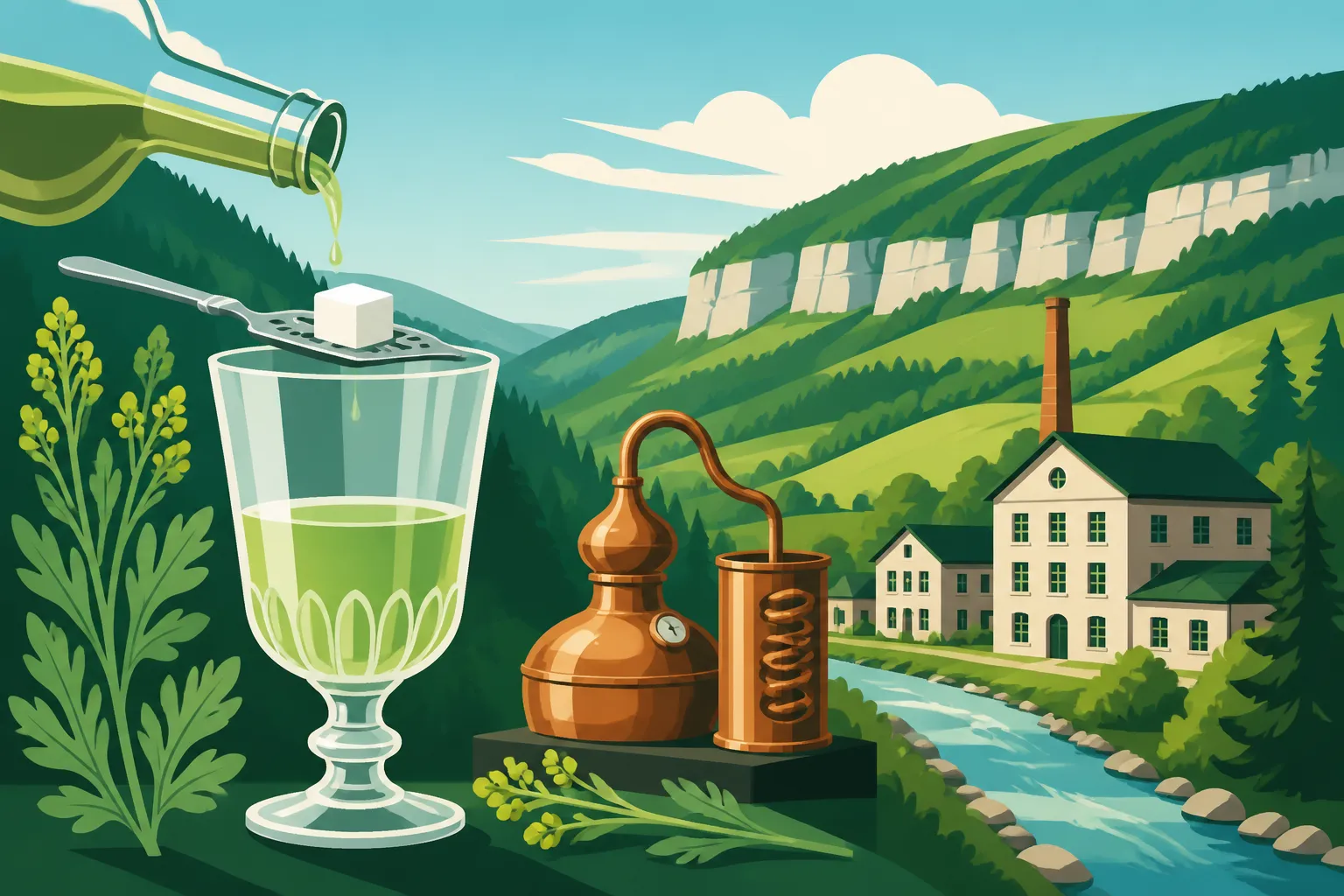
- The glass: You'll typically use a special absinthe glass, often with a reservoir at the bottom for measuring the absinthe, or a simple stemmed glass.
- The spoon: A slotted absinthe spoon, often ornate, is placed across the rim of the glass.
- The sugar cube: A sugar cube is placed on the spoon. This isn't just for sweetness; it helps to balance the bitterness of the wormwood.
- The water: Slowly, ice-cold water is dripped over the sugar cube, which dissolves into the absinthe. As the water mixes with the spirit, a magical transformation occurs: the clear absinthe turns cloudy and opalescent, a phenomenon known as the "louche." This milky cloudiness is due to the essential oils (primarily from the anise and fennel) that are insoluble in water, creating a beautiful visual spectacle. The ratio of absinthe to water is typically 1:3 to 1:5, but it's really about personal preference.
The beauty of the louche is that it not only looks appealing but also releases the complex aromas and flavors of the botanicals, mellowing the strength of the alcohol. It's a slow, deliberate process, perfect for reflecting on the history and artistry in your glass. Remember, absinthe is strong – typically 45-75% ABV – so always drink responsibly. The goal is appreciation, not intoxication!
Beyond Absinthe: Other Spirits and Local Delicacies
While absinthe is undoubtedly the star of Val-de-Travers, the region's distilling heritage extends beyond the Green Fairy. Many local producers also create other fine spirits and showcase the valley's rich culinary traditions.
- Other fruit brandies (eaux-de-vie): Swiss distillers are masters of fruit brandies. You might find excellent plum (
Prune), pear (Poire), cherry (Kirsch), or even gentian root spirits. These are often crystal clear and incredibly aromatic, reflecting the pure essence of the fruit. They are a wonderful expression of the region's agricultural bounty. - Local liqueurs: Some distilleries produce herbal liqueurs or infusions, often using other local plants. These can be delightful digestifs or ingredients in cocktails.
- Regional Cheeses: Neuchâtel is also known for its cheese, and you'll find plenty of opportunities to sample local varieties. Pair them with a crisp white wine from the nearby Neuchâtel vineyards, or perhaps even an absinthe-washed cheese for a truly local experience. For more on Swiss cheese, check out our guide on Regional Swiss Cheeses: Gruyère, Emmental, Appenzeller, and More.
- Chocolate: Many local chocolatiers have embraced the absinthe connection, offering exquisite absinthe-infused chocolates. These make for unique and delicious souvenirs.
It's a complete sensory experience that brings together history, craft, and the authentic flavors of the region.
The Legalities and Souvenirs
Now that you’ve immersed yourself in the world of absinthe, you’ll probably want to take a piece of the Green Fairy home with you. But as with all things Swiss, there are rules and regulations, especially when it comes to alcohol and customs.
Bringing Absinthe Home: Customs and Personal Limits
This is an important one, as no one wants to run into trouble with customs! When purchasing absinthe, it's crucial to be aware of the personal import limits if you plan to take it out of Switzerland, especially back into an EU country or your home country.
- For EU residents returning to the EU: The general rule for spirits over 22% alcohol is 1 liter per person. If you're bringing in absinthe with lower alcohol content or other alcoholic beverages, the rules might differ slightly, so always check the specific regulations of your destination country's customs agency. Crossing back into France, for instance, has specific allowances.
- For non-EU residents or flying home: Your home country's customs regulations will apply. Typically, there's an allowance for spirits, usually 1 liter per adult, but this can vary. For example, if you're flying back to the US, the allowance is usually 1 liter.
- Within Switzerland: If you're simply traveling between cantons, there are no limits on how much legal absinthe you can purchase and transport for personal use.
Always keep your receipts. If you're unsure, it's best to declare items at customs. Most distilleries are well-versed in these regulations and can provide advice on purchasing limits. Don't be tempted to buy more than allowed, as fines can be hefty.
Shopping for Authentic Absinthe and Related Keepsakes
Beyond the bottles themselves, Val-de-Travers offers a treasure trove of absinthe-related souvenirs and local products that make for fantastic gifts or personal mementos.
- Authentic Absinthe: Purchase directly from the distilleries! This guarantees authenticity and often gives you access to special editions or smaller batches. You'll find both "La Bleue" (clear) and "La Verte" (green) varieties, each with its unique flavor profile. Ask the distillers for their recommendations – they love to share their passion.
- Absinthe spoons and glasses: These are iconic parts of the ritual and make beautiful, functional souvenirs. You can find them in distillery shops, the Maison de l'Absinthe, and local artisan stores. Some spoons are simple, others intricate and historical replicas.
- Absinthe chocolates and candies: As mentioned, many local chocolatiers create delicious absinthe-infused treats. These are usually safe to travel with and make great small gifts.
- Local herbs: You might find packets of dried absinthe botanicals, allowing you to try your hand at infusing your own spirits or simply enjoying their aroma.
- Books and artwork: The region's rich history has inspired many artists and writers. Look for local books on absinthe history or artworks depicting the valley and its Green Fairy lore.
Choosing your souvenirs is a lovely way to extend the experience of your visit. It’s a tangible reminder of a fascinating journey into a unique corner of Swiss culture, proving that sometimes, the most interesting stories are found just below the surface, or in this case, in a carefully crafted, herb-infused spirit.
Disclaimer
The information provided in this guide is for general informational purposes only and does not constitute legal, financial, or medical advice. While we strive to provide accurate and up-to-date information, regulations and circumstances can change. Always consult with relevant authorities, legal professionals, or service providers for specific advice tailored to your situation. This blog and its authors are not responsible for any actions taken based on the information provided herein. Please drink responsibly and be aware of all local laws regarding alcohol consumption and transportation.