Renting a Car for Swiss Road Trips: What to Know
Ah, the romance of the open road! After grappling with the meticulous precision of Swiss public transport, the idea of just hopping into a car and driving wherever the mood takes you – often to those hidden gems the trains don't reach – is incredibly appealing. But before you swap your SBB timetable for a GPS, there's a fair bit to unpack about renting a car here in Switzerland. This guide is going to walk you through everything you need to know to make your Swiss road trip dreams a reality, from navigating the rental companies to understanding local driving quirks, without any nasty surprises.
The Allure and Reality of Car Rentals in Switzerland
When you first arrive in Switzerland, everyone raves about the public transport. And for good reason! It’s impeccable, timely, and takes you to most places you’d want to go. But there are certainly moments, especially when you start exploring beyond the main tourist routes, where a car feels like pure freedom.
Why Consider Renting a Car in the Land of Public Transport?
Let’s be honest, the Swiss train system is legendary. You can get almost anywhere, often faster and with less hassle than driving, especially in cities. You can enjoy the scenery instead of focusing on the road, and you don't have to worry about parking. So why on earth would an expat or tourist even think about renting a car?
Well, it comes down to a few key factors: freedom, flexibility, and access. Imagine wanting to visit a tiny, picturesque village nestled deep in the Valais Alps, or perhaps a remote trailhead for a hike that only has one PostBus connection a day. Or maybe you're planning a grand tour through the lesser-known passes, stopping at every breathtaking viewpoint without being beholden to a train schedule. This is where a rental car shines. For families with young children and a mountain of gear, or for those who simply prefer door-to-door convenience, a car can drastically simplify logistics. Hauling skis, strollers, or a week's worth of groceries on multiple train changes is not always the romantic Swiss experience portrayed in brochures. Having your own wheels means you dictate the pace, linger longer where you want, and spontaneously change your plans based on the weather or a sudden whim. It’s about truly embracing the spirit of a road trip in a country renowned for its scenic drives.
The Cost Factor: A Realistic Look at Rental Expenses
Alright, let's talk brass tacks. Switzerland isn't known for being cheap, and car rentals are no exception. Beyond the headline daily rate you see advertised, there are several costs that can quickly add up, turning your budget-friendly road trip into a financial adventure you didn't quite sign up for.
First, there's the rental fee itself. This varies wildly based on the season, how far in advance you book, the type of car, and the rental duration. Summer and peak ski season will always be pricier. Booking well ahead of time, especially through comparison sites like Omio or GetYourGuide, can sometimes net you a better deal than walking up to the counter. Then come the mandatory extras. Most basic rentals in Switzerland include a certain level of third-party liability insurance, but often with a significant deductible (excess). You’ll almost certainly be offered (and often feel pressured) to buy additional coverage like Collision Damage Waiver (CDW) with zero deductible, or Theft Protection (TP). While these can add a hefty amount to your daily rate, consider the peace of mind. Swiss roads are generally excellent, but accidents happen, and repairs here are eye-wateringly expensive. A small scratch can cost hundreds, if not thousands, of francs.
Other potential costs include:
- Young Driver Surcharge: If you're under 25, prepare to pay an extra daily fee.
- Additional Driver Fee: Want to share driving duties? That'll cost you.
- GPS Rental: While tempting, consider using your phone's navigation if you have a good data plan.
- Child Seats: Essential for families and often a separate charge.
- Fuel Policy: Always understand this. Picking up full and returning full is usually the most economical option. Avoid pre-paying for fuel unless you're absolutely certain you'll return it empty.
- One-Way Fees: If you pick up in Zurich and drop off in Geneva, expect a surcharge.
- Winterisation Fee: During colder months, cars often come with winter tires, and sometimes snow chains, for an additional fee. This isn't optional; it's a safety necessity.
- Vignette: The annual Autobahn tax sticker. Most rental cars will already have this, but always double-check. If it doesn't, you'll need to buy one for CHF 40 (or around EUR 42 for a digital one). Driving on Swiss motorways without one will result in a hefty fine. You can read more about the Swiss Autobahn Vignette: E-Vignette vs Physical Sticker for 2026 in a dedicated guide.
- Parking Fees: Parking in Swiss cities and even many smaller towns is rarely free and can be expensive. Factor this into your daily budget.
- Traffic Fines: Swiss traffic laws are strict, and fines are steep, often income-based. A single speeding ticket can set you back hundreds of francs, or even more. We've got a whole article on Speeding Tickets in Switzerland: Income-Based Fines and Strict Radars for good reason.
Public Transport vs. Car: A Quick Comparison for Road Trips
Deciding between public transport and a rental car for your Swiss adventure really boils down to your travel style and itinerary.
| Feature | Public Transport (Train/Bus) | Rental Car |
|---|---|---|
| Cost | High for individual tickets, but passes like GA/Half-Fare can be cost-effective for frequent travel. | Daily rental fee, insurance, fuel, parking, tolls, potential fines. Can be very expensive. |
| Flexibility | Fixed schedules, limited access to very remote areas. | Complete freedom to go anywhere, anytime, with spontaneous stops. |
| Convenience | Relax, enjoy views, no driving stress, city center access, no parking worries. | Door-to-door convenience, especially with luggage or children. |
| Speed | Often faster between major cities. | Slower in cities due to traffic/parking; faster for remote areas or specific routes. |
| Scenery | Panoramic train windows, especially on scenic routes. | Ability to stop at any viewpoint, explore off-the-beaten-path roads. |
| Environmental Impact | Generally lower carbon footprint. | Higher, especially with traditional combustion engines. |
| Stress Level | Low (unless connecting in a rush). | High (driving in unknown territory, parking, fines, traffic). |
| Access to Nature | Excellent for main hiking/ski areas. | Unparalleled access to remote trailheads and lesser-known spots. |
For shorter city breaks, or trips focused solely on major attractions well-served by SBB, a car can quickly become a burden due to parking challenges and costs. However, if your itinerary involves exploring multiple regions, staying in more rural areas, or venturing across borders for a Cross-Border Trips: Visiting Milan and Lake Como from Switzerland kind of adventure, a car becomes an indispensable tool. Many expats swear by a combination: use public transport for getting to major hubs, then rent a car for specific regional explorations. It's not uncommon to purchase a The Half-Fare Travelcard (Halbtax): The Must-Have Pass for Swiss Residents to cover train journeys and rent a car for a few days to fill in the gaps.
Essential Pre-Rental Knowledge for Expats
Navigating the pre-rental phase in Switzerland can feel like decoding a secret language, especially with all the forms and insurance jargon. But a little preparation goes a long way to ensure a smooth pick-up and avoid unexpected charges.
Driver's License Requirements for Foreigners
This is often where new arrivals get tripped up. If you hold a driver's license from an EU/EFTA country, you're generally good to go. You can use your national license for as long as it's valid.
However, for those from non-EU/EFTA countries (like the US, Canada, Australia, UK post-Brexit, etc.), the rules are a bit more stringent. You can use your foreign driver's license for a maximum of 12 months from your date of entry into Switzerland. After that, you must convert it to a Swiss license. For rental purposes, within that initial 12-month window, most rental companies will accept your valid national license, but they often require an International Driving Permit (IDP) to accompany it. The IDP isn't a license itself; it's simply a translation of your existing license into multiple languages, validating its authenticity. It’s easily obtainable in your home country (e.g., through AAA or your local equivalent) and is usually valid for one year. Always carry both your national license and your IDP. If you're a long-term resident and have passed the 12-month mark, you should have already converted your license. If not, you won't be able to legally drive, let alone rent a car. Our guide on Driving in Switzerland: Licenses, Buying Cars, and Strict Traffic Laws provides even more detail on the conversion process.
Age Restrictions and Fees for Young Drivers
Swiss rental companies, like many across Europe, impose age restrictions and often levy additional fees for younger drivers. Typically, the minimum age to rent a car in Switzerland is 20 years old. However, many companies require drivers to be at least 21 or even 25 to rent certain vehicle categories (like larger SUVs or luxury cars).
Furthermore, if you are under the age of 25 (sometimes even up to 26 or 29, depending on the rental agency and specific canton), you will almost certainly face a "young driver surcharge" per day. This fee can vary significantly, often ranging from CHF 15 to CHF 30 per day, which can seriously inflate your rental cost over a multi-day trip. It's a non-negotiable insurance-related charge that rental companies apply due to the higher perceived risk associated with less experienced drivers. Always check the specific age requirements and any associated surcharges with the rental company before booking to avoid any unpleasant surprises at the counter.
Understanding Swiss Insurance: CDW, TP, and Liability
This is probably the most confusing part of car rental anywhere, and Switzerland is no different. Don't just blindly tick boxes; understand what you're paying for.
- Third-Party Liability Insurance: This is legally mandatory in Switzerland and is always included in your rental price. It covers damage to other vehicles, property, or injuries to other people if you are at fault in an accident. It does not cover damage to your rental car. The coverage amounts are typically very high, ensuring you're protected against major claims.
- Collision Damage Waiver (CDW) / Loss Damage Waiver (LDW): This is the most crucial optional insurance to consider. CDW covers damage to the rental vehicle itself in case of a collision, regardless of fault. It almost always comes with an excess or deductible (called "Selbstbehalt" in German, "franchise" in French) – a fixed amount you are liable to pay out-of-pocket before the insurance kicks in. This deductible can be anywhere from CHF 800 to CHF 2,000 or more. Rental companies will aggressively push you to buy a "Super CDW" or "Excess Reduction" package that lowers this deductible to zero or a very small amount. While expensive, if you're risk-averse, it might be worth it.
- Theft Protection (TP): This covers the cost of the rental vehicle if it's stolen. Like CDW, it often comes with an excess.
- Personal Accident Insurance (PAI): Covers medical costs for you and your passengers in case of an accident. Check your existing travel insurance or health insurance (like your Healthcare in Switzerland for Expats: The Complete System Overview (2027)) to see if you're already covered, as this is often redundant.
- Glass and Tyre Coverage: Often excluded from standard CDW, this covers damage to windshields, windows, and tires, which can be costly repairs.
Credit Card Coverage: Many premium credit cards offer rental car insurance benefits, often covering CDW/LDW. If you plan to rely on this, call your credit card provider before you travel and ask very specific questions:
- Does it apply in Switzerland? (Some countries are excluded).
- Is it primary or secondary coverage? (Primary pays first, secondary pays after your personal insurance).
- Are there any vehicle exclusions? (Luxury cars, vans, certain SUVs might not be covered).
- What is the maximum coverage amount?
- What documents will they require if you have to make a claim? (You'll likely need a police report, the rental agreement, and repair invoices).
If you're using credit card coverage, you will typically decline the rental company's CDW/LDW at the counter. Be prepared for them to put a significant hold on your credit card (the amount of the deductible) as a security deposit.
Navigating the Rental Process and On-Road Experience
Once you’ve got your head around the paperwork and costs, the actual process of getting and using your rental car becomes much smoother. Knowing what to expect at pick-up and understanding the unique aspects of driving in Switzerland will save you a lot of grief.
Choosing the Right Rental Company and Vehicle
When it comes to rental companies, you'll find all the usual international suspects in Switzerland: Avis, Hertz, Europcar, Sixt, Budget, and Enterprise. There are also local Swiss chains like Mobility (a car-sharing service, but sometimes offers short-term rentals) and smaller, independent agencies.
- Major Players: Generally reliable, large fleets, often available directly at airports (like Zurich Airport or Geneva Airport) and major train stations. They tend to have higher prices but offer more comprehensive support. Their online booking systems are usually robust, and you can often find good deals by comparing across sites like Booking.com, which aggregates multiple rental providers.
- Budget Brands: Sometimes offer lower prices but check reviews carefully. Their service might be less polished, and hidden fees can be more common.
- Booking Aggregators: Websites such as Omio or GetYourGuide often compare prices across several companies, which is a great way to find competitive rates. Just make sure to read the fine print regarding insurance and extras when booking through these platforms, as they might have different default settings.
Choosing Your Vehicle:
- Size Matters: Swiss roads, especially in old towns and mountain passes, can be narrow. Parking spaces are often compact. A smaller car is generally easier to maneuver and park. Don't automatically go for the biggest SUV unless you genuinely need the space and comfort for a long family trip into the Alps.
- Fuel Type: Most cars will be petrol (Benzin) or diesel (Diesel). Electric vehicles are becoming more common, but ensure you understand the charging infrastructure if you opt for one. Fuel prices are high, so a fuel-efficient model can save you money.
- Manual vs. Automatic: Many European cars, especially standard rental fleet models, are manual transmission (stick shift). If you only drive automatic, be very clear when booking, as automatic cars can be fewer and sometimes more expensive.
Always book in advance, especially during peak season, to ensure availability and better rates.
Picking Up and Returning Your Rental
The pick-up counter is where careful planning pays off.
- Documents: Have your valid national driver's license, International Driving Permit (if needed), passport/ID, and the credit card used for booking ready. The credit card must be in the main driver's name and have sufficient limit for the security deposit.
- Inspect the Car Thoroughly: Before you drive off, meticulously inspect the vehicle for any existing damage – dents, scratches, cracked windshields, scuffs on wheels, even interior damage. Take photos or a video with your phone, documenting every little imperfection. Compare this against the damage report provided by the rental company. If you spot anything not on their report, point it out to a staff member immediately and have it added. This is crucial to avoid being charged for pre-existing damage upon return.
- Fuel Policy: Confirm the fuel policy. "Full to Full" is standard and usually the best option.
- Vignette: Confirm the car has a valid Swiss motorway vignette attached to the windshield.
- Child Seats/GPS: Check that any extras you booked, like child seats or a GPS, are present and correctly installed.
Returning the Car:
- Full Tank: If your policy is "Full to Full," ensure the tank is completely full. You'll pay a premium if the rental company has to fill it for you.
- Cleanliness: While you don't need to deep clean it, remove all your rubbish and personal belongings. Excessive mess might incur a cleaning fee.
- Inspection: Try to return the car during opening hours so a staff member can inspect it with you present. Get a final sign-off that there's no new damage. Again, take photos or videos of the car's condition upon return, especially if returning after hours, for your own record.
- Parking: Return the car to the designated rental car parking area. Be mindful of airport return signs, as they can sometimes be confusing.
Swiss Road Rules and Regulations You MUST Know
Driving in Switzerland is generally a pleasant experience thanks to well-maintained roads and disciplined drivers, but there are some critical rules and nuances you need to be aware of.
- Speed Limits: These are strictly enforced by speed cameras and police.
- Motorways (Autobahn): 120 km/h (75 mph)
- Expressways (Autostrasse): 100 km/h (62 mph)
- Outside built-up areas: 80 km/h (50 mph)
- Inside built-up areas (towns/cities): 50 km/h (31 mph)
- Residential areas (30er Zonen/Zones 30): 30 km/h (19 mph)
- Pedestrian zones (Spielstrassen): Walking speed (no specific number, just crawl)
- Always be extra vigilant in residential areas; the speeds can change quickly, and children might be playing.
- Vignette: As mentioned, you need an annual vignette to use Swiss motorways. Without it, you face a CHF 200 fine plus the cost of the vignette itself. Most rental cars will have one.
- Headlights: Always drive with your headlights on, even during the day. It's legally mandatory.
- Seatbelts: Mandatory for all occupants, front and rear.
- Alcohol Limits: The legal blood alcohol limit is 0.05%. This is significantly lower than in many other countries, so if you plan to drink anything, don't drive. Penalties are severe.
- Right of Way: Trams always have priority. On narrow mountain roads, the ascending vehicle usually has right of way, but sometimes PostBuses (yellow buses) have special priority signs – always yield to them.
- Parking: This is often the biggest headache.
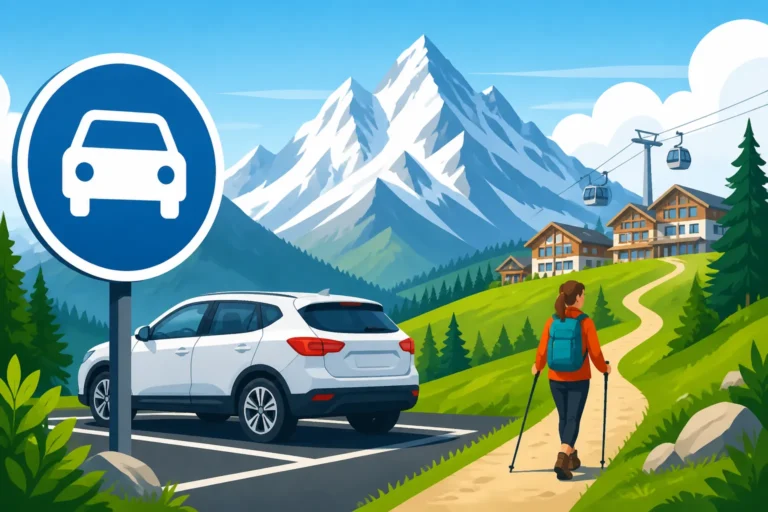
- Blue Zones (Blaue Zone): Free for a limited time (usually 1 hour on weekdays) with a blue parking disc set to your arrival time.
- White Zones: Paid parking, usually with a meter.
- Yellow Zones: Private or reserved parking, do not park here unless explicitly allowed.
- No parking signs: Often just a clear way, but look for the red circle with a blue background and a red diagonal line.
- Always check signs carefully. For more details on parking, check out our guide on Parking in Swiss Cities: Blue Zones, Permits, and White Zones.
- Tunnels: Switzerland has many tunnels. Pay attention to the signage within them, as speed limits can change, and overtaking might be prohibited.
- Motorcycles: Be aware of motorcyclists, especially on mountain passes; they are very common and often drive fast.
Familiarizing yourself with these rules is essential not just for legal compliance, but for your safety and the safety of others.
Practical Tips for a Smooth Swiss Road Trip
You’ve got the car, you know the rules. Now for the really fun part: enjoying your Swiss road trip! But a few extra practical tips can make all the difference, especially when dealing with Switzerland's diverse geography and occasional border hops.
Winter Driving Essentials
If you're planning a road trip between October and April, especially in the mountains, winter driving is a whole different beast.
- Winter Tires: While not legally mandatory nationwide, it is highly recommended to use winter tires during cold months. In many cantons and for certain routes, they become de facto necessary. Rental cars in Switzerland are usually equipped with appropriate winter tires (often for an extra fee) during the winter season. Refusing them can be dangerous and could invalidate your insurance if you get into an accident due to inadequate grip. Read our detailed article on Winter Tires in Switzerland: Are They Legally Mandatory in 2027? for more insight.
- Snow Chains: For some particularly steep or snowy mountain passes, snow chains (Schneeketten) might be legally required. You'll see signs indicating this. If you’re driving into remote mountain areas, ensure your rental car comes with chains and, crucially, that you know how to put them on before you need them.
- Mountain Passes: Many high mountain passes (e.g., Furkapass, Sustenpass) close entirely during winter due to heavy snow. Always check road conditions before setting off. Apps like TCS (Touring Club Schweiz) or Google Maps are good resources for up-to-date road closures.
- Föhn Winds: Be aware of the Föhn wind, a warm, dry down-slope wind that can bring sudden changes in weather and make driving challenging. It's not just an anecdote; it's a real weather phenomenon that can affect driving conditions. Our guide on Weather and Geography: Föhn Winds, Winter Readiness, and Alpine Living explains it further.
- Emergency Kit: Consider carrying a small emergency kit with a warm blanket, water, snacks, and a charged phone, especially if heading into remote areas.
Border Crossings and International Travel
One of the great joys of driving in Switzerland is how quickly you can hop over to neighboring countries like France, Germany, Austria, and Italy for a day trip or longer.
- Green Card (International Motor Insurance Card): While Switzerland is part of the Green Card system, it’s always wise to ensure your rental car documents include proof of international insurance coverage. Most rental companies provide this automatically, but double-check if you plan to cross borders. This card proves that your vehicle is insured for third-party liability in the countries listed on it.
- Country-Specific Rules: Each neighboring country has its own driving rules, vignette requirements, and speed limits.
- Austria: Requires its own vignette for motorways.
- Germany: Generally no tolls or vignettes on Autobahns, but some cities have environmental zones (Umweltzonen) requiring a special sticker.
- France: Some motorways are toll roads (péages), paid at booths.
- Italy: Also has toll roads (Autostrade), paid at booths or with electronic systems.
- Always research the driving rules of your destination country beforehand.
- Rental Company Policy: Inform your rental company if you plan to take the car across international borders. Some may have restrictions or require specific documentation or insurance add-ons. Failing to inform them could invalidate your insurance.
Making the Most of Your Rental: Scenic Routes and Parking Hacks
You've done all the hard work; now for the reward! Switzerland offers some of the most breathtaking drives in the world.
- Scenic Routes: Don't just stick to the autobahns. Explore the network of well-maintained secondary roads and mountain passes. The Grand Tour of Switzerland is a fantastic, well-signposted route that covers the country's highlights, but even smaller regional drives can be spectacular. Think about the winding roads through the Lavaux vineyards, the dramatic passes of Graubünden, or the lakeside roads of Ticino.
- GPS/Navigation: While you can rent a GPS from the car company, modern smartphones with apps like Google Maps, Apple Maps, or Waze are usually more than sufficient. Download offline maps in advance, especially for mountain areas where signal can be spotty.
- Parking Hacks:
- Park & Ride (P+R): For city visits, these are invaluable. Park your car on the outskirts of the city and take public transport in. It's often cheaper than city center parking and saves you the stress of urban driving. Check the websites of major cities (e.g., Zurich, Geneva, Bern) for P+R locations.
- Hotel Parking: If your accommodation offers parking, confirm if it's free or incurs an additional charge.
- Underground Garages: These are common in Swiss towns and cities. They're secure but expensive. Follow the green "P" signs.
- Street Parking Apps: Some cities use apps for street parking payments (e.g., Parkingpay).
- Consider a small bag with coins for older parking meters, though most now accept cards or apps.
- Packing for Day Trips: Since you have a car, you can bring more! Pack essentials for all seasons, even in summer, especially if you're heading to higher elevations. Our guide on What to Pack for a Day Trip to the Swiss Alps offers some great advice.
- Roadside Assistance: Ensure you know how to contact your rental company's roadside assistance in case of a breakdown or accident. Keep the number handy.
Renting a car in Switzerland opens up a world of possibilities that public transport, as wonderful as it is, simply can't match. It's about experiencing the country on your own terms, delving into its hidden corners, and creating those spontaneous, unforgettable memories. Just do your homework, understand the rules, and enjoy the ride!
Disclaimer
The information provided in this guide is for general informational purposes only and does not constitute legal, financial, or professional advice. While we strive to keep the information up-to-date and accurate, regulations and conditions in Switzerland can change rapidly. Always verify current requirements with official Swiss authorities, your rental car company, and your insurance provider before making any decisions. We are not responsible for any actions taken based on the information provided here.