Wildlife Watching in the Swiss National Park
Ah, the Swiss National Park! Many of us arrive in Switzerland with a postcard image in our minds – majestic peaks, sparkling lakes, and perhaps a friendly marmot waving from a rock. But the reality of spotting Switzerland's incredible wildlife, especially the more elusive creatures like ibex or chamois, can feel a bit like trying to find a needle in a very vast, very beautiful haystack. It’s not a zoo, and the animals aren’t on a schedule. This guide is here to cut through the guesswork and provide you with realistic expectations and actionable tips for truly appreciating the wild inhabitants of this unique sanctuary.
Understanding the Swiss National Park: A Sanctuary, Not a Zoo
The Swiss National Park (SNP), or Schweizerischer Nationalpark as the locals call it, isn't just a pretty patch of mountains. Established way back in 1914, it holds the prestigious title of being the oldest national park in the Alps and one of the earliest in Europe. This place is different. Unlike many parks around the world where human access and intervention are common, the SNP operates under an incredibly strict philosophy: nature, undisturbed. This means no trees are cut, no animals are hunted, and the landscape is allowed to evolve entirely on its own terms. As an expat, this concept can feel a bit foreign at first, especially coming from countries where nature parks often have more visitor amenities and less stringent rules.
What Makes the SNP Unique?
The sheer commitment to wildness is what sets the Swiss National Park apart. Imagine a place where for over a century, the only law has been the law of nature itself. This dedication has earned it international recognition, including a UNESCO Biosphere Reserve designation. When you visit, you're not just hiking; you're stepping into a living laboratory, a testament to what happens when humans truly take a step back. The "nature first" approach here means a set of rules that might seem a little intense to the uninitiated. You must stay on marked trails – no venturing off-path, not even for a minute to get a better photo. Picking flowers, collecting stones, lighting fires, camping, or even having your dog with you (even on a leash!) are absolute no-gos. These aren't just arbitrary rules; they are the bedrock of the park's mission, protecting fragile alpine ecosystems and ensuring the wildlife can thrive without constant human disturbance.
Think of it this way: every footstep off the path, every discarded apple core, every raised voice, can have a ripple effect on the sensitive balance of this ecosystem. The marmots might flee their burrows, the ibex might alter their grazing patterns, and the rare alpine flora might be trampled. It's a small price to pay for the privilege of experiencing true wilderness, but it requires a conscious shift in mindset. Understanding and respecting these rules isn't just about avoiding a fine; it's about being a responsible guest in a truly special place.
Getting There and Park Access
Navigating to the Swiss National Park typically means heading to the Engadine region in the canton of Graubünden. The primary gateway village is Zernez, which also hosts the park's excellent visitor centre. For those of us who rely on Switzerland’s stellar public transport system (and who doesn’t, really?), getting to Zernez is a breeze. You'll take an SBB train to Chur, then change to the scenic Rhaetian Railway (RhB) which winds through stunning mountain landscapes directly to Zernez. From Zernez, local PostBus services can take you to various park entrances and trailheads, such as S-chanf, or even further into the heart of the Engadine valley. For convenience, you can easily look up train and bus schedules and book your tickets through platforms like Omio, ensuring a smooth journey without fumbling with ticket machines.
While you can technically drive to Zernez, be aware that parking within the small villages can be limited and expensive, and cars are absolutely forbidden inside the park boundaries themselves. Most trailheads have designated parking areas, but many people opt for the convenience and environmental friendliness of public transport. The Visitor Centre in Zernez is an invaluable first stop, offering detailed maps, trail information, current wildlife sightings, and a fantastic exhibition that helps you understand the park’s ecological significance before you even set foot on a trail. It's truly the best place to start your adventure, equipping you with the knowledge and context to make your wildlife watching experience more rewarding.
The Magnificent Wildlife You Might Encounter
The Swiss National Park is a haven for alpine creatures, and with a bit of luck and a lot of patience, you can witness them in their natural glory. Forget the typical zoo experience; here, you're an observer in their world, and that makes every sighting infinitely more special. The animals here are truly wild, meaning they might be shy, elusive, or simply far away. That's part of the charm and the challenge!
Iconic Alpine Mammals
When most people dream of wildlife watching in the Swiss Alps, a few iconic species immediately come to mind, and the SNP delivers.
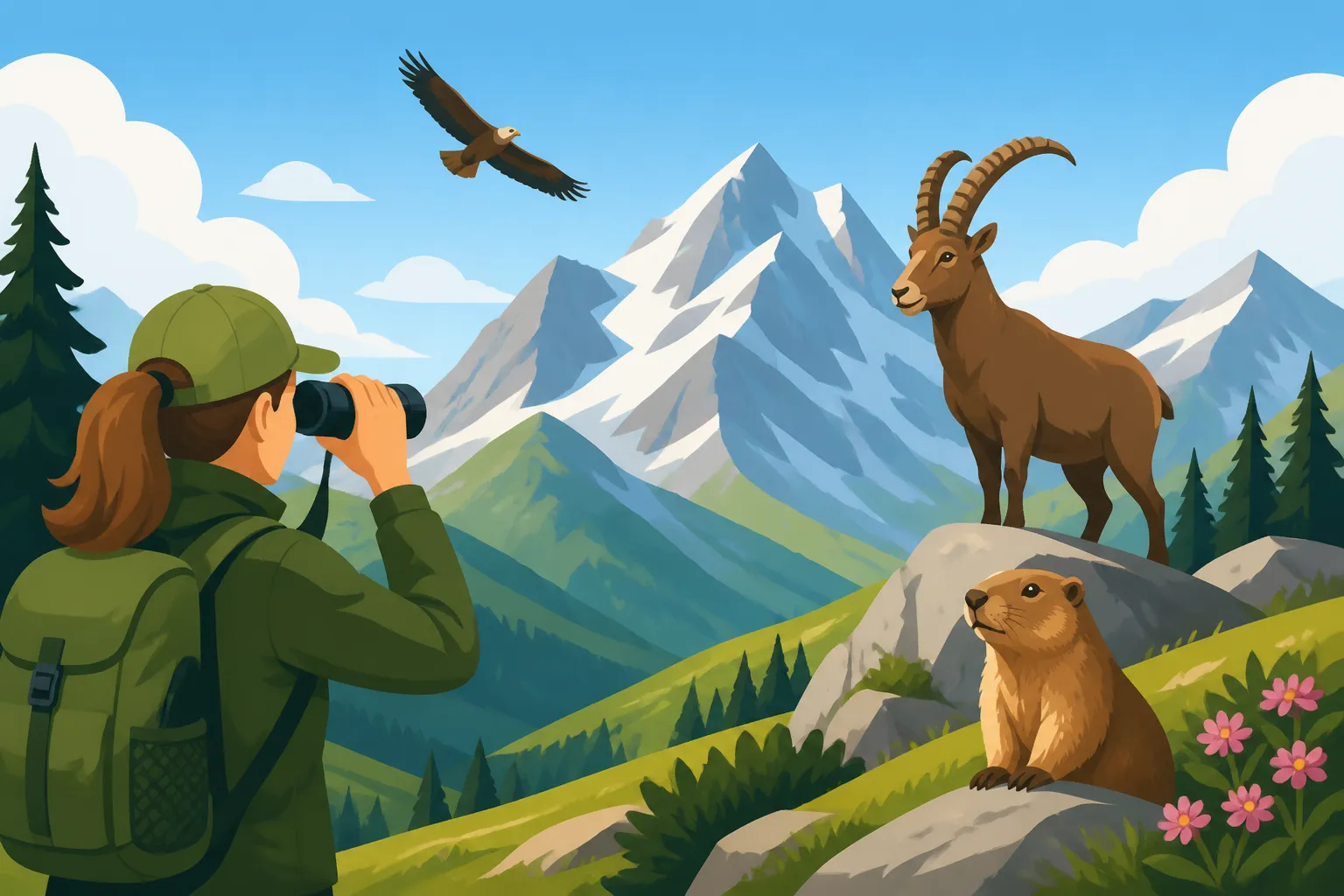
First up, the mighty Ibex (Steinbock). These magnificent creatures, with their massive, curving horns, are the true kings of the high mountains. They're incredibly agile climbers, preferring rocky, steep terrain at higher altitudes, often on sunny, south-facing slopes where snow melts faster and vegetation grows earlier. The best time to spot them is usually early morning or late afternoon when they are most active, grazing or navigating the treacherous cliffs. Keep your eyes peeled on ridgelines and rocky outcrops above the tree line. Trails leading to areas like Margunet or near the Murterölsch region are known for ibex sightings. Remember, they blend in incredibly well with their surroundings, so look for movement or the distinct silhouette of their horns against the sky.
Then there's the Chamois (Gämse). These are like the ibex's smaller, speedier cousins. They’re also excellent climbers, but generally prefer slightly lower altitudes, often found in forests, clearings, and less extreme rocky areas. Chamois are quicker and more nervous than ibex, often bolting at the first sign of human presence. Their short, hooked horns are a distinguishing feature. If you see a flash of movement or hear a sudden snort in a wooded area, it might just be a chamois making a quick exit.
The Red Deer (Rothirsch) are perhaps the most visible and numerous large mammals in the park. They are the biggest land mammals in Switzerland, and their presence is especially dramatic during the rutting season in September and October. This is a truly spectacular time to visit, as the males engage in fierce battles for dominance, their powerful bellows echoing through the valleys. The Val Trupchun, a stunning valley within the park, is particularly famous for its high density of red deer during this period. You'll likely see large herds grazing peacefully, but during the rut, expect roaring, antler clashing, and an unforgettable display of nature's raw power.
And finally, the utterly charming Marmots (Murmeltiere). These fluffy alpine rodents are practically the unofficial mascots of the Swiss Alps. They are abundant in the park, particularly in alpine meadows and rocky areas where they dig their extensive burrow systems. You'll often hear their distinctive, shrill warning whistles before you see them. They're curious but cautious, and if you sit quietly in an area known for marmots, you might just be rewarded with close-up views of them sunbathing, foraging, or engaging in playful scuffles. Watching them interact is pure joy, and they’re often one of the easiest animals to spot.
Birds of Prey and Other Fascinating Avians
Beyond the impressive mammals, the skies and trees of the Swiss National Park are alive with avian wonders. The park is a prime location for spotting majestic birds of prey.
The undisputed monarch of the skies is the Golden Eagle (Steinadler). With its immense wingspan and powerful flight, watching a golden eagle soar effortlessly above the peaks is a truly breathtaking experience. They patrol vast territories, often riding thermals high above the valleys. Look for their distinctive broad wings and V-shaped tail as they circle. Patience is key, but the reward of seeing one of these magnificent hunters in action is immense.
Another incredible success story you might witness is the Bearded Vulture (Gänsegeier / Bartgeier). These gigantic birds, once hunted to extinction in the Alps, have been successfully reintroduced thanks to dedicated conservation efforts. They are Europe's largest birds of prey, identifiable by their huge, narrow wings (up to 2.9 meters / 9.5 feet!) and a long, diamond-shaped tail. Unlike other vultures, they don't have a bald head; instead, they have a "beard" of dark bristles. They primarily scavenge on bones, dropping them from great heights to crack them open, earning them the nickname "bone breaker." Spotting one gliding silently on the wind is an awe-inspiring moment, a symbol of successful rewilding.
Beyond these giants, keep an eye out for other fascinating birds. You might spot the Nutcracker, a corvid with a distinctive spotted plumage that is adept at finding and storing pine nuts. Alpine Choughs with their bright yellow beaks and red legs are common visitors to mountain huts and often perform acrobatic displays in the air. Even smaller birds like the Ring Ouzel, a thrush-like bird with a distinctive white crescent on its chest, contribute to the vibrant soundscape of the park.
Smaller Creatures and Flora
While the big mammals and birds often steal the show, the Swiss National Park is also home to a myriad of smaller creatures that play vital roles in its ecosystem. You might see various species of lizards darting across sun-warmed rocks, or a kaleidoscope of butterflies flitting among alpine flowers. Dragonflies hover over streams, and countless insects create a subtle hum, all contributing to the intricate web of life.
And let's not forget the incredible flora. While you can't pick them, the alpine flowers, including various gentians, rhododendrons, and potentillas, paint the meadows with vibrant colours in spring and summer. These plants are not just pretty; they are the foundation of the ecosystem, providing food and shelter for many of the animals you’ve come to see. Each tiny fern, moss, and lichen plays a role in the undisturbed wilderness that the SNP strives to protect.
Best Practices for Ethical Wildlife Watching
Remember, the Swiss National Park isn't a safari park. The rules are strict because the mission is crucial: to let nature be. For us as visitors, this means adopting a mindful and respectful approach to wildlife watching. It’s about being a silent observer, not an intruder. The reward is an authentic connection with nature that few other places can offer.
The Golden Rules of Observation
When you're out in the Swiss National Park, a few "golden rules" will ensure your experience is both rewarding for you and harmless for the animals.
First and foremost: Stay on marked trails. This isn't a suggestion; it's a legal requirement and absolutely paramount for the park's integrity. The primary reason is to protect the incredibly fragile alpine vegetation and soil, which can take decades to recover from a single footprint. More importantly for wildlife watching, straying off paths can disturb nesting birds, interrupt animal foraging, or even separate parents from their young. Animals quickly become stressed by unpredictable human movements, so sticking to the designated paths creates a predictable "human corridor" that they learn to adapt to.
Secondly, maintain distance. This is where your binoculars or spotting scope become your best friends. Never, ever approach an animal, no matter how calm or seemingly accustomed to humans it appears. A general rule of thumb is to keep a distance of at least 200-300 meters from large mammals. If an animal changes its behaviour because of your presence (e.g., stops feeding, looks directly at you, starts moving away), you are too close. Approaching animals can be dangerous for you, and it causes unnecessary stress for them, disrupting their natural routines. Feeding animals is also strictly forbidden and harmful, as it can make them reliant on humans and interfere with their natural diet.
Silence is golden. Speak softly, avoid shouting, and move slowly and deliberately. Sudden loud noises or rapid movements can startle animals, sending them fleeing. The quieter you are, the more likely you are to observe natural behaviours without causing alarm. Take your time, breathe deeply, and let the sounds of the wilderness surround you. This also means no drone flying – the noise and visual disturbance are incredibly detrimental to wildlife.
Finally, remember the best times for wildlife activity are typically early morning (shortly after sunrise) and late evening (a couple of hours before sunset). During the midday heat, many animals seek shelter and rest, making sightings much less likely. Plan your hikes to align with these prime viewing windows.
One crucial rule for expat pet owners: No dogs allowed. This can be a hard pill to swallow if you’re used to hiking with your furry companion. However, even a well-behaved dog on a leash leaves behind scent trails that can stress and displace wild animals. The park's ecosystem is too sensitive to accommodate domestic animals, so please leave your canine friends at home or with a sitter when visiting the SNP.
Essential Gear and Planning
To make the most of your wildlife watching adventure, some preparation and the right gear are indispensable. Think of yourself as an intrepid explorer, ready for anything the mountains (and their inhabitants) throw at you.
First up, binoculars or a spotting scope are not optional; they are absolutely essential. Without them, most of your sightings will be distant specks. A good pair of binoculars (e.g., 8×42 or 10×42 magnification) will bring those ibex on the distant ridge right into view. For really close-up details of red deer across a valley, a spotting scope is even better. Similarly, if photography is your passion, a camera with a telephoto lens (200mm minimum, ideally 400mm or more) will allow you to capture stunning images without encroaching on the animals' space.
Next, good hiking boots and weather-appropriate clothing are non-negotiable. The alpine weather in Switzerland is notoriously unpredictable, even in summer. You can experience all four seasons in a single day. Layering is key: start with a base layer, add a fleece or warm mid-layer, and always carry a waterproof and windproof jacket. A hat, gloves, and sunscreen are also vital. For practical advice on dressing for the mountains, consider checking out guides like What to Pack for a Day Trip to the Swiss Alps.
Don't forget a detailed map of the Swiss National Park. While the trails are well-marked, understanding the topography and planning your routes are crucial. The Zernez Visitor Centre provides excellent maps and brochures. Also, bring plenty of snacks and water, as there are no facilities within the park itself – and remember to pack out everything you pack in, leaving no trace.
For planning your routes and navigating, consider using hiking apps like Hiking Apps for Switzerland: SwitzerlandMobility and Komoot, which can provide valuable insights into trail difficulty, elevation profiles, and estimated times, helping you focus on the wildlife rather than worrying about getting lost. Always prioritize Mountain Safety in Switzerland: Weather, Gear, and Emergency Numbers when venturing into the Alps.
Specific Hotspots and Seasonal Highlights
While wildlife can be found throughout the park, some areas offer particularly good chances for specific sightings, and timing your visit can make all the difference. Knowing where and when to go significantly ups your chances of a truly memorable encounter.
Val Trupchun – The Deer Paradise
If red deer are at the top of your wildlife wish list, then Val Trupchun is where you need to be. This stunning U-shaped valley, accessible from Prasüras near S-chanf, is perhaps the most famous and rewarding spot for observing red deer, especially during the awe-inspiring rutting season in September and October. During these months, the valley becomes a stage for nature's drama, as dominant stags gather their harems and challenge rivals with their thunderous roars and clashing antlers. The sheer number of deer here is remarkable, and with binoculars, you can spend hours watching their complex social interactions.
The hike through Val Trupchun is relatively straightforward, following the clear river, gradually ascending. There are designated observation points where you can set up your scope or binoculars and watch the spectacle unfold from a respectful distance. It's an unforgettable experience, but be prepared for company, as this area is popular during the rut. Even outside of the rutting season, Val Trupchun offers excellent chances to see red deer and often chamois, marmots, and various birds.
Margunet Trail and Murterölsch
For those hoping to spot the majestic ibex, trails around Margunet and the Murterölsch region are often cited as prime locations. These areas feature the steep, rocky, high-altitude terrain that ibex favour. The Margunet trail, for instance, offers panoramic views and traverses classic ibex habitat above the tree line. You'll need to hike to a higher elevation, which demands good fitness, but the views alone are worth it. These areas also provide opportunities for spotting chamois and golden eagles soaring overhead.
Patience is vital here. Ibex often remain perfectly still for long periods, blending into the rocks. Look for small movements, distinct shapes against the horizon, or patches of green vegetation on steep slopes where they might be grazing. Again, early mornings and late afternoons are your best bet.
Seasonal Considerations
The time of year you visit the Swiss National Park dramatically influences your wildlife watching opportunities.
- Spring (May-June): As the snow melts, the park bursts into life. Marmots emerge from hibernation, often seen sunbathing near their burrows. Migratory birds return, and the alpine meadows begin to erupt with wildflowers, attracting countless insects and butterflies. While large mammals are present, the dense new foliage can make them harder to spot.
- Summer (July-August): All trails are open, and the park is fully accessible. Marmots are very active, and you have good chances to see chamois and red deer grazing. Ibex are higher up, but still observable. The warmer weather makes for pleasant hiking, but animals might be less active during the midday heat.
- Autumn (September-October): This is arguably the prime season for wildlife watching, especially if you want to witness the dramatic red deer rut. The forest colours are spectacular, painting the valleys in hues of gold and crimson. Ibex and chamois are also very active as they prepare for winter. However, be aware that popular spots like Val Trupchun can get crowded, and accommodation in nearby villages like Zernez or Scuol should be booked well in advance. Platforms like Booking.com can be incredibly useful for securing your stay during this peak season.
- Winter (November-April): The Swiss National Park is largely inaccessible for hiking in winter, with most trails closed due to snow and avalanche risk. Animals either hibernate (like marmots) or descend to lower altitudes, where they are harder to spot and best left undisturbed. Some specific winter hiking trails might be open in the immediate vicinity of the park, but these are generally for human recreation rather than wildlife observation.
Understanding these seasonal shifts will help you tailor your visit to your specific wildlife interests and maximize your chances of seeing the animals you're most keen to encounter. And just as importantly, it helps you respect their natural rhythms. The park also puts out a "Wildtiere beobachten" (Wildlife Observation) flyer, often available at the Visitor Centre, that gives up-to-date tips on where sightings are most likely.
The Philosophy of the Swiss National Park
Stepping into the Swiss National Park isn't just about ticking off a list of animal sightings. It's an immersion into a unique philosophy, a deeply Swiss commitment to conservation that resonates with a profound respect for nature. For many expats, this might be a subtle but impactful cultural lesson about how this country values its wild spaces.
Beyond Just Seeing Animals – Embracing Wilderness
The true magic of the SNP lies not just in catching a glimpse of an ibex, but in embracing the wilderness itself. It's about the patient waiting, the quiet observation, and the understanding that you are a visitor in a world that operates on its own terms, untouched by human interference. This park is a testament to the fact that sometimes, the best thing we can do for nature is absolutely nothing at all. This "hands-off" approach means that every animal you see, every sound you hear, every rustle in the bushes, is entirely natural, uninfluenced by human activity.
It’s an invitation to slow down, to truly listen to the wind, observe the changing light on the mountains, and appreciate the vast, complex ecosystem around you. The value here is in understanding the fragility of these ecosystems and the importance of allowing wild spaces to exist autonomously. It's a powerful reminder that our planet needs places where nature is the sole authority, where flora and fauna can adapt, evolve, and survive without our constant management. This profound respect for nature's self-governance is deeply embedded in the Swiss identity and is vividly experienced within the park's boundaries.
Educational Opportunities
While the park itself demands a "leave no trace" and "observe from afar" approach, it doesn't mean you're left to your own devices for understanding its wonders. The Zernez Visitor Centre is an absolute treasure trove of information. Here, you'll find engaging exhibitions about the park's history, geology, flora, and, of course, its incredible wildlife. Interactive displays help you learn about animal behaviours, tracks, and calls, preparing you for what to look for and listen for out on the trails. It's a fantastic place to contextualize your hiking experience and deepen your appreciation for the park's unique conservation efforts.
Furthermore, the park offers a range of ranger-led excursions. These guided tours are an invaluable resource, especially for newcomers. Park rangers are experts in the local ecology and have an uncanny ability to spot wildlife that casual observers might miss. They can teach you about animal tracking, explain the nuanced behaviours you’re witnessing, and provide insights into the park’s conservation work. This is by far the best way to enhance your chances of seeing animals and learning about the environment in an ethical and informed manner. While platforms like GetYourGuide might list general nature experiences in the wider Engadine region, for specific, in-depth wildlife insights within the SNP, the official park-led tours are usually your best bet. Always check the Visitor Centre's website or inquire directly for their current offerings.
The educational aspect extends beyond just the animals; it also encompasses the park’s role as a UNESCO World Heritage Site in Switzerland Worth Visiting. This designation speaks to its global significance as a pristine alpine wilderness, and learning about its status adds another layer of appreciation to your visit.
Table: Key Wildlife in the Swiss National Park
| Animal | Where to Spot | Best Time | Key Feature |
|---|---|---|---|
| Ibex | High-altitude, rocky, steep terrain (Margunet, Murterölsch) | Early morning, late afternoon | Large, curved horns; agile climbers on cliffs |
| Chamois | Forests, clearings, lower rocky areas | Early morning, late afternoon | Smaller, hooked horns; quick and nimble |
| Red Deer | Valleys, forests, clearings (especially Val Trupchun) | Early morning, late afternoon, | Large antlers (males); rutting season (Sept/Oct) |
| Marmots | Alpine meadows, rocky slopes with burrows | Mid-morning, late afternoon | Distinctive whistle; sunbathing; often in colonies |
| Golden Eagle | Soaring high above valleys and peaks | Any time, especially on sunny days | Huge wingspan; powerful flight; distinctive silhouette |
| Bearded Vulture | High above valleys; distinctive diamond tail and "beard" | Any time, riding thermals | Largest European bird of prey; bone-breaking scavenger |
Disclaimer
The information provided in this guide is for general informational purposes only and is subject to change. While we strive to offer accurate and up-to-date advice, regulations, access rules, and wildlife behaviours can vary. Always consult official sources, such as the Swiss National Park website or the Zernez Visitor Centre, for the most current information before planning your visit. Wildlife sightings are never guaranteed, and visitors are responsible for their own safety and adherence to all park rules and regulations.