Pharmacies (Apotheken) After Hours: Finding Emergency Medication
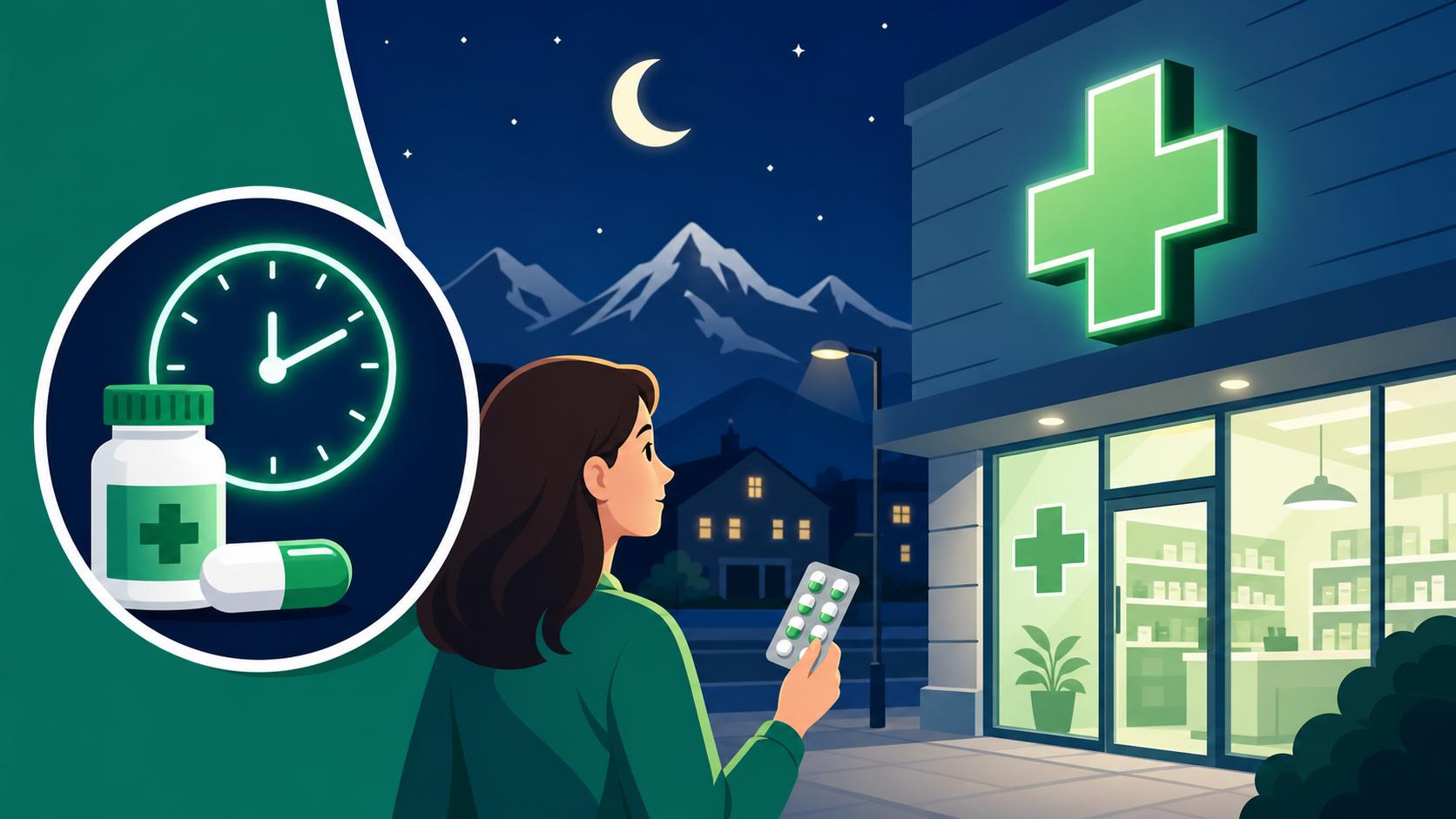
Waking up at 3 AM to the sound of a persistent, barking cough or a skyrocketing fever is a rite of passage for every expat in Switzerland. I remember my first winter in Zurich, staring at an empty box of Algifor while my partner shivered, realizing with horror that every shop in a five-mile radius had been locked tight since Saturday afternoon. This guide solves the frantic search for medication when the rest of the country is asleep.
The Reality of Swiss Opening Hours and the Emergency System
Switzerland is a country that deeply values its rest. While this makes for a peaceful quality of life, it can feel like a bureaucratic wall when you are in pain and it is 9 PM on a Tuesday. Most local pharmacies, or Apotheken, close by 6:30 PM on weekdays and often by 4:00 PM on Saturdays. Sundays? Unless you are at a major transit hub, the shutters are down. Understanding how the "emergency" designation works here is the first step to staying sane.
Why Everything Closes Early in Switzerland
The strict opening hours are governed by labor laws and cantonal regulations designed to protect workers' rights and ensure communal quiet time. For a newcomer, it feels like a personal affront, but for the Swiss, it is a non-negotiable part of the social contract. I learned the hard way that you cannot simply "run to the 24-hour CVS" because that concept does not exist here. Instead, the system relies on a rotating schedule of duty pharmacies. This is why having comprehensive coverage, like that offered by Cigna Global, can be a lifesaver, as their support lines can often help you navigate local provider locations when you are too stressed to search.
Defining Emergency vs. Convenience in the Swiss Context
In Switzerland, an "emergency" is strictly defined. If you just want a bottle of vitamins or some high-end sunscreen, you are expected to wait until Monday morning. Emergency pharmacies are there for acute pain, sudden illness, or filling life-saving prescriptions. If you show up at a Notfallapotheke for something trivial, you will still be served, but you will pay a significant premium for the privilege. It is always a good idea to keep a basic stock of essentials like Over-the-Counter Painkillers in Switzerland: Dafalgan, Algifor, and Costs in your medicine cabinet to avoid these midnight runs.
The Culture of the Notfallapotheke
The emergency pharmacy is often a small window or a night-bell system. You won't be browsing the aisles for a snack; you’ll be speaking through a glass partition or an intercom. It is a formal, functional interaction. For those with chronic conditions, ensuring your insurance is robust is vital. Many expats find that Healthcare in Switzerland for Expats: The Complete System Overview (2027) provides the necessary context to understand why the system is structured this way.
How to Find an Emergency Pharmacy
Finding a Notfallapotheke is not as simple as a Google Maps search, as the "open" status on search engines is often inaccurate for rotating duty hours. You need to use the official channels that the locals use.
Using Online Directories and Local Portals
Every canton has a dedicated website or a "Notfall" (emergency) section on their official pharmacy association page. For example, in Zurich, you would look for the Apothekerverband des Kantons Zürich (AVKZ). These sites are updated in real-time. If you are struggling with the language, having a few key terms ready is helpful: Notfalldienst (emergency service), Apotheke (pharmacy), and Geöffnet (open). If you find yourself frequently needing supplements or non-prescription items, ordering ahead from iHerb can save you the stress of these last-minute searches for basic wellness products.
The SOS Number 144 and Non-Emergency Medical Hotlines
If you are in a genuine medical crisis, you should call 144. However, for just finding a pharmacy, calling the cantonal medical emergency number is more appropriate. Each canton has one (e.g., 0800 33 66 55 in some regions). These operators usually speak English and can tell you exactly which pharmacy is on duty. For more on the difference between these services, see Emergency Numbers 144 vs 112: Which to Call in a Swiss Medical Crisis.
Physical Signs and Local Lists at Standard Pharmacies
One of the most reliable "old school" ways to find help is to walk to your nearest local pharmacy. By law, they must display a sign in their window listing the nearest emergency pharmacies and the contact details for the current duty pharmacist. I’ve spent many nights squinting at these printed lists in the rain. It is a community-based backup that works even if your phone battery is dead. This is part of the broader system of Finding Medical Care in Switzerland: Doctors, Specialists, and Referrals that relies on localized information.
Understanding Emergency Surcharges and Billing
Nothing spikes your blood pressure like the bill at a Swiss emergency pharmacy. It is important to know that you aren't being "scammed" as a foreigner; the fees are standardized and transparent, even if they are high.
The Dreaded Emergency Fee
When you use a pharmacy outside of normal business hours, a "Notfallgebühr" or "Service de garde" fee is added to your bill. This fee typically ranges from CHF 17.50 to CHF 50, depending on the time of night and the canton. This fee covers the cost of keeping a pharmacist on call. Even if you are just buying a CHF 10 box of paracetamol, that box might suddenly cost you CHF 60. This is another reason why I always suggest keeping a "Swiss survival kit" of basics from iHerb at home.
How Insurance Handles After-Hours Medication
If you have a valid prescription for the medication you are picking up, most basic Swiss health insurance (KVG) will cover the cost of the medicine, but they may not always cover the full emergency surcharge unless it was a life-threatening situation. If you have international coverage through Cigna Global, you might have different reimbursement rules for emergency out-of-pocket costs. It is worth checking The Swiss Franchise System: How Deductibles and Copays Work to see how these small bills impact your annual deductible.
Tiers Garant vs. Tiers Payant in Emergency Settings
In an emergency pharmacy, you will almost always be asked to pay upfront (Tiers Garant), especially if you are not a regular customer at that specific branch. You will receive a Rückforderungsbeleg (claim receipt) which you then mail to your insurance company for reimbursement. Some larger 24-hour pharmacies in cities like Zurich or Geneva might use Tiers Payant, where they bill the insurer directly, but don't count on it. For a deeper look at this, read How to Read a Swiss Medical Bill (Rückforderungsbeleg) and Claim Refunds.
| Service Type | Estimated Cost (Extra) | Payment Method | Insurance Coverage |
|---|---|---|---|
| Evening (6 PM – 10 PM) | CHF 15 – 25 | Cash / Card | Partial |
| Late Night (10 PM – 7 AM) | CHF 40 – 50 | Cash / Card | Case-by-case |
| Sunday / Public Holiday | CHF 20 – 40 | Cash / Card | Usually covered with Rx |
| Pharmacist Consultation | CHF 10 – 20 | Cash / Card | Covered with Rx |
Alternative Options: Hospital Pharmacies and Airport/Train Stations
If you live near a major city, you have a "get out of jail free" card. Major transportation hubs and hospitals operate on different rules than the local village pharmacy.
The SBB Hack – Shopping at Major Transport Hubs
The pharmacies located inside major train stations like Zurich HB, Geneva Cornavin, or Basel SBB are often open much later than street-side shops—sometimes until midnight or even 24/7. Because these are high-traffic areas, they are permitted to stay open for the convenience of travelers. They often do not charge the emergency fee if they are within their "extended" but "regular" hub hours. If you are in Zurich, the Walk-in Clinics in Zurich: Permanence Hautbahnhof Guide is a great resource for medical needs that include on-site pharmacy services.
Permanence and Walk-in Clinic Pharmacies
Most Swiss cities have a "Permanence"—a walk-in clinic for non-life-threatening emergencies. These clinics usually have an associated pharmacy that stays open as long as the doctors are seeing patients. If you need a prescription written and filled at 11 PM, this is your best bet. You will find similar setups in the Geneva Expat Healthcare Guide: International Clinics and Public Hospitals.
iHerb and Stocking Your Home Cabinet
The best way to "find" an emergency pharmacy is to not need one. I eventually learned that keeping a stock of high-quality zinc, Vitamin C, and basic cold remedies from iHerb prevented those 2 AM panics. While they don't sell prescription heart meds, having your "wellness" stock ready means you only have to brave the cold for true medical emergencies. For those with international lifestyles, Cigna Global also provides resources on how to maintain your health so you're less likely to end up in an emergency queue.
Over-the-Counter Rules and Prescription Realities
Switzerland is quite conservative about what you can buy without a doctor’s note. This can be a shock if you come from a country where you can buy heavy-duty painkillers or cough syrups with codeine at a petrol station.
Can You Get a Prescription Filled After Hours?
Yes, but you must have a physical prescription or have had your doctor send an e-prescription to that specific pharmacy. If you run out of a chronic medication—say, blood pressure pills—and it is Sunday, the pharmacist can technically dispense a small "emergency pack" to bridge you until Monday, but they are not legally required to do so without a script. They will often charge a "consultation fee" to verify your need. This is a common hurdle mentioned in Pharmacies and Medication: Prescriptions, Costs, and OTC Regulations.
Dealing with Restricted Medications
Medications in Switzerland are categorized from A to D. Category A and B require a prescription. If you are looking for antibiotics for a suspected UTI at 2 AM, the pharmacist cannot give them to you without a doctor’s order. You would first need to visit an emergency doctor or a Permanence. For more on what you can and cannot bring into the country yourself, see Bringing Prescription Medication into Switzerland: Customs and Legal Limits.
Language Barriers at the Pharmacy Window
Most pharmacists in Switzerland are highly educated and usually speak excellent English, especially in cities like Zurich, Basel, or Geneva. However, in smaller towns, you might struggle. It is helpful to know the generic name of your medication (e.g., Ibuprofen instead of Advil). If you find yourself in a situation where the doctor refuses to speak English, check What to Do If Your Doctor Refuses to Speak English During a Consultation for advice on navigating those awkward cultural moments.
Regional Guides: Zurich, Geneva, Basel, and Bern
Each major Swiss city has its own rhythm for emergency care. Knowing the "anchor" pharmacy in your city can save you hours of searching.
Finding the Notfallapotheke on Sundays in Zurich
In Zurich, the "Bellevue Apotheke" is the legendary 24/7 go-to. It is located right at the Bellevue tram stop and never closes. It is busy, efficient, and everyone there speaks English. If you are in the northern part of the city, checking Finding the Notfallapotheke (Emergency Pharmacy) on Sundays will give you more localized options that might be closer than the city center.
Geneva and the French-Speaking Regions
In Geneva, the system is often referred to as the Pharmacie de garde. The location rotates, but there is always at least one open in the city center. The Pharmacie des Hôpitaux Universitaires de Genève (HUG) is also a critical resource. For those living in the surrounding areas, the Vaud Expat Healthcare Guide: CHUV and Riviera Medical Centers provides similar "anchor" locations for Lausanne and Vevey.
Basel and Bern After-Hours Coverage
Basel, being a pharma hub, has excellent coverage. The Notfallapotheke in the Basel SBB station is a primary resource, but there are also rotating neighborhood options. In Bern, the city's Apotheke at the Bahnhof is open until 10 PM daily, after which the duty rotation takes over. For those in the capital, Bern Expat Healthcare Guide: Inselspital and Local Care Facilities is the definitive list for night-time needs.
Emergency Medical Services and When to Skip the Pharmacy
Sometimes, the pharmacy isn't enough. If you are experiencing chest pain, severe allergic reactions, or uncontrollable bleeding, the Notfallapotheke is the wrong stop.
When to Call an Ambulance
If the situation is dire, call 144. Be aware that ambulance rides in Switzerland are not fully covered by basic insurance—you usually pay 50% of the cost. For more details on this often-surprising bill, read Does Basic Swiss Insurance Cover Ambulance Rides? The 50% Rule Explained.
REGA: The Swiss Alpine Rescue
If you are in a remote area or a mountain village where the nearest emergency pharmacy is an hour away, you might be thinking about REGA. While they don't deliver aspirin, they are essential for medical evacuations. Many expats maintain a membership for peace of mind. Check REGA Membership: Why Expats Need Air Rescue Insurance in the Alps to see if it’s right for your family.
The Role of Supplemental Insurance
For many of us, the high out-of-pocket costs of emergency care are the biggest stressor. This is where Supplementary Health Insurance (VVG): What It Covers and When to Buy It comes into play. Some private plans will cover the emergency pharmacy surcharges or provide 24/7 tele-medicine lines that can call in prescriptions for you, saving you the walk-in fee at a clinic. Both Cigna Global and local Swiss providers offer various tiers of this "peace of mind" coverage.
Legal Disclaimer
This guide is for informational purposes only and does not constitute medical or legal advice. Healthcare regulations and pharmacy opening hours in Switzerland can change frequently. Always consult with a qualified medical professional or contact official Swiss emergency services (144) in the event of a medical crisis. Verify all insurance coverage details directly with your provider.