Over-the-Counter Painkillers in Switzerland: Dafalgan, Algifor, and Costs
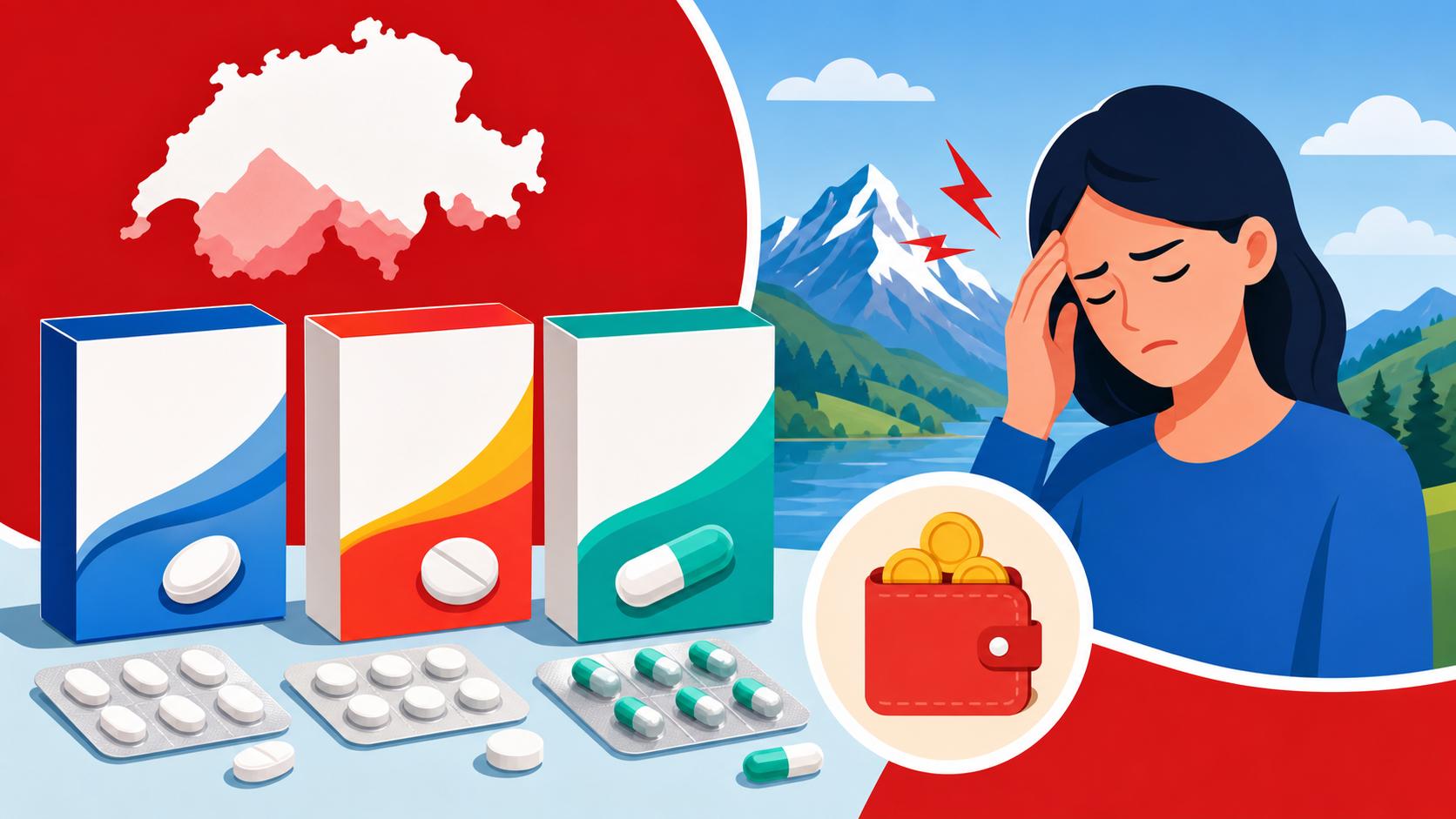
Walking into a Swiss pharmacy for the first time can be a jarring experience when you realize your favorite headache remedy from back home is nowhere to be found. I remember standing in a Zurich Apotheke, clutching my temples and trying to describe "the blue gel caps" to a very professional but confused pharmacist. This guide explains the Swiss over-the-counter landscape, specifically focusing on staples like Dafalgan and Algifor, to ensure you get the relief you need without the confusion.
Understanding the Swiss Pharmacy and Drugstore Culture
One of the first culture shocks for many expats is the realization that you cannot buy painkillers in a supermarket. Unlike the US, UK, or many other European countries where you can grab a pack of ibuprofen alongside your milk and bread at a Coop or Migros, Switzerland maintains a strict monopoly on medicinal sales. All medication, even the most basic paracetamol, must be purchased in either an Apotheke (Pharmacy) or a Drogerie (Drugstore).
The distinction between these two is important for your wallet and your convenience. An Apotheke is a full-service medical pharmacy where pharmacists can dispense prescription medication and offer high-level medical advice. They carry Category A, B, and D medications. A Drogerie, on the other hand, focuses on health and beauty, carrying Category D and E medications but nothing that requires a doctor's prescription. If you just need standard pain relief, a Drogerie is often slightly less intimidating, though prices remain fairly standardized across the board.
When you walk up to the counter, be prepared for the Swiss consultation. It is a legal requirement for the staff to ask if you have taken the medication before and to explain the dosage. While this can feel patronizing when you just want to go home and lie down, it is a hallmark of the Healthcare in Switzerland for Expats: The Complete System Overview (2027) that emphasizes patient safety. They will often ask if the pain is acute, if you have a fever, or if you are taking other medications. This level of care is why you pay a premium for over-the-counter (OTC) drugs here.
The Big Two: Dafalgan and Algifor Explained
If you ask for a generic painkiller in Switzerland, nine times out of ten, you will be handed either Dafalgan or Algifor. These are the "Coke and Pepsi" of the Swiss pharmaceutical world. Understanding what is in them will save you a lot of time and potential drug interactions.
Dafalgan (Paracetamol)
Dafalgan is the most common brand of paracetamol in Switzerland. It is the equivalent of Tylenol in the US or Panadol in the UK and Australia. It is primarily used for mild to moderate pain and fever.
- Availability: You can find it in almost every Pharmacies and Medication: Prescriptions, Costs, and OTC Regulations outlet. It comes in tablets, effervescent tabs (which are very popular in Switzerland), and even suppositories for children.
- Dosage: The standard OTC strength is 500mg. While 1g tablets exist, they are often kept behind the counter or may technically require a prescription depending on the pack size.
- The Experience: Swiss doctors love paracetamol. Whether you have a broken toe or a post-operative recovery plan, Dafalgan is usually the first line of defense. It is gentler on the stomach than ibuprofen but lacks anti-inflammatory properties.
Algifor (Ibuprofen)
Algifor is the dominant brand for ibuprofen, equivalent to Advil or Motrin. It is an NSAID (Non-Steroidal Anti-Inflammatory Drug), making it the preferred choice for menstrual cramps, dental pain, or sports injuries involving swelling.
- Versions: You will likely see "Algifor Dolo." The "Dolo" suffix usually indicates it is intended for pain (dolor). The standard strength is 400mg per tablet.
- Usage: It is highly effective but comes with the usual warnings about taking it on an empty stomach. The Swiss versions are extremely high quality; I’ve found that Algifor Liquid caps seem to work faster than many generic versions I’ve used abroad.
- Combination Products: Be careful with products like Algifor-L, which contains ibuprofen lysine for faster absorption. Always clarify with the pharmacist which version is best for your specific pain.
For those who have a Cigna Global policy or other international insurance, you might find that while these OTC meds are not usually covered, the advice given by the pharmacist can help you decide if you need to escalate to a specialist. If you are ever in doubt during the weekend, you should locate your local Finding the Notfallapotheke (Emergency Pharmacy) on Sundays to avoid a long wait at the ER.
Comparing Costs and Packaging
Switzerland is famously expensive, and medication is no exception. A pack of 16 paracetamol tablets that might cost 50 cents in a London supermarket can easily run you 7 to 9 CHF in a Geneva pharmacy. This price gap is one of the most significant frustrations for newcomers.
Below is a general price comparison for common OTC pain relief options in Switzerland (prices are estimates for 2026).
| Product Name | Active Ingredient | Typical Pack Size | Estimated Cost (CHF) |
|---|---|---|---|
| Dafalgan | Paracetamol 500mg | 16 Tablets | 6.50 – 8.50 |
| Algifor Dolo | Ibuprofen 400mg | 10 Tablets | 9.00 – 12.00 |
| Voltaren Dolo | Diclofenac 12.5mg | 20 Tablets | 12.50 – 15.00 |
| Aspirin S | Acetylsalicylic Acid | 20 Tablets | 8.00 – 10.50 |
| Generic Paracetamol | Paracetamol 500mg | 20 Tablets | 5.00 – 6.50 |
To save money, always ask for the "Generikum" (generic). Brands like Mepha or Streuli produce the exact same molecules as Dafalgan or Algifor for a fraction of the price. The pharmacists won't always offer the generic first unless you ask, as the branded versions are the default in their systems.
Another tip for long-term expats: while you can’t buy painkillers via post easily due to strict import laws, you can save significantly on health-adjacent products like vitamins, supplements, and bandages by using iHerb. This allows you to reserve your pharmacy budget for the heavy hitters like Algifor. However, be mindful of Bringing Prescription Medication into Switzerland: Customs and Legal Limits if you are considering ordering anything more "medical" from abroad.
Navigating the Swiss Medical System and Insurance for OTC Drugs
A common question among expats is: "Can I claim these painkillers on my health insurance?" The short answer is usually no. Under The Swiss Franchise System: How Deductibles and Copays Work, you are responsible for all medical costs until you hit your annual deductible (Franchise). Since most healthy expats choose a high franchise of 2,500 CHF, your occasional pack of Dafalgan will always be an out-of-pocket expense.
Even if you have reached your deductible, basic insurance (KVG/LAMal) typically only covers medication on the "Specialties List" (Spezialitätenliste), which are drugs prescribed by a doctor. If you buy it OTC without a prescription, you pay the full price. If your doctor writes you a prescription for high-dose ibuprofen, it then follows the How to Pay Medical Bills: Tiers Garant vs. Tiers Payant Billing Systems rules, where the pharmacy might bill your insurer directly or you pay and claim it back.
If you find yourself frequently needing pain relief for a chronic condition, it is worth Finding Medical Care in Switzerland: Doctors, Specialists, and Referrals to get a proper diagnosis. A doctor can prescribe larger, more cost-effective packs (like 100-count boxes of 1g paracetamol) that are much cheaper per dose than the small OTC packs and may be covered by your insurance if you have a low franchise.
Other Common OTC Options: Aspirin, Voltaren, and More
While Dafalgan and Algifor rule the roost, there are other options available for specific needs.
Aspirin: Bayer Aspirin is widely available. In Switzerland, you will often see "Aspirin Cardio" (low dose for heart health) and "Aspirin C" (effervescent with Vitamin C). The latter is a Swiss cult favorite for the early stages of a cold. If you need something for a sore throat or congestion to go with it, check out my other guide on Cough and Cold Medicine in Switzerland: Local Brands and Pharmacy Advice.
Voltaren Dolo: This contains diclofenac. It is excellent for joint pain and backaches. While the gel version is available everywhere, the oral tablets are Category D, meaning you need to speak to the pharmacist. They are very effective but have a higher risk of side effects, so the consultation is particularly important here.
Natural and Alternative Options: Switzerland has a deep-rooted love for "Komplementärmedizin." In any Drogerie, you will find a vast array of herbal painkillers, homeopathic remedies, and essential oils. While these are popular, if you are looking for "real" medicine, make sure you aren't accidentally buying a homeopathic dilution. Look for the active ingredient list on the side of the box.
In summary, while the costs are higher and the access is more regulated than you might be used to, the quality of OTC pain relief in Switzerland is exceptional. By knowing to ask for Dafalgan for a fever or Algifor for inflammation—and always remembering to ask for the generic—you can navigate the Swiss pharmacy like a pro.
Disclaimer
This article is for informational purposes only and does not constitute medical advice. Always consult with a qualified healthcare professional or a Swiss pharmacist before taking any medication. The author is an expat blogger sharing personal experiences and research, not a licensed medical practitioner. Please read the package insert (Packungsbeilage) carefully for any medication purchased in Switzerland.