Bringing Prescription Medication into Switzerland: Customs and Legal Limits
Arriving at Zurich Airport with a suitcase full of pills can feel like a high-stakes gamble if you aren't sure about Swiss narcotic laws. I remember sweating at the "Red Channel" while an officer inspected my asthma inhalers with clinical precision. This guide solves the confusion around the 30-day limit, necessary documentation, and how to avoid having your essential treatments confiscated by customs.
Understanding Swiss Customs and the 30-Day Rule
When you first land in Switzerland, whether you are here for a weekend in the Alps or a permanent relocation to Zug, the most important figure to remember is thirty. Under Swiss law, specifically the Federal Act on Medicinal Products and Medical Devices, individuals are permitted to carry a supply of medication intended for their own personal use for a period of 30 days. This rule is designed to ensure that travelers have access to their necessary treatments while preventing the unauthorized import of commercial quantities.
The 30-day rule applies to almost all standard prescription drugs, from blood pressure medication to birth control. However, the interpretation of "30 days" can be tricky if your dosage is variable. I always advise fellow expats to calculate their 30-day supply based on the maximum possible dosage prescribed by their doctor. If you are staying longer than a month, you are expected to integrate into the local system and obtain your refills through a Swiss pharmacy. You can learn more about how this works in (Healthcare in Switzerland for Expats: The Complete System Overview (2026)).
It is also vital to understand that this allowance is strictly for personal use. You cannot bring in a 30-day supply for a friend, a relative, or "just in case" someone else needs it. If customs officials suspect you are importing medication for others, they have the authority to seize the items and potentially issue a heavy fine. I’ve seen people lose hundreds of francs worth of specialized medication because they couldn't prove it was for them. For those with international health plans like Cigna Global, it’s worth checking if they have specific liaisons who can help you navigate these initial local requirements.
Finally, remember that the 30-day rule is a limit for entry, not a limit for possession. Once you are settled, you will need to establish a relationship with a local practitioner. The transition can be smoother if you have your initial records ready. For a broader look at the medical landscape you are entering, check our guide on (Pharmacies and Medication: Prescriptions, Costs, and OTC Regulations).
The Critical Importance of Documentation
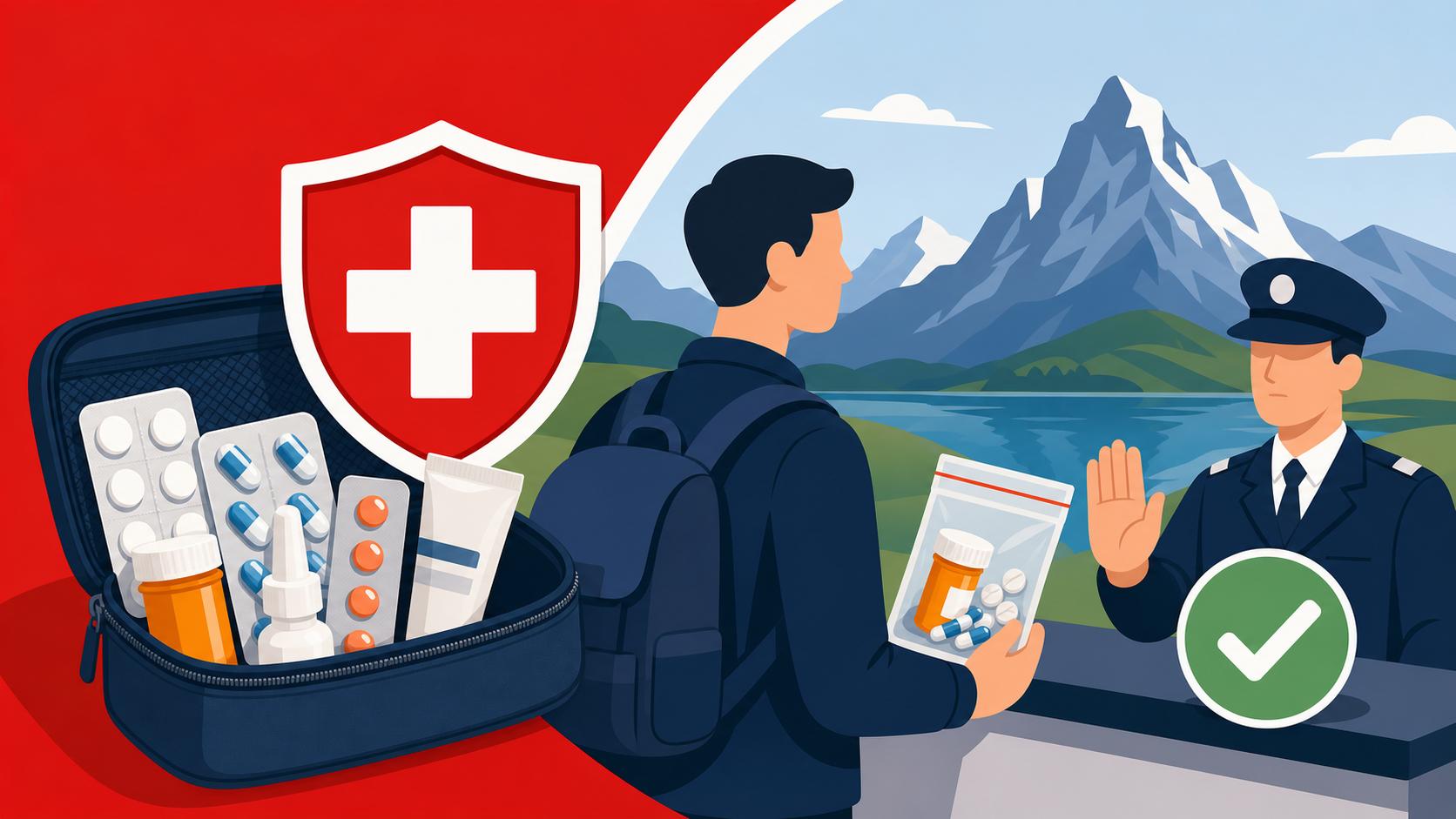
Swiss customs officers are generally reasonable, but they are also incredibly thorough. You cannot simply show up with a handful of loose pills in a plastic bag and expect to pass. The gold standard for bringing medication into Switzerland is keeping everything in its original pharmacy packaging. This packaging clearly displays your name, the prescribing doctor’s name, the drug name, and the dosage instructions. This is your first line of defense during a baggage check.
Beyond the packaging, you should always carry a copy of the original prescription and, ideally, a "Medical Passport" or a formal letter from your physician. This letter should be written in English, German, French, or Italian. If your doctor only provides documents in a language like Spanish or Chinese, you should have them translated before you fly. The letter must state the diagnosis, the specific medication required, and the daily dosage. This is particularly important for chronic conditions where you might be carrying multiple types of pills.
I personally recommend keeping a digital copy of these documents on your phone and a physical copy tucked into the same bag as your medication. If you are moving here for work and have a complex medical history, finding a local advocate is step one. We have a detailed resource on (Finding an English-Speaking Family Doctor (Hausarzt) in Major Cantons) that can help you find someone to take over your care once your initial 30-day supply runs low.
Having this documentation isn't just about customs; it’s about your safety. If you end up in a situation where you need (Emergency Medical Services: Ambulances, REGA, and Crisis Protocols), having your current prescriptions and a doctor's note in your bag allows Swiss paramedics to treat you without the risk of dangerous drug interactions. It is a small step that provides massive peace of mind in a new country.
Special Regulations for Narcotics and Psychotropic Substances
This is where things get serious. Switzerland is a signatory to the Schengen Agreement and the 1971 Convention on Psychotropic Substances, which means they take the import of "controlled substances" very seriously. This category includes many common medications for ADHD, severe pain (opioids), and anxiety (benzodiazepines). If you are (Bringing ADHD Medication (Ritalin/Adderall) Through Swiss Customs), you cannot simply rely on the standard 30-day rule without extra paperwork.
For narcotics, you must have a specific certificate from your doctor that complies with the requirements of the Swiss Federal Office of Public Health (FOPH). This certificate must detail the exact quantities you are carrying. If you are traveling from a Schengen country, there is a specific form called the "Announcement for the carrying of narcotic drugs." If you are coming from outside the Schengen area (like the US, UK, or Canada), the rules are even stricter, and you should ideally have your doctor use the international template provided by the International Narcotics Control Board.
I have spoken to many expats who were surprised to find that their standard anxiety medication was flagged at the border. The Swiss "Betäubungsmittelverzeichnis" (list of controlled substances) is updated regularly. If you are unsure, check the Swissmedic website or consult with your insurance provider. If you use a premium expat insurer like Cigna Global, they often have resources to help you identify if your specific brand name is considered a controlled substance in Switzerland.
| Medication Category | Documentation Required | Maximum Supply Allowed |
|---|---|---|
| Standard (e.g., Blood Pressure) | Original Box + Prescription | 30 Days |
| Controlled (e.g., ADHD, Opioids) | Medical Certificate + Schengen Form | 30 Days |
| Supplements (e.g., iHerb Vitamins) | Original Packaging | Reasonable Personal Use |
| Prohibited (e.g., Certain Hormones) | Not Allowed | Zero |
Failure to declare these substances can lead to criminal charges, not just confiscation. When in doubt, always use the "Red Channel" at customs and declare what you have. Most of the time, the officers will see your paperwork and send you on your way. It is the attempt to hide these medications that triggers the most trouble.
Managing Mail-Order Medications and Shipping Risks
A common mistake new expats make is trying to have their family back home mail them a "top-up" of their prescription. I cannot stress this enough: do not do this. Importing medicinal products by mail into Switzerland is strictly prohibited for private individuals. The Swiss authorities are very protective of their pharmaceutical market and have strict safety protocols. If a package containing prescription medication is intercepted by Swiss Post and Customs, it will be seized.
When a package is seized, you won't just lose the medication. You will receive a formal notice from Swissmedic, and you will likely be charged an administrative fee for the destruction of the drugs. These fees can range from 300 to over 1,000 CHF depending on the complexity of the case. I once knew a student who tried to have her birth control sent from the UK; she ended up with a bill that cost more than a month's rent in Basel.
The only exception to this rule is for very specific cases, usually involving life-saving drugs that are not available in Switzerland, and even then, the process must be handled by a licensed Swiss pharmacy or a doctor. For daily wellness, however, you can usually find high-quality alternatives within the country. If you are looking for specific brands of vitamins or supplements that aren't available in local shops like Müller or Sun Store, you can often use sites like iHerb, which ship to Switzerland legally, provided the items aren't classified as "medicinal" by Swiss standards.
If you do order supplements from abroad, be prepared for (How to Read a Swiss Medical Bill (Rückforderungsbeleg) and Claim Refunds) to seem simple compared to the customs invoices you might receive for VAT and handling fees. Always check if the supplement is legal here; for example, high-dose melatonin is often regulated as a medicine in Switzerland and might be blocked if ordered from a foreign site, even through iHerb.
Supplements, Vitamins, and Over-the-Counter Limits
While prescription drugs have a hard 30-day limit, vitamins and supplements fall into a slightly different category. Most supplements are viewed as "foodstuffs" or "low-risk medicinal products." You are generally allowed to bring a "reasonable amount" for personal use. What constitutes "reasonable" is subjective, but usually, a three-month supply of multivitamins or fish oil won't raise an eyebrow at the border.
However, be aware that some supplements that are over-the-counter (OTC) in your home country might be prescription-only in Switzerland. A classic example is Vitamin D. In many countries, you can buy 5,000 IU capsules at any grocery store. In Switzerland, high doses are often handled by a doctor, especially when dealing with (Winter Depression (SAD): Light Therapy and Vitamin D Prescriptions). If you are carrying very high-potency supplements, treat them as you would a prescription drug and bring a doctor's note to be safe.
Another quirk of the Swiss system is the cost and availability of simple painkillers. You might be used to buying a 500-count bottle of Ibuprofen for a few dollars. In Switzerland, you will typically get a box of 20 or 50 tablets at the pharmacy for a much higher price. For more on this, see our breakdown of (Over-the-Counter Painkillers in Switzerland: Dafalgan, Algifor, and Costs). Because of this price difference, many expats try to "stock up" when they move. While carrying a few bottles of Advil is fine, carrying fifty bottles looks like you're running an unlicensed pharmacy.
If you are a fan of specific brands like those found on iHerb, you can continue to use them, but keep your orders small to avoid high import taxes. Swiss customs are particularly vigilant about weight and value. If your supplement order exceeds 65 CHF (including shipping), you will likely be hit with administrative fees that take the "discount" out of your purchase.
What to Do If You Run Out or Lose Your Medication
Despite the best planning, accidents happen. I’ve heard horror stories of luggage being lost or medication being left in a hotel fridge in Lugano. If you find yourself in Switzerland without your essential medication, do not panic, but do act quickly. Your first stop should not be the pharmacy, as they cannot legally dispense most medications without a Swiss prescription.
Instead, go to a "Permanence" or a walk-in clinic. These are found in almost every major train station (like Zurich HB or Geneva Cornavin) and are used to dealing with travelers. Bring your empty medication box or your foreign prescription with you. The doctor will perform a brief consultation and can then issue a Swiss prescription that any local pharmacy will honor. If you have international coverage through Cigna Global, this visit should be covered, though you may need to pay upfront and claim it back later.
For those living here longer-term, it is much more efficient to use a digital system. Once you have a Swiss prescription, you can use apps to manage your refills. We have a guide on (Using a Swiss Pharmacy App (Zur Rose, Amavita) for Refills) that explains how to get your pills delivered to your door once you are settled into the local healthcare ecosystem.
If your medication is extremely specialized and a local doctor cannot find an equivalent, they may have to "import" it for you through official channels. This is expensive and slow, which is why I always recommend starting the search for your Swiss doctor the moment you get your B-permit or residence card. Procrastination is the enemy of health in a country as regulated as Switzerland.
Summary of Prohibited Substances and Common Pitfalls
While most medication is allowed under the 30-day rule, there are some hard "no-go" areas. Any medication containing substances prohibited by the Swiss Anti-Doping laws can be problematic if you are an athlete, but for the average person, the focus is on performance enhancers and certain hormonal treatments. Growth hormones and certain steroids are heavily restricted and often require special permits from the FOPH that are nearly impossible for a private citizen to get on short notice.
Another pitfall is the "herbal" category. Just because something is "natural" doesn't mean it’s unregulated. Many Traditional Chinese Medicine (TCM) products containing certain animal or plant extracts are banned under CITES (the Convention on International Trade in Endangered Species). If you use TCM, you should check the ingredients carefully before bringing them into the country. Swiss customs take environmental protection and species preservation just as seriously as drug control.
Lastly, be mindful of the "Green Channel" culture. Many travelers assume that if they have a prescription, they can walk through the Green Channel. Technically, if you are carrying controlled substances (narcotics), you should go through the Red Channel to declare them. Most people don't, and most of the time they aren't stopped, but if you are the one who gets picked for a random check and you have an undeclared bottle of Oxycontin, the "I didn't know" defense will not work. Be honest, be prepared, and keep your paperwork organized.
Disclaimer
The information provided in this article is for general informational purposes only and does not constitute legal or medical advice. Regulations regarding the import of medication into Switzerland are subject to change by Swissmedic and the Federal Office of Public Health. Always verify current requirements with official Swiss government sources or your healthcare provider before traveling.