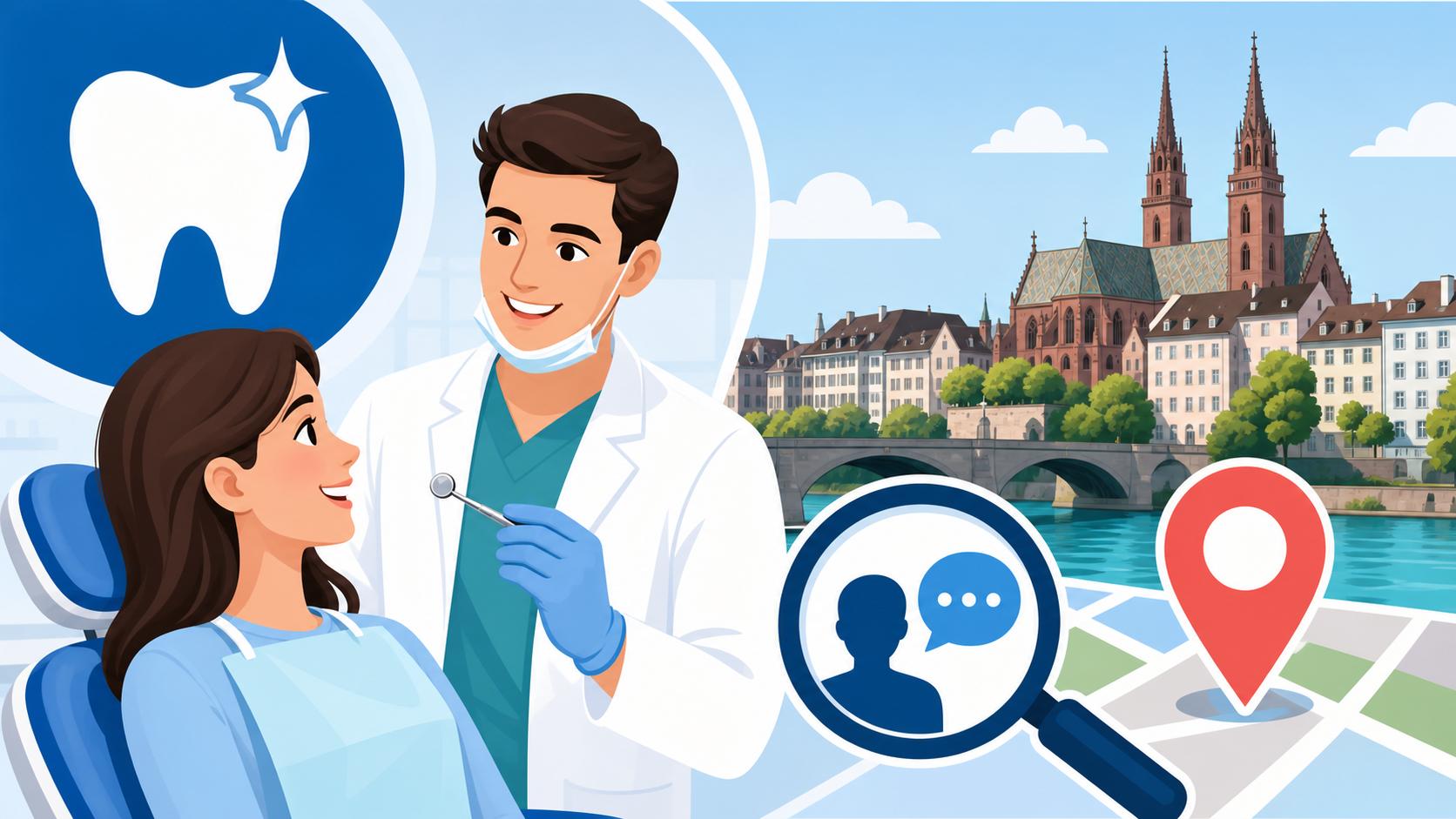
Finding an English-Speaking Dentist in Basel City
Waking up with a sharp, throbbing pain in your molar while living in a city where you still struggle to order a "Stange" of beer in the local dialect is a nightmare scenario. I remember my first dental emergency in Basel; I spent more time worrying about how to say "root canal" in German than actually finding a doctor. This guide provides a roadmap for navigating the Basel dental landscape, ensuring you find a professional who speaks your language and understands the specific administrative hurdles expats face.
The Language Barrier in Basel Dental Practices
Basel is an international hub, thanks to the massive pharmaceutical presence of companies like Roche and Novartis. However, while the business world breathes English, the medical and dental world often defaults to Swiss German or High German. When you are in pain, the last thing you want to do is use a translation app to describe the difference between a dull ache and a sharp sensitivity to cold. Finding an English-speaking dentist in Basel City is not just about comfort; it is about clinical safety and ensuring you fully consent to a treatment plan you actually understand.
Most dentists in the city center, especially those near the Basel SBB train station or the Claraplatz area, are accustomed to international patients. Many of these practitioners have studied abroad or regularly attend international conferences held in English. When calling a clinic, do not be afraid to ask immediately if the dentist speaks English. Often, the receptionist might have limited English, but the medical staff will be fluent. It is a common "Basler" experience to navigate a slightly clunky phone call only to find a dentist with perfect, near-native English once you are in the chair.
Validation is key here: it is okay to feel intimidated. The Swiss dental system is highly efficient but also quite formal. If you cannot find a local recommendation, Finding Medical Care in Switzerland: Doctors, Specialists, and Referrals is an excellent starting point for understanding how the broader medical system connects with dental specialists. Remember that your comfort level directly impacts your ability to advocate for yourself during a procedure.
Understanding the Swiss Dental Tariff System
The cost of dental work in Switzerland is legendary, and Basel is no exception. Unlike the general medical system, dental care is largely a private expense. In Switzerland, dentists use a billing system called DENTOTAR. This system assigns a number of "points" to every single action a dentist performs—from a simple examination to a complex extraction. The total cost is calculated by multiplying these points by a "point value" (Taxpunktwert) set by the individual clinic.
In Basel City, you will find that the point value typically ranges between 1.0 and 1.3 for private patients. Social insurance cases often have a lower, fixed rate. Before you agree to any major work, such as a bridge or an implant, it is standard practice—and highly recommended—to ask for a "Kostenvoranschlag" or a formal cost estimate. This document will break down the points and the point value, so you aren't hit with a four-figure surprise three weeks later. For those worried about the long-term financial impact, checking out Dental Care in Switzerland: Costs, Insurance Reality, and Alternative Options can help you visualize how these costs fit into a typical expat budget.
| Procedure Type | Typical Point Range | Estimated Cost (CHF) |
|---|---|---|
| Annual Check-up & X-rays | 100 – 150 | 120 – 180 |
| Professional Cleaning (Hygienist) | 120 – 200 | 140 – 250 |
| Simple Composite Filling | 200 – 400 | 220 – 500 |
| Root Canal (Single Canal) | 600 – 900 | 700 – 1,100 |
| Ceramic Crown | 1,000 – 1,500 | 1,200 – 1,800 |
Navigating Emergency Dental Care in Basel
If your tooth decides to revolt on a Sunday morning, you have a few specific options in Basel. The primary hub for dental emergencies is the Universitäres Zentrum für Zahnmedizin Basel (UZB). Located near the Rosentalanlage, this is a world-class facility where many of the staff are researchers and professors at the University of Basel. Because it is a teaching hospital, you are almost guaranteed to find high-level English proficiency among the staff.
The UZB operates an emergency service that is available 365 days a year. However, be aware that "emergency" in Switzerland often comes with a surcharge. You will likely have to pay a base fee for the emergency consultation on the spot, usually by card or cash, before they even look at your teeth. This is a shock for many newcomers who are used to billing cycles, but it is standard protocol for "Walk-in" patients without a pre-established history at the clinic.
For those who need immediate pain relief while waiting for an appointment, you might visit a local pharmacy. Our guide on Finding the Notfallapotheke (Emergency Pharmacy) on Sundays explains how to locate medication outside of business hours. You can often find high-quality oral care products and supplements to manage inflammation through online retailers like iHerb, which is a favorite among expats for stocking up on brands that aren't always available in the local Coop Vitality or Amavita pharmacies.
Insurance Reality and the KVG Gap
One of the biggest shocks for expats is realizing that Is Basic Health Insurance (KVG) Mandatory for Expats? A Plain-English Guide actually covers very little when it comes to teeth. Mandatory Swiss health insurance only covers dental work if it is caused by a serious, unavoidable general illness or a specific accident. If you just have a cavity or need a wisdom tooth pulled due to crowding, you are paying out of pocket.
This is where supplementary insurance becomes a lifeline. Many expats opt for Supplementary Health Insurance (VVG): What It Covers and When to Buy It to bridge this gap. However, be warned: you must apply for dental insurance while your teeth are healthy. Most Swiss insurers require a dental exam before approval and will exclude any "pre-existing conditions." If you are already in Basel and your teeth are a mess, getting a new Swiss policy to cover them is nearly impossible.
In these cases, international plans like Cigna Global are often a superior choice for expats. Cigna Global offers modular plans where you can add dental coverage that is often more flexible than local Swiss "VVG" plans. This is especially useful if you move frequently, as the coverage follows you across borders. Cigna Global also understands the billing structures of international clinics, which can make the process of How to Read a Swiss Medical Bill (Rückforderungsbeleg) and Claim Refunds much smoother when dealing with high-cost procedures in Basel.
The Border Hopping Phenomenon
Living in Basel gives you a unique geographic advantage: the "Dreiländereck" (three-country corner). It is an open secret among locals and expats alike that many people cross the border into Weil am Rhein, Germany, or Saint-Louis, France, for dental work. The price difference can be staggering, sometimes up to 50% cheaper for labor-intensive work like crowns or orthodontics.
However, border-hopping isn't without risks. If you have a complication or an infection three days after a procedure in Germany, you have to commute back across the border to see that specific dentist, or pay full Swiss prices for a local Basel dentist to fix the mistake. Furthermore, if you are planning Orthodontics for Children in Switzerland: Insurance and Financial Planning, many Swiss school dental programs and local insurance providers prefer you to stay within the Swiss system for continuity of care.
If you do choose to look across the border, read Dental Costs in Switzerland vs. Border Countries: A Price Comparison carefully. You need to factor in the cost of travel, the potential for multiple appointments, and the fact that a Basel-based dentist provides a level of convenience and local accountability that is hard to beat when you have a busy work schedule at the Euroairport or the Novartis Campus.
Finding the Right Hygienist and Long-term Care
In Switzerland, the "Dentalhygienikerin" (dental hygienist) is often your primary point of contact. It is common to see a hygienist twice a year for a deep clean and "scaling," with the actual dentist only popping in for five minutes at the end to check the X-rays. This is a very proactive, prevention-heavy system. If you maintain these regular appointments, you can avoid the eye-watering costs of major surgery later on.
When choosing a practice, look for one that uses modern technology. Basel is home to some of the most advanced dental tech in the world (Straumann, a global leader in dental implants, is headquartered right nearby in Basel-Landschaft). Ask if they use digital impressions instead of those uncomfortable physical molds. A practice that invests in tech usually has staff that stays up-to-date with international trends, which almost always correlates with English fluency.
For post-cleaning care, many expats prefer to use specific fluoride rinses or specialized toothpastes. While local pharmacies are great, using a service like iHerb allows you to find specific international brands you might trust more. Maintaining a strict regimen at home is the best way to ensure you don't have to navigate the Emergency Medical Services: Ambulances, REGA, and Crisis Protocols for a dental infection that has turned systemic.
Checklist for Your First Appointment in Basel
When you finally book that English-speaking dentist in Basel City, come prepared. The Swiss appreciate efficiency and documentation.
- Bring your ID and Insurance Card: Even though basic insurance doesn't cover most things, they need it for your administrative file.
- Previous X-rays: If you have digital copies from your home country, bring them. This can save you CHF 100 on new ones.
- List of Medications: Be specific. If you are taking supplements from iHerb or prescriptions from a specialist, they need to know for anesthesia purposes.
- Ask about "Tiers Payant": Find out if they bill the insurance directly or if you have to pay first and claim back. Learn more about this at Pharmacies and Medication: Prescriptions, Costs, and OTC Regulations.
- The Point Value: Ask "Was ist Ihr Taxpunktwert?" (What is your point value?). Knowing if it’s 1.0 or 1.2 tells you immediately if you are in a premium clinic.
Finding the right dental partner in Basel takes a little bit of legwork, but once you find an English-speaking dentist who understands your history and your insurance (whether it's a local VVG or a global plan like Cigna Global), the "Swiss price tag" becomes much easier to swallow because you know you are getting some of the best care on the planet.
Disclaimer
The information provided in this guide is for educational and informational purposes only and does not constitute professional medical or dental advice. Always seek the advice of a qualified dental professional in Switzerland regarding any medical condition or treatment. Prices and regulations mentioned are based on 2026 estimates and are subject to change by the Swiss Dental Association (SSO) and individual cantonal authorities.