Walk-in Clinics in Zurich: Permanence Hautbahnhof Guide
Waking up with a searing ear infection on a Sunday morning is a rite of passage for every newcomer to Zurich. I remember my first time vividly, standing in the middle of a deserted Kreis 4 street, wondering why every doctor's office was shuttered and how I'd survive until Monday. This guide explores the essential lifesaver for every expat: the walk-in clinic at Zurich Main Station.
The Reality of Emergency Care in Zurich
When you first arrive in Switzerland, the healthcare system can feel like a fortress of efficiency that you simply don’t have the key to. Back home, you might have been used to a local GP who could squeeze you in, or perhaps you just headed straight to the hospital ER for a minor cut. In Zurich, the system is much more stratified. Hospitals like the Universitätsspital Zürich (USZ) are world-class, but their emergency rooms are strictly reserved for life-threatening situations or major trauma. If you show up there with a flu or a sprained ankle, you are going to wait for a very long time and likely receive a bill that reflects the high-intensity environment of a major hospital.
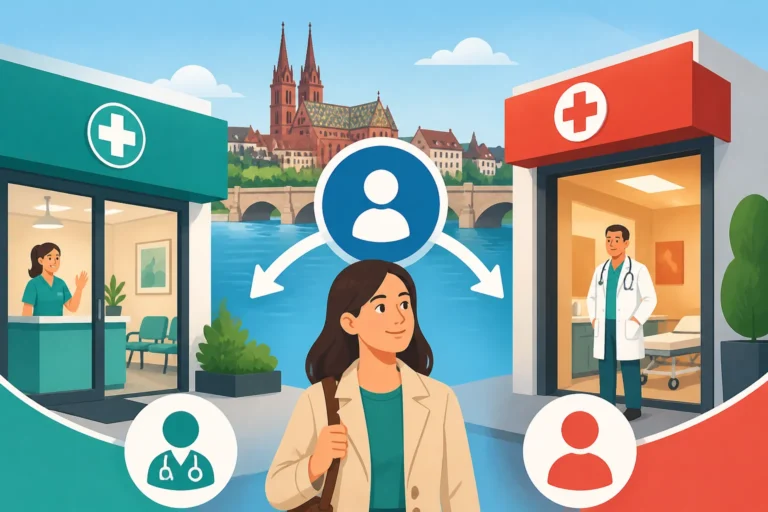
This is where the concept of the "Permanence" comes in. A Permanence is a walk-in clinic designed specifically to bridge the gap between your regular family doctor and the hospital emergency room. They are staffed by general practitioners and specialists who handle everything from sports injuries and stitches to sudden illnesses and infections. For those of us who haven't yet mastered the art of (Finding Medical Care in Switzerland: Doctors, Specialists, and Referrals), these clinics are the primary point of entry for urgent but non-life-threatening issues. They understand the "I need help right now" panic that happens when your regular doctor is on vacation or the weekend has just begun.
The most famous of these is the Permanence Hauptbahnhof. Located right at the heart of the city’s transport hub, it serves as the ultimate safety net. Because it operates outside of standard Swiss business hours, it has become the go-to for the international community. Whether you are covered by the standard (Understanding KVG/LAMal: Mandatory Basic Health Insurance Explained) or you have an international plan through a provider like Cigna Global, the process at a walk-in clinic is designed to be as frictionless as possible for people who are in pain and potentially confused by local administrative norms.
A Deep Dive into Permanence Hauptbahnhof
The first challenge any pained expat faces is actually finding the clinic. Zurich HB is a sprawling labyrinth on multiple levels, and when you’re nursing a migraine or a twisted knee, the last thing you want is a scavenger hunt. The Permanence is located at Bahnhofplatz 15, which is essentially on the "street level" at the front of the station (the South side, near the tram stops for the 6, 7, 11, and 13). You’ll see a large pharmacy called Amavita on the corner; the entrance to the clinic is right next to it. Taking the elevator up to the clinic immediately transports you from the chaotic bustle of the train station into a clean, quiet, and highly professional medical environment.
Once you step out of the elevator, the triage process begins. Unlike many countries where you might wait for hours before even speaking to a professional, the Swiss triage system at the Permanence is remarkably swift. You’ll be greeted at the front desk where you’ll need to provide your ID and your insurance card. If you are using a global policy like Cigna Global, make sure you have your digital or physical membership card ready. The staff here are almost universally fluent in English, which is a massive relief when you’re trying to describe the specific type of "stabbing" pain in your abdomen. They will assess the urgency of your situation and give you a realistic estimate of the wait time.
The operating hours are one of the biggest draws. They are open 365 days a year, typically from 7:00 AM until 10:00 PM. I’ve been there on Christmas morning and late on a rainy Tuesday evening; the level of care remains consistent. While they do not take appointments—that’s the whole point of a walk-in—the flow is managed well. If the wait is long, they might suggest you grab a tea in the station and come back at a specific time. This level of respect for the patient's time is something I’ve truly grown to appreciate after years of living here. It feels less like a waiting room and more like an efficient service center for your health.
Services Offered at the Station Clinic
The range of diagnostic tools available at the Permanence Hauptbahnhof is surprisingly broad for a walk-in center. They have on-site X-ray machines, which is essential if you’ve had a tumble while hiking or a collision on a bicycle. Instead of being referred elsewhere and waiting days for a scan, they can often tell you within the hour if that swelling is a simple sprain or a fracture. They also have a fully equipped laboratory. This means blood tests for infections, CRP levels, and even basic metabolic panels can be processed while you wait. For an expat who needs to get back to work or care for their family, this "one-stop-shop" efficiency is invaluable.
Beyond physical injuries, the clinic is a hub for acute illnesses. Zurich winters can be brutal, and the flu or a chest infection can hit you like a freight train. The doctors here are experienced in identifying local seasonal trends and can prescribe necessary antibiotics or antivirals on the spot. If your condition requires a specialist, they won't just pat you on the head and send you home. They can provide a direct referral, which is often required by certain insurance models. This is particularly helpful if you are still in the process of (Finding an English-Speaking Family Doctor (Hausarzt) in Major Cantons) and need a bridge to more specialized care.
It’s also important to note what they don’t do. They aren't a pharmacy, although there is one conveniently located downstairs. They also aren't a psychiatric ward, though they can help with acute crisis stabilization before referring you to the right place. For things like (Emergency Medical Services: Ambulances, REGA, and Crisis Protocols), you still need to call 144. However, for about 90% of the "urgent" issues we face as expats, the Permanence has the equipment and the expertise to handle it. After your visit, if the doctor suggests supplements to boost your immune system during recovery, many expats find that ordering specific brands of Vitamin D or Zinc from iHerb is a cost-effective way to stock up on high-quality products that might be more expensive at a local Apotheke.
Practical Logistics: Costs and Billing
One of the most confusing aspects of Swiss healthcare for a new resident is the billing system. When you visit the Permanence, you won't usually pay at the desk. Instead, the Swiss system relies on two main methods: Tiers Garant and Tiers Payant. In most walk-in scenarios, the clinic will send the bill directly to your insurance company (Tiers Payant), or they will send a QR-bill to your home address, which you pay and then claim back from your insurer (Tiers Garant). For a deeper dive into this, you should read our guide on (How to Pay Medical Bills: Tiers Garant vs. Tiers Payant Billing Systems).
If you are a tourist or have a very high deductible, you might be asked to pay upfront via credit card. A standard consultation usually starts around 150 to 250 CHF, depending on the complexity and the time of day (evenings and Sundays carry a surcharge). It sounds expensive, but remember that this is being deducted from your annual "Franchise." If you haven't met your deductible yet, you will be paying this out of pocket eventually anyway. Keep an eye on your (Out-of-Pocket Maximums: Calculating Your True Annual Healthcare Costs) to understand when your insurance will finally start picking up the 90% of the tab.
For those using international plans like Cigna Global, the reimbursement process is usually handled through their dedicated portals. Always make sure to ask the clinic for a "Rückforderungsbeleg"—this is the itemized receipt that insurers require to process your claim. Even if you aren't feeling well, taking thirty seconds to ensure you have the right paperwork will save you hours of administrative headaches later. Switzerland loves its paperwork, and having a stamped, official document is the only currency the insurance companies truly recognize.
Managing Your Recovery in Zurich
Leaving the clinic with a prescription in hand is only the first step. Because the Permanence is located at the Hauptbahnhof, you are literally seconds away from the city's most reliable late-night pharmacy. The Amavita downstairs stays open until 11:00 PM, which is a godsend. You can learn more about how to navigate these local shops in our guide on (Pharmacies and Medication: Prescriptions, Costs, and OTC Regulations). If you are looking for specific (Finding the Notfallapotheke (Emergency Pharmacy) on Sundays), the station is your best bet, as most other pharmacies in the city will be closed.
Once you are back home, focus on resting. The Swiss approach to recovery is often "wait and see" combined with targeted medication. If you’ve been prescribed (Over-the-Counter Painkillers in Switzerland: Dafalgan, Algifor, and Costs), follow the dosage strictly. To support your long-term health and prevent a return to the walk-in clinic, many of my fellow expats use iHerb to maintain a steady supply of probiotics and multivitamins that can be hard to find in the local Migros or Coop. Keeping your immune system in top shape is the best way to avoid having to navigate the HB labyrinth while sick.
Finally, remember that the Permanence is a temporary solution. Once the acute phase of your illness or injury is over, you should look into a long-term follow-up. This is where your Hausarzt comes in. The walk-in clinic will usually provide you with a medical report (Arztzeugnis) or a summary of your visit. Make sure you keep this and share it with your regular doctor. If you don't have a regular doctor yet, use this experience as a wake-up call to find one. The Swiss system works best when you have a primary physician who knows your history and can manage your care holistically.
| Clinic Feature | Permanence Hauptbahnhof | Alternative: Sanacare Stadelhofen | Alternative: Children's Permanence |
|---|---|---|---|
| Location | Zurich Main Station | Near Stadelhofen Station | Zurich HB (Floor 1) |
| Best For | Adult Emergencies / Weekends | Regular Walk-ins / Residents | Pediatric Emergencies |
| Hours | 07:00 – 22:00 Daily | Business Hours | 08:00 – 21:00 Daily |
| English Spoken | Yes (High Fluency) | Yes | Yes (Specialized Staff) |
| On-site X-ray | Yes | Limited | Yes |
| Insurance | All Swiss & Major Global | Mostly Swiss KVG | All Swiss & Major Global |
Summary of Essential Items to Bring
When you're rushing out the door to a walk-in clinic, it’s easy to forget the basics. I’ve made the mistake of leaving my wallet at home while clutching my throbbing thumb, and it just adds to the stress. Before you leave for the station, double-check that you have your physical VeKa card. You can read more about Using Your Swiss Health Card (VeKa) at the Clinic to understand why this little piece of plastic is so important. It holds your insurance data and allows the clinic to bill correctly.
If you are an expat with a complex medical history, having a digital copy of your previous records or a list of current medications is incredibly helpful for the doctor. If your medications are from outside Switzerland, the doctor might need to find the local equivalent. Brands like Cigna Global often provide an app where you can store these records securely. Additionally, if you have a specific preference for natural supplements or vitamins you’ve been taking from iHerb, bring the bottles or a photo of the labels so the doctor can check for any potential drug interactions with the new prescriptions they might give you.
Disclaimer
The information provided in this guide is for general informational purposes only and does not constitute professional medical advice, diagnosis, or treatment. Always seek the advice of your physician or another qualified health provider with any questions you may have regarding a medical condition. Never disregard professional medical advice or delay in seeking it because of something you have read in this article. In the event of a life-threatening emergency, immediately call 144 in Switzerland or 112 in Europe.