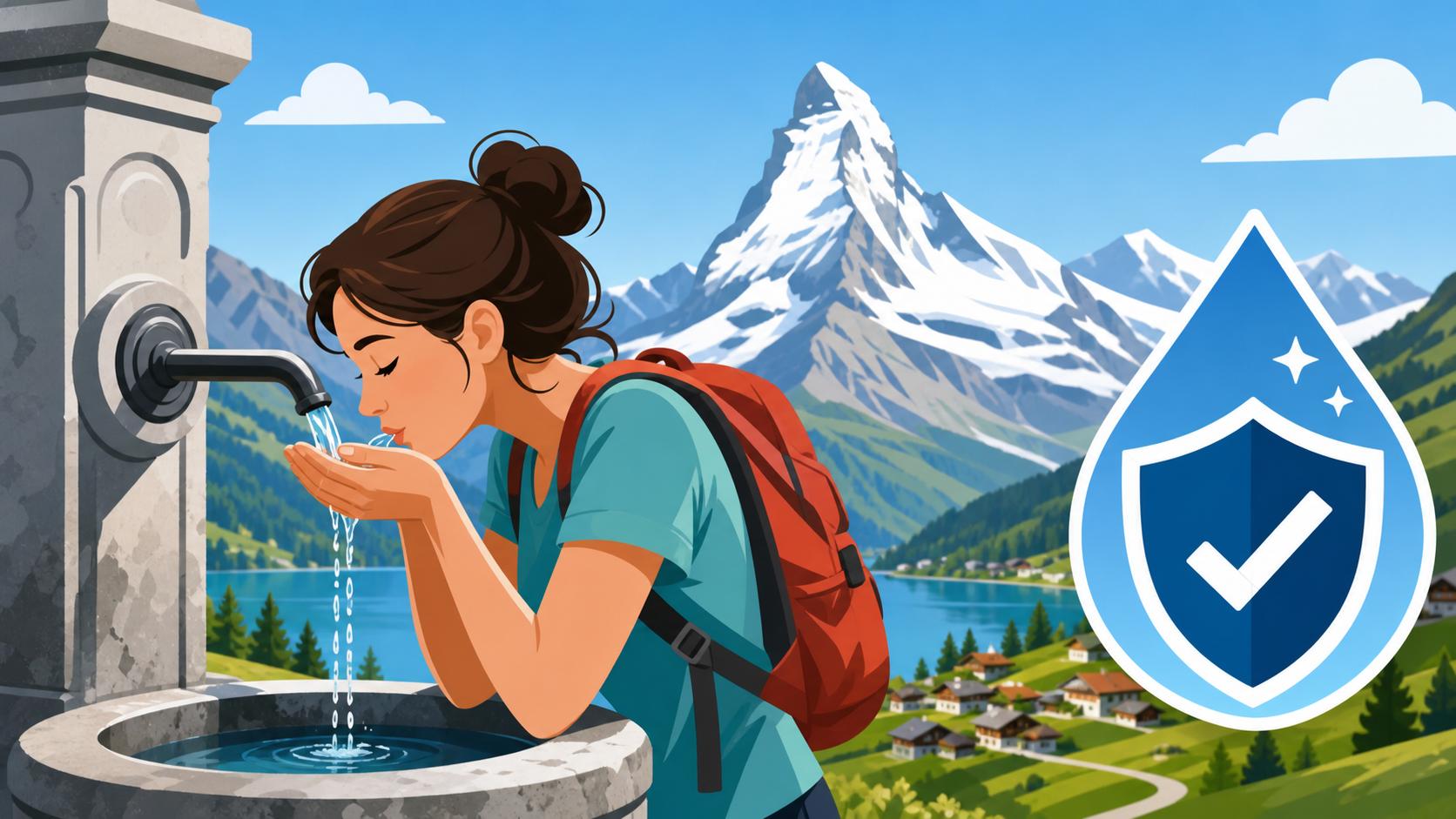
Water Quality in Switzerland: Is It Safe to Drink from Fountains?
Many newcomers to Switzerland find themselves lugging heavy six-packs of bottled water from Migros or Coop, terrified that the crystal-clear water flowing from the ornate neighborhood fountain might be untreated or unsafe. I spent my first three months in Geneva doing exactly that until a local friend laughed at my plastic mountain and showed me their favorite "water source" in the Old Town. This guide demystifies Swiss water quality, explains fountain etiquette, and helps you navigate the "Kein Trinkwasser" signs like a seasoned resident.
The Phenomenon of Swiss Fountain Culture
If you walk through any Swiss city, from the winding alleys of Bern to the lakeside promenades of Lugano, you will notice an abundance of public fountains. In Zurich alone, there are over 1,200 of them. To a new expat, these often look like decorative monuments or historical relics, but they are actually part of a highly sophisticated, functional infrastructure. Historically, these fountains were the primary water source for households before indoor plumbing became the norm, and the Swiss have maintained them with an almost religious fervor.
The culture of drinking from fountains is deeply ingrained in the local psyche. It is not uncommon to see a businessman in a bespoke suit leaning over a stone basin to take a sip, or a group of hikers filling their 2-liter bladders at a wooden trough in the Alps. This accessibility is a point of national pride. It represents the Swiss commitment to public health and environmental stewardship. For someone just starting to navigate the Healthcare in Switzerland for Expats: The Complete System Overview (2027), understanding that your basic hydration needs are met by the state is a welcoming realization.
Beyond the aesthetics, these fountains serve a vital role in the "Notwasserversorgung" or emergency water supply. Many fountains are fed by a separate network that remains operational even if the main power grid or standard water lines fail. This level of preparedness is classic Switzerland. When you drink from a fountain, you aren't just getting water; you are tapping into a system designed to withstand crises, which is quite a comforting thought when you are adjusting to a new country.
Is the Water Actually Safe to Drink
The short answer is yes, Swiss tap water is among the highest quality in the world. In fact, in many blind taste tests, Swiss tap water frequently beats expensive bottled brands. The water is sourced primarily from three places: 40% comes from groundwater, 40% from springs, and the remaining 20% from lakes. Because the groundwater and spring water are often naturally filtered through the Alpine soil, many municipalities do not even need to use chemical treatments like chlorine or ozone.
The standards for drinking water are regulated by the Swiss Federal Food Safety and Veterinary Office. They mandate rigorous testing for bacteria, pesticides, and heavy metals. This obsession with purity means you can usually skip the expensive filtration pitchers. However, the one thing you will notice is the mineral content. Swiss water is notoriously "hard," meaning it contains high levels of calcium and magnesium. While great for your heart, it can be tough on your appliances and your skin.
If you find that the hard water is affecting your hair or causing skin irritation, you are not alone. Many expats find they need to supplement their beauty routines with specialized products from iHerb to combat the drying effects of the high calcium levels. From chelating shampoos to heavy-duty moisturizers, addressing the "hard water struggle" is a rite of passage for every new resident. If the skin issues persist, you might find yourself looking for Finding Medical Care in Switzerland: Doctors, Specialists, and Referrals to get a recommendation for a local skin specialist who understands the Alpine climate.
Groundwater and Spring Protection
Switzerland takes the protection of its water sources incredibly seriously. There are massive "protection zones" around groundwater wells where construction and certain types of farming are strictly prohibited. This prevents runoff from contaminating the aquifers. When you are out in the countryside, you might see signs marking these zones. This proactive approach is why the water tastes so fresh; it hasn't been heavily processed to remove pollutants because the pollutants never got there in the first place.
Mineral Concentration and Limescale
The hardness of the water varies significantly by canton. In regions with lots of limestone, like the Jura mountains or parts of Zurich, you will see limescale buildup on your kettle within days. While this calcium is technically healthy, it can be a nuisance. You will quickly learn the "vinegar trick"—soaking your faucet heads and kettles in white vinegar (Essig) to dissolve the white crust. For those who prefer professional-grade solutions, you can often find high-quality descalers and household maintenance items on iHerb that ship directly to your Swiss address.
Decoding the Signs: When Not to Drink
The golden rule in Switzerland is that every fountain contains drinkable water unless it specifically says otherwise. This is the opposite of many other countries, where you assume a fountain is purely decorative until proven safe. If a fountain is not potable, it will be clearly marked with a sign.
The warning signs usually feature a glass of water with a red line through it and text in the local language:
- German: "Kein Trinkwasser"
- French: "Eau non potable"
- Italian: "Acqua non potabile"
These signs are most common on fountains in private gardens, decorative fountains that recirculate water (to save on the bill), or in train station bathrooms where the water might be reclaimed for flushing. If you see no sign, the water is fresh from the main. I remember the first time I saw a dog drinking from a trough in Zug; I hesitated until I realized there was no warning sign. Since then, I’ve filled my bottle at that same fountain dozens of times while Finding an English-Speaking Family Doctor in Zug for my routine checkups.
The Emergency Water Network
In major cities like Zurich, some fountains are part of a special emergency network. These are often stone fountains that flow continuously. Even during a power outage or a water main break, these "bronze-fountain" networks keep running via gravity-fed systems. They are tested even more frequently than the standard tap water. If you are living in a high-density area, it is worth checking the Zurich Expat Healthcare Guide: Hospitals, Clinics, and Emergency Contacts to see where your nearest emergency services and water points are located.
Skin and Hair Care in a Hard Water Environment
While the water is safe for your internal organs, your external ones—skin and hair—might disagree at first. The high mineral content can leave a film on your hair, making it feel "crunchy" or dull. It can also strip the natural oils from your skin, leading to eczema or dryness, especially during the harsh Swiss winters.
To mitigate this, many expats invest in shower filters. However, if you are renting, you might be limited in the modifications you can make to your plumbing. This is where your product choice becomes critical. Using a clarifying shampoo once a week can help remove mineral buildup. I personally order a lot of my vitamins and specialized skincare from iHerb because they carry specific international brands that focus on mineral-heavy environments.
If you notice a sudden increase in moles or skin spots after moving to the higher altitudes and spending more time outdoors, remember to balance your hydration with proper protection. You can find more advice on this in our guide to Sunscreen and Dermatologist Checks: Skin Cancer Prevention in the Alps. Healthy living in Switzerland is a holistic endeavor, and while the water is a great start, you have to manage the environmental side effects as well.
Financial and Environmental Benefits of Tap Water
One of the quickest ways to optimize your Cost of Living in Switzerland 2026: Budgeting for Singles and Families is to stop buying bottled water. A liter of tap water costs a fraction of a cent, while a bottle of Evian or Henniez at the kiosk can set you back 4.00 CHF. Over a year, this adds up to hundreds, if not thousands, of francs.
Furthermore, Switzerland is very conscious of its carbon footprint. Even though the recycling system for PET bottles is excellent, the energy required to transport and process bottled water is significant. By carrying a reusable stainless steel bottle, you are participating in the local culture of sustainability. It’s a small change that makes a big difference in Budgeting in Zurich and Geneva: Managing Expat Expenses in High-Cost Cities.
For many expats, the shift to tap water is part of a broader health upgrade. Knowing that you have constant access to pure, mineral-rich water encourages better hydration habits. When you combine this with a comprehensive insurance plan like Cigna Global, you are setting a very strong foundation for your long-term health in the Alpine republic. Clean water, clean air, and high-quality medical coverage are the three pillars of the Swiss expat "health hack."
Comparison of Water Options in Switzerland
| Feature | Tap Water / Fountains | Bottled Water (Still) | Bottled Water (Sparkling) |
|---|---|---|---|
| Cost | Negligible (included in utilities) | 0.25 – 4.00 CHF per liter | 0.30 – 4.50 CHF per liter |
| Convenience | Available at almost every corner | Requires carrying heavy bags | Requires carrying heavy bags |
| Purity | Tested daily, high mineral content | Variable depending on brand | Variable, contains CO2 |
| Eco-Impact | Zero plastic waste | High PET recycling needs | High PET recycling needs |
| Taste | Neutral, cold, and fresh | Can taste of plastic if old | Sharp, acidic, bubbly |
Practical Tips for the Hydrated Expat
To make the most of the Swiss water system, I recommend a few veteran moves. First, buy a high-quality, insulated water bottle. The water from the fountains is usually ice-cold, even in the middle of July, and an insulated bottle will keep it that way for hours. Second, download a "fountain map" app. Many Swiss cities have digital maps showing every public tap, which is incredibly useful when you are exploring a new neighborhood.
If you have children, the fountain culture is even more important. It is a free and safe way to keep them hydrated while playing at the many world-class parks. Just be sure to teach them the "Kein Trinkwasser" symbol early on. If you are pregnant or have specific health concerns, you might want to discuss mineral intake with a specialist. You can find English-speaking experts through our guide on Women’s Health: Gynecologists, Screenings, and Contraception Access.
Lastly, consider the holistic benefits of your environment. Drinking fresh Alpine water is just one part of the high quality of life here. When you pair this with a solid health insurance policy like Cigna Global, you take the stress out of the "what-ifs." Living in Switzerland can be administratively heavy, but the basic things—like the water in your glass—are designed to be as simple and pure as possible. Enjoy the fountains; they are one of the best free perks this expensive country has to offer.
Disclaimer
This article is for informational purposes only and does not constitute medical or legal advice. While Swiss water quality is generally excellent, specific health conditions or sensitivities should be discussed with a qualified healthcare professional. Always observe local signage and warnings regarding water potability in your specific location.