Magic Pass vs Individual Ski Resort Passes in Switzerland
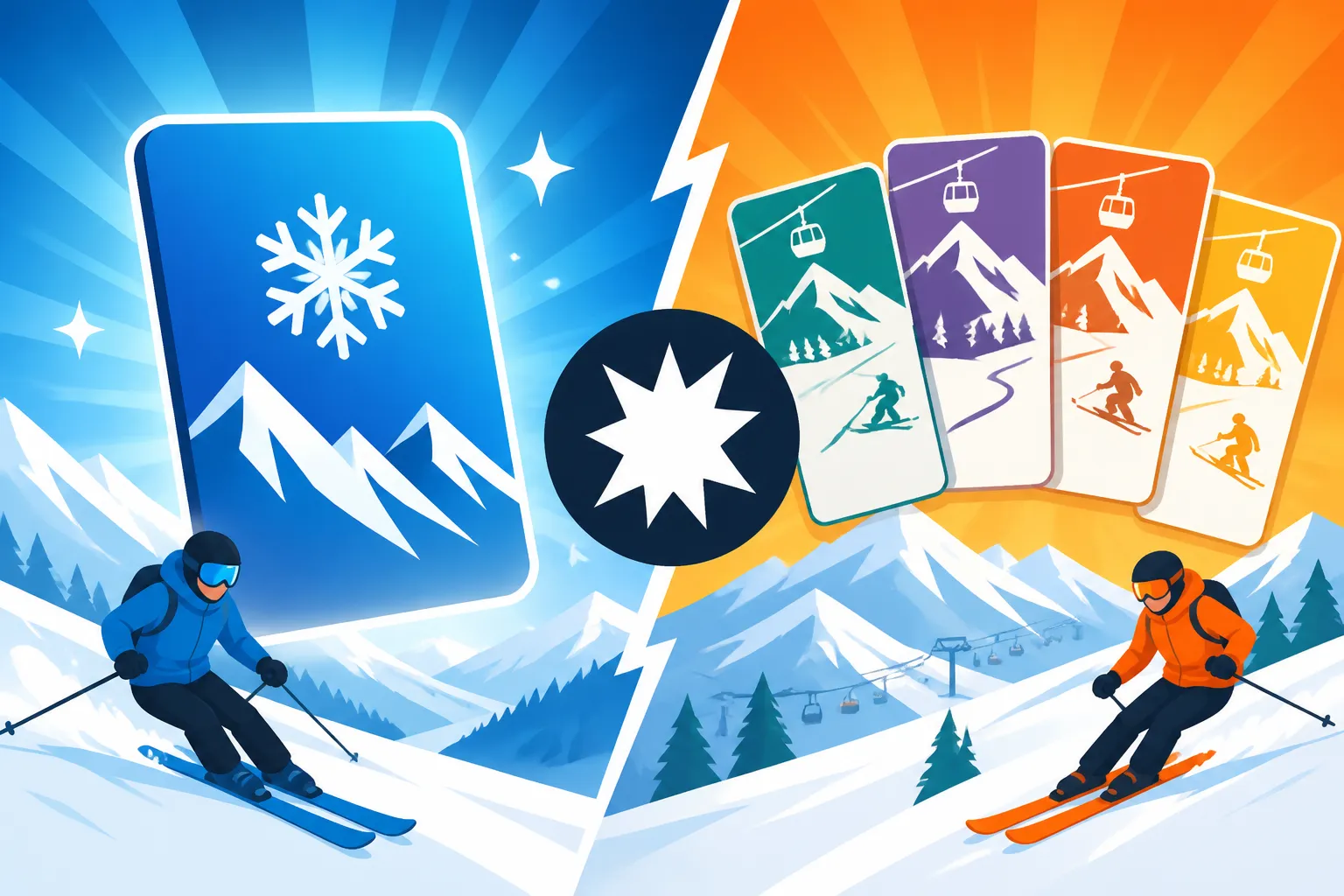
Ah, winter in Switzerland! The crisp air, the snow-capped peaks… it's truly magical. But then you start looking into hitting the slopes, and suddenly that magic turns into a dizzying array of options, prices, and passes. It's enough to make your head spin faster than a fondue pot, isn't it? As an expat who's been through the yearly ritual of trying to figure out the most economical way to ski here, I know the struggle is real. This guide is going to break down the big decision for many of us: the Magic Pass versus buying individual ski resort passes.
The Allure of the Magic Pass: A Season of Freedom?
When you first hear about the Magic Pass, it sounds almost too good to be true. One pass, valid at a huge number of resorts across multiple cantons? For a flat fee? It really does spark the imagination of endless powder days and exploring new mountains every weekend. But like all things in Switzerland, the devil is in the details, and understanding those details is key to knowing if it's truly "magic" for your expat life.
What Exactly is the Magic Pass and How Does It Work?
The Magic Pass is essentially a seasonal pass that grants you unlimited access to a network of ski resorts, usually from the start of the winter season until the end of the following spring. Think of it like a subscription service for skiing, but instead of just one streaming platform, you get access to a whole library of resorts. The beauty of it lies in its extensive reach; as of recent seasons, it typically includes around 40-50 different destinations, primarily concentrated in French-speaking Switzerland (Romandie) and some parts of German-speaking Switzerland, particularly the Bernese Oberland and Valais. You'll find popular spots like Crans Montana, Les Diablerets, Grächen, and some lesser-known gems all bundled together.
The pricing structure is a crucial element here. The Magic Pass is almost always sold in a series of pre-sale waves, with the price increasing with each wave. The absolute cheapest rates are offered months in advance, often as early as April or May for the next winter season. This requires a significant upfront financial commitment long before the first snowflake falls, which can be a bit daunting when you're still figuring out your summer holiday plans. If you miss these early bird deals, the price can climb considerably, sometimes making it less appealing compared to other options. It's designed to reward early commitment and guarantees a certain level of revenue for the participating resorts, allowing them to plan their operations. For an expat, this means you need to be on top of your game and plan your ski season well in advance. If you're new to the country or still settling in, this kind of forward planning might feel like an added stress on top of everything else.
Pros and Cons for Expats: Is the "Magic" Real?
For an expat living in Switzerland, the Magic Pass can be a fantastic proposition, but it certainly isn't a one-size-fits-all solution. Let's weigh it up.
On the "pro" side, the cost-effectiveness for heavy users is undeniable. If you envision yourself on the slopes every weekend, or even just 15-20 days throughout the season, the Magic Pass will almost certainly pay for itself. Individual day passes in Switzerland are notoriously expensive – often CHF 60-90 or more per day, especially at popular resorts. Do the math, and you'll quickly see the savings if you're a keen skier. The flexibility to explore new resorts is another huge perk. Instead of being tied to one mountain, you can discover hidden valleys, try different terrains, and experience the varied charm of Swiss ski areas. One weekend you might be carving turns in the sun-drenched slopes of Grimentz-Zinal, and the next, you're enjoying the more intimate runs of Charmey. This really encourages you to get out and discover more of your beautiful new home country. Plus, once you've bought the pass, there's no daily decision-making about whether it's "worth" the cost for a half-day or a slightly less-than-perfect weather day. You just go!
However, there are significant "cons" to consider. The upfront cost is substantial, easily running into several hundred francs, sometimes over CHF 1,000 for an adult pass if you buy later in the sales window. This is a big chunk of change to lay out, especially when you're still managing the myriad other expenses of moving to and living in Switzerland. There's also the commitment factor. If unforeseen circumstances (injury, new job, or simply discovering you're not as big a skier as you thought) prevent you from using it frequently, that upfront investment can feel like a waste. Overcrowding at popular Magic Pass resorts can also be an issue, especially on prime weekends or during school holidays. While the pass aims to spread people out, certain accessible or well-known destinations can still get very busy, leading to longer lift queues than you might expect for the price you pay. Finally, geographical limitations are real. While the Magic Pass covers a wide area, if you live in, say, Eastern Switzerland or close to a major resort not affiliated with Magic Pass (like Verbier or Davos-Klosters), the travel time and cost to reach the Magic Pass resorts might diminish its value. You might spend more time on trains or in your car than on the slopes. When planning, you should definitely check how accessible the Magic Pass resorts are from your home. You can use platforms like Omio to check train schedules and travel times to various ski destinations, helping you determine if the network aligns with your preferred mode of transport.
Individual Resort Passes: The Traditional Approach
Before the era of mega-passes like the Magic Pass or the Epic Pass in North America, most skiers simply bought tickets for the specific mountain they wanted to ski. This traditional method is still very much alive and well in Switzerland, and for many expats, it's actually the more practical and flexible choice, especially in your first few years.
Understanding Day Passes, Multi-Day Passes, and Seasonal Tickets
When we talk about individual resort passes, we're really looking at a spectrum of options.
Day passes are exactly what they sound like: a ticket valid for one day of skiing at a specific resort. These are perfect for spontaneous trips or if you only plan to hit the slopes a handful of times a season. You simply decide where and when you want to go, and you buy your ticket. Prices fluctuate based on the resort, the season (peak vs. off-peak), and often whether you buy them online in advance or at the ticket counter on the day. Buying online is almost always cheaper. For example, a day pass at a mid-sized resort like Flumserberg might be CHF 75 at the counter but CHF 60 if booked a week ahead online.
Multi-day passes offer a slight discount if you're planning to ski several consecutive days at the same resort, such as a weekend getaway or a short ski holiday. You might buy a 2-day pass or a 6-day pass, which will be cheaper per day than buying individual day passes. These are great if you're planning a trip to a specific area and want to fully explore one mountain or interconnected ski region.
Finally, seasonal tickets for a single resort or a local network are for those who are fiercely loyal to one mountain or live right next to it. For example, if you live in Zermatt, you'd likely buy a Zermatt seasonal pass. These passes typically offer unlimited access to that specific resort's lifts for the entire winter season. While they also represent a significant upfront investment, they are usually cheaper than the Magic Pass if you only ever plan to ski at that one resort. These are often purchased by locals who spend almost every possible day on their home mountain. You can find detailed breakdowns of costs and options in guides like Skiing in Switzerland: Resorts, Passes, and Costs for Residents.
When a Single Resort Pass Makes More Sense
So, who are these individual passes best for? They are absolutely the go-to option if:
- You live next to one particular resort: If you've settled down in a place like Engelberg, Verbier, or Flims-Laax, and that's your primary stomping ground, buying a pass for that specific resort makes perfect sense. The convenience of driving or taking a short bus ride to your local mountain outweighs any desire for variety.
- You only ski a few times a year: Let's be realistic, not everyone can or wants to be on the slopes every weekend. If you're a casual skier who might go 2-5 times a season, buying individual day passes will be far more economical than committing to a Magic Pass. For example, if you ski four days a year, even at CHF 80 a day, that's CHF 320. A Magic Pass, even at its cheapest early-bird rate, would still be significantly more. Our guide on How Much Does a Day of Skiing Cost in Switzerland in 2026? can help you budget for these occasional trips.
- You prefer a specific mountain: Maybe you fell in love with a particular resort's terrain, its snow conditions, or its ambiance. You might find that you prefer the challenging runs of Portes du Soleil, or the family-friendly atmosphere of Arosa Lenzerheide. If one mountain truly captures your heart, why bother with a multi-resort pass? You can easily book specific activities or even Renting Ski Equipment in Switzerland: Costs and Where to Book for a particular resort via platforms like GetYourGuide if you want to try out a day trip without fully committing.
- Beginner lessons are tied to one resort: If you're just starting out, or if your children are taking ski lessons, those lessons are usually tied to a specific ski school at a particular resort. It makes sense to buy your passes for that same location. This is especially relevant if you're looking into Family Ski Resorts in Switzerland: Best Areas for Children.
- Your social circle dictates it: Sometimes, your group of friends or family has a tradition of going to a specific resort. It's often easier and more fun to join them with a day pass than to push for a Magic Pass-friendly destination.
The key takeaway here is flexibility. You don't have to make a huge commitment upfront, and you can adapt your skiing plans to the weather, your mood, and your budget as the season progresses.
The Financial Realities: Crunching the Numbers
This is where the rubber meets the road, or rather, the skis meet the snow. Switzerland is renowned for its high cost of living, and skiing is no exception. Understanding the true financial commitment involves more than just the pass price.
A Cost Comparison Scenario
Let's imagine a scenario to illustrate the difference. We'll use round figures for simplicity, based on typical prices in a recent season for an adult:
Scenario: A Single Adult Expat Skiing X Days in a Season
| Category | Magic Pass (Early Bird) | Individual Day Passes (Online Avg.) | Individual Day Passes (Counter Avg.) |
|---|---|---|---|
| Pass Cost | CHF 400 | N/A | N/A |
| Cost per day (10 days) | CHF 40 | CHF 70 (total CHF 700) | CHF 85 (total CHF 850) |
| Cost per day (20 days) | CHF 20 | CHF 70 (total CHF 1400) | CHF 85 (total CHF 1700) |
| Cost per day (5 days) | CHF 80 | CHF 70 (total CHF 350) | CHF 85 (total CHF 425) |
Assumptions:
- Magic Pass (Early Bird) price: CHF 400 (this is a placeholder; actual prices vary annually and by sales wave, often between CHF 399-500 for the earliest bird adult pass).
- Individual Day Pass (Online Average): CHF 70 (reflects buying in advance for most mid-to-large resorts).
- Individual Day Pass (Counter Average): CHF 85 (reflects buying on the day at the resort).
As you can see from the table, if you only ski 5 days a season, buying individual online day passes is clearly cheaper than the Magic Pass. The Magic Pass only starts becoming significantly cheaper per day around the 6-7 day mark if bought at the earliest price, and its value truly shines when you hit 10+ days. If you're skiing 20 days, the Magic Pass is an absolute no-brainer, saving you a substantial amount.
This calculation is just for one adult. For families, the numbers scale up quickly, but the principle remains. Families might also find value in other passes like the Best Value Ski Passes for Residents in Switzerland, which cater specifically to families or regional groups.
Hidden Costs and Considerations Beyond the Ticket Price
The pass itself is only one part of the equation. There are many other expenses that can quickly add up and impact your overall winter budget:
- Travel Costs: Switzerland has an excellent public transport network, but it's not free. A train ride to a distant resort can add CHF 30-80 round trip, per person, even with a The Half-Fare Travelcard (Halbtax): The Must-Have Pass for Swiss Residents. If you have a car, you'll pay for petrol, potential highway tolls, and often expensive parking at ski resorts. For longer journeys to Magic Pass resorts, remember to factor in these travel expenses. You can plan your journeys and compare options using
Omio, which integrates various transport methods across Switzerland and Europe. - Food on the Mountain: Eating at mountain restaurants is an experience, but it's also incredibly pricey. A basic lunch (a plate of pasta or a sausage with fries) with a drink can easily set you back CHF 30-50 per person. Many expats quickly learn to pack sandwiches, snacks, and a thermos of hot tea to save a small fortune.
- Gear Rental vs. Ownership: If you don't own your ski or snowboard gear, you'll be renting. This can cost anywhere from CHF 50-80 per day for a basic set. If you rent frequently, buying your own gear quickly becomes more economical, even second-hand. Check out our guide on Renting Ski Equipment in Switzerland: Costs and Where to Book for more insights.
- Lessons: If you're a beginner or want to improve your technique, ski lessons are a must. Group lessons are cheaper than private ones, but still represent a significant cost per day.
- Insurance: This is a crucial one in Switzerland. While your mandatory basic health insurance (KVG) covers accidents, you might have a high deductible (The Swiss Franchise System: How Deductibles and Copays Work) and co-pay. Your employer-provided accident insurance (UVG) covers occupational and non-occupational accidents if you work more than 8 hours a week for the same employer. This is incredibly important for sports injuries. However, it's wise to understand the specifics, as detailed in Occupational Accident Insurance (UVG): What Happens When You Ski and Crash?. Trust me, a helicopter ride off the mountain (Rega) isn't something you want to pay for out-of-pocket, so checking your supplementary insurance or getting a Rega membership might be a good idea.
Making Your Choice: Practical Advice for Expats
Navigating the Swiss ski pass landscape as an expat can feel overwhelming, but a systematic approach can help you make the best decision for your situation.
Assess Your Skiing Habits and Location
Before you jump into any pass purchase, take a moment to honestly assess your potential skiing habits and your geographical location in Switzerland. This isn't just about what you hope to do, but what you realistically will do.
- How many days realistically will you ski? Be honest with yourself. If you've never skied before, or only go once every few years, the Magic Pass is probably not for you. If you're an avid skier who lives for winter and plans to be on the slopes 10+ days, it starts to look very appealing. Remember that factors like weather, other commitments, and even simply feeling tired after a long work week can reduce your actual ski days.
- Where do you live? This is a huge factor. If you're based in a city like Zurich, many Magic Pass resorts are a 1.5 to 2.5-hour drive or train ride away. This means early mornings and long days. If you're living in, say, Valais or Fribourg, you might be right on the doorstep of several Magic Pass resorts, making it far more convenient. Consider how easy it is to reach these destinations from your specific canton. For instance, if you're in Best Neighborhoods in Zurich for Expat Families, you'll be looking at different travel times than someone in Geneva.
- Do you prefer exploring or sticking to one familiar spot? Some people love the novelty of a new mountain every weekend, while others cherish the familiarity of one resort, knowing all its runs and hidden gems. The Magic Pass is for explorers, individual passes are for the loyalists.
- What about your family's needs? If you have children, consider their age and skill level. Are they happy to try new places, or do they prefer the consistency of one ski school and familiar slopes? The Magic Pass often has good family rates, but factor in the added complexity of navigating new resorts with kids.
Booking and Planning Your Winter Adventures
Once you've done your self-assessment, you can move to the practicalities of getting your passes and planning your trips.
- Importance of buying early for Magic Pass: If you decide the Magic Pass is for you, mark your calendar! The earliest pre-sale period, usually in spring for the following winter, offers the best prices. Missing this window means paying significantly more, potentially negating the cost benefits. Keep an eye on the Magic Pass website for exact dates.
- Checking resort openings and conditions: Regardless of your pass choice, always check the resort's website or snow reports before you head out. Swiss resorts are generally well-maintained, but conditions can vary wildly depending on snowfall and temperature. Some smaller Magic Pass resorts might open later or close earlier in the season.
- Using apps or websites for individual passes: If you opt for individual passes, leverage online booking. Websites like GetYourGuide or the resort's own site often provide discounts for early purchases. Many resorts also use dynamic pricing, meaning prices increase as the demand for a specific date goes up or as the purchase date gets closer to the ski day. So, booking a week or two in advance can save you quite a bit compared to buying at the ticket counter.
- Accommodation and other activities: If you're planning multi-day trips to a specific resort, remember to book your accommodation in advance, especially during peak season. Websites like Booking.com are excellent for finding hotels and apartments near your chosen ski destination. If you're not skiing all day, or if some family members prefer other activities, explore options like snowshoeing, winter hiking, or sledding (Schlitteln) – there are fantastic opportunities for Snowshoeing and Winter Hiking in Switzerland for Non-Skiers and Sledding (Schlitteln) Runs in Switzerland: Family Winter Fun throughout the country.
Ultimately, whether you choose the Magic Pass or stick to individual resort passes depends entirely on your personal situation, your enthusiasm for skiing, and your willingness to travel. There's no wrong answer, just the one that fits your expat life in Switzerland best. Happy shredding!
Disclaimer
The information provided in this guide is intended for general informational purposes only and does not constitute financial, legal, or insurance advice. While we strive to keep the information up-to-date and accurate, prices, rules, and offerings from ski resorts and pass providers (like Magic Pass) can change without notice. Always verify details directly with the respective service providers. Skiing and other winter sports carry inherent risks, and it is your responsibility to ensure you have adequate insurance coverage, obey safety rules, and are equipped for the conditions. We recommend consulting official cantonal and federal websites or a qualified professional for personalized advice.