Occupational Accident Insurance (UVG): What Happens When You Ski and Crash?
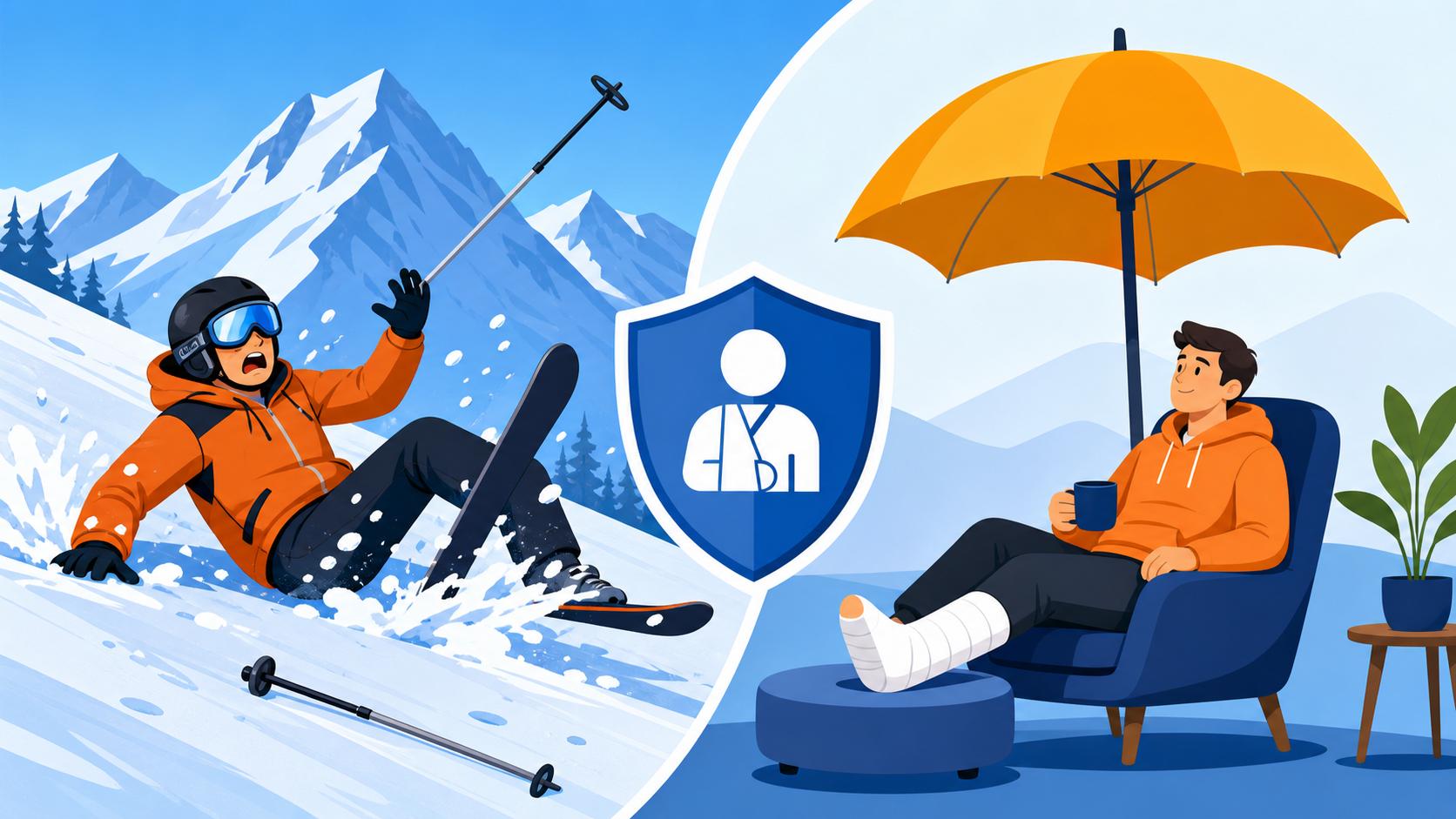
The mountain air is crisp, the sun is reflecting off the pristine powder of the Valais Alps, and you are having the best Saturday of your life until a hidden patch of ice sends you tumbling into a jagged rocky outcrop. I remember my first season in Verbier, lying in the snow and wondering if the helicopter circling above was about to cost me my entire relocation savings. This guide explains how Swiss Occupational Accident Insurance (UVG) protects you during leisure mishaps and the specific steps you must take to ensure your medical bills are covered.
Understanding UVG and NBU: Your Dual Safety Net
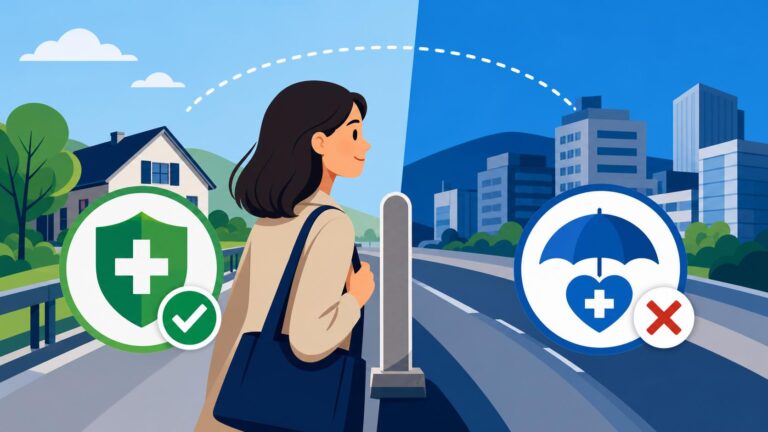
In Switzerland, the insurance system for accidents is surprisingly robust, but it is split into two distinct categories under the Federal Act on Accident Insurance (UVG). If you are employed by a Swiss company for more than eight hours per week, you are automatically covered not just for accidents that happen at your desk or on the factory floor (Occupational Accidents), but also for those that happen while you are skiing, hiking, or even just tripping over your rug at home. This second part is called Non-Occupational Accident Insurance, or NBU (Nichtberufsunfallversicherung).
The distinction is vital because many expats arrive thinking their basic health insurance handles everything. While Understanding KVG/LAMal: Mandatory Basic Health Insurance Explained is the foundation of Swiss healthcare, it usually excludes accident coverage if you are employed. Your employer pays the premium for the occupational part, and they usually deduct a small percentage from your monthly salary to cover the NBU portion. For the average expat, this is a fantastic deal. Unlike basic health insurance, where you have to pay a deductible and a 10% copay, UVG/NBU coverage typically pays 100% of the medical costs from the very first franc, provided you seek treatment in a general ward.
However, if you work fewer than eight hours a week for a single employer, you are not covered for non-occupational accidents through your job. In that case, you must explicitly add accident coverage to your private health insurance policy. If you forget this step and have a wipeout on the slopes, you will be forced to navigate The Swiss Franchise System: How Deductibles and Copays Work out of your own pocket, which can be a painful financial lesson.
The Immediate Aftermath: Claims and Notifications
When the crash happens, your priority is medical attention, but the administrative clock starts ticking immediately. If the ski patrol (Pistenrettung) has to haul you down the mountain in a sled, they will ask for your insurance details. You should have your insurance card—the same one you use for Finding Medical Care in Switzerland: Doctors, Specialists, and Referrals—handy. However, once you are stable, the most important call you make isn't to your family; it is to your HR department.
Your employer is the gateway to your accident coverage. They must provide you with an accident report form (Bagatellunfall-Meldung for minor injuries or a full accident report for major ones). This form generates an accident number. Every doctor, physiotherapist, and pharmacy you visit for that specific injury will need this number. Without it, the billing system defaults back to your health insurance, and you will start seeing invoices with deductibles applied. During my recovery from a torn ACL, I found that staying organized was key; I kept a digital folder for every receipt, including supplements I ordered from iHerb to support bone and joint health during the healing process.
If you are unconscious or unable to notify your employer immediately, the hospital will usually start the process, but as soon as you are able, ensure the UVG insurer (often SUVA or a private provider like AXA or Helvetia) has officially opened your case. This is also the time to check your supplementary coverage. If you have Supplementary Health Insurance (VVG): What It Covers and When to Buy It, you might be eligible for a private room or treatment by a head of department, which standard UVG does not cover.
Rescue Costs and the Dreaded 50 Percent Rule
One of the most shocking realizations for expats is that Swiss insurance does not always cover the full cost of getting you off a mountain. There is a common misconception that because you pay for UVG, everything is "free." This is where the fine print regarding "rescue" vs. "transport" comes into play. If you are injured and need an ambulance to the hospital, NBU usually covers this. But if you are stuck on a cliff and need a helicopter rescue because you are in a life-threatening situation, the costs can skyrocket into the tens of thousands.
Even with UVG, there are limits on "search and rescue" costs, often capped at a specific amount per year (frequently around CHF 20,000). While that sounds like a lot, a complex Alpine rescue involving multiple teams can exhaust that limit quickly. Furthermore, if you are not an employee and are relying on basic health insurance, you face an even tighter squeeze. You might find that Does Basic Swiss Insurance Cover Ambulance Rides? The 50% Rule Explained applies to your situation, leaving you with a bill for thousands of francs for a simple ride to the ER.
To mitigate this, almost every veteran expat in Switzerland will tell you to become a patron of REGA. This is a non-profit air rescue organization. While they aren't technically "insurance," they can waive the costs of rescues not covered by your UVG or KVG policies. Understanding the nuances of How to Join REGA and What the Patronage Actually Covers is as essential for a Swiss winter as owning a good pair of boots. For those who travel frequently outside of Switzerland to ski in France or Austria, a global policy like Cigna Global can provide an extra layer of security, ensuring that international rescue and repatriation are handled without a bureaucratic nightmare.
Comparing Accident Coverage in Switzerland
| Feature | NBU (Through Employer) | KVG Accident (Private) |
|---|---|---|
| Deductible (Franchise) | None (0 CHF) | Same as your health plan |
| Copay (Selbstbehalt) | None (0%) | 10% (up to 700 CHF) |
| Medical Treatment | 100% in General Ward | 90% after deductible |
| Salary Replacement | 80% starting from 3rd day | None (unless separate) |
| Medication Coverage | 100% via Accident Number | Pharmacies and Medication: Prescriptions, Costs, and OTC Regulations |
| Rescue Coverage | Limited cap (e.g., 20k) | 50% up to 500 CHF/year |
Salary Continuation and Professional Impact
If your ski crash is serious enough to keep you away from your desk, UVG provides a vital benefit: Taggeld (Daily Allowance). Starting from the third day after your accident, the accident insurance will pay 80% of your insured salary. This continues until you are able to return to work or until an invalidity pension kicks in. This is a much stronger safety net than the standard sick pay rules in many other countries.
However, you must be diligent with your medical paperwork. Your doctor will issue an Sick Notes (Arztzeugnis): Do You Need One on the First or Third Day? which specifies your percentage of incapacity. You might be 100% unable to work for the first two weeks, but then 50% capable for the following month. You are expected to work that 50% if your employer can accommodate you. In the rare and unfortunate case that an injury leads to long-term friction with your boss, it is helpful to understand your rights regarding Workplace Bullying (Mobbing): How to Document and Report It to HR, though most Swiss employers are very accustomed to the "ski injury" rhythm of the winter months.
During your downtime, focus on rehabilitation. The UVG will cover your physical therapy sessions, provided they are prescribed by a doctor. I found that staying on top of my vitamin D and magnesium levels with orders from iHerb helped significantly with the "winter blues" that come from being stuck on the couch while everyone else is on the mountain. If your recovery is slow, don't be afraid to ask for a second opinion; Finding Medical Care in Switzerland: Doctors, Specialists, and Referrals allows you some flexibility, though you should always check if your accident insurer requires you to see their specific medical experts for long-term disability assessments.
Common Pitfalls and Exclusions
While the Swiss system is generous, it is not a "get out of jail free" card. There are specific scenarios where your UVG/NBU will reduce or even deny benefits. The most common reason is "Gross Negligence" (Grobe Fahrlässigkeit). If you were skiing off-piste in a closed area during a high avalanche warning, or if you were significantly intoxicated when you crashed, the insurer has the right to slash your daily allowance payments. They will still pay your medical bills (doctors and hospitals), but the money you rely on to pay your rent while you can't work could be cut by 20% to 50%.
Another pitfall is the "Hazardous Activities" (Wagnisse) clause. Certain extreme sports—like base jumping, speed flying, or certain types of ice climbing—are classified as absolute hazards. If you are injured doing these, benefits are automatically reduced. If you are an adrenaline junkie, you likely need specialized supplemental insurance. Companies like Cigna Global often offer high-risk sport riders that can fill these specific gaps where the Swiss state-mandated system pulls back.
Finally, ensure you understand How to Read a Swiss Medical Bill (Rückforderungsbeleg) and Claim Refunds. Even with the accident number, some smaller clinics might send the bill to you first. Never pay these out of your own pocket without checking if you should be sending them directly to the UVG insurer. The "Tiers Payant" system means the insurer should pay the provider directly, but if you end up in the "Tiers Garant" loop, you’ll need to be proactive about your reimbursements to avoid a temporary cash flow crisis.
Occupational Accident Insurance UVG Disclaimer
This article is provided for informational purposes only and does not constitute legal or financial advice. Insurance regulations in Switzerland, including UVG and NBU statutes, are subject to change and can vary based on individual employment contracts and cantonal regulations. Always consult with your HR department, your insurance provider, or a qualified legal expert regarding your specific coverage and obligations. The author and publisher are not responsible for any financial losses or legal issues arising from the use of this information.