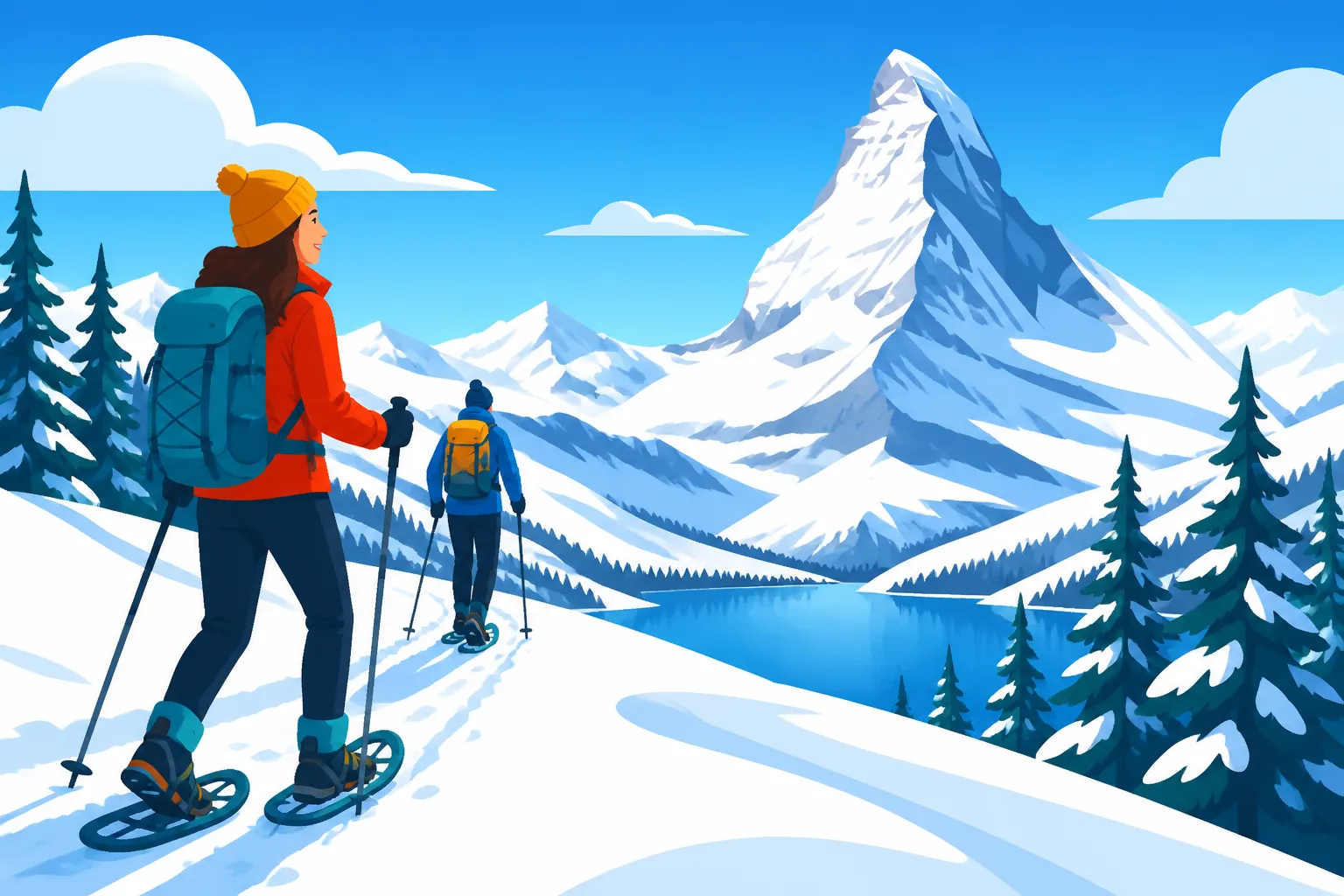
Snowshoeing and Winter Hiking in Switzerland for Non-Skiers
The first winter in Switzerland can be a bit of a bewildering experience, especially if you’re like me and arrived with grand visions of snowy peaks but absolutely no desire to strap planks to your feet and hurtle down a mountain. It's easy to feel left out when everyone else is talking about their latest ski adventures, but I'm here to tell you that there's a whole, equally magical winter world waiting for you that doesn't involve chairlifts, expensive rentals, or terrifying slopes. This guide will walk you through everything you need to know about embracing snowshoeing and winter hiking, helping you discover the serene beauty of the Swiss Alps at your own pace.
Why Embrace Winter Hiking and Snowshoeing in Switzerland?
When you first land in Switzerland during winter, the sheer dominance of skiing and snowboarding can be overwhelming. Everywhere you look, people are decked out in their gear, discussing piste conditions, and planning their next carving session. For those of us who either never learned, aren't interested, or simply prefer a gentler pace, it can feel like winter in the Alps isn't "for us." But trust me, as an expat who's been here a while, nothing could be further from the truth. There's an entire universe of serene, accessible, and breathtaking winter experiences to be had without ever touching a ski.
Beyond the Slopes: A Different Perspective
Imagine this: instead of the whiz and clang of ski lifts, you hear the muffled crunch of fresh snow underfoot. Instead of bustling mountain restaurants packed with goggle-tanned faces, you find quiet paths winding through snow-laden forests, leading to a secluded hut offering a warm Glühwein. This is the world of winter hiking and snowshoeing, and it offers an entirely different, arguably more intimate, perspective of the Swiss winter wonderland.
For years, I felt a pang of guilt every time friends would ask about my ski trips, knowing I hadn't ventured beyond a gentle sled run. But then I discovered the profound peace of a winter hike. It's a chance to truly connect with the landscape, to breathe in the crisp, clean mountain air without the adrenaline rush. You can set your own rhythm, stop for photos whenever your heart desires, and simply soak in the silence. The views are just as spectacular, often even more so, because you're moving through the landscape rather than merely observing it from a speedy descent. It validates that feeling that you want to experience the postcard-perfect Swiss winter, but on your own terms, without feeling pressured to conform to the "skiing expat" stereotype.
Health Benefits and Accessibility
Beyond the sheer beauty and tranquility, winter hiking and snowshoeing are fantastic for your health – both physical and mental. Unlike the high-impact nature of skiing, these activities offer a superb cardiovascular workout without putting excessive strain on your joints. Walking through snow engages different muscle groups, building strength in your legs and core, and often burns more calories than regular hiking. It's an excellent way to maintain fitness during the colder months when outdoor exercise might otherwise feel less appealing.
Moreover, these activities are incredibly accessible. You don't need years of practice or expensive lessons to get started. If you can walk, you can winter hike. If you can walk through deeper snow, you can snowshoe. There’s no complex technique to master, no steep learning curve, and far less risk of injury compared to hurtling down a black run. This makes it a perfect activity for families, couples, or solo adventurers of varying fitness levels. It’s also a wonderful antidote to the winter blues; being out in the natural light, surrounded by stunning scenery, does wonders for your mood. It’s a realistic and attainable way to embrace the Swiss winter, rather than feeling like you’re constantly missing out.
Understanding the Types of Winter Trails
So, you're ready to trade the ski boots for something a little more grounded. Great choice! But what exactly are you looking for when you hit the trails? Switzerland has an incredibly well-developed network of winter paths, but they come in a few different flavors, each suited to different conditions and preferences. Knowing the difference between a Winterwanderweg and a Schneeschuh-Trail is key to ensuring you have the right gear and the best experience.
Classic Winter Hiking Trails (Winterwanderwege)
These are the bread and butter of winter exploration for non-skiers. Winterwanderwege, or winter hiking trails, are typically clearly marked paths that have been specially prepared and groomed for walkers. Think of them as dedicated snow highways for pedestrians. They’re often flattened by machines, or at least regularly trodden down, making them easy to navigate with standard hiking boots. You won't be post-holing (sinking deep into the snow) every step of the way, which is a huge relief!
These trails vary greatly in difficulty, from gentle, almost flat strolls around a village or lake, to more challenging ascents on mountain sides. You'll find them almost everywhere there's a ski resort or even just a picturesque mountain village. They're usually well-signed with pink posts or special winter hiking symbols, making it hard to get lost. Popular areas like the lower slopes around Grindelwald and Wengen, or the high-altitude, car-free paradise of Stoos, offer extensive networks of these groomed paths. For many of these trails, especially the flatter ones, a good pair of waterproof hiking boots with decent grip is often sufficient. However, if there’s been a freeze-thaw cycle, or if the path is particularly popular and becomes compacted, ice can be an issue. Always keep an eye on conditions.
Designated Snowshoe Trails (Schneeschuh-Trails)
Now, if you're craving a deeper dive into the untouched snow, a more immersive and adventurous experience, then Schneeschuh-Trails are for you. These are specifically marked routes designed for snowshoeing, meaning they are not groomed. You'll be breaking trail (or following in someone else's snowshoe prints) through deeper snow, often in more remote or higher-elevation areas away from the main ski crowds. This is where the real magic happens if you love solitude and pristine winter landscapes.
Snowshoe trails open up a world of possibilities, allowing you to venture into areas that would be impassable in regular boots. They often wind through serene forests, traverse gentle slopes, and lead to stunning viewpoints that offer unparalleled quiet. Because you're dealing with ungroomed terrain and deeper snow, proper snowshoes are absolutely essential. Furthermore, these trails can sometimes venture into areas with a higher risk of avalanches, even if they are marked. It is absolutely paramount to check the avalanche bulletin from the SLF (Swiss Institute for Snow and Avalanche Research) before heading out, especially for any routes that ascend steeper terrain. Areas like the Gantrisch Nature Park, the car-free village of Braunwald, or the expansive plateau of Melchsee-Frutt offer fantastic designated snowshoe routes that range from easy to challenging. This is a chance to truly feel like an explorer, albeit a well-marked one!
Essential Gear for Your Winter Adventure
Stepping out into the Swiss winter without the right gear is a recipe for a miserable time. I’ve made that mistake once or twice in my early days, ending up with soggy socks and numb fingers, and learned my lesson the hard way. Unlike a leisurely stroll in the city, winter hiking and snowshoeing in the Alps require a bit of preparation regarding what you put on your feet and body. Getting it right ensures you stay warm, dry, safe, and, most importantly, comfortable enough to enjoy every breathtaking moment.
The Right Footwear: Boots, Snowshoes, and Spikes
Your feet are your most important tool out there, so treating them right is non-negotiable. For any winter hiking, a sturdy pair of waterproof hiking boots is fundamental. Look for boots that offer good ankle support – crucial for uneven terrain hidden under snow – and are insulated to keep your toes toasty. Brands like Meindl, Salomon, and Lowa are popular here for a reason. Make sure they are truly waterproof; slushy trails or unexpected puddles can ruin a day faster than anything.
If you’re venturing onto designated Schneeschuh-Trails, then snowshoes are your indispensable companions. They distribute your weight over a larger area, preventing you from sinking deep into the snow with every step. There are different types of snowshoes: flatter, wider ones for deep, powdery snow, and more aggressive ones with crampon-like teeth for steeper, icier climbs. For most beginner to intermediate trails, a versatile all-mountain snowshoe will do the trick. You don't necessarily have to buy them upfront; many local sports shops in mountain resorts, as well as some mountain railway stations, offer snowshoe rentals. This is a great option for trying them out before committing to a purchase.
And finally, for those groomed Winterwanderwege that might turn icy, especially after a thaw-freeze cycle or heavy foot traffic, microspikes or smaller portable crampons can be a lifesaver. These are lightweight, rubber-like devices with small metal spikes that slip over your regular hiking boots, providing fantastic traction on slippery surfaces. They pack down small and can be invaluable in preventing a nasty fall. I always carry a pair in my backpack during winter, just in case.
Layering Like a Pro: Clothing and Accessories
The secret to staying comfortable in changeable mountain weather is layering, and it's something the Swiss absolutely excel at. Think of it as a three-layer system:
- Base Layer: This is worn directly against your skin and needs to wick away sweat to keep you dry. Merino wool is a fantastic natural option, as it's warm, breathable, and doesn't get smelly quickly. Synthetic alternatives also work well. Avoid cotton, as it retains moisture and will leave you feeling cold once you stop moving.
- Mid Layer: This provides insulation. A fleece jacket or a lightweight down jacket is perfect. You'll add or remove this layer throughout the day depending on your activity level and the temperature.
- Outer Layer (Shell): This is your protection against wind, snow, and rain. A waterproof and windproof jacket (like Gore-Tex or similar membranes) is essential. Make sure it's breathable so you don't overheat. Waterproof hiking pants are also highly recommended, perhaps with a softshell material for flexibility.
Beyond these core layers, don't forget the vital accessories:
- Hat: A significant amount of body heat is lost through your head, so a warm hat is a must.
- Gloves: Waterproof and insulated gloves are key to keeping your hands functional. Consider thin liner gloves for dexterity and warmth if you need to take photos.
- Gaiters: These are fabric sleeves that attach to your boots and cover the lower part of your pant leg, preventing snow from getting into your boots – an absolute game-changer in deeper snow.
- Sunglasses and Sunscreen: Even in winter, the sun's reflection off the snow can be incredibly intense. Protect your eyes and skin!
- Backpack Essentials: Always carry water (in an insulated bottle to prevent freezing), high-energy snacks, a small first-aid kit, a fully charged phone, and ideally a physical map or a downloaded offline map. If you're going higher, consider carrying an extra warm layer like a thin down jacket for stops. For more packing tips, check out our guide on what to pack for a day trip to the Swiss Alps.
Planning Your Trip: Logistics and Safety
Okay, you've got the gear sorted, you know the difference between a groomed path and a snowshoe trail. Now comes the exciting part: planning your adventure! But before you head out the door, a little logistical foresight and a strong dose of safety awareness can make all the difference between an unforgettable day and an uncomfortable, or even dangerous, one. The Swiss mountains, while beautiful, demand respect, especially in winter.
Finding Trails and Checking Conditions
The first step is to identify where you want to go. Switzerland is a treasure trove of winter trails, and thankfully, there are excellent resources to help you find them:
- SwitzerlandMobility: This is the official national network for non-motorized traffic and it's truly invaluable. Their website and app (which I swear by) provide detailed maps showing all marked winter hiking and snowshoe trails across the country, complete with elevation profiles, distances, and difficulty ratings. You can often filter by region or even by accessibility.
- Local Tourism Offices: Almost every mountain village and region will have a dedicated tourism website or physical office. These are fantastic for hyper-local recommendations, current trail conditions, and often have brochures with maps. Don't underestimate their knowledge!
- Apps: Besides SwitzerlandMobility, apps like AllTrails or Komoot are popular, often featuring user-generated routes and reviews, which can give you a real-world perspective on conditions.
However, finding a trail is only half the battle. Checking conditions is absolutely crucial, especially in winter.
- Weather Forecasts: Always check the weather for your specific region, not just the general forecast. Websites like MeteoSwiss or SRF Meteo provide highly accurate, localized forecasts, including temperature at different altitudes, wind chill, and expected snowfall.
- Avalanche Reports: For any snowshoeing route, and even some higher Winterwanderwege, checking the avalanche bulletin from the SLF (Swiss Institute for Snow and Avalanche Research) is non-negotiable. This report assesses the avalanche danger on a scale of 1 to 5 for different regions. If the risk is 3 (considerable) or higher, it's generally recommended to stick to very safe, low-angle terrain or groomed paths, or ideally, to postpone your trip. Seriously, don't mess with avalanches; they're no joke. For more on mountain safety, consult our guide on mountain safety in Switzerland: weather, gear, and emergency numbers.
- Trail Status: Many mountain resorts and cable car companies update their websites daily with information on which winter hiking and snowshoe trails are open or closed, often due to snow conditions or avalanche risk. Always cross-reference this.
Finally, getting to your trailhead is usually straightforward thanks to Switzerland's incredible public transport network. The SBB (Swiss Federal Railways) connects virtually every village and mountain resort. Planning your journey with the SBB app is effortless. For comprehensive tips on navigating the country by rail, check out our guide on Switzerland by Train: The SBB Network, Scenic Routes, and Day Trips. You can even use services like Omio to compare and book tickets for trains or buses across the country, making your journey seamless.
Guided Tours vs. Self-Guided Adventures
Once you’ve got a trail in mind and checked the conditions, you need to decide if you’re going it alone or with a professional. Both options have their merits, and the best choice often depends on your experience level and the specific trail you've chosen.
Guided Tours:
- Pros: If you're new to snowshoeing, unfamiliar with mountain navigation in winter, or simply prefer the company and expertise of a local, a guided tour is an excellent option. Guides know the terrain intimately, understand snow conditions and avalanche risks, and can lead you to hidden gems you might otherwise miss. They often provide all the necessary equipment (snowshoes, poles), simplifying your logistics. It’s a fantastic way to learn the ropes safely and comfortably. For example, many local schools offer half-day or full-day snowshoe introductions, and platforms like GetYourGuide allow you to easily browse and book these experiences in various regions across Switzerland.
- Cons: Naturally, guided tours come with a cost, and you're tied to a group's pace and itinerary. They might not offer the same sense of quiet solitude as a self-guided trip.
Self-Guided Adventures:
- Pros: This option offers ultimate freedom. You set your own pace, choose your own route, and enjoy the solitude of the winter landscape. It can also be more budget-friendly as you only pay for transport and any rented gear.
- Cons: This requires more personal responsibility and experience. You need to be confident in your navigation skills (even marked trails can become obscured in heavy snow), understand weather and avalanche reports, and be prepared for self-rescue in a minor emergency. Always let someone know your planned route and expected return time. It’s not advisable for complete beginners to venture onto more challenging snowshoe routes alone.
For your first few times, especially on snowshoe trails, I'd lean towards a guided tour. It builds confidence and teaches you invaluable skills. Once you're more comfortable, then start venturing out on your own with simpler Winterwanderwege.
Top Regions and Recommended Trails for Non-Skiers
Switzerland is absolutely overflowing with incredible winter walking and snowshoeing opportunities. It’s hard to pick favorites, but after years of exploring, I've got a few top regions and specific trails that really shine for non-skiers. These places offer breathtaking scenery, well-maintained paths, and often, cozy mountain restaurants to refuel.
Accessible Winter Wonderland Options
When you're looking for an easier, more family-friendly, or generally less demanding winter experience, these regions are fantastic starting points, easily reachable by public transport and offering ample groomed trails:
- Jungfrau Region (Grindelwald, Wengen, Mürren): This iconic area isn't just for skiers. It boasts an extensive network of Winterwanderwege with views of the Eiger, Mönch, and Jungfrau that will make your jaw drop. For instance, the panoramic winter hiking trail from Männlichen to Kleine Scheidegg offers continuous views without significant elevation gain, and you can easily access it via cable car. Grindelwald and Wengen both have lovely, relatively flat trails winding through the valley or on sunny plateaus, perfect for a gentle stroll. To explore more about this incredible area, dive into our guide on Exploring Interlaken: Gateway to the Jungfrau Region.
- Lake Geneva Region (Les Pléiades, Rochers de Naye): Head above Montreux, and you'll find accessible winter beauty. Les Pléiades, reachable by a charming cogwheel train, offers delightful snowshoe and winter hiking loops through snow-covered forests, often with stunning views over Lake Geneva. Rochers de Naye, also by cogwheel train, provides dramatic alpine vistas and simpler walks near the summit. The whole experience can be a perfect day trip from Geneva. For further exploration, our guide on Day Trips from Geneva: Montreux, Gruyères, and the Lavaux Vineyards offers more inspiration for this beautiful region.
- Engelberg-Titlis: While famous for its glacier skiing, Engelberg also caters wonderfully to walkers. The easy, scenic loop around Lake Trübsee, accessible by cable car from Engelberg, is a prime example of an accessible winter hike. You can even combine it with a spot of ice-skating or a short sledding run. For details on reaching this majestic peak, check out Mount Titlis: Year-Round Snow and the Rotating Cable Car.
- Arosa Lenzerheide: Located in Graubünden, this dual resort offers over 140 km of prepared winter hiking trails. What I love here is the sheer variety, from high-altitude paths with expansive views to serene forest routes, all meticulously groomed. The "Eichhörnliweg" (Squirrel Path) is particularly charming for families, where you can feed friendly wild squirrels directly from your hand!
Challenging Snowshoe Experiences
If you've got some experience, the right gear, and a good understanding of avalanche safety, then Switzerland opens up to some truly spectacular, more challenging snowshoeing adventures. These often involve higher altitudes, deeper snow, and a greater sense of wilderness.
- Valais (Verbier, Crans-Montana): The Valais canton is a snowshoe paradise, especially in areas slightly off the main ski runs. Near Verbier, for instance, you can find challenging trails that climb through pristine snowfields, offering incredible views of the Valais Alps. Crans-Montana also has a great selection of marked snowshoe paths that venture higher into the mountains, rewarding your effort with silence and solitude. These routes often demand careful planning and avalanche assessment due to their terrain.
- Graubünden (Davos, Engadine Valley): This eastern canton boasts vast, high-alpine landscapes perfect for extensive snowshoe tours. Around Davos, you'll find numerous trails, some extending for hours through quiet valleys and up to panoramic ridges. The Engadine Valley, home to St. Moritz, also offers a unique, dry climate that often means pristine, light powder, ideal for snowshoeing. Exploring St. Moritz and the Engadine Valley gives you more insight into this stunning region. Trails here can be long and exposed, so robust gear and solid navigation skills are essential.
- Glarus Alps (Braunwald): Braunwald is a truly special place – a car-free village perched on a sunny terrace in the Glarus Alps, accessible only by a funicular. It’s perfect for a peaceful snowshoe trip where you can completely switch off. The trails often lead through quiet forests and open meadows, offering spectacular views of the surrounding peaks. Many of its trails are well-marked, but some can be quite demanding, taking you into areas with significant snowfall.
Making the Most of Your Swiss Winter Trip
Embracing winter in Switzerland isn't just about the physical activity; it's about the entire experience. After a satisfying hike or snowshoe tour, there are countless ways to relax, indulge, and soak in the unique Swiss winter charm. It’s about weaving these experiences together to create truly unforgettable memories, far beyond what you might expect from simply "not skiing."
Combining Hikes with Other Activities
The beauty of Switzerland is how easily you can combine different activities, transforming a simple hike into a full-day adventure or a perfect weekend getaway:
- Indulge in Mountain Hut Delights: After burning all those calories, there's nothing quite like a warm meal in a traditional mountain hut (Berghütte). Many winter hiking and snowshoe trails lead directly to, or pass by, these cozy eateries. Imagine settling down next to a crackling fire with a hearty Älplermagronen (Swiss macaroni cheese) or a classic cheese fondue. It's the ultimate reward for your efforts and a quintessential Swiss experience. For more on this cheesy tradition, our guide on Fondue and Raclette Culture: How and When the Swiss Eat Them will get your tastebuds tingling.
- Embrace Sledding (Schlitteln): Many resorts offer dedicated sledding runs (Schlittelwege) that are accessible to winter hikers. You can hike up, or take a cable car to a higher point, and then rent a sled for a thrilling (and often hilarious) descent. It’s a fantastic way to add a bit of speed and fun to your day without needing any ski skills. Check out our guide on Sledding (Schlitteln) Runs in Switzerland: Family Winter Fun for more details on where to go.
- Relax at Thermal Baths: Sore muscles after a long day? Switzerland is renowned for its natural thermal spas. A soak in warm, mineral-rich waters with stunning mountain views is the perfect way to unwind and recover. Imagine bubbling pools under the stars on a crisp winter evening – pure bliss! Our guide on Spa and Thermal Baths in Switzerland: Where Residents Relax provides an excellent overview of the best spots.
- Explore Charming Villages and Christmas Markets: Many winter hiking regions are dotted with picturesque villages that are even more enchanting when dusted with snow. If you're visiting in late November or December, combine your outdoor adventure with a stroll through a local Christmas market, sipping Glühwein and browsing handmade crafts. Basel, Zurich, and Montreux have some of the most famous. Our guide to Swiss Christmas Markets: The Best in Zurich, Basel, and Montreux offers a festive itinerary.
Accommodation and Travel Planning
Planning where to stay and how to get around is just as important as choosing your trail and gear. Switzerland's infrastructure is incredibly efficient, making planning surprisingly easy:
- Finding the Perfect Stay: Websites like Booking.com are invaluable for finding accommodation that suits your needs and budget. Whether you're looking for a cozy mountain chalet, a family-friendly hotel, or a charming guesthouse, you'll find plenty of options near popular winter hiking and snowshoeing areas. Consider staying in a car-free village like Zermatt or Braunwald for a truly immersive and peaceful winter experience.
- Seamless Public Transport: As mentioned, Switzerland's public transport system is second to none. The SBB app will be your best friend for planning train and bus journeys to almost any trailhead. Investing in a Half-Fare Travelcard can save you a significant amount on tickets, and if you plan to travel extensively, a Generalabonnement (GA) might even be worthwhile. Our guide to SBB Travelcards: Is the Generalabonnement (GA) Worth the CHF 4000+ Cost? can help you decide. For travelers combining different modes of transport or booking international trips, Omio is a great tool for comparing and booking tickets across various platforms.
- Flexibility is Key: Winter weather can be unpredictable. Be prepared to be flexible with your plans. Have a backup trail in mind, or consider a cultural activity if the weather takes a turn for the worse. The beauty of living in Switzerland is that there's always something incredible to do, regardless of the forecast.
| Feature | Winter Hiking (Winterwanderwege) | Snowshoeing (Schneeschuh-Trails) |
|---|---|---|
| Trail Type | Groomed, cleared, or compacted paths. Often wide and well-trodden. | Ungroomed, deeper snow, often narrower paths. |
| Equipment | Waterproof hiking boots (good grip), optional microspikes. | Snowshoes, waterproof hiking boots, hiking poles with snow baskets, gaiters. |
| Experience Level | Beginner to advanced, depending on elevation gain/distance. | Beginner (guided) to advanced (self-guided with experience). |
| Terrain | Forests, valley floors, sunny plateaus, gentler slopes. Usually well-marked. | Forests, open snowfields, moderate slopes, higher altitudes. Markings can be sparse. |
| Safety | Lower avalanche risk (stay on marked paths), risk of slipping on ice. | Higher avalanche risk (check SLF bulletin!), potential for deeper snow. |
| Pace | Relaxed stroll to brisk walk. | Slower, more effort required, contemplative. |
| Accessibility | Accessible to most fitness levels, often near villages. | Requires reasonable fitness, often in more remote areas. |
| Rental Options | Boots can be rented, microspikes usually purchased. | Snowshoes and poles widely available for rent at sports shops/mountain stations. |
Disclaimer
The information provided in this guide is for general informational purposes only and does not constitute professional advice. While we strive to provide accurate and up-to-date information, conditions in the mountains can change rapidly, especially in winter. Always consult official weather forecasts, avalanche bulletins, and local trail status updates before embarking on any winter hike or snowshoe tour. Ensure you have appropriate gear, sufficient experience, and understand the inherent risks associated with mountain activities. We assume no responsibility for any loss, injury, or damage incurred as a result of using this information.