Driving in Switzerland for Leisure: Vignette and Mountain Pass Tips
Oh, the romantic notion of a Swiss road trip! Cruising through those postcard-perfect landscapes, winding along lakes, and scaling mighty mountain passes. It's absolutely a dream, isn't it? But, as many of us expats quickly learn, driving here comes with its own unique set of rules, quirks, and a rather famous little sticker you absolutely cannot forget. This guide is going to walk you through everything you need to know about navigating Switzerland's roads for leisure, from the essential autobahn vignette to conquering those breathtaking alpine passes, ensuring your Swiss driving adventure is smooth sailing, or rather, smooth driving.
The Ubiquitous Swiss Road Rules: Beyond the Speed Limits
Alright, let's talk about the foundation of driving in Switzerland – the rules. It’s not just about staying within the speed limits; there are a few other things that will either save you a hefty fine or, at the very least, a lot of unnecessary stress. Trust me, I’ve been there, pulling my hair out trying to understand why a certain road was completely deserted yet I couldn't drive faster than a snail.
The Mandatory Autobahn Vignette: Your Gateway to Fast Lanes
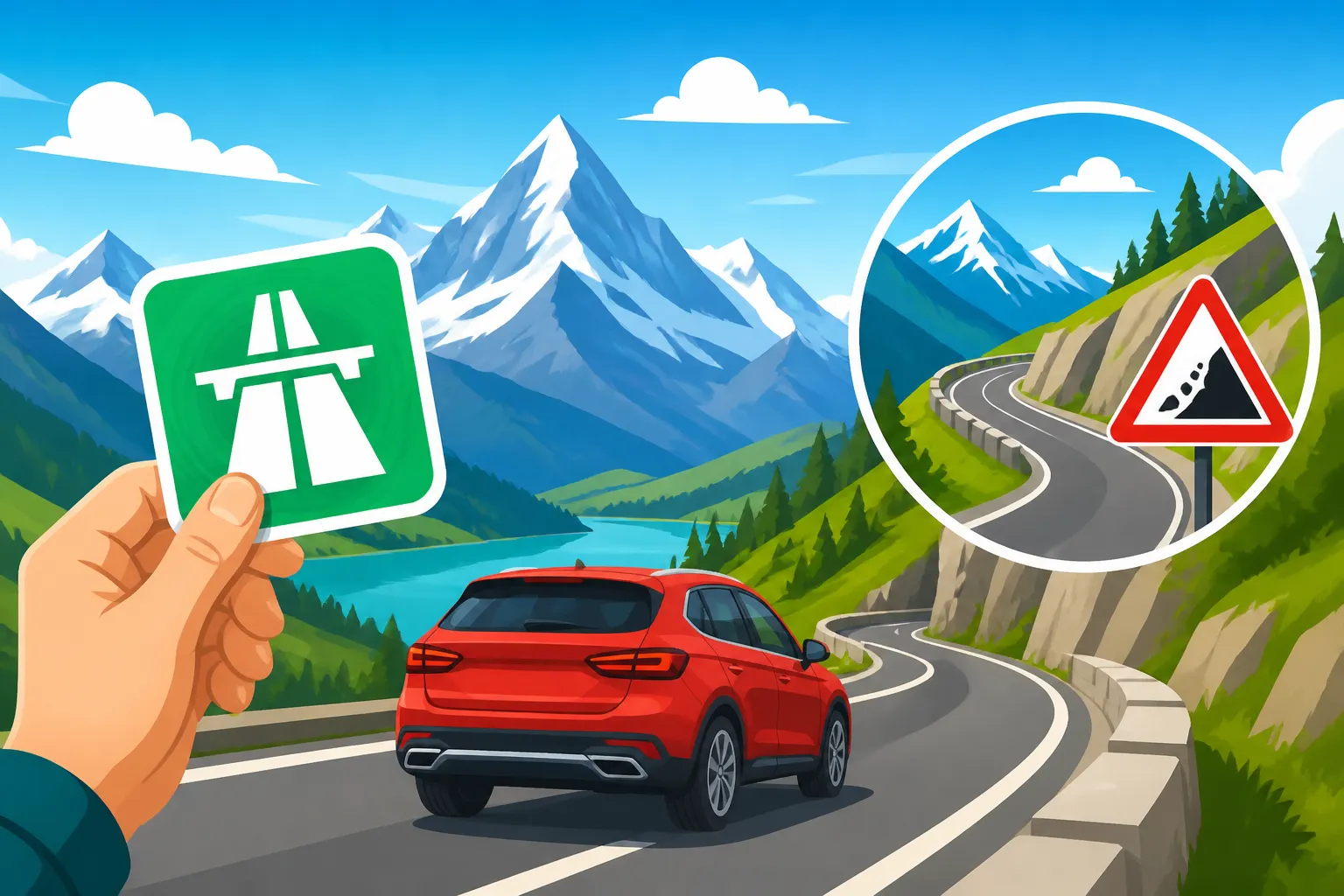
First things first, if you plan on using Switzerland's motorways (Autobahn) or semi-motorways (Autostrasse), you must have a vignette. This isn't just a suggestion; it's a legal requirement, and the Swiss are quite serious about it. Imagine this: you've just crossed the border, feeling excited about your adventure, and within minutes, you're pulled over for not having a little sticker on your windshield. Not the welcome you wanted, right?
The vignette is essentially an annual road tax, costing CHF 40 for the entire year, regardless of when you buy it. So, whether you purchase it in January or December, it's valid until January 31st of the following year. This is one of those frustrations many foreigners share – why can't there be a weekly or monthly option for tourists? Unfortunately, that's just the way it is. For 2024, there's a new option to buy an electronic vignette (e-Vignette) online, which is a fantastic development for those driving rental cars or who dislike wrestling with sticky residue. No more peeling old stickers off the windshield! You can get the physical vignette at border crossings, post offices, petrol stations, or online via the official Federal Customs Administration website for the Swiss Autobahn Vignette: E-Vignette vs Physical Sticker for 2026. Don't even think about skipping it; the fine for not having a valid vignette is CHF 200, plus the cost of buying one on the spot. It's just not worth the risk.
General Driving Laws and Quirks to Remember
Beyond the vignette, Swiss driving laws are quite strict and efficiently enforced, largely due to the pervasive radar speed traps and vigilant police. Speed limits are generally 120 km/h on motorways, 100 km/h on semi-motorways, 80 km/h on open roads outside built-up areas, and 50 km/h in urban areas. Pay close attention to signage, as these can change quickly, especially around villages or construction zones.
One crucial rule, often overlooked by newcomers, is that headlights must be on at all times, even during the day. It's a simple safety measure that helps visibility in tunnels or sudden weather changes. Additionally, the right-of-way can be a bit tricky. On unmarked intersections, the vehicle coming from the right generally has priority. However, large vehicles like Postbuses (the yellow buses that crisscross the mountains) have priority on narrow mountain roads and will often use a distinctive horn signal around blind corners – always give way to them!
Alcohol limits are also stringent, with a legal blood alcohol content (BAC) limit of 0.05%. For context, that's often less than one small beer. It's best to simply avoid drinking any alcohol if you plan to drive. And a word to the wise: speeding fines here are notorious. For serious infractions, they can be income-based, meaning a wealthy individual could face a fine of tens of thousands of francs. This is quite different from what many expats are used to, so be mindful; it’s not just a minor slap on the wrist. If you want to dive deeper into the nuances, check out Driving in Switzerland: Licenses, Buying Cars, and Strict Traffic Laws and specifically, Speeding Tickets in Switzerland: Income-Based Fines and Strict Radars.
Conquering the Alpine Passes: A Scenic but Strategic Endeavor
Driving through the Swiss Alps is truly an unforgettable experience. The winding roads, the dramatic vistas, the sheer scale of the mountains – it’s breathtaking. But these aren’t your average Sunday drives. They require attention, respect, and a little bit of planning.
Navigating Mountain Roads: Steep Climbs and Hairpin Bends
Picture this: you're ascending a mountain pass, the road narrowing, the gradient increasing, and suddenly, you're faced with a series of tight hairpin bends, often with sheer drops on one side. It’s exhilarating, but it's not for the faint of heart, or for those who aren't comfortable shifting gears manually. Using lower gears for both climbing and descending is key – it saves your brakes and gives you better control.
Road conditions are paramount when planning a mountain pass adventure. Most high alpine passes are closed during winter, typically from October/November until May/June, depending on the snowfall. Even in summer, sudden weather changes can lead to temporary closures or hazardous conditions. Always, always check the current status of the passes before you set off. Websites like Tcs.ch or the local tourism offices provide up-to-date information on pass openings and road conditions. There's nothing more frustrating than driving for an hour only to find the pass you wanted to cross is shut. If you're tackling these routes outside of summer, remember that while winter tires aren't legally mandatory everywhere, they are highly recommended for mountain driving and become a necessity on many routes. Read more on Winter Tires in Switzerland: Are They Legally Mandatory in 2027?.
On those narrow, winding mountain roads, specific driving etiquette applies. As a general rule, ascending traffic has priority over descending traffic on very steep sections where passing is difficult. However, the yellow Postbuses always, always have priority – no exceptions. If you see one approaching, find a spot to pull over and let them pass. It's a Swiss tradition, and frankly, they navigate those roads like pros!
Iconic Swiss Mountain Passes Worth the Drive
Switzerland is home to dozens of stunning mountain passes, each offering its own unique charm and challenge. Planning a scenic drive around these can be the highlight of your trip.
One classic route, often called the "Three-Pass Tour," includes the Grimsel Pass, Furka Pass, and Susten Pass. The Grimsel Pass connects the Bernese Oberland with Valais, offering spectacular views of reservoirs and granite landscapes. The Furka Pass, famous from a James Bond film, provides dramatic vistas of the Rhone Glacier. And the Susten Pass is known for its incredible engineering, with tunnels carved directly into the rock and stunning waterfalls. These are usually open from June to October, and you absolutely must check Mountain Passes Open in Summer: Furka, Susten, and Grimsel before heading out.
Then there's the legendary Gotthard Pass. You can either take the modern Gotthard Road Tunnel (which is practical but uninspiring) or, for the true experience, drive over the old pass road, the Tremola. This historic cobblestone route, with its 24 hairpin bends, is a journey back in time, offering incredible views and a real sense of accomplishment. It's a slower, more deliberate drive, but immensely rewarding. Other notable passes include the Klausen Pass, connecting Uri and Glarus with a wild, rugged beauty, and the Flüela Pass in Graubünden, known for its wide-open alpine scenery.
| Mountain Pass | Region | Approximate Opening Season | Key Features | Elevation (m) |
|---|---|---|---|---|
| Grimsel Pass | Bernese Oberland/Valais | June – October | Glacial lakes, granite landscapes, hydropower | 2,164 |
| Furka Pass | Valais/Uri | June – October | Rhone Glacier, James Bond filming location | 2,429 |
| Susten Pass | Bernese Oberland/Uri | June – October | Tunnels, waterfalls, alpine meadows | 2,260 |
| Gotthard Pass | Uri/Ticino | May – November | Historic Tremola road, hospices, cultural significance | 2,106 |
| Klausen Pass | Uri/Glarus | May – October | Wild landscape, waterfalls, fewer crowds | 1,948 |
| Flüela Pass | Graubünden | May – November | Wide open alpine valleys, high altitude | 2,383 |
Note: Opening seasons are approximate and highly dependent on snowfall and weather conditions. Always check current status before travel.
Practical Tips for a Smooth Swiss Road Trip
A little preparation goes a long way, especially when you’re driving in a foreign country. Trust me, you don't want to be caught off guard when you're miles from civilization with a flat tire or an empty tank.
Car Preparation and Essentials
Before you even turn the key, make sure your vehicle is up to snuff. Basic checks like tire pressure, oil, coolant, and wiper fluid are essential. If you’re driving your own car from abroad, ensure it’s in good condition. For rental cars, always do a quick once-over before driving off.
Switzerland also has mandatory equipment you need to carry in your car. A warning triangle is compulsory and must be placed at a safe distance (usually 50-100m) behind a broken-down vehicle. While not mandatory for private vehicles, it's highly recommended to also carry a reflective safety vest. It's a small item that could make a big difference if you break down on a busy road or in low light conditions. You might also consider a first-aid kit.
When it comes to navigation, a good GPS system is invaluable, especially in complex city centers or when trying to locate specific mountain roads. However, don't underestimate the charm and reliability of a physical map as a backup, especially in remote areas where phone signal might be unreliable. For those of us who tend to get a bit lost even with GPS, having a large-scale map to visualize the overall route can be a lifesaver.
Parking and Fueling Up
Parking in Swiss towns and cities can be a bit of a maze, and often quite expensive. You'll encounter different zones:
- Blue Zones: Free parking for one hour (or slightly longer) with a parking disc (Parkscheibe). You set the arrival time on the disc and display it on your dashboard. Available at many supermarkets and police stations.
- White Zones: Paid parking, usually for a limited duration, requiring payment at a meter.
- Yellow Zones: These are strictly reserved for businesses, residents with permits, or specific purposes (e.g., loading/unloading) and should generally be avoided by visitors unless explicitly permitted.
Always read the signs carefully! Fines for incorrect parking are swift and substantial. Some cities also offer underground parking garages (Parkhaus) which are more expensive but offer security and convenience.
Fuel prices in Switzerland are generally higher than in neighboring countries. Petrol stations are widely available, even in smaller towns, but keep an eye on your tank when heading into remote mountain regions. It's a good habit to fill up when you see a station if your tank is less than half full. For electric vehicle owners, the charging infrastructure is growing rapidly, with various apps and networks like evpass or ChargePoint available to locate charging stations.
Alternative Perspectives: When Driving Isn't the Only Way
While driving offers incredible freedom, sometimes the best way to experience Switzerland is to let someone else do the driving, or simply combine modes of transport.
The Joys of Public Transport for Leisure
Switzerland boasts one of the world's most efficient, integrated, and scenic public transport systems. The Swiss Federal Railways (SBB) network is legendary, connecting even the smallest villages to major cities with clockwork precision. Think about it: no stress about parking, no navigating tricky mountain roads, no worrying about vignettes. You just sit back, relax, and enjoy the views from panoramic windows, often on routes that cars can’t even access. Many expats find great value in the SBB Travelcards: Is the Generalabonnement (GA) Worth the CHF 4000+ Cost? or, more commonly, The Half-Fare Travelcard (Halbtax): The Must-Have Pass for Swiss Residents, which offers 50% off most train, bus, and boat tickets.
For planning your car-free journeys, services like Omio can be incredibly useful for comparing and booking train and bus tickets across Switzerland and even into neighboring countries. Or if you prefer guided experiences, platforms like GetYourGuide offer a plethora of tours that include all transport, taking the logistical headaches completely out of your hands. Sometimes, for a truly relaxing trip, letting the train take the strain is the ultimate luxury. And for tourists, a specific Travelcards for Tourists vs Residents: Which Swiss Pass Suits You guide can help pick the best option.
Combining Modes: Park & Ride and Car-Free Zones
You don't always have to choose between driving and public transport; sometimes, the best solution is a clever combination. Many Swiss cities offer excellent Park & Ride (P+R) facilities on their outskirts. You park your car for a reasonable fee and then hop on a tram, bus, or train directly into the city center. This saves you the headache (and expense!) of city parking, plus contributes to reducing urban traffic. For specifics on these, a quick search for Park and Ride Options for Car-Free City Visits in Switzerland will yield local options.
Furthermore, several of Switzerland's most beautiful and iconic destinations are entirely car-free. Places like Zermatt (home to the Matterhorn), Wengen, Mürren, and Saas-Fee are only accessible by train or cable car. This creates a uniquely tranquil atmosphere, free from the noise and fumes of traffic. If you're planning to visit these gems, you'll drive to a designated parking area at the base (e.g., Täsch for Zermatt, Lauterbrunnen for Wengen/Mürren) and then transfer to public transport for the final leg of your journey. When booking accommodation in these areas, platforms like Booking.com are invaluable, as they often highlight the accessibility and transport options for car-free destinations right in their listings, helping you plan your final approach to your mountain retreat. It’s all part of the charm of Swiss travel!
Disclaimer
Please remember that while this guide provides comprehensive advice based on current information, laws and regulations in Switzerland can change. Always consult official sources for the most up-to-date requirements before and during your travels. This article is for informational purposes only and does not constitute legal or financial advice.