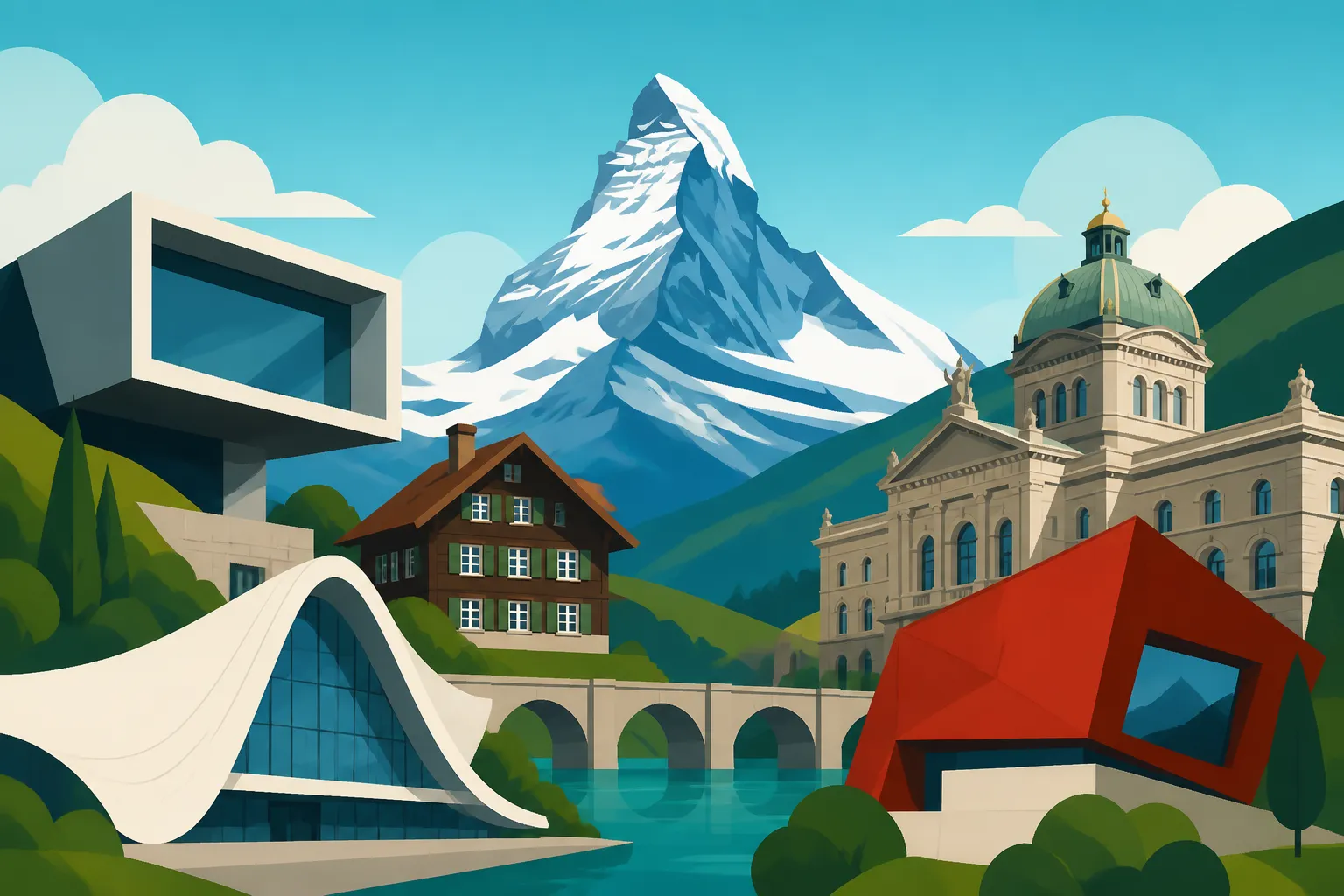
Architecture and Design Highlights Across Switzerland
When you first think of Switzerland, your mind likely jumps to majestic mountains, serene lakes, and perhaps the meticulous craftsmanship of watches or chocolate. But for those of us who've called this country home for years, we know there's a quieter, equally profound beauty to uncover: its incredible architecture and design. It's easy to get swept up in the natural splendor and overlook the intricate stories etched into the stone and glass of Swiss buildings. This guide isn't just about pointing out pretty structures; it’s about understanding the soul of Switzerland through its built environment, from ancient Roman ruins to cutting-edge contemporary marvels, and showing you how to truly experience these architectural treasures yourself.
From Medieval Marvels to Modern Masterpieces: A Historical Overview
Switzerland, despite its reputation for sleek modernity, is absolutely steeped in history, and its buildings are tangible proof. You can literally walk through centuries of design, often within the same city block. It's a fascinating journey that reveals how different eras, cultural influences, and practical necessities shaped the landscapes we see today.
Tracing the Footprints of History
Long before Switzerland was a unified nation, it was a crossroads for empires and cultures. You might be surprised to learn that Roman settlements laid some of the earliest foundations. Places like Augusta Raurica near Basel offer incredibly well-preserved ruins, giving you a glimpse into sophisticated Roman urban planning. Walking among those ancient stones, you can almost feel the echoes of gladiators and emperors.
As the centuries rolled on, the medieval period left an indelible mark, especially in the German-speaking cantons. Take Bern, for instance, where the entire Old Town is a UNESCO World Heritage Site. Those iconic arcaded walkways, called Lauben, stretching for miles, aren't just charming; they were designed for commerce and protection from the elements, a practical solution that evolved into a distinctive architectural feature. The city's Zytglogge clock tower, a former guard tower, stands as a testament to medieval engineering and artistry. Then there are the awe-inspiring Gothic cathedrals, like the Grossmünster in Zurich with its imposing twin towers, or the stunning Lausanne Cathedral in the French-speaking part of the country. These aren't just religious sites; they are colossal works of art, showcasing intricate stonework, soaring naves, and stained-glass windows that have captured light and imagination for hundreds of years. You can see how generations of craftsmen poured their souls into every detail, often blending Romanesque foundations with later Gothic additions. It’s a wonderful mess of history if you look closely enough.
The Industrial Revolution and Belle Époque Splendor
The 19th and early 20th centuries brought significant changes to Switzerland, not least through the Industrial Revolution and the subsequent boom in tourism. This era saw the emergence of grand, opulent structures that reflected new wealth and a desire to impress. Suddenly, Switzerland wasn't just a place of rugged natural beauty; it was becoming a destination for the international elite.
Railway stations, for example, transformed into magnificent gateways, symbolizing progress and connectivity. Zurich Hauptbahnhof, the main train station in Zurich, is a prime example of this period's grandeur, with its ornate façade and expansive halls. It was designed to welcome the world, and it still does so with stately elegance. Simultaneously, the Alps became a playground for the wealthy, leading to the construction of a plethora of majestic Belle Époque hotels. These grand dames of hospitality, often found in resort towns like St. Moritz, Zermatt, or Montreux, were designed with lavish ballrooms, intricate frescoes, and panoramic windows, providing unparalleled luxury amidst breathtaking scenery. Many still operate today, offering a peek into a bygone era of glamour. Just imagine the stories those walls could tell! This period also saw the rise of more structured urban planning, creating wider boulevards and public buildings that blended classical influences with emerging architectural styles, paving the way for the radical shifts that modernism would soon bring.
Iconic Modern and Contemporary Swiss Design
If traditional alpine chalets are Switzerland's comforting embrace, then its modern and contemporary architecture is its daring handshake with the future. This country has played a surprisingly pivotal role in shaping 20th and 21st-century design, often prioritizing functionality, clean lines, and a deep respect for materials and context.
Pioneering Modernism: Le Corbusier and the CIAM
Switzerland was fertile ground for the revolutionary ideas of modernism, largely due to the influence of one of its most famous sons, Charles-Édouard Jeanneret-Gris, better known as Le Corbusier. Born in La Chaux-de-Fonds, Le Corbusier became a towering figure in architectural history, advocating for radical new ways of designing buildings and cities. His ideas about functionalism, open-plan living, and the use of reinforced concrete swept across the globe.
In Switzerland itself, you can experience his groundbreaking vision firsthand. The Centre Le Corbusier (Heidi Weber Museum) in Zurich is a vibrant, colorful pavilion that perfectly encapsulates his later work – a stark contrast to the often minimalist perceptions of modernism. It’s a bold statement in steel and enamel, demonstrating his "synthesis of the arts." Switzerland also hosted many of the early meetings of the Congrès Internationaux d'Architecture Moderne (CIAM), a powerful organization that propagated modernist principles worldwide. These gatherings cemented Switzerland's place at the heart of the architectural avant-garde. Modernist Swiss architects often embraced simple forms, flat roofs, and large windows, designing buildings that were meant to be efficient, democratic, and healthier for their inhabitants. It was a complete departure from the ornate styles of the past, focusing instead on light, space, and connection to nature, even in urban settings. The shift was more than aesthetic; it was a philosophical change about how we live and interact with our surroundings.
Contemporary Stars and Sustainable Visions
Fast forward to today, and Switzerland continues to be a hotbed of architectural innovation, with several world-renowned contemporary architects pushing the boundaries of design. Basel, in particular, is a playground for contemporary architecture, largely thanks to the homegrown talent of Herzog & de Meuron. This Pritzker Prize-winning duo has an incredible knack for creating buildings that are both profoundly innovative and deeply responsive to their context, often playing with textures, patterns, and light in mesmerizing ways. Their work spans the globe, but in Basel, you can see some of their masterpieces, from the striking copper-clad Stellwerk 1 at the main train station to the iconic Messe Basel exhibition hall.
Another giant in contemporary Swiss architecture is Peter Zumthor, known for his almost spiritual approach to building. His works, often in his native Graubünden, are characterized by meticulous craftsmanship, a profound understanding of local materials, and a sense of quiet contemplation. The Therme Vals, a thermal bath complex built directly into the mountain, is perhaps his most famous creation, a masterclass in light, stone, and water. Beyond these individual stars, Swiss architecture today is increasingly focused on sustainability. With a strong national commitment to environmental protection, architects are pioneering energy-efficient designs, using locally sourced and recycled materials, and integrating buildings seamlessly into the natural landscape. Think of structures powered by renewable energy, featuring green roofs, or designed to minimize their carbon footprint. It's an exciting time to witness this forward-thinking approach, proving that groundbreaking design doesn't have to come at the planet's expense.
Regional Flavors: Architecture Beyond the Big Cities
While Zurich, Basel, and Geneva boast impressive urban developments, the true character of Swiss architecture often reveals itself in the charming regional variations found across the country. These styles are deeply rooted in local traditions, available materials, and the challenging terrain.
Alpine Chalets and Rustic Charm
When you picture Switzerland, chances are you imagine a quaint wooden chalet nestled among snow-capped peaks. This iconic image is not just a stereotype; it’s a living architectural tradition, especially vibrant in the Valais, Bernese Oberland, and Graubünden regions. These traditional alpine chalets are marvels of vernacular architecture, crafted primarily from locally sourced timber, often larch or spruce, with sturdy stone foundations to withstand harsh mountain winters.
The design is incredibly practical, evolved over centuries to cope with heavy snow loads, strong winds, and extreme temperatures. You’ll notice steeply pitched roofs, often weighted with stones to prevent them from blowing off, and deep eaves that protect the wooden walls from rain and snow. Many chalets feature intricate wood carvings, painted details, and charming window boxes overflowing with geraniums in summer. They often have multiple levels, with the ground floor sometimes used for livestock or storage, keeping the living areas warmer above. Places like the traditional villages in the Engadine Valley in Graubünden or the older parts of Zermatt showcase these wooden beauties in their purest form. Wandering through these villages, you truly feel transported back in time. It's a style that blends so naturally with the landscape it's hard to imagine anything else fitting quite so perfectly. It’s a testament to human ingenuity and respect for nature.
Ticinese Grandeur and Mediterranean Touches
Head south across the Gotthard Pass into Ticino, Switzerland's Italian-speaking canton, and the architectural landscape shifts dramatically. Here, the Alps meet the Mediterranean, and the architecture reflects this unique cultural fusion. Gone are the wooden chalets, replaced by sun-drenched stone houses, terracotta roofs, and charming arcades that evoke a distinctly Italian ambiance.
The buildings in towns like Lugano, Locarno, and the countless picturesque villages nestled in the valleys are often built from granite and other local stones, giving them a robust, earthy feel. You'll find graceful loggias, shaded courtyards, and narrow, winding streets that are designed to provide respite from the summer heat. The vibrant colors often seen on plaster facades add to the Mediterranean flair, from warm ochres and terracottas to subtle pastels. Churches and public buildings in Ticino often feature elaborate Baroque and Renaissance influences, distinct from the Gothic and Romanesque styles prevalent further north. The influence of neighboring Italy is undeniable, creating a unique Swiss experience that often feels like a mini-Italy tucked into the southern side of the Alps. It’s a wonderful example of how regional identity profoundly shapes the built environment, offering a fascinating contrast to the rest of the country. Exploring these areas, you quickly realize Switzerland is much more than its common stereotypes; it's a tapestry woven from diverse cultural threads.
Experiencing Swiss Architecture and Design as an Expat
For those of us living here, appreciating Switzerland's architectural and design heritage isn't just about reading books; it's about getting out there and immersing ourselves. It’s one of the most rewarding aspects of settling into Swiss life, and it’s accessible to everyone.
Exploring Design Districts and Museums
To truly get a feel for Swiss design, you need to hit the streets. Many Swiss cities have distinct neighborhoods that showcase particular eras or design philosophies. In Zurich, for example, the industrial-chic Kreis 4 and Kreis 5 areas, particularly around Zürich West, have undergone incredible transformations. Former factories and industrial buildings have been repurposed into trendy apartments, art galleries, boutiques, and innovative workspaces. It’s a fantastic blend of old and new, where the raw edges of the past meet contemporary elegance. You can wander through Viadukt, an old railway viaduct turned into a vibrant market and shopping street, or explore the Prime Tower, one of Switzerland's tallest buildings, offering sleek, modern lines.
Geneva’s Carouge district, often called "Little Italy," has its own distinct charm with its Sardinian-inspired architecture, narrow streets, and charming courtyards. It's a wonderful place to spend an afternoon, soaking in the atmosphere. For a deeper dive, Switzerland boasts excellent design museums. The Museum für Gestaltung (Museum of Design) in Zurich is a must-visit, with extensive collections covering graphic design, product design, fashion, and architecture. It regularly hosts thought-provoking exhibitions that explore the intersection of design and society. Just across the border in Germany, but easily accessible by train from Basel, is the Vitra Design Museum, renowned for its incredible collection of furniture design and its own campus featuring buildings by iconic architects like Frank Gehry and Zaha Hadid. If you're looking for curated experiences, platforms like GetYourGuide often offer specialized walking tours focusing on architectural history in major cities, which can be a fantastic way to gain local insights.
Practicalities: Planning Your Architectural Journeys
One of the greatest joys of living in Switzerland is the sheer ease of travel, and this extends perfectly to architectural exploration. The public transport system here is second to none, making it incredibly simple to hop from a medieval town center to a modernist masterpiece in a different canton. The Swiss Federal Railways (SBB) network connects virtually every corner of the country, offering comfortable and scenic journeys. I always recommend checking out options like the Half-Fare Travelcard (Halbtax) or even the Generalabonnement (GA) if you plan extensive travel, as they significantly reduce the cost of train tickets. You can easily book your train tickets through the SBB app or platforms like Omio, which can also help you compare different routes and prices.
Consider planning day trips to specific cities or regions known for their architectural significance. For example, a trip to Bern can focus on its medieval Old Town, while a visit to Chur, the oldest city in Switzerland, offers a blend of ancient and modern architecture, including works by Peter Zumthor. You can find excellent suggestions for Day Trips from Zurich: Rhine Falls, Rapperswil, and Lucerne or Day Trips from Geneva: Montreux, Gruyères, and the Lavaux Vineyards. When planning overnight stays, especially if you're venturing further afield, Booking.com is a reliable platform to find accommodation that fits your budget and might even put you right in the heart of an architecturally significant area. Don't forget to check local tourism office websites for specific architectural trails or self-guided walking tours in the areas you plan to visit. Many cantons, like Graubünden, even have dedicated routes for exploring contemporary architecture nestled in their stunning landscapes. It’s a fantastic way to combine your love for design with the natural beauty of Switzerland.
| Architectural Style | Period (Approx.) | Key Characteristics | Notable Swiss Examples |
|---|---|---|---|
| Roman | 1st – 5th C AD | Stone construction, arches, public baths, forums. | Augusta Raurica (near Basel) |
| Medieval (Romanesque/Gothic) | 10th – 15th C | Heavy stone, round arches (Romanesque); soaring naves, pointed arches, stained glass, flying buttresses (Gothic). | Grossmünster (Zurich), Lausanne Cathedral, Bern Old Town arcades |
| Renaissance & Baroque | 16th – 18th C | Classical symmetry, intricate ornamentation, grand scale, domes. More prevalent in Italian-speaking Ticino. | Bellinzona Castles, numerous churches in Ticino |
| Belle Époque | Late 19th – early 20th C | Ornate facades, grand interiors, lavish detailing, often associated with luxury hotels and public buildings. | Grand hotels in Montreux, St. Moritz; Zurich Hauptbahnhof |
| Modernism | Early – mid 20th C | Functionalism, clean lines, open plans, concrete, steel, glass, flat roofs. | Centre Le Corbusier (Zurich), various housing estates and public buildings |
| Contemporary | Late 20th C – present | Innovation in materials, forms, sustainable design, often contextual and responsive to site. | Messe Basel (Herzog & de Meuron), Therme Vals (Peter Zumthor), Rolex Learning Center (SANAA) |
| Traditional Alpine Chalet | Centuries old | Timber construction, steeply pitched roofs (often stone-weighted), deep eaves, carved wood details. | Villages in Valais, Bernese Oberland, Engadine Valley |
| Ticinese Vernacular | Centuries old | Stone (granite) construction, terracotta roofs, arcades, loggias, Mediterranean colors. | Lugano, Locarno, traditional villages in Ticino |
Disclaimer
Please note that while I strive to provide the most accurate and up-to-date information, architectural highlights and access can change. It's always a good idea to check official museum websites, opening hours, and local tourism information before planning your visit. Some specific buildings may require reservations or have limited access.