Parking in Swiss Cities: Blue Zones, Permits, and White Zones
Ah, parking in Swiss cities! If you've just moved here, or even if you've been around for a while, you've probably already experienced that unique blend of exasperation and confusion when trying to find a spot for your car. It's not just about finding an empty space; it's about understanding the labyrinthine rules of blue zones, white zones, and those coveted, elusive permits. This guide is going to break down the ins and outs of urban parking in Switzerland, helping you avoid those notoriously hefty Swiss parking fines and navigate the system like a seasoned local.
The Maze of Swiss Parking Zones: An Overview
Switzerland, with its meticulous order and precision, applies the same rigorous standards to its parking regulations. Unlike some other countries where you might just wing it, here, knowing your zones is crucial. Misinterpret a sign, forget your disc, or overstay your welcome, and you’ll quickly find a little yellow envelope tucked under your wiper blade, containing a bill that will make your eyes water.
Blue Zones: The Everyday Puzzle
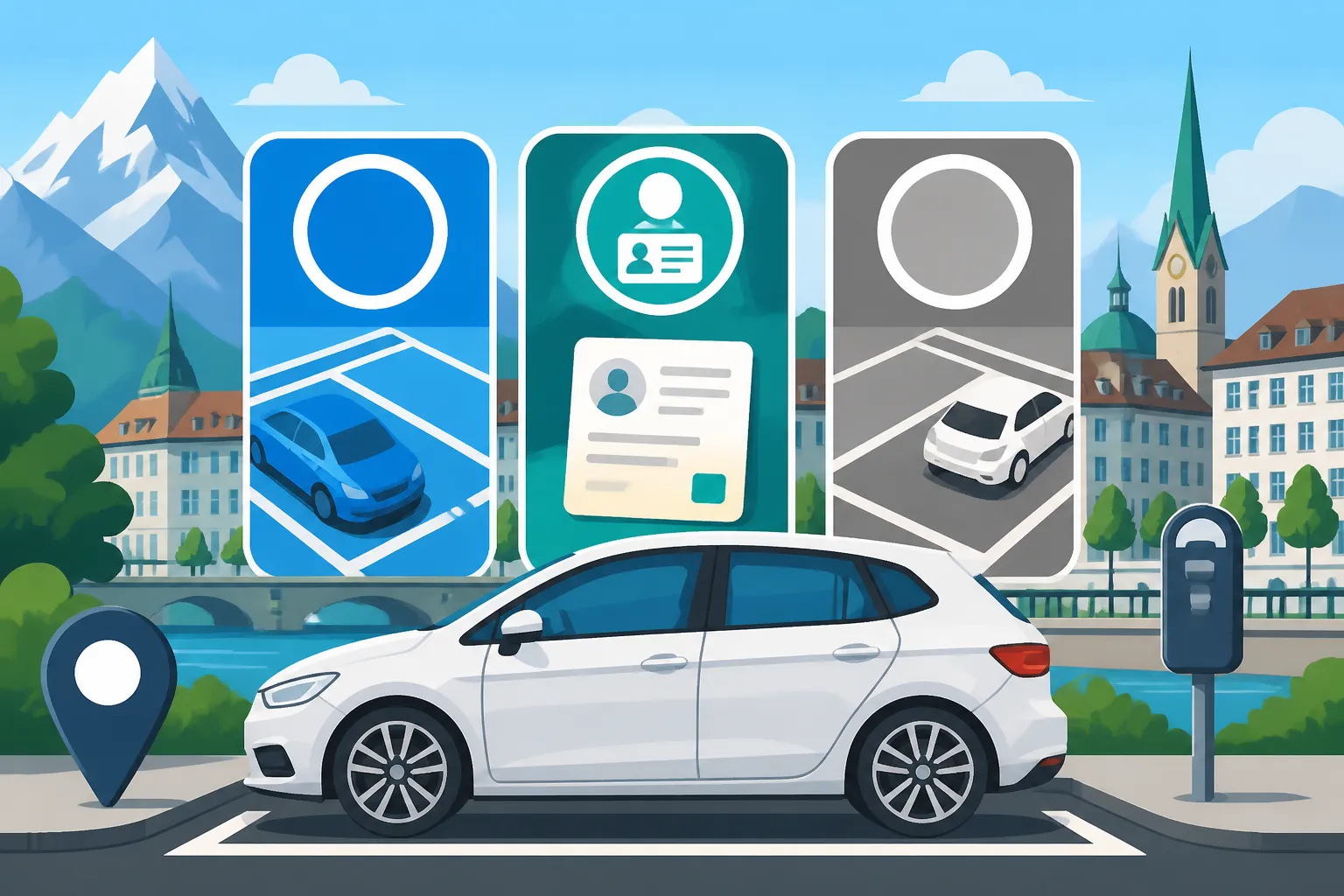
Blue zones, marked by blue lines on the ground and corresponding signs, are arguably the most common and often the most confusing for newcomers. They are designed for short-term parking, typically allowing you to park for a limited duration using a special blue parking disc (Parkscheibe / Disque de stationnement).
Here’s the deal: When you park in a blue zone, you must display a blue parking disc clearly on your dashboard. You set the arrow on the disc to the next half-hour mark after your arrival. So, if you arrive at 10:01, you set it to 10:30. If you arrive at 10:29, you still set it to 10:30. From that point, you're usually allowed to park for one hour. This means if you set your disc to 10:30, you must move your car by 11:30.
Sounds simple, right? Well, it gets a bit trickier with the timings:
- Weekdays (08:00 – 11:30 and 13:30 – 18:00): This is when the one-hour rule (or other specified durations) strictly applies.
- Lunchtime (11:30 – 13:30): You can often park for free during this period, but you still need to set your disc to 13:30. So, if you arrive at 11:35, set it to 12:00, but you can stay until 14:30. Confused yet? The key is that the clock effectively restarts after lunch for enforcement.
- Overnight (18:00 – 08:00): Generally, parking is free and unlimited in blue zones during these hours. You still need to display your disc, set to 08:00 the next morning, so you can stay until 09:00.
- Sundays and Public Holidays: Often free and unlimited all day. Again, check local signs, but typically you set your disc to 08:00 if you're parking overnight before a working day.
The blue disc itself can be picked up for free at police stations, traffic offices, or even many banks and post offices. Don't cheap out and try to use a piece of paper with a handwritten time – it won't fly with the parking police, who are exceptionally good at spotting irregularities.
White Zones: Your Best Bet (Sometimes)
White zones are typically paid parking areas, almost always accompanied by a parking meter. These are often found in city centers, near shops, or popular attractions. The white lines on the ground indicate a space where you can park, and a nearby machine will tell you the rules: duration, cost per hour, and operating hours.
Payment is usually made via coins or card at the meter. Increasingly, many cities also offer mobile parking apps like Parkingpay or EasyPark, which allow you to pay digitally and often extend your parking duration from your phone. This is a massive convenience, especially if you're running late or simply forget how quickly time flies when you're exploring a new Swiss city. Always double-check the meter or app to make sure you're covered for the entire time you plan to stay. Exceeding the paid time, even by a few minutes, can result in a fine.
Beyond public white zones, you'll also find private white zones, such as those belonging to specific apartment buildings, businesses, or private parking lots. These are usually clearly marked with signs indicating "Privat" or "Nur für Mieter" (For Tenants Only). Parking in these spots without explicit permission is a surefire way to get towed or receive a significant fine, often from a private enforcement company rather than the police. It's not worth the risk, trust me.
Yellow Zones: Don't Even Think About It
Yellow zones are the absolute no-go areas for parking. These are designated by yellow lines on the pavement, sometimes solid, sometimes dashed.
- Solid Yellow Line: Absolute no stopping or parking zone. This often means bus stops, fire lane access, or areas where emergency vehicles need clear passage.
- Dashed Yellow Line: No parking zone. You can stop briefly for loading or unloading passengers or goods, but you cannot leave your vehicle unattended. This might be a delivery zone or a taxi stand.
- Yellow Cross on the Pavement: Means "no parking" for a specific purpose, often used to keep intersections clear.
You'll also see yellow zones in front of private driveways, designated for company vehicles, or police cars. These areas are strictly enforced, and parking there, even for "just a minute," can lead to immediate fines or towing. Seriously, don't even try it. Your car will be gone, and retrieving it will be an expensive, bureaucratic headache.
Demystifying Parking Permits for Residents
For those of us living in Swiss cities, relying on blue and white zones can quickly become a nightmare, especially if you need to park regularly near your home. This is where residential parking permits come into play. They are a game-changer but require a bit of understanding.
Residential Parking Permits Anwohnerparkkarte
If you reside in a city, you can generally apply for a residential parking permit (often called an Anwohnerparkkarte in German-speaking cantons or a Vignette de stationnement résidentiel in French-speaking ones). This permit allows you to park in designated blue zones within a specific district or "zone" of your city for an extended period, usually without needing to set your blue disc or adhere to the hourly limits during the day. However, it does not guarantee you a spot – it just gives you the right to park there if one is available. This is a crucial distinction and a common source of frustration for expats, as you can still spend ages circling for a spot.
To qualify, you typically need to:
- Be a registered resident of the specific zone where you're applying. Your official address must be within that area.
- Own or lease a vehicle registered to your name at that address.
- Prove a genuine need for the permit, usually by simply owning a car and living in the zone.
The application process usually involves visiting your local Gemeinde (municipality) or traffic office (Strassenverkehrsamt / Office cantonal des véhicules). You'll need your residence permit, vehicle registration document (Fahrzeugausweis), and sometimes proof of address. The costs vary wildly by canton and city, from around CHF 150 to CHF 500+ per year. It's not cheap, but it's often far cheaper than hourly parking or regular fines.
For example, in Zurich, you apply for a parking permit for a specific "Kreis" or district. If you live in Kreis 3, your permit is valid for blue zones only within Kreis 3. You can’t just park in Kreis 1 without following the regular blue zone rules. Make sure you understand the exact boundaries of your permit's validity.
When you're first moving to Switzerland, coordinating everything can feel overwhelming. Services like Renting in Switzerland: The Complete 2027 Guide for Expats can offer invaluable advice on securing your new home, but remember that parking is a separate, vital step. While relocation services, such as Sirelo, can help immensely with the logistics of moving your belongings – and even advise on specific permits for large moving trucks – securing your personal residential parking permit will still be your responsibility through the local authorities. They can't do it for you, but they can guide you on the local specifics.
Visitor Permits and Special Occasions
What happens when friends or family come to visit, or you need a service like a plumber for an extended period? Most cities offer temporary visitor permits. These can usually be purchased online or at your local administration office. They come in various durations – often for half a day, a full day, or even several days – and allow your guests to park in the blue zones within your residential zone without needing a blue disc.
For larger vehicles, like moving vans during your initial relocation, or if you're having significant work done on your apartment, you might need special permits for Sondernutzung (special use) of public space. This could involve reserving a section of the street for a moving truck or a crane. Again, this is handled by the local Gemeinde or traffic police and requires advance planning and a fee. If you're moving yourself, planning ahead for this is crucial; even professional relocation assistance, like that provided by Sirelo, will need these permits secured for a smooth operation.
Practical Strategies for Parking in Swiss Cities
Okay, so you know the zones and the permits. But how do you actually make parking less of a daily battle? It's about combining knowledge with strategy.
Navigating Parking Garages Parkhäuser
Parking garages, or Parkhäuser (in German-speaking areas) and Parkings souterrains (in French-speaking ones), are your reliable, albeit often expensive, friends in Swiss cities. They offer predictable parking, often 24/7, and typically have electronic signs on main roads indicating how many spaces are available.
Pros:
- Guaranteed Space: No circling for ages, especially in busy city centers.
- Security: Most garages are well-lit and monitored, offering better security for your vehicle.
- Convenience: Often located directly under major shopping areas, train stations, or tourist attractions.
Cons:
- Cost: This is the big one. Hourly rates can be significant, and daily maximums can quickly add up, often CHF 30-50 for a full day.
- Tight Spaces: Swiss garages, particularly older ones, can have notoriously narrow ramps and parking spots. If you drive a larger SUV, be prepared for some careful maneuvering.
- Complexity: Some older garages still use ticket systems, while newer ones might use number plate recognition. Payment is usually at a machine before you exit.
When planning a trip to a city, especially if you know you'll be driving, checking online for nearby parking garages and their current availability and prices is a smart move. Websites like parking.ch often list details for major cities.
Apps, Websites, and Real-Time Information
Technology is your ally in the quest for parking.
- Mobile Parking Apps: As mentioned, apps like Parkingpay, EasyPark, and often local city-specific apps allow you to pay for white zone parking directly from your phone. You can usually extend your time if needed, and some even remind you when your parking session is about to expire. This is a lifesaver.
- City Parking Websites: Most major Swiss cities have excellent websites detailing all their parking facilities, including real-time availability for garages, prices, and information on residential permits. For example, the City of Zurich website has an extensive section on parking.
- Navigation Apps: Google Maps, Apple Maps, and dedicated navigation systems often integrate parking garage locations and sometimes even real-time availability data.
To really make the most of these digital tools, having reliable data on your phone is non-negotiable. If you're a new arrival or a tourist, consider a flexible eSIM from a provider like Airalo to ensure you have immediate connectivity for navigation and parking apps without needing a physical SIM card right away. This can save you a lot of stress when you're already grappling with the complexities of driving in Switzerland and its unique traffic laws.
Alternative Solutions: Public Transport & Car-Sharing
Let's be honest, sometimes the best parking strategy in Switzerland is not to drive at all.
- Public Transport: Switzerland has one of the world's most efficient and comprehensive public transport networks. From the SBB national railway to local trams, buses, and boats, you can get almost anywhere without a car. For residents, investing in a Half-Fare Travelcard (Halbtax) or even a Generalabonnement (GA) can make this incredibly cost-effective. For city visits, utilizing park-and-ride options on the outskirts, and then taking a tram or train into the center, often proves less stressful and sometimes even cheaper than battling city parking.
- Car-Sharing: Services like Mobility Carsharing are popular in Switzerland. You pay an annual fee and then hourly or daily rates to use cars parked at designated stations across the country. This can be an excellent option if you only need a car occasionally for specific tasks or weekend trips, without the hassle and expense of owning, insuring, and parking your own vehicle.
Remember, the cost of living in Switzerland is already high, and parking fines or daily garage fees can quickly inflate your budget. Seriously consider if driving into the city center is always necessary or if one of these alternatives might be a smarter move.
What Happens If You Get Fined?
It’s almost a rite of passage for expats to get a parking ticket in Switzerland. They are often discreet yellow slips tucked under your wiper. These will detail the offense, the fine amount, and payment instructions.
- Minor Offenses (e.g., expired blue disc, slightly overstaying a white zone meter): Fines typically range from CHF 40 to CHF 120. These are usually direct payment slips. Pay them promptly.
- Serious Offenses (e.g., parking in a yellow no-stopping zone, blocking access, repeated offenses): Fines can be much higher, potentially CHF 200+, and can lead to points on your license or even vehicle impoundment. These might come in the form of an actual Ordnungsbussenverfügung (summary penalty order) in the mail, which you have a right to contest if you believe it's unjust, though you'll need a good argument and potentially legal advice from an organization like ASLOCA.
Ignoring a Swiss parking fine is a terrible idea. The system is incredibly efficient at escalating non-payments, leading to increased fees, debt collection (Betreibung), and potentially impacting your future ability to get loans, rent an apartment, or even renew your residence permit. Just pay it, learn from it, and move on.
The complexities of Swiss parking are a microcosm of life here – precise, regulated, and demanding attention to detail. But with a bit of planning and understanding, you can navigate it successfully.
Disclaimer
The information provided in this guide is for general informational purposes only and does not constitute legal or financial advice. Parking regulations, fees, and permit requirements can vary significantly by canton and municipality and are subject to change. Always consult the official websites of the relevant local authorities (e.g., your Gemeinde, Strassenverkehrsamt, or city police) for the most accurate and up-to-date information specific to your location.