Reaching Ski Resorts by Train and Bus Without a Car
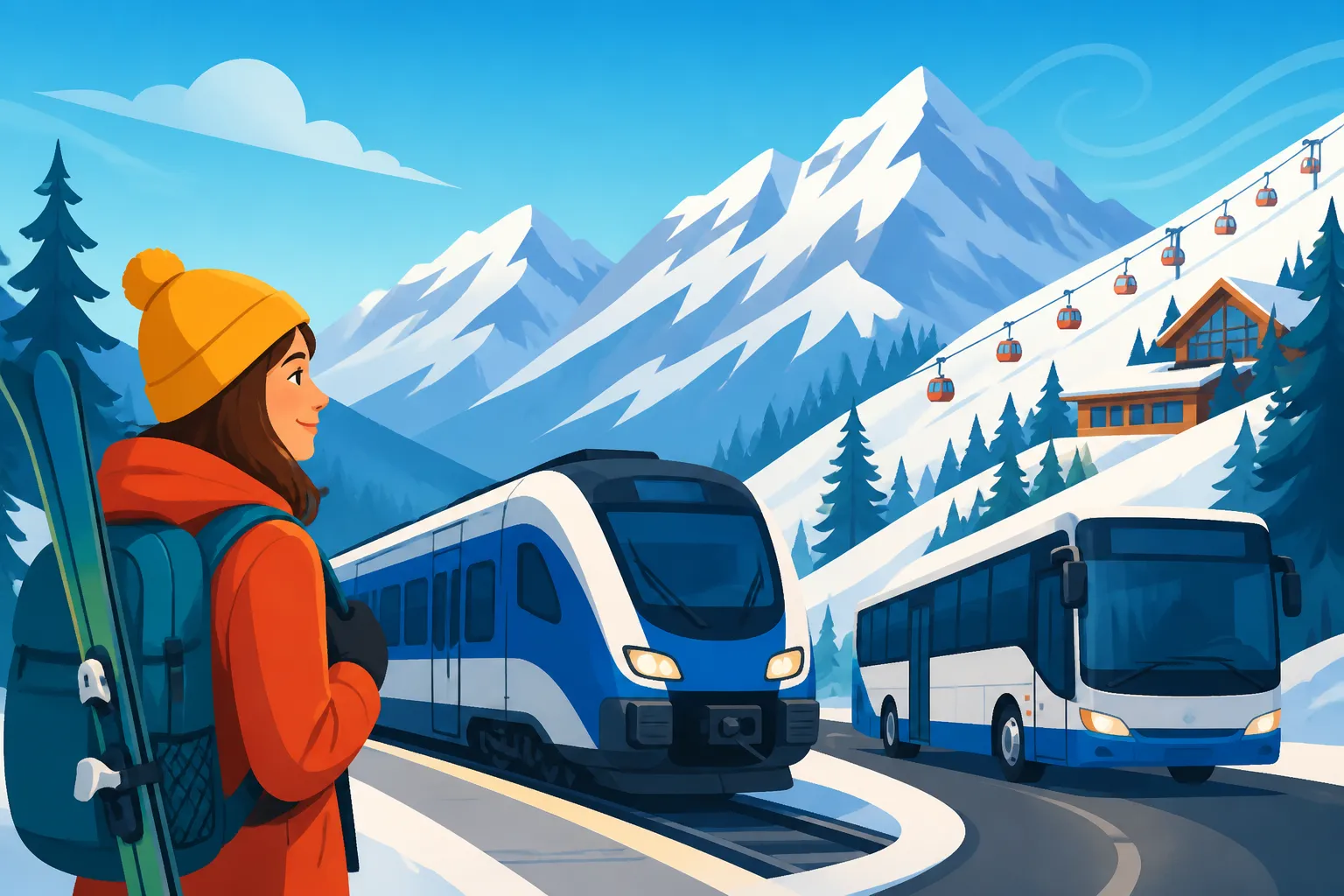
One of the biggest worries for new arrivals in Switzerland, especially if you're not planning on getting a car, is how on earth you're going to experience those postcard-perfect ski slopes. You see the stunning mountains, you hear about world-class resorts, and then you look out your window at the complex public transport map, wondering if it's even feasible to haul your gear without a personal vehicle. Trust me, it absolutely is, and this guide is here to walk you through the magic of reaching Swiss ski resorts by train and bus, often with less hassle than driving.
The Swiss Public Transport Marvel: Your Gateway to the Slopes
Switzerland's public transport system, primarily run by the SBB (Swiss Federal Railways), is legendary for a reason. It's not just about getting from A to B; it's about seamlessly connecting almost every village, valley, and, yes, even the most remote ski resorts, all year round. As an expat who initially thought a car was essential, I quickly learned that the train and bus network here is often superior to driving, especially when snow and ice become factors.
Why the Train & Bus System is Your Best Friend
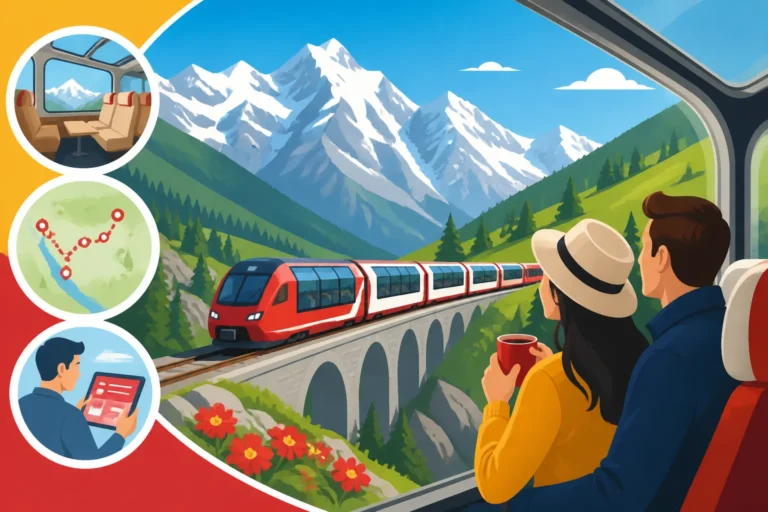
Forget the stress of navigating icy mountain roads, dealing with expensive parking fees at the base of a resort, or fumbling with snow chains in sub-zero temperatures. Switzerland's integrated transport system turns what could be a headache into a scenic, relaxing part of your ski adventure. The trains run with an almost unbelievable punctuality, carving through stunning landscapes that are often inaccessible by car. Picture yourself enjoying a warm coffee, reading a book, or simply soaking in the views of snow-dusted forests and towering peaks as someone else does all the driving. This isn't just transport; it's part of the experience.
Moreover, the environmental benefit is undeniable. Choosing public transport over driving is a small but significant way to contribute to keeping Switzerland's pristine environment, well, pristine. Many resorts actively encourage public transport use and offer incentives or integrated tickets. It’s also incredibly cost-effective, particularly if you invest in one of the fantastic travel cards, which we’ll get into next. You save on petrol, parking, and the wear and tear on your own vehicle, not to mention the potential stress of getting lost or stuck.
Understanding Your SBB Pass Options
The key to unlocking affordable and convenient train and bus travel in Switzerland, especially for skiing, lies in understanding the SBB travel passes. These aren't just for tourists; they're an absolute game-changer for residents.
- The Half-Fare Travelcard (Halbtax): This is, hands down, the single most valuable investment for almost anyone living in Switzerland. For a fixed annual fee (around CHF 185 for an adult), it slashes the price of virtually all train, bus, boat, and many mountain railway tickets by 50%. If you plan even a few weekend trips to the mountains or visits across the country, it pays for itself quickly. Imagine saving half on every single ski trip! You can learn more about this essential pass in our detailed guide on The Half-Fare Travelcard (Halbtax): The Must-Have Pass for Swiss Residents.
- Saver Day Passes (Spartageskarte): These are truly budget-friendly options that many expats overlook. If you know your travel dates well in advance, you can snag a full day of unlimited travel across the entire public transport network for as little as CHF 29 (with a Half-Fare card) or CHF 52 (without). The trick is to book early, as prices increase closer to the travel date and as availability dwindles. This is a fantastic way to keep your costs down for a ski day trip, and we've covered it thoroughly in Saver Day Pass (Spartageskarte): How Residents Save on Day Trips.
- Generalabonnement (GA): For the truly hardcore explorers and frequent commuters, the GA card offers unlimited travel on almost all public transport. While a significant annual investment (over CHF 4,000 for adults), if you're hitting the slopes every weekend, visiting family across the country, and commuting by train, it might be worth considering. Our guide SBB Travelcards: Is the Generalabonnement (GA) Worth the CHF 4000+ Cost? dives deep into its value proposition.
Here's a quick comparison to give you an idea:
| Pass Option | Annual Cost (Approx.) | Discount/Benefit | Ideal For |
|---|---|---|---|
| Half-Fare Travelcard (Halbtax) | CHF 185 | 50% off most public transport fares | Most residents, frequent day-trippers, occasional ski trips |
| Saver Day Pass (Spartageskarte) | From CHF 29 (with Halbtax) | Unlimited travel for one day across Switzerland | Budget-conscious travelers, planned ski day trips (booked in advance) |
| Generalabonnement (GA) | CHF 4,000+ | Unlimited travel on almost all public transport | Frequent travelers, daily commuters, very keen skiers |
Planning Your Journey: SBB App and Online Tools
The SBB Mobile app is your digital travel agent, schedule keeper, and ticket vendor all rolled into one. It’s indispensable. Download it immediately if you haven't already. To plan your ski trip:
- Enter your departure and destination: Simply type in your current location and the name of the ski resort (e.g., "Engelberg Titlis" or "Zermatt"). The app is smart enough to find the best connections, often listing the PostBus or cable car stations as the final stop.
- Check connections and platforms: The app provides real-time updates on delays (rare, but they happen!), platform changes, and intermediate stops. You'll see the full itinerary, including train, bus, and even mountain railway legs.
- Buy your tickets: You can purchase tickets directly through the app, which is incredibly convenient. If you have a Half-Fare card registered to your profile, the discounted prices will automatically apply. This is often easier than fussing with ticket machines, especially if you're not fluent in the local language.
- Consider Omio for broader trips: While the SBB app is king for domestic travel, if you're perhaps planning a multi-country ski adventure or even just checking connections from a nearby border region like France or Germany, platforms like Omio can be useful. They aggregate train and bus options across Europe, sometimes providing alternatives you might not think of if you're starting your journey from slightly further afield. However, for getting to a Swiss resort from within Switzerland, SBB is your primary tool.
Before you even leave your house, make sure you've also checked the current conditions. Our guide on Weather Apps and Webcams for Planning Swiss Mountain Trips is an excellent resource to ensure you don't arrive only to find heavy fog or closed slopes. There's nothing worse than making the effort only to have the weather thwart your plans!
Navigating Specific Resort Connections: Last Mile Solutions
Getting to the main town near a ski resort is usually straightforward by train. The real magic of the Swiss system is how it handles that crucial "last mile," seamlessly connecting you from the train station to the actual ski lifts and slopes.
PostBus: The Iconic Yellow Buses to Alpine Villages
Once your train journey ends at a valley station, don't be surprised to see a bright yellow PostBus waiting to whisk you further up the mountain. These iconic buses are a vital part of Switzerland's public transport network, often serving even the smallest and most remote villages. They are perfectly synchronized with train arrivals, meaning minimal waiting times to complete your journey to the slopes.
For example, if you're heading to a resort like Flims Laax Falera, your train might take you to Chur, and from there, a PostBus will pick you up right outside the station and drive you directly to the resort villages. Or for Arosa, the train takes you all the way, but for specific points within the village or to other lifts, the local Arosa Bus network (often free with your ski pass or accommodation) kicks in. The PostBus is incredibly reliable, comfortable, and usually has space for your gear (though larger groups might need to coordinate or be prepared to stand). It truly extends the rail network into the high alpine.
Mountain Railways, Cable Cars, and Gondolas
Many premier Swiss ski resorts are designed with public transport in mind, offering direct connections from their valley train stations to the ski slopes via various mountain transport systems. This is where Switzerland truly excels.
Take Zermatt, for instance, a car-free village. You arrive by train, step out of the station, and are immediately immersed in the charming town, with the Matterhorn looming overhead. From there, you can easily walk to the Gornergrat railway or the Matterhorn Express gondola stations, which take you directly up into the ski area. Your SBB ticket might even include the first leg of these mountain journeys, or you can use your Half-Fare card for a discount on the separate mountain transport ticket. This integration is designed to make your journey as fluid as possible, letting you focus on the anticipation of hitting the powder.
Another great example is Engelberg Titlis. The train station is practically adjacent to the main gondola that takes you up to the Titlis ski area. Similarly, in Grindelwald, after arriving by train, you're a short walk or quick local bus ride from the Eiger Express gondola or the trains up to First or Kleine Scheidegg, all leading to vast ski domains. Our guide on Mountain Railways and Cable Cars: Reaching Switzerland's Peaks provides more context on these fantastic modes of transport.
Local Shuttle Services and Ski Buses
Beyond the official SBB and PostBus network, many individual ski resorts offer their own dedicated shuttle or ski bus services. These often run frequently throughout the day, connecting various parts of the village, different lift stations, and even partner hotels.
For example, in Verbier, after arriving at Le Châble train station, free shuttle buses run continuously up to Verbier village. Once in Verbier, a comprehensive network of local buses ferries skiers between different lift hubs like Médran and Savoleyres. These services are often included in your ski pass or are very low cost. It's always a good idea to check the specific resort's website (e.g., Zermatt.ch, Engelberg.ch, Verbier.ch) before you go. Look for sections like "Anreise" (arrival), "Verkehr" (transport), or "Skibus." These pages will detail timetables and routes for local connections. Sometimes, they even have live trackers for the buses, which is incredibly helpful when you're bundled up and waiting for your ride!
When booking your accommodation, especially through sites like Booking.com, it’s worth checking its proximity to both the main train station and any local ski bus stops. Sometimes a slightly further-out hotel can be a fantastic deal if it's right on a convenient bus route. If you’re eyeing a ski package, perhaps from a provider found on GetYourGuide, double-check if any internal resort transport is bundled in.
Practical Tips for a Smooth Journey to the Snow
Now that you know the how, let's talk about the what if and the how to best. A little preparation goes a long way in ensuring your public transport ski trip is as enjoyable and stress-free as possible.
Managing Your Gear: Skis, Boots, and Luggage on Public Transport
This is often the biggest concern for first-timers: "How do I deal with my skis and boots?" Here's the reality:
- On the Train: Most SBB trains, especially the newer ones, have dedicated luggage racks and sometimes even specific ski/snowboard racks in the entry areas or between carriages. Look for the universal luggage icon. If not, you can generally place your skis vertically against the walls in the entry area, or horizontally on the overhead racks (if they're short enough). Boots usually go under your seat or on the luggage racks. During peak hours or school holidays, trains can get crowded, so be prepared to stand with your gear.
- On the Bus: PostBuses and local ski buses are accustomed to carrying skiers. They usually have ample space in the standing areas for skis and often offer external racks for longer items. Be mindful of others and keep your gear close to avoid blocking aisles.
- SBB Luggage Services: For longer stays or if you simply detest carrying your gear, SBB offers excellent luggage services. You can send your skis, boots, and bags from almost any SBB station to many resort destinations and have them delivered to your hotel, usually within 24-48 hours. This does cost extra and requires planning, but it's a fantastic option if you're staying for several days and want to travel light. Our guide on Luggage and Ski Transport on Swiss Public Transport delves deeper into these options.
- Rentals at the Resort: If you don't own gear or want to avoid the hassle, simply rent it! Most major resorts have numerous rental shops near the main lifts. This means you only carry your clothes and personal items on the train, which is much lighter. Many GetYourGuide packages for ski trips will offer options to include equipment rental, which can simplify things immensely.
Booking Tickets and Making Reservations
As mentioned, the SBB app is your best friend for purchasing tickets. For regular point-to-point tickets, you generally don't need a seat reservation on Swiss trains (unless it's a specific panoramic train like the Glacier Express, but these are less common for direct ski access). Just buy your ticket and hop on.
However, for those Saver Day Passes, remember to book them as far in advance as possible to secure the best prices. These are limited in number and rise in price closer to the travel date. For a deeper look at managing costs, check out our piece on Budget Travel in Switzerland: Seeing the Country Without Overspending.
If you're traveling during peak times, such as Swiss school holidays or major public holidays like Swiss Public Holidays and Work in Switzerland: Which Cantons Get Which Days Off, trains and buses heading to popular resorts will be busier. Try to travel slightly off-peak if possible (e.g., earlier in the morning or later in the afternoon) to ensure more space and comfort.
Checking Weather & Snow Conditions in Advance
Before you set off, especially if you're aiming for a specific day trip, always double-check the weather and snow conditions. There's nothing worse than arriving at a resort to find it's fogged in or the snow isn't great.
Many resorts have live webcams accessible through their websites or apps. You can literally see the conditions at the top, middle, and bottom of the mountain in real-time. Combine this with a reliable weather forecast for the specific alpine region. Apps like MeteoSwiss (the official Swiss weather service) are excellent. This foresight will help you decide if it’s truly a "bluebird day" worth the trip or if you should perhaps consider a different activity. Our detailed guide on Weather Apps and Webcams for Planning Swiss Mountain Trips is an absolute must-read for comprehensive planning.
By leveraging Switzerland's incredible public transport network, even without a car, you have access to some of the world's best skiing. From Skiing in Switzerland: Resorts, Passes, and Costs for Residents to finding the perfect Family Ski Resorts in Switzerland: Best Areas for Children, the mountains are truly accessible to everyone. So, pack your What to Wear Skiing in Switzerland: Layering for the Alps, grab your Half-Fare card, and embrace the car-free way to the Swiss slopes!
Disclaimer
Please note that while I strive to provide accurate and up-to-date information, circumstances in Switzerland, including public transport schedules, pricing, and resort offerings, can change. It is always advisable to check official SBB, PostBus, and individual ski resort websites for the latest information before planning your trip. This guide is for informational purposes only and does not constitute official travel advice.