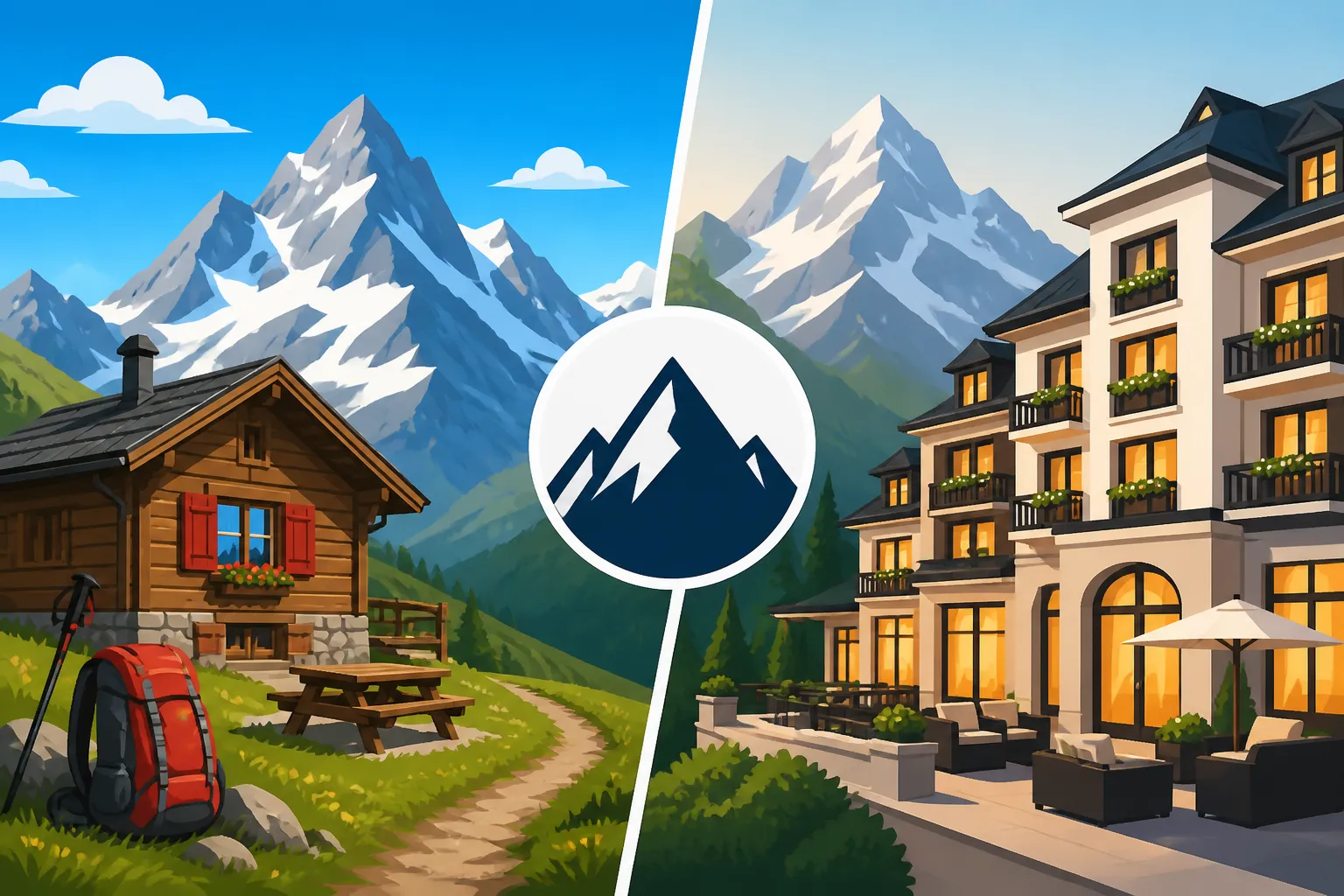
Mountain Huts vs Hotels: Where to Stay in the Swiss Alps
Venturing into the majestic Swiss Alps is a dream for many, with jagged peaks, pristine lakes, and meadows bursting with wildflowers. But once you’ve decided on your route, the big question looms: where are you actually going to lay your weary head? It’s not just about finding a roof; it’s about choosing an experience that shapes your entire alpine adventure. This guide will walk you through the distinct worlds of traditional mountain huts and comfortable alpine hotels, helping you decide which fits your dream Swiss mountain escape.
What Exactly Is a "Mountain Hut" in the Swiss Alps?
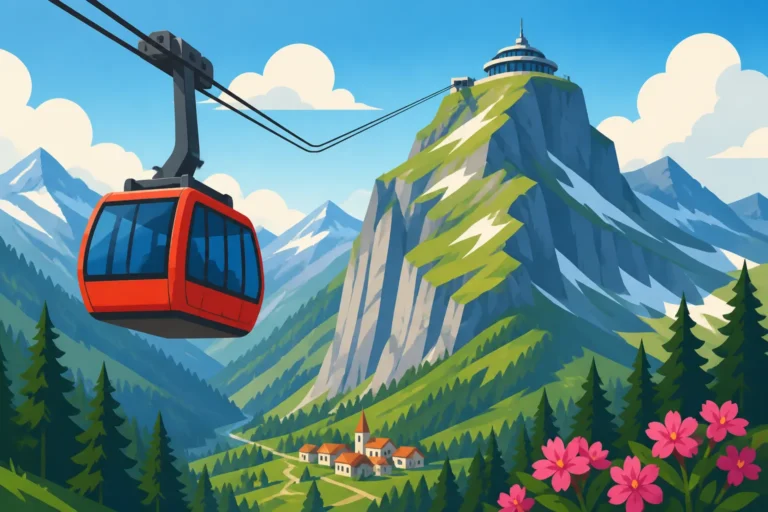
For those new to the Swiss mountain scene, the term "mountain hut" might conjure images of rustic, perhaps even dilapidated shacks. Let me tell you, the reality is far from that! In Switzerland, mountain huts, or Berghütten (German), Cabanes (French), or Capanne (Italian), are typically sturdy, well-maintained shelters nestled high in the mountains, often at elevations well above the tree line. They are predominantly managed by the Swiss Alpine Club (SAC) or private entities, serving as vital bases for hikers, climbers, and mountaineers.
SAC Huts: The Heart of Alpine Adventure
The Swiss Alpine Club operates over 150 huts, and these are truly iconic. When you picture a mountain hut experience, an SAC hut is probably what you're thinking of. They’re strategically placed, often requiring a good hike, sometimes even a glacier crossing or a scramble up a fixed rope route, to reach. This isn't just a place to sleep; it’s a destination in itself.
You’ll typically find shared dormitories (Massenlager) with bunk beds, often sleeping anywhere from 6 to 30 people in one room. Privacy is minimal, but the camaraderie is maximum. Imagine stumbling in after a long day’s hike, boots off, smelling a bit… alpine, and settling down to a hearty meal with fellow adventurers, sharing stories of the day's triumphs and travails. That's the hut life. These huts are run by wardens who cook, clean, and often provide valuable local knowledge about weather and trail conditions. Meals are usually simple but incredibly filling – think Rösti, soup, and plenty of bread. You can often book half-board, which includes dinner and breakfast. Showers, if available, are typically coin-operated and short, often cold, and definitely not designed for lingering. Electricity is usually limited, sometimes only available for charging phones at specific times, and internet access is rare, forcing a much-needed digital detox. Booking is essential, especially during peak summer hiking season, and you can usually do this online via the SAC website or directly with the hut. For more practical advice, consider reading our guide on Swiss Alpine Club (SAC) Huts: Booking and Etiquette for Overnights.
Private Huts and Other Rustic Options
Beyond the official SAC network, you'll find a smattering of privately owned huts, often run by local families, as well as unmanaged shelters (Biwakschachtel) that are more for emergency use or very experienced, self-sufficient mountaineers. Private huts might offer a touch more comfort than SAC huts, sometimes featuring smaller dorms or even private rooms, though these are rare at higher altitudes. Their prices might be slightly higher, and the amenities could vary wildly. For instance, some may have a more extensive menu or even a small shop. These can be fantastic alternatives if you're looking for a slightly less communal experience while still embracing the remoteness. It's best to check their individual websites or call ahead for details on what to expect. While they might not be on major booking platforms like Booking.com, a quick search for "Berghütte [Region name]" will often bring them up.
The Classic Alpine Hotel Experience: Comfort and Convenience
On the other end of the spectrum, we have alpine hotels. These are your conventional accommodations, ranging from charming, family-run guesthouses (Gasthäuser) to luxurious five-star resorts. They offer the comforts and privacy that a mountain hut simply cannot, making them ideal for those who prefer a gentler pace, or those who want to combine stunning mountain views with amenities like spas and gourmet dining.
Types of Alpine Hotels
Alpine hotels in Switzerland come in all shapes and sizes, and you can find them in virtually every mountain town and village, from the famous resort towns like Zermatt and Interlaken to smaller, quieter hamlets.
- Boutique & Family-Run Hotels: These often offer a more personalized experience, with local charm, traditional architecture, and a warm, inviting atmosphere. They might have a restaurant serving regional specialties and can be a fantastic way to immerse yourself in local culture. Think wood-paneled rooms, cozy fireplaces, and owners who remember your name.
- Mid-Range Hotels: Providing a good balance of comfort and value, these hotels are a popular choice. You'll get private rooms, en-suite bathrooms, sometimes a breakfast buffet, and often amenities like Wi-Fi and TV. They are usually well-located, close to train stations or cable car access points, making them very convenient for exploring. Booking these is usually straightforward through platforms like Booking.com or directly on their websites.
- Luxury Resorts & Spas: If pampering is part of your alpine dream, Switzerland delivers with exceptional luxury resorts. These boast world-class spas, gourmet restaurants, indoor/outdoor pools, and rooms with breathtaking views. Locations like St. Moritz, Gstaad, and Verbier are famous for their high-end offerings. These hotels cater to those seeking ultimate relaxation and indulgence after a day of gentle hiking or skiing. Some might even offer guided activities or exclusive access to mountain experiences.
Amenities, Accessibility, and Ease of Booking
The biggest draw of an alpine hotel is undoubtedly the comfort. You get your own private room and bathroom, hot showers whenever you want, comfortable beds, clean linens, and usually heating. Many offer amenities like Wi-Fi, cable TV, and sometimes even a minibar. Larger hotels might have fitness centers, spas, saunas, and swimming pools, perfect for unwinding after a day outdoors.
Accessibility is generally much easier than with huts. Most alpine hotels are located in villages accessible by public transport (trains or post buses) or car. This means you can arrive with all your luggage, without the need for a multi-hour trek. You can easily travel to most villages using the excellent Swiss public transport system. For planning your journeys, Omio is a great tool to compare train, bus, and even flight options to get you close to your destination. Once there, you'll find hotels listed on major booking sites like Booking.com, making reservations as simple as a few clicks. You can even find curated experiences or package deals that combine accommodation with activities via sites like GetYourGuide, taking the stress out of planning. When considering your choice, think about how much you value a good night's sleep in a private space versus the rustic, communal charm of a hut.
Cost Comparison and Value Proposition
Now, let's talk about the elephant in the room: cost. Switzerland isn't exactly known for being cheap, and that applies to accommodation too. However, understanding the pricing structure and what you get for your money can help you budget effectively for your alpine adventure.
Mountain Hut Pricing: What You Pay For
Mountain huts are generally the more budget-friendly option, but "budget-friendly" is a relative term in Switzerland!
- Accommodation: An overnight stay in a dormitory at an SAC hut typically costs between CHF 35-50 for non-SAC members. If you're a member of the SAC or a reciprocal alpine club (like the DAV in Germany), you often get a significant discount, reducing the price to CHF 25-35. This saving alone can be a compelling reason to consider joining the SAC if you plan multiple hut trips.
- Half-Board: Most hut visitors opt for half-board, which includes dinner and breakfast. This adds another CHF 40-50 to your cost, bringing the total for an overnight stay with meals to roughly CHF 75-100 for non-members, or CHF 60-85 for members. Given the remote locations, buying and carrying all your food would be incredibly heavy and impractical, so half-board is usually the best and most convenient option.
- Drinks & Snacks: Expect to pay typical Swiss mountain prices for any additional drinks, snacks, or a packed lunch. A beer might be CHF 6-8, a chocolate bar CHF 4-5.
- Showers: As mentioned, showers are often coin-operated (CHF 5 for a few minutes of coldish water) – a small price to pay for a moment of relative cleanliness.
The value here isn't just about the monetary cost; it's the priceless experience. You're paying for access to incredible, otherwise unreachable locations, the unique atmosphere, and the genuine hospitality of the hut wardens. It's a no-frills, authentic mountain experience.
Alpine Hotel Pricing: Understanding the Range
Alpine hotels have a much wider price range, catering to different budgets and expectations.
- Mid-Range: A decent mid-range hotel in a popular alpine village might cost anywhere from CHF 150-300 per night for a double room, often including breakfast. Prices fluctuate significantly based on season, demand, and location. For example, a hotel in a less touristy village in the Valais might be cheaper than a comparable one in Lauterbrunnen.
- Luxury: High-end resorts can easily run upwards of CHF 400-800+ per night, especially during peak ski season or summer. Here, you're paying for impeccable service, gourmet dining, extensive spa facilities, and often ski-in/ski-out access or panoramic views.
- Hidden Costs: While a hotel offers more amenities, remember to factor in potential additional costs. Meals outside of breakfast can add up quickly, as can spa treatments, parking fees, or even city taxes (Kurtaxe) which are often not included in the initial booking price.
The value proposition of a hotel lies in comfort, privacy, and convenience. You're paying for a good night's sleep, the ability to relax in your own space, and immediate access to town amenities, restaurants, and often better transport links. If you’re traveling with a family, hotels often offer family rooms or connecting rooms, which can be significantly more practical than sharing a dormitory with small children.
| Feature | Mountain Hut (SAC) | Alpine Hotel (Mid-Range) |
|---|---|---|
| Location | Remote, high alpine, often difficult to access | In villages/towns, accessible by road/train |
| Accommodation | Shared dorms (Massenlager) with bunk beds, minimal privacy | Private rooms with en-suite bathrooms, varying sizes/views |
| Meals | Half-board common (simple dinner/breakfast), packed lunches | Breakfast usually included, à la carte dining, wider choices |
| Amenities | Basic: communal areas, limited/coin-op showers, no Wi-Fi | Private bathrooms, Wi-Fi, TV, sometimes spa/pool/gym |
| Cost (per night) | CHF 60-100 (non-member half-board) | CHF 150-300+ (double room, often with breakfast) |
| Booking | Direct with hut/SAC website, often months in advance | Major booking platforms (Booking.com), hotel websites, travel agents |
| Social Aspect | Highly communal, camaraderie, shared experiences | Private, quiet, less interaction with other guests |
| Access | Requires significant hiking/climbing, public transport to trailhead | Public transport to door, private car parking often available |
| Experience | Rustic, challenging, authentic alpine adventure | Comfortable, relaxing, convenient, wider range of activities |
Making Your Choice: Which Alpine Accommodation Is Right for You?
Deciding between a mountain hut and an alpine hotel really comes down to what kind of experience you're chasing, your fitness level, and your budget. There’s no right or wrong answer, only what’s right for you and your travel companions.
When a Mountain Hut is Your Best Bet
Choose a mountain hut if:
- You're an avid hiker or mountaineer: If your primary goal is to embark on multi-day treks, summit peaks, or traverse challenging high-alpine routes, huts are indispensable. They are positioned as strategic stepping stones, breaking up long journeys and offering shelter in truly wild landscapes. Without them, many iconic routes, like parts of the Via Alpina or high-altitude glacier tours, would simply be impossible as day trips. This is where you connect deeply with the raw beauty of the Alps, far from any paved road. For tips on navigating these paths safely, check out Mountain Safety in Switzerland: Weather, Gear, and Emergency Numbers.
- You crave authentic, rustic experiences: If the thought of shared dorms, limited showers, and simple food excites you, rather than deters you, then hut life is for you. It's about disconnecting from modern conveniences and connecting with nature and fellow adventurers. You’ll find yourself chatting with people from all walks of life, sharing advice, and bonding over the day's physical efforts. It's truly a unique cultural experience.
- You're traveling on a tighter budget (relatively): While not "cheap" by international standards, huts offer the most affordable overnight options in the high Alps, especially if you have an SAC membership. The communal meals are also far more economical than dining out in a village restaurant.
- You enjoy camaraderie and social interaction: Huts foster a strong sense of community. Evenings are spent in the common room, swapping stories, playing cards, or just enjoying the quiet hum of conversation. If you love meeting new people and being part of a shared journey, this is an incredibly rewarding environment.
When an Alpine Hotel is the Ideal Choice
Opt for an alpine hotel if:
- Comfort and privacy are your top priorities: After a day of exploring, sometimes all you want is a hot, private shower, a comfortable bed to yourself, and the peace and quiet of your own room. Hotels deliver this consistently. They're perfect if you need to recharge fully without external distractions.
- You're traveling with family or young children: While some huts are child-friendly, the shared dormitory experience might not be ideal for everyone, especially with babies or toddlers. Hotels offer family rooms, cribs, and often more kid-friendly dining options and facilities. For family outings, exploring articles like Family Travel in Switzerland: Kid-Friendly Destinations and Tips might offer more suitable ideas.
- You prefer easy accessibility and convenience: Hotels in alpine villages are easily reached by car or public transport, meaning you don’t have to hike for hours just to get to your accommodation. This is a huge plus if you have a lot of luggage, prefer to drive, or want to explore multiple areas without strenuous daily commutes. Websites like Omio can help you plan your journey to these accessible villages, showing you all the train and bus connections.
- You want more amenities and dining options: From gourmet restaurants to spas, pools, and extensive wine lists, hotels offer a wider range of services to enhance your stay. If fine dining, relaxation, and a bit of pampering are important to your vacation, hotels are the clear winner. Many also offer excellent local dining experiences that allow you to delve into Swiss Food and Drink Culture: Regional Specialties and Dining Etiquette.
- You want flexibility in your daily plans: With hotels, you're not tied to specific hut opening times, meal schedules, or shared spaces. You can come and go as you please, enjoy breakfast at your leisure, and choose from a variety of restaurants in the village. This freedom is often worth the extra cost.
Ultimately, both mountain huts and alpine hotels offer incredible gateways to the beauty of the Swiss Alps. Many expats, myself included, find that the perfect Swiss alpine holiday often involves a bit of both: a few nights deep in the mountains at a hut for an immersive hiking experience, followed by a comfortable hotel stay in a charming village to relax and recover. Whatever you choose, remember that the Swiss Alps are waiting to astound you with their unparalleled beauty, regardless of where you rest your head. You can always use Booking.com or similar sites to explore hotel options or GetYourGuide to find experiences that complement your stay, whether you're roughing it or living it up.
Disclaimer
The information provided in this guide is for general informational purposes only and does not constitute professional advice. While we strive to ensure accuracy and provide up-to-date information regarding accommodation options in the Swiss Alps, details such as pricing, availability, booking procedures, and specific amenities can change frequently. Always verify current information directly with mountain huts, hotels, or official booking platforms before making any reservations. The author and publisher are not responsible for any inaccuracies, omissions, or outcomes from the use of this information. Personal safety and preparation are paramount when engaging in alpine activities; consult local guides, weather forecasts, and trail conditions before embarking on any hikes.