How Much Salary Do You Need to Live Comfortably in Switzerland?
Moving to Switzerland often begins with a moment of pure euphoria when you see your new salary in Swiss Francs, only to be followed by a cold sweat once you realize a standard pizza costs thirty francs and your health insurance premium looks like a car payment. This guide solves the mystery of the "Swiss Number" by breaking down the actual cost of living and defining what a comfortable salary looks like for singles, couples, and families across different cantons.
Defining Comfortable in the Land of High Costs
When we talk about living comfortably in Switzerland, we aren't just talking about surviving. Most people moving here want to know if they can afford a modern apartment, enjoy a meal out once a week, go skiing in the winter, and still have money left over for a yearly vacation. In many European cities, a salary of CHF 80,000 would make you wealthy. In Zurich or Geneva, that same amount for a family of four might actually put you near the threshold for Cantonal Premium Reductions (Prämienverbilligung) for Low-Income Households.
Comfort in Switzerland is highly subjective and depends heavily on your location. A single person earning CHF 90,000 in a smaller town like Olten or Fribourg will live like royalty compared to someone on the same salary in the heart of Zurich. To truly understand your purchasing power, you have to look beyond the gross figure and calculate the "net-net"—what stays in your pocket after every mandatory deduction, from the federal tax down to the last cent of your accident insurance.
For a single person, a gross salary of CHF 85,000 to CHF 100,000 is generally considered the "comfort threshold" in major cities. This allows for a nice one-bedroom apartment, a The Half-Fare Travelcard (Halbtax): The Must-Have Pass for Swiss Residents, and a social life that doesn't involve constant price-checking. If you are a couple, the math changes; a household income of CHF 140,000 provides a very high standard of living, assuming you don't have three children in full-time daycare.
The Mandatory Deductions That Eat Your Paycheck
Before you ever see a cent of your salary in your bank account, the Swiss system takes its share. Unlike some countries where you only worry about income tax, Switzerland has a multi-layered approach to social security and pension. You will see deductions for OASI (AHV), DI (IV), and APG on your payslip. Furthermore, The Three-Pillar Pension System: AHV, BVG, and Private Savings ensures that a portion of your income is locked away for your future. While this is great for your long-term security, it significantly reduces your monthly liquidity.
Then there is the tax situation. If you are here on a B Permit and earn less than CHF 120,000, your employer will likely deduct Withholding Tax (Quellensteuer) vs Standard Taxation for Foreigners directly from your paycheck. This simplifies things but doesn't always account for every deduction you might be entitled to. For Americans or high earners with complex global assets, working with a specialist firm like Taxes for Expats is often necessary to ensure you aren't being double-taxed or missing out on cantonal incentives.
Health insurance is another "hidden" tax. It is mandatory, and it is not deducted from your salary; you must pay it out of your net income. Even if you choose a high The Swiss Franchise System: How Deductibles and Copays Work, you are looking at a minimum of CHF 300 to CHF 450 per month just for basic coverage. If you want a semi-private room or orthodontic coverage for your kids, those costs escalate quickly. When budgeting for a comfortable life, many expats forget that Healthcare in Switzerland for Expats: The Complete System Overview (2027) requires you to pay for most of your visits out of pocket until your deductible is met.
Housing and the Reality of Fixed Expenses
Your biggest expense will undoubtedly be rent. In the Swiss housing market, there is an unwritten rule that your rent should not exceed one-third of your gross income. For a "comfortable" 3.5-room apartment (which means two bedrooms and a living room) in a desirable area of Zurich or Geneva, you should expect to pay between CHF 2,800 and CHF 4,000.
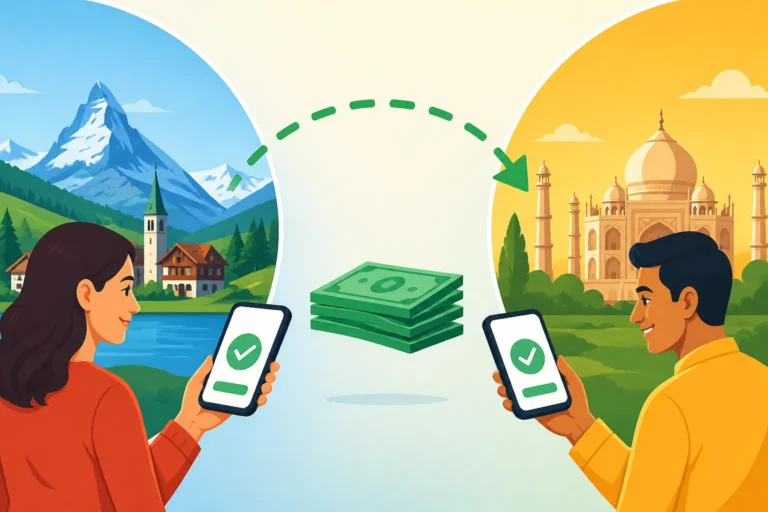
Beyond the rent itself, you have to account for the "Nebenkosten"—the ancillary costs for heating and water—and the mandatory The Serafe Fee 2026: Paying the Mandatory CHF 335 Media Tax. Every household in Switzerland must pay this media fee, regardless of whether you actually own a television. It is these small, recurring costs that catch newcomers off guard. To manage these payments and your international transfers, using a service like Wise can save you a significant amount in exchange rate markups compared to traditional Swiss banks, which often charge a premium for "international services."
Then there is the matter of insurance. Most landlords will not even let you sign a lease without proof of Private Liability Insurance (Privathaftpflicht): Why Expats Need It. It is relatively inexpensive—usually around CHF 150 to CHF 200 per year—but it is a non-negotiable part of the Swiss administrative machinery. If you accidentally scratch the parquet floor or your dog breaks a neighbor's vase, you will be glad you have it.
Lifestyle Choices and Variable Spending
If you want to live comfortably, you need to budget for the high cost of local services. Getting a haircut can cost CHF 50 for men and CHF 120+ for women. A simple lunch at a mid-range restaurant with a drink will rarely be under CHF 35. This is why many expats find themselves adopting the "Swiss way"—cooking at home during the week and reserving dining out for special occasions.
Groceries are another significant line item. While discounters like Aldi and Lidl have made a dent in the market, the quality and variety at Migros and Coop are where most locals shop. Meat is particularly expensive due to high import tariffs designed to protect Swiss farmers. It is not uncommon for a family to spend CHF 1,200 to CHF 1,500 a month on groceries and household supplies. This is why Cost of Living in Switzerland 2026: Budgeting for Singles and Families is such a frequent topic of conversation at expat meetups.
Transport is one area where you can actually save money if you plan correctly. Owning a car in a city like Basel or Zurich is often more of a burden than a luxury due to parking costs and traffic. Instead, most comfortable expats rely on the incredible rail network. While SBB Travelcards: Is the Generalabonnement (GA) Worth the CHF 4000+ Cost? is expensive upfront, it covers almost all public transport in the country, allowing you to explore the Alps every weekend without buying a single extra ticket.
Estimated Monthly Budget for 2026
To give you a clearer picture, here is a breakdown of what a "comfortable" monthly budget looks like in a major Swiss city like Zurich or Geneva. These figures assume a mid-to-high standard of living.
| Expense Category | Single Person (CHF) | Family of Four (CHF) |
|---|---|---|
| Rent (incl. Utilities) | 2,200 – 2,800 | 3,500 – 5,000 |
| Health Insurance | 350 – 450 | 1,200 – 1,500 |
| Groceries & Household | 600 – 800 | 1,500 – 2,000 |
| Transport (Halbtax/ZVV) | 150 – 250 | 400 – 600 |
| Leisure & Dining Out | 500 – 800 | 800 – 1,200 |
| Phone, Internet, Serafe | 120 – 150 | 200 – 250 |
| Savings & Pillar 3a in 2026: Tax Deductions, Limits, and Investment Options | 600 – 1,000 | 500 – 1,000 |
| Total Monthly Net Needed | 4,520 – 6,250 | 8,100 – 11,550 |
The Impact of Children on Your Salary Needs
The single biggest "comfort killer" in Switzerland is the cost of childcare. Unlike many other European countries, daycare is not heavily subsidized for middle and high-income earners. If both parents work, Childcare Costs in Switzerland: Daycare (Kita) Prices by Canton can easily reach CHF 2,500 to CHF 3,000 per month, per child. This is a staggering amount that often forces families to rethink their work percentages.
In many cases, one parent will drop down to an 80% or 60% workload to reduce the number of days the child spends in a Kita. While this helps with the budget, it also affects your long-term pension contributions. To live "comfortably" as a family with two children in daycare while maintaining an apartment in a city, a household gross income of at least CHF 160,000 to CHF 180,000 is often the baseline. Without that, you may find yourself living month-to-month despite having what sounds like a massive salary on paper.
The silver lining is the public school system. Once children reach the age of four, they enter the mandatory kindergarten and school system, which is free and of exceptionally high quality. Moving your children from private daycare to public school is often the moment when Swiss-based families finally feel "rich."
Strategic Financial Habits for Expats
To make a Swiss salary go further, you need to be strategic. First, maximize your tax situation. Using tools or services like Taxes for Expats can help you navigate the complexities of filing both in Switzerland and your home country, especially if you have rental income abroad. Second, manage your currency efficiently. Many newcomers lose thousands of francs a year simply by using their local Swiss bank to pay off a mortgage back home or send money to family. A provider like Wise offers the mid-market rate and transparent fees, which is essential when you are dealing with a currency as strong as the Swiss Franc.
Third, look at your location. Moving just fifteen minutes outside of a major city can save you CHF 500 a month in rent and potentially thousands a year in taxes. Cantons like Zug or Schwyz are famous for their low tax rates, but even within the Canton of Zurich, the municipal tax rate varies significantly from one village to the next.
Finally, don't ignore the importance of the third pillar. Contributing to a private pension is one of the few ways you can actively reduce your taxable income in Switzerland. It is a win-win: you pay less in taxes today, and you build a "comfort fund" for your future retirement, whether you stay in Switzerland or move on to your next adventure.
Important Information and Disclaimer
The information provided in this guide is for educational and informational purposes only. Cost of living figures, tax rates, and insurance premiums are based on 2026 projections and average market data, which can fluctuate based on inflation, political changes, and individual lifestyle choices. We are not financial advisors, tax professionals, or legal experts.
The mention of specific brands like Taxes for Expats or Wise is intended to provide helpful resources for common expat pain points but does not constitute a legal or financial recommendation. Always consult with a qualified Swiss tax advisor or financial planner to discuss your specific situation, especially regarding permit-related tax obligations and international asset declarations. Living in Switzerland involves complex administrative requirements that vary by canton, and individual experiences may differ significantly from the averages presented here.