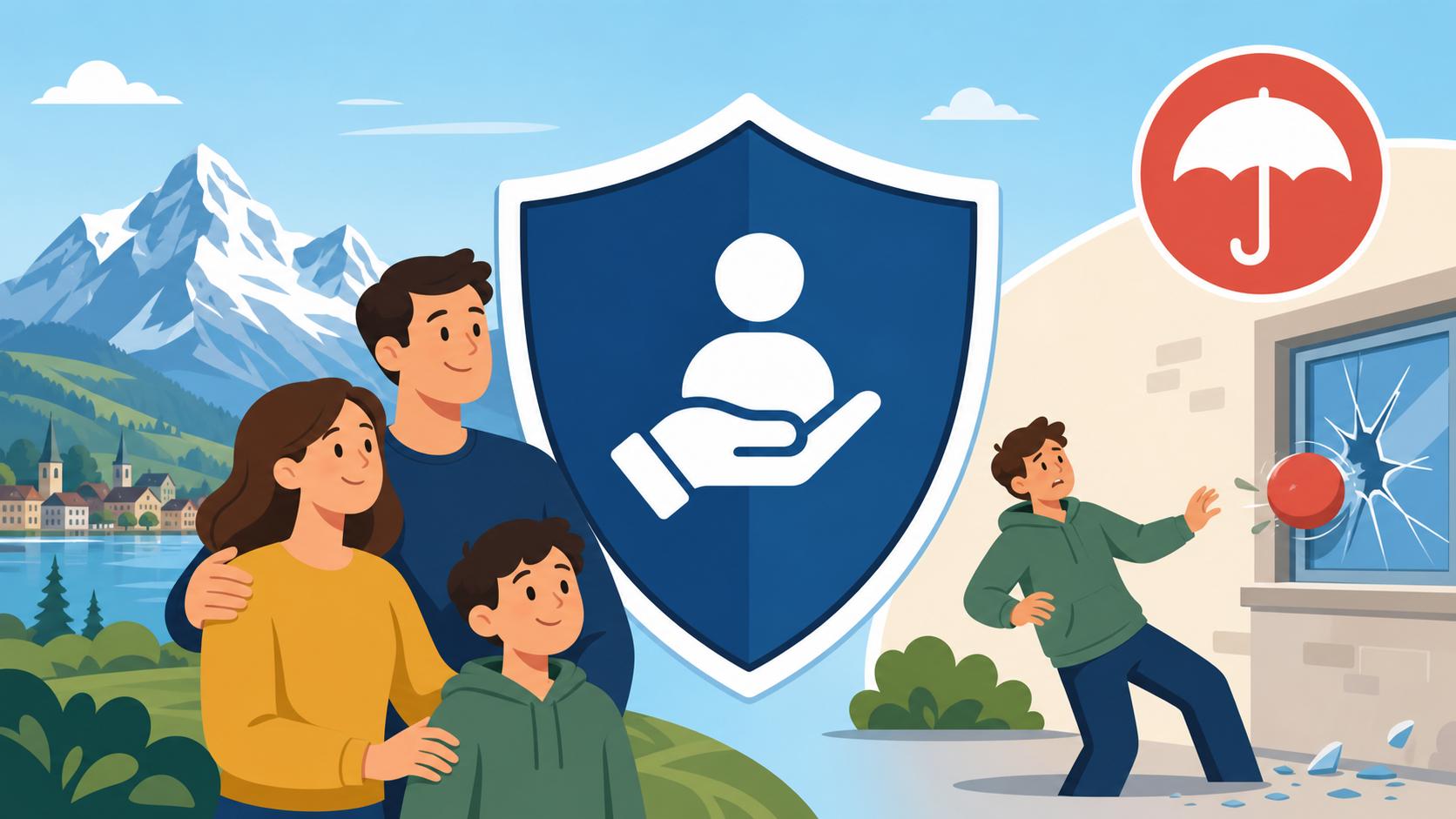
Private Liability Insurance (Privathaftpflicht): Why Expats Need It
Dropping a heavy iron on a 100-year-old oak parquet floor or accidentally colliding with a local on the ski slopes of Zermatt can turn your Swiss dream into a financial nightmare in seconds. I remember the cold sweat I felt when my first landlord in Zurich demanded proof of liability insurance before even handing over the keys to my studio. This guide breaks down why private liability insurance is arguably the most important document you will hold as an expat in Switzerland.
What is Privathaftpflicht and Why is it Essential in Switzerland
In the Swiss legal system, the concept of personal responsibility is taken very seriously. Unlike some countries where "accidents happen" and are absorbed by the state or communal funds, Switzerland operates on the principle that if you cause damage, you are personally liable for the full cost of restitution. This is governed by the Swiss Code of Obligations, which states that any person who unlawfully causes damage to another, whether willfully or out of negligence, must provide compensation.
For an expat, this might sound standard until you realize the scale of "restitution" in a country with some of the world's highest labor and material costs. A small scratch on a rental kitchen counter doesn't just mean a bit of wood filler; it often means the landlord replaces the entire unit at your expense. This is why Cost of Living in Switzerland 2026: Budgeting for Singles and Families always includes a line item for insurance. It is not just about protection; it is about survival in a high-cost environment.
The Legal Reality of Liability and the Code of Obligations
The Swiss Code of Obligations (Obligationenrecht) is the backbone of all private contracts and liability issues in the country. It distinguishes between "mild negligence" and "gross negligence." If you accidentally knock over a vase at a friend's house, that is mild. If you leave a candle burning and go to the grocery store, and your apartment building catches fire, that is gross negligence.
Privathaftpflicht (Private Liability Insurance) is designed to step into your shoes and handle these claims. Without it, a single mistake could lead to a "Betreibung"—a debt collection entry—that follows you for years. Understanding this legal landscape is vital for anyone who has just finished Registering Your Address at the Kreisbüro Within 14 Days of Moving and is looking to settle in long-term. The Swiss authorities and service providers expect you to have this coverage as a baseline of "civilized" residency.
The Peace of Mind Factor for Renters
If you are renting, which the vast majority of expats do, your landlord will almost certainly require proof of private liability insurance. In fact, most rental applications are considered incomplete without it. The landlord wants to know that if you ruin the floor, stain the bathroom tiles, or break a built-in appliance, an insurance company will pay for the repairs rather than having to chase a foreigner who might leave the country.
This insurance becomes particularly relevant during Swiss Apartment Handovers (Wohnungsübergabe): Protocols and Deposits. During the exit inspection, the "Verwaltung" (property manager) will look for every tiny defect. If you have a solid Privathaftpflicht policy, you can simply note the damage on the protocol and let the insurance company handle the negotiation with the landlord. It removes the adversarial nature of moving out and ensures you get your rental deposit back in full.
Coverage Scenarios When Does the Policy Actually Kick In
Understanding what is covered is just as important as having the policy. Generally, Swiss private liability insurance covers three main areas: bodily injury, property damage, and financial loss resulting from the first two. However, the nuances are where most expats get tripped up. For instance, did you know that most basic policies also act as a "passive legal defense"? If someone makes an unjustified claim against you, your insurance company will hire the lawyers to fight it on your behalf because they don't want to pay the claim either.
I once had a neighbor claim I had scratched their car door in our shared garage. I knew I hadn't done it. I called my insurance provider, and they handled the entire dispute, eventually proving the scratches were old. This saved me hours of stress and potentially thousands in legal fees. This is part of the broader Banking and Finance for Expats in Switzerland: The 2027 Guide strategy: protecting your assets from unexpected drains.
Damage to Rented Property and the Landlord's Best Friend
The most common claim for expats involves "Mieterschäden" or tenant damage. This covers things that are not considered "normal wear and tear." If the paint is slightly faded after five years, that is the landlord's problem. If your cat has used the doorframe as a scratching post, that is your problem.
Standard policies in Switzerland cover damage to "immovable" objects in the apartment (floors, walls, built-in cabinets) and often "movable" objects provided by the landlord (fridge, stove). However, you must ensure your policy specifically mentions "damage to rented property." Some ultra-cheap, "bare-bones" plans might exclude this, which renders the insurance useless for a tenant. Before signing, check if your policy covers Does Swiss Liability Insurance Cover Losing the Apartment Key?, as replacing the central locking system of an entire apartment block can cost upwards of CHF 5,000.
Accidental Injury to Third Parties Skiing and Cycling
Switzerland is a playground for outdoor enthusiasts, but it is also a land of high-speed risks. If you are skiing in Verbier and lose control, crashing into another skier, you could be liable for their medical bills, their lost wages, and even "pain and suffering" payments. Given the costs involved, these claims can easily reach six or seven figures.
The same applies to cycling. If you accidentally hit a pedestrian while biking through Zurich, your liability insurance is what stands between you and financial ruin. Most Swiss residents have a coverage limit of at least CHF 5 million, though CHF 10 million is becoming the standard for a negligible increase in premium. This level of protection is why many expats also look into Household Contents Insurance (Hausratversicherung): Burglary and Fire Coverage at the same time, often bundling the two for a discount.
The Gross Negligence Clause and Why You Need It
One of the most important "add-ons" in a Swiss liability policy is the "Gross Negligence" (Grobe Fahrlässigkeit) waiver. Under standard law, if an insurance company determines you acted with gross negligence—like running a red light or leaving a frying pan unattended—they have the right to "regress" or reduce their payout. This means they might only pay 50% of the claim, leaving you to pay the rest.
By adding a gross negligence waiver to your policy, the insurance company agrees not to reduce the payout even if you were significantly at fault (excluding criminal acts or DUI). For the sake of an extra CHF 20 a year, it is a no-brainer. I've seen expats lose their entire savings because they forgot to check this box. It’s a small price to pay to ensure your financial stability, much like how you would use Wise to ensure you aren't losing money on poor exchange rates when paying your Swiss bills from an offshore account.
Costs and Choosing the Right Provider
The good news is that private liability insurance in Switzerland is surprisingly affordable. For a single person, a standard policy usually costs between CHF 100 and CHF 150 per year. For a family, it might range from CHF 150 to CHF 250. When you consider that this covers millions of francs in potential debt, it is arguably the best value-for-money product in the country.
When choosing a provider, you will see big names like AXA, Zurich, Helvetia, and Mobiliar. There are also digital-first options that cater specifically to the expat market with English-language interfaces and simplified sign-up processes. While the price is important, pay close attention to the "Selbstbehalt" or deductible.
Average Annual Premiums and Deductibles
The deductible is the amount you pay out of pocket for each claim. In Switzerland, the standard deductible for private liability is usually CHF 200. You can opt for a CHF 0 deductible, but this will increase your annual premium. Conversely, raising your deductible to CHF 500 can lower your premium, but for a saving of only CHF 30 a year, it’s usually not worth the extra risk.
| Policy Type | Coverage Limit | Average Annual Cost (CHF) | Standard Deductible (CHF) |
|---|---|---|---|
| Single Person | 5 Million | 100 – 130 | 200 |
| Family / Couple | 10 Million | 160 – 220 | 200 |
| With Pet Add-on | 5 Million | 140 – 180 | 200 |
| With Gross Negligence | 10 Million | 180 – 240 | 200 |
As you can see, the jump from 5 million to 10 million in coverage is often less than the cost of a single pizza in Geneva. If you are managing your budget carefully, perhaps using Trade Republic to earn interest on your savings while you wait for bills to arrive, these small annual premiums are easy to absorb.
Bundling with Household Insurance
Almost every insurance advisor in Switzerland will suggest "bundling" your Privathaftpflicht with your Hausratversicherung (Household Contents Insurance). Household insurance covers your stuff—your laptop, your furniture, your clothes—against fire, water damage, and theft.
Bundling usually results in a 10% to 15% discount on the total premium. It also simplifies your life because you only have one point of contact for any incident involving your home. If a pipe bursts and ruins your floor (Liability) and your expensive rug (Household), having one insurer prevents the two companies from arguing over who pays for what. This kind of administrative efficiency is highly valued here, much like how many expats prefer the streamlined experience of Binance for managing their crypto-finance alongside their traditional Swiss banking.
Managing Your Swiss Finances as an Expat
Living in Switzerland requires a certain level of financial "hygiene." The system is efficient, but it is also rigid. Beyond insurance, you need tools that help you navigate the high costs and the unique currency environment. Paying your insurance premiums, your rent, and your The Serafe Fee 2026: Paying the Mandatory CHF 335 Media Tax requires a local bank account or a very clever fintech solution.
I always recommend that new arrivals set up their financial ecosystem in the first week. This includes a local bank for your salary, but also secondary accounts for international needs. If you are still receiving some income in your home currency, using Wise to transfer that into CHF is essential to avoid the predatory exchange rates of traditional banks.
Smart Tools for Payment and Savings
Once you have your insurance and basic banking sorted, you should look at how to make your money work harder. Switzerland is a great place to earn, but it’s an even better place to invest if you know where to look. While local banks offer stability, their interest rates on savings are often negligible.
Many of my expat friends use Trade Republic to keep their emergency funds or "insurance deductible" cash. With competitive interest rates on uninvested cash and the ability to buy fractional shares or ETFs, it’s a great way to build a "Swiss nest egg" while you are here. Having a dedicated pot of money for potential insurance deductibles or unexpected costs makes the high cost of living much more manageable.
Protecting Your Digital Assets
In 2026, liability isn't just about physical damage; it's about your digital footprint and assets too. While private liability insurance doesn't typically cover crypto-related losses, many expats in Switzerland—especially in the "Crypto Valley" of Zug—are heavily invested in digital currencies.
If you are part of this community, using a secure and reputable platform like Binance is the digital equivalent of having good insurance. It provides the infrastructure needed to manage assets safely in a country that is incredibly forward-thinking regarding blockchain technology. Just as you wouldn't live in an apartment without liability insurance, you shouldn't manage your digital wealth without the right platform security.
How to Sign Up and File a Claim
Signing up for insurance is perhaps the easiest administrative task you will face in Switzerland. Unlike getting a permit or finding a flat, insurers are eager to have your business. You can usually get a quote and a policy certificate in less than five minutes online. This certificate is what you will send to your landlord or the "Kreisbüro" if they request it.
If the worst happens and you need to file a claim, the process is quite formal. The Swiss appreciate documentation. If you break something in your apartment, take high-resolution photos immediately. If you are involved in an accident with a person, get their contact details and the details of any witnesses. Do not admit liability on the spot—simply say, "I have insurance, and I will report this to them immediately."
The Application Process for New Arrivals
When you apply, you will be asked if you have had any claims in the last five years. Be honest. The Swiss insurance database is interconnected, and "forgetting" a claim can lead to a denial of coverage later. You will also need to specify if you are a single person or a family. A "family" policy usually covers everyone living in the same household, including children and sometimes even unmarried partners (concubinage).
If you have a dog, you must mention this. Some cantons require a specific "dog liability" add-on with a minimum coverage amount (often CHF 1 million or CHF 3 million). Without this, you might find yourself in hot water with the local authorities. If you're living in the central hubs, check out our guide on Finding an English-Speaking Family Doctor in Zug or similar cities, as they often have networks that can recommend expat-friendly insurance brokers.
Documenting Incidents: The Swiss Way
When filing a claim, you will usually fill out an online form provided by your insurer. You will need to provide the date, time, location, and a detailed description of the event. If it involves your rental apartment, you should also notify your landlord. However, I highly recommend joining The ASLOCA / Mieterverband: Why Every Swiss Tenant Must Join before you have an issue. They can provide legal advice on whether a claim should go through your insurance or if the landlord is trying to charge you for something that is actually "normal wear and tear."
Once the claim is filed, the insurance company will communicate directly with the damaged party. They may send an "Expert" (adjuster) to look at the damage, especially for high-value parquet or kitchen claims. If the claim is approved, the insurance company pays the third party directly, minus your deductible, which you will then be billed for. It is a smooth, if somewhat bureaucratic, process that reinforces why this coverage is so vital for your peace of mind.
Private Liability Insurance Overview
| Feature | Importance | Expat Context |
|---|---|---|
| Rental Protection | High | Mandatory for almost all Swiss apartment leases. |
| Ski/Bike Accidents | High | Covers injuries to others in high-risk Swiss sports. |
| Key Loss | Medium | Can be an add-on; vital for expensive central lock systems. |
| Gross Negligence | High | Prevents insurers from reducing payouts due to your mistakes. |
| Legal Defense | Medium | Insurer fights unjustified claims against you for free. |
Private Liability Insurance Disclaimer
This article is for informational purposes only and does not constitute professional financial or legal advice. Insurance laws and cantonal regulations in Switzerland are subject to change. Always consult with a licensed insurance advisor or read the specific General Insurance Conditions (GIC) of your provider before signing a contract. Coverage limits and exclusions can vary significantly between insurance companies.