Cutting Costs in Switzerland: Where Expats Overspend in Year One
Arriving in Switzerland with a fresh employment contract and a seemingly massive salary is an exhilarating feeling until that first grocery bill and health insurance invoice hit your inbox. Most newcomers lose thousands of francs in their first twelve months simply because they apply home-country logic to the Swiss system. This guide identifies the specific financial traps expats fall into and provides a roadmap for protecting your hard-earned savings.
The Trap of Convenience in Swiss Banking and Transfers
When you first land in Zurich, Geneva, or Basel, the priority is usually getting a local IBAN as quickly as possible to receive your salary. Many expats default to the "Big Two" banks because they have prominent branches at the airport or main stations. While these institutions are prestigious, their fee structures for basic accounts and international services can quietly erode your balance. If you aren't careful, you might end up paying monthly maintenance fees, card fees, and—most importantly—inflated exchange rates.
Overpaying on International Currency Exchanges
The single biggest drain on an expat’s wallet in year one is moving money across borders. Whether you are transferring your initial relocation savings into Switzerland or sending Swiss Francs back home to pay a mortgage or student loan, the "convenience" of a traditional bank transfer is a trap. Standard banks often hide a 2% to 4% margin in the exchange rate, plus a flat "sending fee."
If you are transferring CHF 50,000 for a house down payment back home, a 3% hidden margin costs you CHF 1,500 for a single click. This is where using a specialist service like Wise becomes essential. By using the mid-market exchange rate, you avoid the predatory spreads that traditional Swiss banks favor. I personally learned this the hard way after losing a significant chunk of my relocation bonus to "service fees" that were never clearly disclosed.
Choosing High-Fee Traditional Banks
Many newcomers assume they need a traditional brick-and-mortar bank to be "taken seriously" by landlords or authorities. In reality, the Swiss fintech scene has exploded, and for most daily needs, a neobank is more than sufficient and significantly cheaper. Many traditional accounts will charge you CHF 10 to CHF 20 per month just for the "privilege" of holding your money, and they might even charge you for every ATM withdrawal.
Instead of following the crowd to a massive global bank, look into the Best Neobanks in Switzerland: Neon, Yuh, and Zak Compared. These platforms often offer free accounts, better exchange rates for traveling abroad, and easy-to-use apps. Unless you are applying for a complex mortgage in your first six months, a digital-first bank will save you hundreds of francs in annual fees.
Healthcare and Insurance Pitfalls
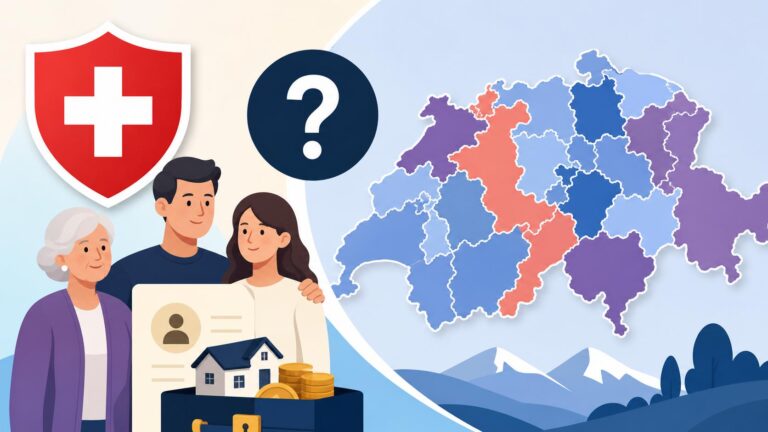
Switzerland’s healthcare system is world-class, but it is also a financial maze. Expats often overspend by choosing "gold-plated" plans they don't need or by failing to understand the unique deductible system. Unlike in many other countries, your premium is largely determined by your "Franchise" (deductible), and picking the wrong number can be a very expensive mistake.
Selecting the Wrong Deductible (Franchise)
The Swiss system offers deductibles ranging from CHF 300 to CHF 2,500. A common error is choosing a middle-ground deductible like CHF 1,000 or CHF 1,500. Statistically, this is almost always the worst choice. You should either choose the CHF 300 deductible if you expect high medical costs (maternity, chronic illness, or frequent specialist visits) or the CHF 2,500 deductible if you are healthy and have enough savings to cover an emergency.
Newcomers often play it "safe" with a CHF 1,500 deductible, but when you factor in the higher premiums compared to the CHF 2,500 model, you end up paying more regardless of whether you go to the doctor or not. To save money, you need to understand How to Choose the Right Deductible (Franchise) for Your First Year and commit to one of the two extremes. If you realize by October that your choice was wrong, remember the November 30 Deadline: The Exact Steps to Switch Your Swiss Health Insurance to lock in a better rate for the following year.
Ignoring Supplementary Insurance Benefits
While basic insurance (KVG) is mandatory, many expats jump into expensive supplementary (VVG) packages without looking at the fine print. Conversely, some skip supplementary insurance entirely and end up paying out of pocket for things that could have been covered for a few francs a month. For example, if you have children, dental insurance for them is a must-buy before they turn a certain age, as Swiss dental costs are notoriously high.
Another hidden cost-saver in the insurance world is the "Telmed" or "HMO" model. By agreeing to call a medical hotline first or visit a specific group practice before seeing a specialist, you can shave 15% to 20% off your monthly premium. These savings add up to over CHF 1,000 a year for a couple. It’s also worth checking if you need Private Liability Insurance (Privathaftpflicht): Why Expats Need It—not because the law requires it, but because almost every Swiss landlord does. Without it, you might find yourself paying for a full floor replacement because of one accidental scratch on the parquet.
Housing and Household Budget Leaks
Finding a flat in Switzerland feels like a full-time job, and in the desperation to secure a roof over their heads, expats often overlook clauses that lead to major expenses later. The costs don't stop at the rent; they are hidden in the utilities, the mandatory fees, and the brutal move-out process.
Overpaying for Temporary Accommodation and Cleaning
Most expats start in "serviced apartments" that charge double or triple the local market rent. While this is unavoidable for the first month, many stay far too long because they are intimidated by the local rental market. Every extra month in temporary housing is thousands of francs lost. Furthermore, when you finally move from your first permanent flat to your second, the "end-of-tenancy" cleaning expectations are likely much higher than what you are used to.
In Switzerland, the handover (Abgabe) requires the apartment to be "clinic-clean." Many expats try to do this themselves, fail the inspection, and then have to pay for a professional cleaner anyway—or worse, lose their deposit. Investing in End-of-Tenancy Cleaning Companies: Getting a Passed Inspection Guarantee can actually save you money by ensuring your several-thousand-franc deposit is returned in full without a legal battle.
The Hidden Costs of Utilities and Mandatory Fees
Newcomers are often blindsided by the bills that arrive months after they move in. One such bill is the Serafe fee, which is a mandatory CHF 335 per year (as of 2024/2025 rates) for radio and TV licensing. You cannot opt out of this just because you don’t own a TV; if you have a smartphone or a computer, you are liable. Knowing about The Serafe Fee 2026: Paying the Mandatory CHF 335 Media Tax helps you budget so it doesn’t come as a shock.
There are also the "Nebenkosten" (ancillary costs). Your monthly rent usually includes a "down payment" for heating and water, but if the winter is particularly harsh or you love long, hot showers, you will receive a reconciliation bill at the end of the year. Some expats have been hit with "catch-up" bills of over CHF 1,000. To keep these costs down, pay attention to the Swiss etiquette of keeping windows closed while the heater is on and managing your usage of shared laundry facilities.
Transportation and Lifestyle Missteps
The Swiss public transport system is a marvel, but it is priced as a luxury service for those who don't have a strategy. Similarly, the cost of food is a major hurdle for those who shop like they are still in London, New York, or Berlin.
Driving Without an SBB Strategy
Buying a car in Switzerland is often a financial mistake for expats living in cities. Between the insurance, the "Vignette" for the highway, and the astronomical cost of parking spaces (which can run CHF 150-300 per month), a car is a liability. However, the biggest mistake is using the train without a discount card. A return ticket from Zurich to Geneva can cost CHF 180.
The very first thing every expat should buy is The Half-Fare Travelcard (Halbtax): The Must-Have Pass for Swiss Residents. It costs roughly CHF 190 for the first year and pays for itself in just two or three long-distance trips. Without it, you are effectively paying a 100% "ignorance tax" on every train, bus, and boat journey you take.
Grocery Shopping and Dining Habits
Food prices in Switzerland are among the highest in the world due to strict import protections. If you shop exclusively at "high-end" supermarkets like Globus or Jelmoli, or even stick strictly to the premium lines at Coop and Migros, your grocery bill will be double what it needs to be. Smart expats learn to "tier" their shopping.
You buy your staples (cleaning supplies, dry goods, basic produce) at discounters and save the premium stores for specialty items. Understanding the landscape of Grocery Shopping: Coop, Migros, Aldi, Lidl, and Denner Compared is the difference between a CHF 800 monthly food budget and a CHF 1,500 one. Additionally, the "takeaway culture" is expensive here. A simple sandwich and a soda can easily cost CHF 20. Learning to embrace the "lunch bag" culture common in Swiss offices can save you CHF 300 to CHF 400 a month alone.
Tax Planning and Professional Assistance
Taxation in Switzerland is unique because it happens at three levels: federal, cantonal, and municipal. Most expats on a B Permit are taxed at source (Quellensteuer), which feels convenient but often results in overpayment if you have significant deductions.
Failing to Claim Deductions on Withholding Tax
If you earn over a certain threshold or have specific expenses, you can file a tax correction (Antrag auf Neuveranlagung). Many expats leave money on the table by not claiming deductions for Pillar 3a contributions, professional education, or even the cost of commuting. Because the Swiss tax system is so specific, using a service like Taxes for Expats can be a lifesaver, especially for US citizens who face the double burden of filing in both Switzerland and the United States.
Managing your taxes as an American abroad is notoriously complex due to FATCA and FBAR requirements. Firms like Taxes for Expats specialize in ensuring you don't get penalized by the IRS while also optimizing your Swiss tax return. For non-Americans, a local fiduciary (Treuhand) can often find enough deductions to pay for their own fee five times over. Don't assume the "tax at source" amount is final; it is often just a baseline that can be lowered with the right paperwork.
| Expense Category | Typical Expat Overspend (Year 1) | Savings Strategy | Potential Annual Saving |
|---|---|---|---|
| Banking & FX | CHF 1,000 – 2,000 | Use Wise and Neobanks | CHF 1,500 |
| Health Insurance | CHF 800 – 1,200 | Optimize Franchise/Telmed | CHF 1,000 |
| Transport | CHF 500 – 1,500 | Buy Halbtax or GA Card | CHF 800 |
| Groceries | CHF 3,000 – 5,000 | Shop at Aldi/Lidl/Denner | CHF 3,500 |
| Total Potential | CHF 6,800+ |
Summary of First-Year Financial Wisdom
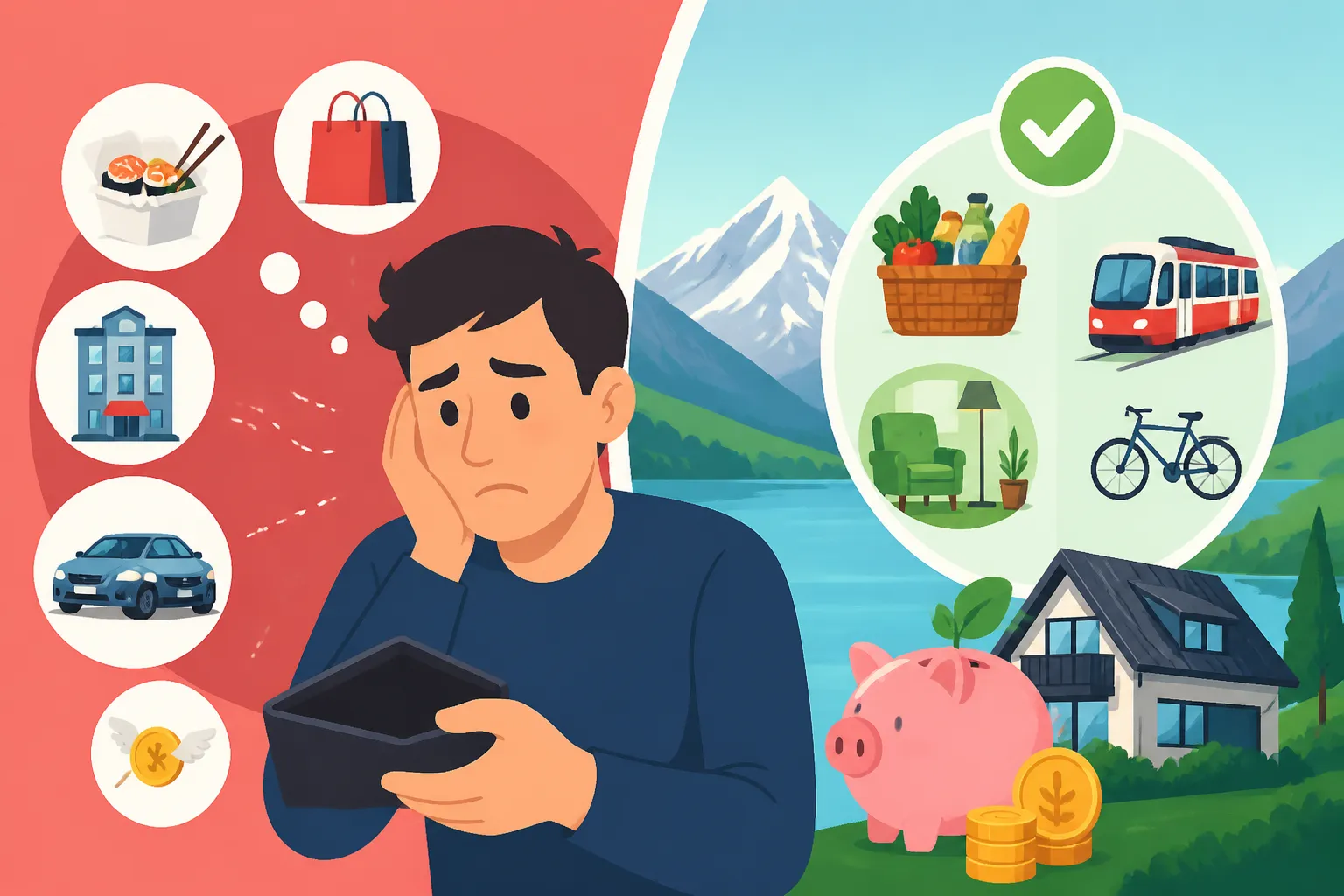
The secret to thriving financially in Switzerland isn't just about earning a high salary; it’s about mastering the "Swiss way" of spending. This means being proactive rather than reactive. Don't wait for the high bills to arrive before you look for alternatives. Set up your Wise account before you move your life savings. Buy your Half-Fare card on day one. Research your health insurance options before the three-month deadline expires.
By avoiding the convenience traps of big banks and premium retailers, you can enjoy the incredibly high quality of life Switzerland offers without watching your bank balance stagnate. It takes a bit of "administrative stamina" to set these things up correctly, but the reward is a significantly higher savings rate and a much smoother integration into your new home.
Disclaimer
This guide is for informational purposes only and does not constitute professional financial, legal, or tax advice. Switzerland’s laws and insurance regulations are subject to frequent changes. Always consult with a qualified Swiss tax advisor or insurance specialist to discuss your specific situation, especially regarding international tax obligations and mandatory health insurance requirements.