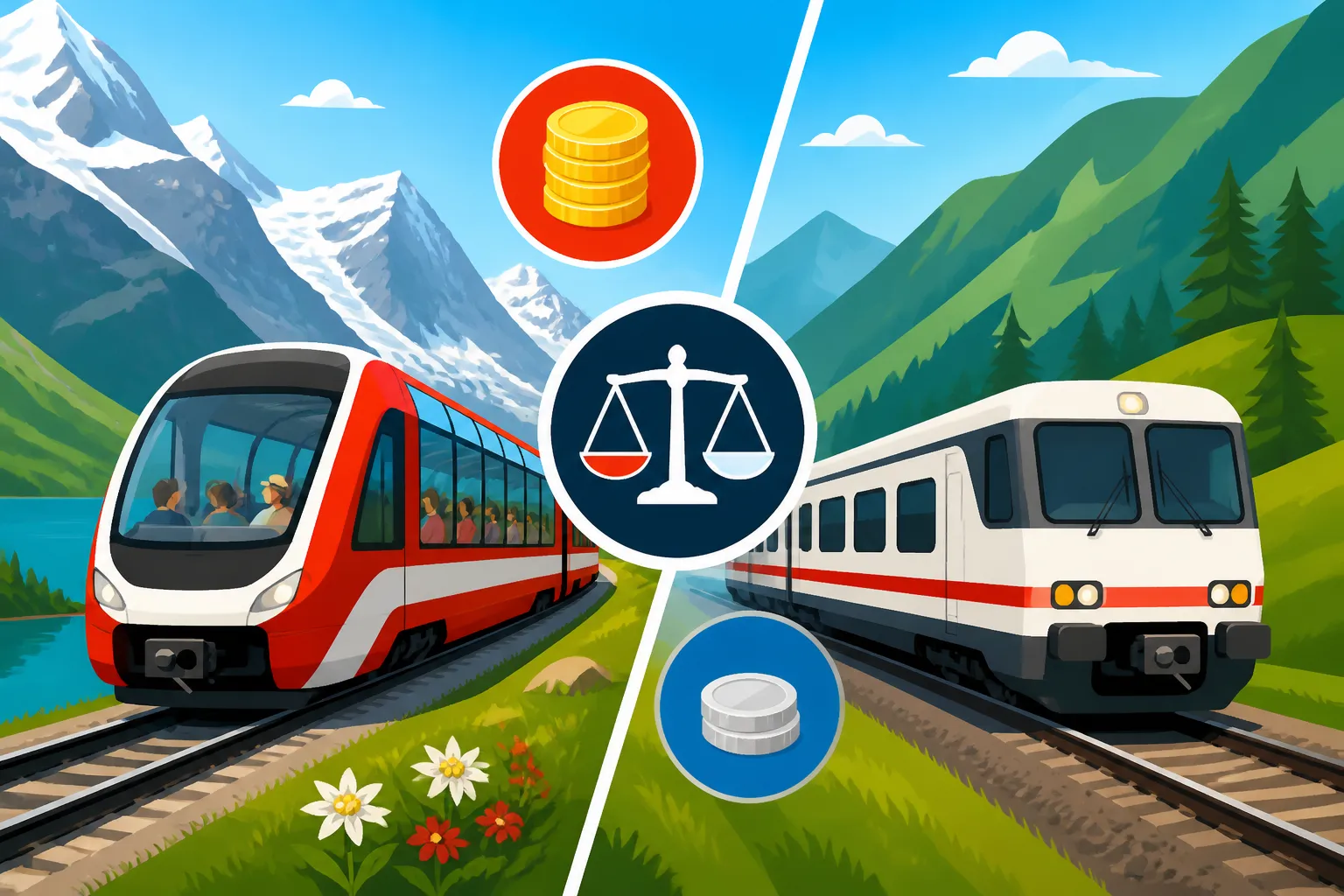
Glacier Express vs Regular Trains on the Same Route: The Cost Difference
Navigating the Swiss train system can feel like learning a new language, and when you start dreaming of those iconic panoramic carriages, the question of cost quickly becomes a huge one. Many of us expats, after seeing all the stunning photos of the Glacier Express, wonder if we really need to shell out a fortune for it, or if those everyday red SBB trains can deliver a similar experience without breaking the bank. This guide is here to demystify the price differences and help you decide where your hard-earned francs are best spent.
The Allure of the Glacier Express: What You're Really Paying For
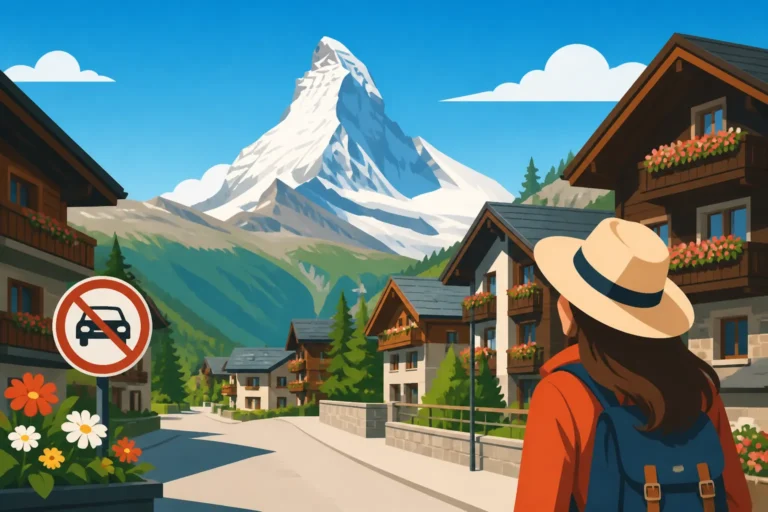
Let's be honest, the " slowest express train in the world" holds a certain mystique. It's not just a train ride; it's marketed as an experience, a journey through some of Switzerland's most breathtaking landscapes, from the Matterhorn village of Zermatt all the way to the chic resort of St. Moritz. But what exactly are you signing up for when you opt for this legendary route, and why does it carry a premium price tag?
A Panoramic Experience, Not Just Transport
The Glacier Express prides itself on offering more than just transportation. Its signature feature, of course, is the massive panoramic windows that extend almost to the roof, giving you uninterrupted views of the deep ravines, charming villages, and soaring peaks. Imagine sitting back, sipping a glass of local wine, and watching the Swiss Alps unfold around you without a single window frame obstructing your view. It's truly something special, especially if you’re a first-timer to these parts.
Beyond the visuals, there's a curated experience. Each seat comes with a headset providing commentary in multiple languages, pointing out historical landmarks and natural wonders along the way. You get insights into the engineering marvels of the bridges and tunnels, the local folklore, and the geography you're passing through. It transforms a simple journey into an educational and immersive tour. And let's not forget the dining service! Freshly prepared meals are served right at your seat, often featuring regional specialties. It's definitely a splurge, but for many, the psychological value of this "journey of a lifetime" justifies the cost. For an even deeper dive into the overall experience, you might want to check out our guide on Glacier Express: Booking, Routes, and Is It Worth It for Residents.
Breaking Down the Base Fares and Seat Reservations
Now, for the nitty-gritty: the actual cost. The Glacier Express operates on the standard Swiss public transport network, meaning that a valid ticket is required, just like any other train. However, on top of that, you must purchase a mandatory seat reservation. This is where the price starts to climb compared to regular trains.
The base fare for the journey itself depends on the distance and whether you opt for 1st or 2nd class. For example, a full journey from Zermatt to St. Moritz (or vice versa) will naturally be more expensive than just a segment like Chur to Brig. Let's say, a standard 2nd class ticket for the full route could be around CHF 150-160 without any discounts. The real kicker, though, is the mandatory seat reservation. This fee is fixed per person, per segment, and varies by season. In high season (summer months), it can be around CHF 49 per person for the full route, while in the shoulder or low season, it might drop to around CHF 39. So, you're looking at a ticket price plus this non-negotiable reservation fee. This fee also applies even if you have a SBB Travelcards: Is the Generalabonnement (GA) Worth the CHF 4000+ Cost? or a Eurail/Swiss Travel Pass – the pass covers the base fare, but not the reservation. For specifics on how this works, our article on Do You Need to Reserve Seats on the Glacier Express? can clarify further.
The Pragmatic Charm of Regular SBB Trains: Cost-Effectiveness and Flexibility
Stepping onto a regular SBB train after dreaming of the panoramic Glacier Express might feel like a downgrade, but I promise you, it's anything but! Switzerland's public transport system is renowned globally for its efficiency, punctuality, and incredible views, even on standard routes. In fact, many locals (and seasoned expats) prefer the regular trains for their flexibility and significantly lower costs.
Standard Class vs. First Class on SBB
While there isn't a "Glacier Express light" equivalent, regular SBB trains traverse much of the same stunning scenery. For instance, you can take a sequence of regional trains from Zermatt to St. Moritz, changing a few times along the way (usually in Brig and Chur), and you'll be treated to virtually identical views – often with windows that open for better photos!
A 2nd class ticket on a regular SBB train offers comfortable seating, ample space, and those classic red and white carriages we all know and love. The full fare for a similar route, say Zermatt to St. Moritz, would still be in the range of CHF 150-160. However, the key difference is the lack of mandatory seat reservations on most regular SBB services. You can simply show up and hop on, giving you immense flexibility. If you want a bit more space, quieter carriages, and often more comfortable seating, you can always upgrade to 1st class. A 1st class ticket will typically be about 60-70% more expensive than 2nd class but offers a substantial step up in comfort and often less crowded carriages, perfect for soaking in those Alpine views.
Leveraging SBB Discounts: Half-Fare Card and Saver Day Passes
This is where regular SBB trains truly shine for residents and savvy travelers. Switzerland's public transport discount system is a game-changer. The absolute must-have for anyone living here, or even visiting for more than a few days, is The Half-Fare Travelcard (Halbtax): The Must-Have Pass for Swiss Residents. This card, which costs around CHF 190-200 for a year, literally halves the price of almost all public transport tickets, including trains, buses, and boats. If you have a Half-Fare card, that CHF 150 Zermatt-St. Moritz ticket instantly drops to CHF 75. It's incredible value.
But wait, there's more! Another fantastic option for saving money on those longer, scenic journeys is the Saver Day Pass (Spartageskarte): How Residents Save on Day Trips. These passes, available for purchase up to 60 days in advance, offer unlimited travel on a specific day across the entire SBB network, often for as little as CHF 29 with a Half-Fare card or CHF 52 without. Imagine traveling the entire Zermatt-St. Moritz route for just CHF 29! You'll need to be flexible with your dates and book early, as prices increase closer to the travel date and as availability dwindles. You can easily scout for these deals on the SBB website or via the handy Using the SBB Mobile App to Book Scenic and Regional Journeys. For those spontaneous trips, you can also often find Supersaver Tickets on SBB: How to Find the Cheapest Train Fares for specific connections, though these are less flexible than the Saver Day Pass.
Direct Cost Comparison: Glacier Express vs. Regular Trains
Let's put some concrete numbers to this. Understanding the actual cost difference can be eye-opening, especially for expats trying to balance adventure with a budget. We'll look at a couple of popular routes to illustrate.
Zermatt to St. Moritz: The Full Scenic Route
This is the quintessential Glacier Express journey, a true bucket-list item for many.
- Glacier Express (full route, 2nd class, high season 2026 estimates):
- Base Ticket: ~CHF 155 (full fare)
- Mandatory Seat Reservation: ~CHF 49
- Total: ~CHF 204
Now, let's compare that to taking regular SBB trains on the exact same route, switching in Brig and Chur, which takes about the same amount of time because the Glacier Express deliberately moves slowly.
- Regular SBB Trains (full route, 2nd class, 2026 estimates):
- Full Fare Ticket: ~CHF 155
- With Half-Fare Card: ~CHF 77.50
- With a pre-booked Saver Day Pass (best case): ~CHF 29 (with Half-Fare) or ~CHF 52 (without Half-Fare)
- Potential Savings: From CHF 49 (full fare vs. Saver Day Pass) to CHF 175 (Glacier Express vs. Half-Fare + Saver Day Pass).
Shorter Segments: Chur to Brig or Andermatt to Disentis
Even for shorter, but still very scenic, segments, the cost difference remains significant due to that fixed reservation fee. Let's take Chur to Brig, a lovely stretch through the Rhine Gorge and over the Oberalp Pass (Glacier Express route).
-
Glacier Express (Chur to Brig, 2nd class, high season 2026 estimates):
- Base Ticket: ~CHF 80 (full fare)
- Mandatory Seat Reservation: ~CHF 49
- Total: ~CHF 129
-
Regular SBB Trains (Chur to Brig, 2nd class, 2026 estimates):
- Full Fare Ticket: ~CHF 80
- With Half-Fare Card: ~CHF 40
- With a pre-booked Saver Day Pass (best case): ~CHF 29 (with Half-Fare) or ~CHF 52 (without Half-Fare)
- Potential Savings: From CHF 49 (full fare vs. Saver Day Pass) to CHF 100 (Glacier Express vs. Half-Fare + Saver Day Pass).
Here's a quick comparison table for clarity:
| Route (2nd Class) | Glacier Express (Full Fare + Reservation) | Regular SBB (Full Fare) | Regular SBB (Half-Fare) | Regular SBB (Saver Day Pass + Half-Fare, booked early) |
|---|---|---|---|---|
| Zermatt to St. Moritz | ~CHF 204 | ~CHF 155 | ~CHF 77.50 | ~CHF 29 |
| Chur to Brig | ~CHF 129 | ~CHF 80 | ~CHF 40 | ~CHF 29 |
| Note: Prices are estimates for 2026 high season and can vary based on actual booking date and specific route segments. |
As you can see, the reservation fee for the Glacier Express forms a significant portion of its total cost, regardless of the length of your journey. This fixed overhead makes it particularly "expensive" proportionally for shorter segments.
Beyond the Ticket Price: Hidden Costs and Value
When deciding between the Glacier Express and regular trains, it's not just about the upfront ticket cost. There are other elements that contribute to the overall experience and value for money.
Dining and Onboard Services
On the Glacier Express, the dining experience is part of the package. You can pre-order a multi-course lunch or simply order à la carte snacks and drinks served directly to your seat. This is certainly a luxury, but it comes at Swiss luxury prices. A two-course meal can easily set you back CHF 35-45, and a three-course meal even more. While convenient and scenic, it's a significant additional cost.
On regular SBB trains, you have complete freedom. You can pack your own picnic lunch, grab a sandwich or coffee from the train station kiosks before you board, or even hop off at a larger station during a connection to stretch your legs and find a local eatery. This flexibility translates to substantial savings. It's also worth noting that many SBB long-distance trains do have a 'Minibar' service or even a restaurant car, but these are optional and often less formal (and slightly less pricey) than the Glacier Express dining.
Time and Flexibility
The Glacier Express is, by design, slow. It's meant to be savored. The full journey from Zermatt to St. Moritz takes approximately 8 hours. While this is part of its charm, it means committing an entire day to that specific route, on a fixed schedule. If delays occur, you're pretty much stuck.
Regular SBB trains, on the other hand, offer unparalleled flexibility. While the actual travel time for the same route (Zermatt to St. Moritz, for instance) might be similar if you take direct connections, you have the option to break up your journey. Fancy a detour to a charming town not on the express route? Want to spend a few hours hiking near Disentis before continuing? With regular trains, you can hop off and on as you please (as long as your ticket is valid for the chosen route and time). This freedom is priceless for many expats who like to explore. You don't have to worry about mandatory seat reservations, giving you the liberty to spontaneously decide your next move. Planning Day Trips by Train: The Best Swiss Destinations Within Two Hours often works best with the flexibility of regular SBB services. When you factor in transporting items like skis, regular trains often offer more space without specific booking requirements for luggage, unlike some specific services which may need Luggage and Ski Transport on Swiss Public Transport to be pre-arranged.
Making Your Decision: When to Splurge and When to Save
So, given these stark differences, how do you decide which train experience is right for you? It really boils down to your priorities, your budget, and what kind of travel memory you're hoping to create.
The "Once-in-a-Lifetime" Experience
If you're a tourist visiting Switzerland for the very first time, if it's a special occasion like an anniversary or a significant birthday, or if you simply crave that quintessential, curated luxury rail journey, then the Glacier Express might be absolutely worth the splurge. The panoramic windows are indeed spectacular, the onboard service is attentive, and the commentary adds a layer of depth you won't get on a regular train. It’s an all-inclusive experience of seeing the country's highlights roll by in comfort and style.
Think of it this way: it's not just transport, it's an attraction in itself. You're paying for convenience, a guaranteed window seat, and a structured, scenic tour without any navigational worries. For certain travelers, this unique blend of comfort, service, and continuous stunning views makes it an unforgettable memory, easily booked through platforms like Omio or GetYourGuide which often offer packages including the reservations.
The Practical Traveler's Choice
For us expats living here, or for budget-conscious travelers and those who plan to explore Switzerland extensively, the regular SBB trains are almost always the more sensible choice. You still get to see nearly all of the same incredible scenery, often with windows that open for fresh air and even better photo opportunities (without the glare of curved panoramic glass!). The cost savings, especially with a The Half-Fare Travelcard (Halbtax): The Must-Have Pass for Swiss Residents or well-planned Saver Day Pass (Spartageskarte): How Residents Save on Day Trips, are phenomenal.
The flexibility of regular trains allows you to break up your journey, explore charming towns, take shorter segments, or even combine train travel with other modes like a lake cruise. This opens up endless possibilities for exploration, from Day Trips by Train: The Best Swiss Destinations Within Two Hours to more extensive tours across the country. Plus, bringing your own snacks and drinks on board regular trains keeps your food budget in check. While you won't get the same continuous commentary, a good travel guide or a map app will serve you just as well for identifying landmarks. For families with young children, the sheer length of the Glacier Express can also be a challenge, making shorter, flexible regular train segments often a better fit for exploring Best Scenic Train for Families With Young Children in Switzerland. Ultimately, Booking.com or similar sites can help with accommodation in various towns along any train route, allowing you to tailor your journey fully.
So, while the "Window to the Alps" is undeniably beautiful, don't feel pressured to go for the big-ticket item every time. Switzerland's regular trains are a world-class experience in themselves, offering incredible value and flexibility to discover this gorgeous country at your own pace and price point.
Disclaimer
The information provided in this article is for general guidance only and is subject to change. While we strive to provide accurate and up-to-date information, individual circumstances, specific routes, and current pricing from service providers like SBB, Glacier Express, Omio, GetYourGuide, and Booking.com may vary. Always verify details directly with the respective service providers before making travel plans or purchases.