EU/EFTA vs Third-Country Nationals: Immigration Differences in Switzerland
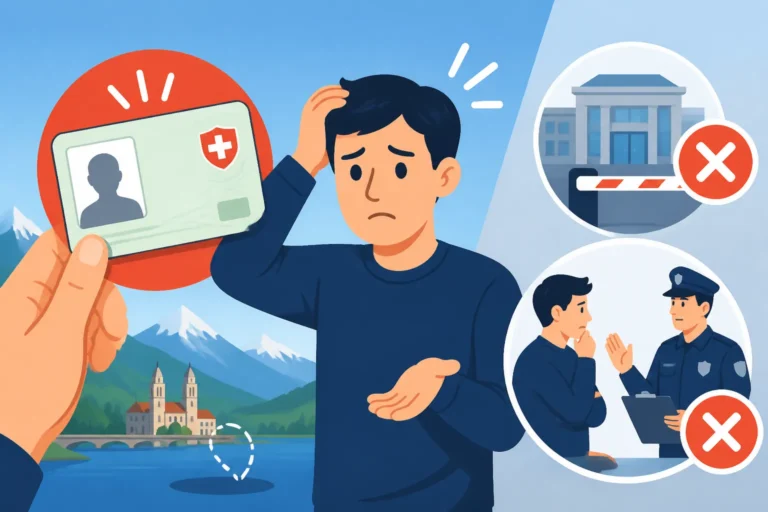
Moving to Switzerland often feels like trying to join an exclusive club where the membership rules depend entirely on the color of your passport. I still remember the sinking feeling of watching a friend from Italy get their residency approved in days while my non-EU application sat in a bureaucratic black hole for three months. This guide finally demystifies the stark immigration differences between EU/EFTA citizens and Third-Country Nationals to help you navigate the system with realistic expectations.
The Core Distinction: Understanding the Dual System
Switzerland operates what is known as a dual-track immigration system. On one side, you have the Agreement on the Free Movement of Persons (ALCP) with the European Union and EFTA countries (Iceland, Liechtenstein, and Norway). On the other, you have the Federal Act on Foreign Nationals and Integration (AIG), which governs everyone else. This distinction isn't just about paperwork; it dictates whether you have a legal right to live here or if your presence is a "concession" granted by the Swiss state.
The Agreement on the Free Movement of Persons
For those holding a passport from an EU/EFTA member state, moving to Switzerland is relatively straightforward. Under the ALCP, you generally have a right to enter, live, and work in Switzerland, provided you have a valid employment contract or sufficient financial means to support yourself without relying on social assistance. This agreement was designed to create a fluid labor market, meaning that as an EU citizen, you are treated almost identically to a Swiss national when it comes to hiring.
When I talk to EU expats, they are often surprised by the lack of "hoops." You don't need a visa to enter; you simply show up, find a job, and register at the local town hall. The permit is essentially a confirmation of a right you already possess through the treaty. However, keep in mind that even though the process is easier, you are still subject to the Mandatory Registration: How to Sign Up for Health Insurance Within 90 Days rule just like everyone else.
The Federal Act on Foreign Nationals and Integration
If you are a Third-Country National (TCN)—meaning you are from the USA, Canada, India, Australia, or any other non-EU/EFTA country—the rules are significantly more restrictive. For TCNs, Swiss immigration is based on economic necessity and the "high-qualification" principle. The government isn't looking for just any workers; they are looking for specialized experts, researchers, and senior managers who can provide a specific benefit to the Swiss economy.
As a TCN, you do not have a "right" to a permit. Every application is scrutinized by both the cantonal labor office and the State Secretariat for Migration (SEM). You must prove your value, and your employer must prove they couldn't find anyone else. This is where Residence Permits in Switzerland: L, B, and C Permits Explained becomes a vital roadmap, as the limitations on these permits for TCNs are much tighter than for their European counterparts.
Work Permits and Quotas: The Great Divide
The most significant hurdle for non-Europeans is the job market entry. While an EU citizen can move here to look for a job for up to three months without a permit, a Third-Country National must have a job offer in hand before they even set foot in the country for residency purposes. This creates a "chicken and egg" problem that many expats find incredibly frustrating.
Priority for Local and EU/EFTA Workers
In Switzerland, there is a strict hierarchy of hiring. Employers are legally obligated to prioritize Swiss nationals first, followed by EU/EFTA citizens already living in Switzerland, and then EU/EFTA citizens living abroad. Only after exhausting these pools can they look toward the rest of the world. This is known as "Inländervorrang."
When an employer wants to hire a TCN, they must submit a detailed report to the authorities. They have to show they advertised the position on national job boards, worked with the regional employment center (RAV), and interviewed candidates from the EU but found them lacking in specific, necessary skills. Understanding How Employers Prove 'Inländervorrang' to Hire a Non-EU Citizen is essential if you are trying to convince a Swiss company to sponsor your visa; you need to help them build this case by highlighting your unique, niche expertise.
The Annual Quota System for Third-Country Nationals
Even if a company proves you are the only person for the job, you might still be denied because of quotas. The Swiss Federal Council sets a specific number of L and B permits available for TCNs each year. These numbers are often surprisingly low—sometimes only a few thousand for the entire country. Once these quotas are gone, no more permits are issued until the following January, regardless of how much the company needs you.
I've seen highly qualified engineers lose out on jobs simply because they applied in November when the Zurich or Geneva quotas were already exhausted. This is a reality that EU citizens never have to face. If you are a non-EU professional, timing your move to the beginning of the year can be a strategic advantage. You can find more details on this in our guide to Third-Country National Quotas: How the Swiss Permit Limits Work.
The Permit Alphabet Soup: L, B, and C Permits
While the letters stay the same, the conditions attached to them vary wildly depending on your nationality. An "EU-B" permit is a very different beast compared to a "TCN-B" permit. Understanding these nuances will save you a lot of stress when it comes time for renewal or when you consider changing employers.
Short-term Residency and the L Permit
The L permit is for short-term stays, usually tied to a contract of less than one year. For EU/EFTA citizens, an L permit is often issued if they are still looking for work or have a short-term assignment. It is relatively easy to transition from an L to a B permit once a permanent contract is signed.
For Third-Country Nationals, the L permit is often "tied" to a specific employer and a specific project. If the project ends or you are laid off, your right to remain in Switzerland usually expires with the permit. Furthermore, the time spent on a TCN-L permit does not always count toward the residency years required for a permanent C permit, which can be a massive setback for those hoping to settle here long-term.
Long-term Residency and the B Permit
The B permit is the standard "resident" permit. For EU/EFTA citizens, it is typically valid for five years and is automatically renewed as long as you remain employed or have sufficient funds. You also have full "professional mobility," meaning you can quit your job on Monday and start a new one on Tuesday without asking the migration office for permission.
For TCNs, The Swiss B Permit: Eligibility, Renewal, and Restrictions are much more complex. A TCN-B permit is usually valid for only one year and must be renewed annually. Most importantly, many TCN-B permits are "tied" (gekoppelt) to the employer. This means if you want to change jobs, your new employer has to go through the whole labor market testing process again to "transfer" your permit. If you quit without another sponsored role lined up, you may be asked to leave the country.
Family Reunification: Bringing Loved Ones to Switzerland
One of the most emotional aspects of immigration is bringing your spouse or children with you. Here, the "two-tier" system is perhaps at its most visible. The Swiss authorities prioritize keeping European families together, while Third-Country families must meet stricter financial and housing criteria.
Rights for EU/EFTA Citizens
Under the Free Movement agreement, EU/EFTA citizens have a broad right to family reunification. You can bring your spouse, children under 21 (or older if they are dependent), and even parents or grandparents if you can prove you are supporting them financially. The process is usually a formality; you show the birth and marriage certificates, and the permits are issued.
Crucially, the family members of EU citizens are usually granted the right to work immediately upon arrival. They do not need to go through the labor market priority test. If your spouse is a teacher or a graphic designer, they can start looking for jobs the day they arrive, making the transition to Swiss life much smoother for the whole household.
Stricter Rules for Third-Country Nationals
For TCNs, family reunification is a "discretionary" right. You must prove that you have a large enough apartment (usually measured by the number of rooms per person) and sufficient financial resources to support everyone without any risk of needing social help. Your spouse may also be required to demonstrate basic language proficiency in the local language (German, French, or Italian) before the permit is granted.
For all these official applications, you will need certified translations of your documents. I highly recommend using RushTranslate for this, as they are familiar with the specific "Apostille" and certification requirements that Swiss cantonal offices demand. Getting a translation rejected because it wasn't "official" enough is a common and expensive mistake I’ve seen many expats make.
Path to Permanent Residency and Citizenship
After living in Switzerland for a few years, many expats want the security of a C permit (Permanent Residency). This permit removes most of the "foreigner" restrictions—you can change jobs freely, move cantons without permission, and you are no longer subject to "taxation at source" (Quellensteuer).
Standard vs. Accelerated C Permits
The standard rule for a C permit is 10 years of continuous residency. However, citizens of most EU/EFTA countries—as well as those from the USA and Canada due to bilateral treaties—can apply for an "accelerated" C permit after only five years. This is a huge advantage, as it fast-tracks your integration into Swiss society.
For TCNs from countries without these special treaties (like India, China, or Brazil), the wait is usually the full 10 years. There is a "fast-track" option for those who are exceptionally well-integrated, but it requires a high level of language proficiency and a clean record. You can find the specific requirements in our guide on The Swiss C Permit (Permanent Residency): Fast-Track and Standard Routes.
Language and Integration Requirements
In recent years, Switzerland has tightened the integration requirements for all foreigners. Even EU citizens now often need to prove language skills to get a C permit. However, the level required for TCNs is often higher or more strictly enforced. You will need to sit a "fide" test or provide a recognized certificate like a Goethe or DELF diploma.
Navigating the Language Requirements for Swiss Permits: A1 to B2 Standards Explained is non-negotiable. If you cannot speak the local language to an A2 or B1 level, your permit renewal or C permit application could be downgraded or denied. It’s one of the few areas where the Swiss government is increasingly treating Europeans and non-Europeans with the same level of scrutiny.
Practical Administrative Hurdles: Registration and Documentation
Regardless of where you come from, your first 14 days in Switzerland will be a whirlwind of bureaucracy. The Swiss system is hyper-localized; you don't just register with "Switzerland," you register with your specific "Gemeinde" or "Commune" (municipality).
The 14-Day Registration Rule
Every new resident must visit their local town hall within 14 days of arrival and before they start working. You will need your employment contract, your lease agreement, and your passport. For EU citizens, this is usually where you apply for your permit card. For TCNs, you are usually registering the "pre-approval" you received from the Swiss embassy in your home country.
I cannot stress enough how important The 14-Day Registration Rule: Signing Up at the Gemeinde/Commune is. If you miss this window, you can face fines, and it can complicate your health insurance start date. The Swiss are sticklers for punctuality, and "I didn't know" is rarely accepted as an excuse at the Kreisbüro.
Managing Health Insurance and Social Security
Once registered, the clock starts ticking on your health insurance. You have 90 days to find a provider, but the coverage is backdated to your first day of residency. For expats who move frequently or want the best international coverage, Cigna Global offers flexible plans that can often supplement the mandatory Swiss basic insurance, especially if you travel often or want access to private clinics.
You will also be issued a Swiss Social Security (AHV) number. This 13-digit number will follow you for the rest of your life in Switzerland. It’s used for your pension, your taxes, and your health insurance. Make sure the name on your AHV card matches the name on your residency permit exactly to avoid administrative headaches later on.
| Feature | EU/EFTA Citizens | Third-Country Nationals (TCN) |
|---|---|---|
| Right to Residency | Legal right under ALCP | Discretionary (concession) |
| Work Search | Can enter for 3 months to look | Must have job offer before entry |
| Labor Market Priority | Treated like Swiss nationals | Subject to "Inländervorrang" |
| Quotas | No quotas (except safeguard clause) | Strict annual quotas |
| B Permit Validity | Typically 5 years | Typically 1 year |
| Family Reunification | Extended family allowed | Only nuclear family (spouse/kids) |
| C Permit (Fast-track) | After 5 years (most countries) | After 10 years (unless treaty/VINTA) |
| Job Mobility | Can change employers freely | Often "tied" to one employer |
Changing Jobs and Cantons: Mobility Restrictions
One of the biggest "gotchas" in the Swiss system is the restriction on moving between cantons or changing jobs. Switzerland is a confederation of 26 cantons, and each one acts a bit like its own little country when it comes to immigration.
Mobility Rights for EU/EFTA Residents
If you have an EU-B permit, you have the "right" to professional and geographical mobility. If you live in Zurich but get a better job offer in Geneva, you can move there without needing the Geneva authorities to "approve" your move in advance. You simply deregister in Zurich and register in Geneva. Your permit remains valid.
This freedom is what makes the Swiss labor market so attractive to Europeans. It allows for career growth and the ability to follow the best opportunities without bureaucratic interference. However, always remember to update your address for your insurance and Cigna Global policies so your coverage remains valid in your new location.
Tied Permits and Cantonal Approval for Non-EU Residents
For TCNs, moving cantons is a much bigger deal. If you hold a "tied" B permit, your residency is granted by a specific canton for a specific job. If you want to move from Zurich to Zug, Zug must first "accept" your permit. They will check if they have enough quota space and if your presence still serves the economic interest of the canton.
In some cases, TCNs have been offered dream jobs in another canton only to have the move blocked by the migration office. This is why many non-EU expats feel a sense of "golden handcuffs" during their first few years. Until you get an "untied" B permit or a C permit, your mobility is at the mercy of the authorities. If you find yourself in this situation, consulting with an immigration specialist or a lawyer is often the only way to navigate the appeal process.
Family Life and Long-term Integration
Living in Switzerland as an expat is about more than just permits; it’s about building a life. Whether you are EU or non-EU, the ultimate goal for most is "Integration." This means more than just paying your taxes; it means joining local clubs (Vereine), participating in neighborhood "Apéros," and respecting the local "quiet hours."
The Swiss government looks favorably on people who make an effort. If you show that you are learning the language, volunteering, or that your children are thriving in the local school system, it makes every permit renewal and every administrative interaction significantly easier. The "Differences" might start with your passport, but they often end with how well you've made Switzerland your home.
Disclaimer: Expert Advice and Regulatory Changes
This guide is intended for informational purposes only and does not constitute legal advice. Swiss immigration laws, quotas, and bilateral agreements are subject to frequent changes by the Federal Council and the State Secretariat for Migration (SEM). While we strive to keep this information accurate, you should always consult with the official Swiss authorities or a qualified immigration lawyer before making significant life decisions. Local cantonal practices can also vary significantly from the federal guidelines.