Replacing a Lost Residence Permit While Travelling Outside the EU
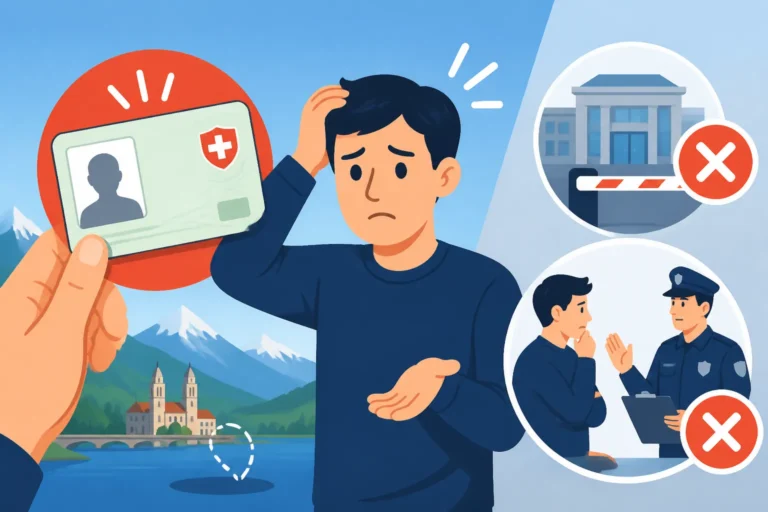
Losing your Swiss residency card while on vacation abroad is a nightmare scenario that turns a relaxing trip into a high-stakes bureaucratic ordeal at the airport. I will never forget the cold sweat I felt at a boarding gate in Bangkok when I realized my B-permit was missing, leaving me effectively "stateless" in the eyes of the airline staff. This guide provides the exact, step-by-step recovery process to get you back into Switzerland safely and how to navigate the paperwork to replace that plastic card once you are home.
The Initial Panic: What to Do the Second You Realize It Is Gone
The moment you realize your purse or wallet—containing your precious Ausländerausweis—is gone, your priority must shift from "vacation mode" to "administrative recovery." Many expats assume they can just show a photo of the permit on their phone or a scan of their passport to the airline. In reality, airlines are terrified of the heavy fines imposed by the Swiss government for transporting "undocumented" passengers, and they will likely deny you boarding without a physical, valid entry document.
Your first stop is not the airport, but the local police station in the country where you are traveling. You need a formal police report (a Verlustmeldung or Rapport de police). This document is the foundation of everything that follows. Without it, you cannot prove to the Swiss embassy that the card was stolen or lost rather than sold or used for fraud. If the local police do not speak English and your report is in a language like Thai or Arabic, you may eventually need a service like RushTranslate to provide a certified version for the Swiss authorities once you return, or even for the local consulate to process your emergency entry.
Once you have that report, do not just head to the airport. You need to contact the nearest Swiss Embassy or Consulate. Switzerland has a robust network of diplomatic representations, but they often require appointments. Call them immediately and explain that you are a resident of Switzerland who has lost their permit. They will not simply give you a new card on the spot—those are printed in Switzerland—but they will start the process for a specific emergency document known as the "Return Visa."
The Return Visa (Rückreisevisum): Your Golden Ticket Home
The most important term you need to learn in this situation is the Rückreisevisum. This is a special visa issued to foreign residents who have a valid right to live in Switzerland but lack the physical permit to prove it at the border. It is essentially a bridge that satisfies the airline's requirements and the Swiss Border Guard's security protocols.
To obtain this, you will generally need to visit the Swiss consulate in person. They will verify your status in the central ZEMIS database (the Central Migration Information System). This is why having a digital scan of your lost permit on your phone or in your email is so helpful; it gives the consular officer the exact permit number to look up. You will also need to provide a new passport photo and pay a fee, which can range from CHF 100 to CHF 150 depending on the country and the urgency.
While you are waiting for this to be processed—which can take anywhere from 24 hours to a few business days—you might find yourself stranded in a foreign city longer than planned. This is where having comprehensive international coverage is a lifesaver. If your stay is extended due to these administrative hurdles, checking your policy with a provider like Cigna Global can ensure that any medical issues that arise during your "extra" vacation days are covered, as your standard Swiss KVG might have limitations depending on where you are stranded.
Dealing with Airlines and Border Control
Even with a Return Visa in your passport, the check-in process at a non-EU airport can be stressful. Airline staff are often more familiar with standard tourist visas than they are with the nuances of Resident Permits in Switzerland: L, B, C, and G Permits Explained. If the agent seems confused, stay calm and point to the visa issued by the Swiss Consulate. It is explicitly designed for this purpose.
It is a good idea to arrive at the airport at least four hours early. There is a high chance the airline will want to call their "document check" desk or even contact the Swiss authorities at Zurich or Geneva airport to verify the visa. If you have a copy of your police report and the receipt from the Swiss Embassy, keep them in your carry-on.
When you finally land in Switzerland, you will face the Swiss Border Guard. They are generally much more understanding than the airline agents because they have direct access to your records. You should prepare for a few extra questions about Biometrics and Airport Immigration: What Happens at Swiss Border Control to ensure your identity matches the data on file. Once they see the Return Visa and verify your identity against their digital records, you will be allowed back into the country.
The Formal Replacement Process: Steps Once You Are Back
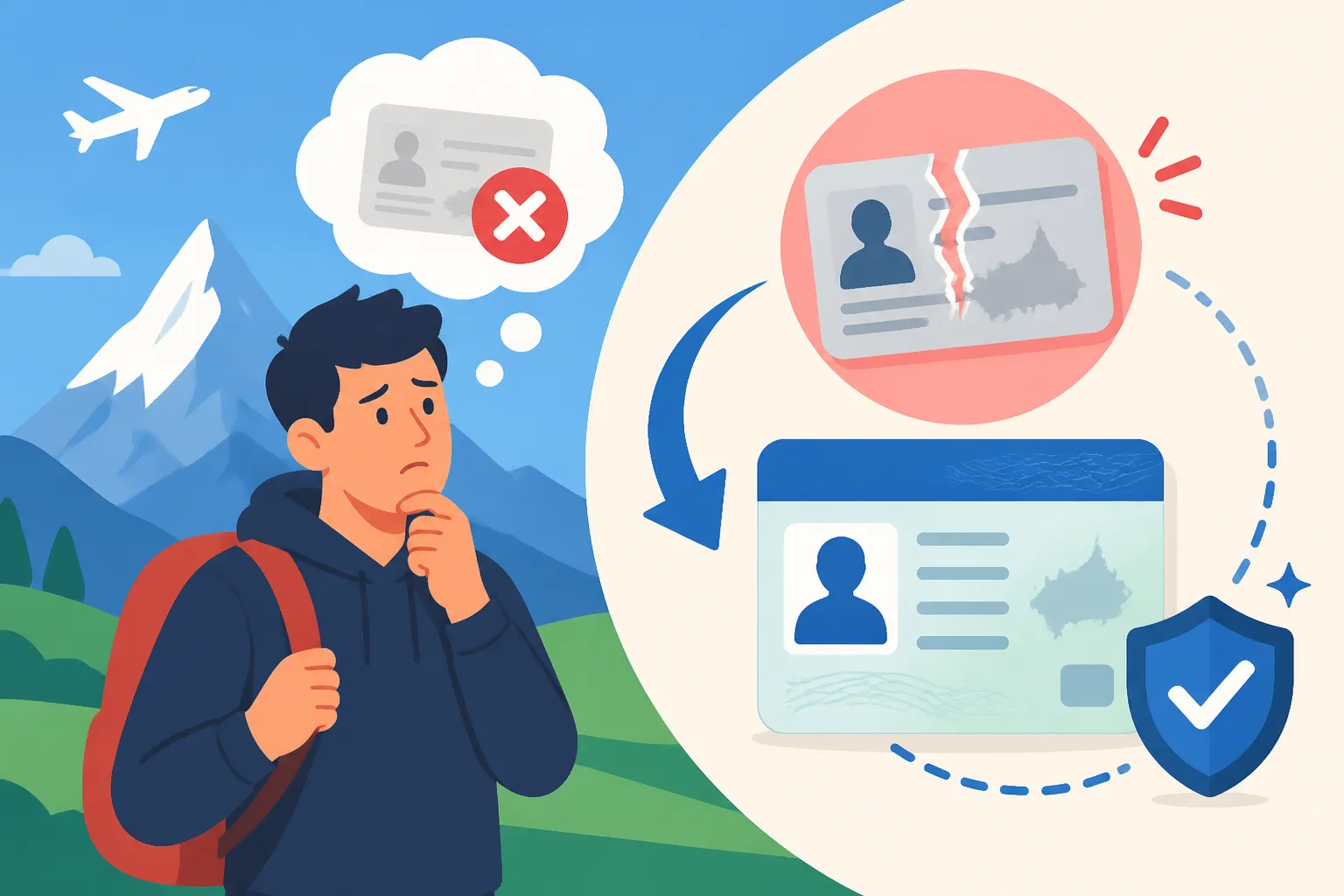
Landing back on Swiss soil is a relief, but your journey is not over. Your lost permit is now flagged in the system, and you are technically walking around without a valid ID (as expats are required to carry their permit or a copy). You must initiate the replacement process within the first few working days of your return.
The process varies slightly by canton, but generally, you must report to your local Migrationsamt (Migration Office) or, in smaller towns, the Gemeindeverwaltung. You cannot do this entirely online; you will need to show up with your passport and the police report you obtained abroad. If you lost your permit in a country where the police report is not in a Swiss national language or English, this is the point where Finding English-Speaking Notaries for Visa Documents in Switzerland or using a translation service becomes mandatory. The Swiss authorities need to be 100% certain about the circumstances of the loss.
| Step | Action Item | Estimated Cost |
|---|---|---|
| 1 | File Police Report Abroad | $0 – $30 (Local fees) |
| 2 | Apply for Return Visa at Embassy | CHF 100 – 150 |
| 3 | Report Loss to Canton Migration Office | CHF 40 – 100 |
| 4 | Biometric Appointment (if required) | CHF 20 |
| 5 | New Card Issuance Fee | CHF 80 – 120 |
When you report the loss, the officer will issue you a temporary paper document that proves you have applied for a replacement. This paper is valid for domestic use but do not try to travel out of Switzerland with it! You will have to wait for the new plastic card to arrive by registered mail, which typically takes 10 to 15 business days.
Understanding the Costs and Logistics of a Replacement
Replacing a permit is surprisingly expensive. You are not just paying for a piece of plastic; you are paying for the administrative work of re-verifying your status and the security of the biometric data. For those on The Swiss B Permit: Eligibility, Renewal, and Restrictions, the cost of a replacement can often be higher than the cost of a standard renewal.
You should expect a total "loss" of around CHF 300 to CHF 500 when you factor in the Return Visa abroad, the local police fees, the new card fee, and the travel to the embassy. If you are a student or a low-income worker, this can be a significant blow to your budget. It is worth checking if your household insurance (Hausratversicherung) covers the "loss of personal documents" abroad, as some premium policies will reimburse the replacement costs.
If you happen to find your old permit after you have already applied for a new one, you are legally required to return the old one to the migration office. Do not try to keep it as a "spare." The chip in the old card will be deactivated in the national database, and using it at a border could trigger a fraud alert.
Prevention: How to Never Let This Ruin a Trip Again
As someone who has lived through the "I lost my permit" panic, I have developed a rigid system to prevent a repeat performance. The administrative burden of What Happens if You Lose Your Swiss Residence Card (Ausländerausweis) is so high that a little preparation goes a long way.
First, never carry your actual permit in your wallet while you are out sightseeing in a foreign country. Leave it in the hotel safe. You only need the physical card for the airport and border crossings. For day-to-day ID purposes abroad, a photocopy or a high-resolution photo on your phone is usually sufficient for local police or hotel check-ins.
Second, maintain a "Digital Emergency Kit." I keep a folder in a secure cloud drive (like ProtonDrive or iCloud) that contains:
- A scan of the front and back of my Swiss permit.
- A scan of my passport's bio page.
- My Swiss AHV number.
- Contact details for my local Kreisbüro.
- Proof of health insurance, which is often needed for Health Insurance Requirements for Sponsoring a Tourist Visa Letter or other emergency administrative tasks.
If you are a frequent traveler, especially to "high-risk" areas for pickpocketing, you might even consider Getting a 'Return Visa' (Rückreisevisum) When Traveling with an Expired Card ahead of time if you know your permit is expiring while you are away, though for a lost card, you can only react after the fact.
Dealing with the Canton Office: Tips for a Smooth Experience
When you finally go to Registering at the Kreisbüro: What Documents Do Expats Need to Bring? to finalize your replacement, remember that Swiss bureaucrats value order and completeness. If you arrive with a crumpled, untranslated police report and a vague story, they will be suspicious.
Have your documents organized in a folder. Mention clearly that you have already returned to the country using a Return Visa. This tells them that the federal authorities have already done a preliminary check on you, which makes their job much easier. If your biometric data (fingerprints and photo) is more than five years old, be prepared to have it retaken. Switzerland updated its biometric standards recently, and they often use the "lost card" occasion to refresh their database.
Finally, be patient. The Swiss system is efficient, but it does not "skip" steps for convenience. You are part of a highly regulated immigration system, and every lost card is treated as a potential security breach until proven otherwise. Treat the officers with respect, and you will find that the process—while expensive—is relatively straightforward.
Legal Disclaimer
This guide is for informational purposes only and is based on personal expat experiences and general Swiss administrative procedures. Immigration laws and fees in Switzerland are subject to frequent changes at both the federal and cantonal levels. Always verify current requirements with the Swiss State Secretariat for Migration (SEM) or your specific cantonal migration office before traveling or applying for documents. We are not a legal service or a government agency.