Years on a C Permit That Count Toward Swiss Naturalization
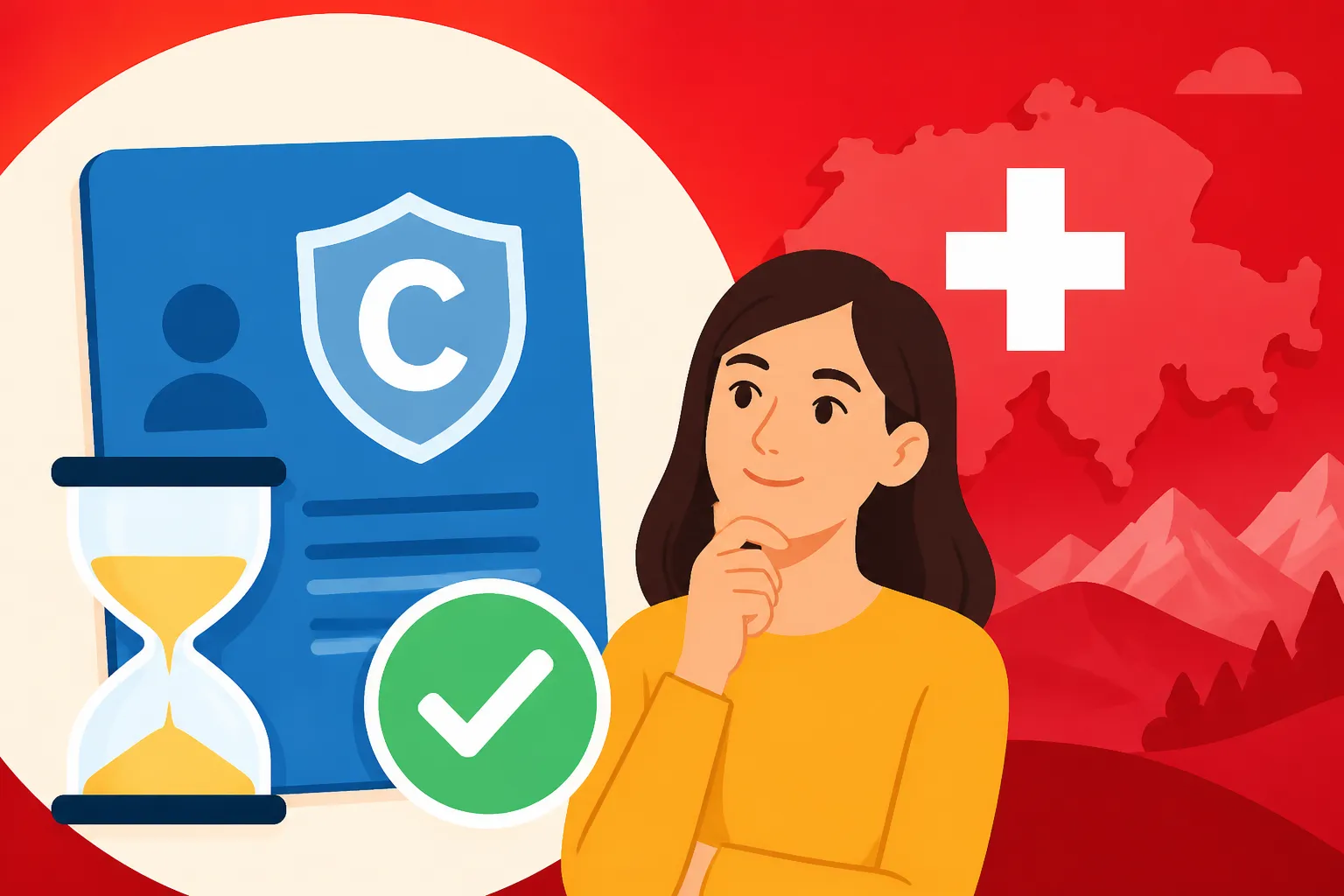
Oh, the C Permit! If you've lived in Switzerland for any length of time, you know that little red card isn't just a piece of plastic; it's a badge of honor, a sign you've successfully navigated a labyrinth of bureaucracy and truly started to put down roots. But what many folks don't realize is that reaching this milestone is often just one more step on an even longer journey for those eyeing the ultimate prize: Swiss citizenship. This guide is here to unravel exactly how those hard-won years on your C Permit contribute to making you a fully-fledged Swiss citizen, breaking down the rules, the nuances, and what it truly means for your naturalization journey.
Understanding the C Permit: Your Gateway to Permanent Residency
Let's be honest, the moment you finally hold that C Permit in your hand, there's a profound sense of relief. It's not just a fancy ID; it’s proof that you've stuck it out, integrated, and earned your place here for the long haul. But before we dive into how it impacts your citizenship dreams, let's make sure we're all on the same page about what this permit actually signifies.
What Exactly is a C Permit?
A C Permit, formally known as a Niederlassungsbewilligung (Settlement Permit), is essentially your golden ticket to permanent residency in Switzerland. Unlike the initial L (short-term) or B (annual residency) permits, the C Permit doesn't need to be renewed every year or two. It grants you nearly the same rights as a Swiss citizen, with a few key exceptions like voting or holding public office. This means you can live, work, and even change jobs or cantons without needing prior approval from the authorities. It’s a huge step towards stability and feeling truly at home rather than just a temporary guest.
The process to get one usually involves proving several years of continuous residency (typically 10 years on a B permit for most Third-Country Nationals, or often 5 years for EU/EFTA citizens and some others), a clean financial record, adherence to the law, and – crucially – sufficient language skills and integration into Swiss society. It’s a rigorous check, but once you pass, the administrative burden lightens considerably. You’ve shown commitment, and Switzerland acknowledges it.
Standard vs. Early C Permit Routes
Navigating the various paths to a C Permit can feel like trying to untangle a ball of yarn, especially with different rules for EU/EFTA citizens versus Third-Country Nationals (TCNs). However, understanding these routes is vital, as the groundwork you lay for your C Permit often sets the stage for naturalization.
For most non-EU/EFTA citizens, the standard route to a C Permit requires 10 years of uninterrupted residence in Switzerland, typically on a B Permit. These years demonstrate a long-term commitment and stability. However, even within this, years on an L Permit (short-term) usually only count half-value, meaning you need twice as many L permit years to equal a B permit year, making the path longer. This slow and steady approach is what many expats find themselves on, meticulously tracking their time and ensuring no administrative missteps.
Then there's the "early C Permit" (or Permis C anticipé in French-speaking Switzerland, vorzeitige Niederlassungsbewilligung in German). This accelerated path allows highly integrated individuals, primarily from EU/EFTA countries, to apply after just 5 years of continuous residency on a B Permit. Some TCNs may also qualify if they meet stringent integration criteria, including excellent language skills (often B1 oral and A2 written is expected, though higher is always better), a flawless debt record (no Betreibungen), no criminal history, and demonstrable participation in Swiss life. This fast-track option really underscores how much the Swiss value active integration. Getting this early C Permit is a huge advantage, not just for practical living, but also because it signals to the authorities that you're already well on your way to becoming a part of the fabric of this country, a narrative that carries significant weight when you eventually apply for citizenship. You can read more about the intricacies of this in our guide on The Swiss C Permit Permanent Residency Fast-Track and Standard Routes.
Counting Your Years: C Permit and the Naturalization Clock
So, you’ve got your C Permit – congratulations! Now, for many, the gaze turns to the ultimate integration prize: Swiss citizenship. This is where your C Permit years truly shine, acting as a solid foundation for your naturalization application. But it’s not as simple as just adding numbers; there are specific rules about how these years are counted.
The 10-Year Residency Rule for Naturalization
Switzerland has a federal requirement for ordinary naturalization: you must have lived in the country for a total of 10 years. Now, this isn't just any 10 years; there are nuances. Crucially, the years you spent in Switzerland between the ages of 8 and 18 count double! So, if you came here as a child, you get a head start. For adults, it's a straightforward 1:1 count. This federal rule is the bedrock upon which all cantonal and communal naturalization requirements are built.
What's really important to grasp is that while 10 years of total residency is the federal minimum, the type of permit you held during those years matters. Generally, time spent on a B Permit counts fully, but L Permits (short-term permits) often only count at half value. This means if you spent two years on an L Permit, it might only be counted as one year towards your federal residency requirement. This is where the C Permit becomes a game-changer. Years spent on a C Permit count fully and unequivocally towards this 10-year requirement. There's no ambiguity, no half-value counting, just straightforward, undeniable residency. It's a clear signal that you've passed the initial integration hurdles and are here to stay. This is a vital distinction, and understanding Ordinary Naturalization Residency Requirement The 10-Year Rule Explained can help clarify this further.
The Power of C Permit Years
Holding a C Permit doesn't just make daily life easier; it significantly smooths the path towards naturalization because the years you spend with this permit are considered the most valuable. Think of it this way: to even get a C Permit, you've already demonstrated a high degree of integration, language proficiency, financial stability, and a clean legal record. The naturalization authorities know this, and it automatically gives your application a stronger standing.
While the federal requirement is 10 years of residency, there's also a stipulation that you must have resided in Switzerland for a certain number of years immediately preceding your application. This often means having lived here for two or three years continuously on a C Permit right before you apply for citizenship. This period on the C Permit is non-negotiable and acts as a final demonstration of your consistent commitment and integration. It's not just about the total sum, but the quality of the recent years you've spent here. These C Permit years signify a stable life, continuous contribution to society, and a deep understanding of Swiss norms. They remove a lot of the scrutiny that might be applied to earlier years spent on temporary permits. Essentially, the C Permit acts as a pre-qualification, making your naturalization journey significantly more straightforward at both the cantonal and communal levels, which often have their own specific demands on top of federal rules. For more on these local demands, check out our piece on Cantonal Residency Requirements for Swiss Citizenship Applications.
Navigating the Naturalization Application Process with a C Permit
Alright, you’ve got your C Permit, you’ve accumulated your years, and you’re ready to take the plunge into the naturalization process. While your C Permit years give you a strong advantage, it’s not a magic wand that bypasses the entire system. Switzerland’s naturalization process is famously thorough, involving federal, cantonal, and communal layers of scrutiny. Your C Permit, however, will be a shining beacon throughout.
Federal, Cantonal, and Communal Requirements
The Swiss naturalization process is unique in its three-tiered structure, and it often catches expats off guard. You're not just applying to the federal government; you're also applying to your canton and your specific commune (municipality). Each level has its own set of requirements, fees, and even interviews. It’s like climbing three separate mountains, each with its own trail guide.
- Federal Requirements: These are the overarching rules set by the State Secretariat for Migration (SEM). They include the 10-year residency rule, a minimum period of stable residence immediately prior to application (often 2-3 years on a C Permit), demonstrating integration, respect for the Swiss legal order, and not posing a threat to internal or external security. Your C Permit already proves you've cleared many of these initial hurdles.
- Cantonal Requirements: Each of Switzerland's 26 cantons has its own additional criteria. This might involve a specific number of years of residence within that particular canton, a higher language proficiency than the federal minimum, or specific questions about cantonal history and geography. Your C Permit status usually means you've already met the cantonal residency requirement for permanent stay, which is a big relief.
- Communal Requirements: This is often where it gets personal. Your commune is where you truly live, and they want to ensure you're a good neighbor. They’ll look at your local integration – do you know about local events? Do you participate in local clubs (Vereine)? Do you pay your taxes on time? They might even conduct a citizenship interview where they ask about your life, your reasons for wanting citizenship, and your knowledge of local customs. Having a C Permit indicates stable residency within that commune, a strong plus. Remember, the communal interview can be daunting, so prepare by learning about your local area. Our guide on The Swiss Citizenship Interview Questions What the Commune Asks You offers some great preparation tips.
What a C Permit Means for Language and Integration Proof
One of the biggest hurdles for many expats seeking Swiss citizenship is proving language proficiency and integration. This is where your C Permit status truly gives you a leg up. To obtain a C Permit, you typically need to demonstrate at least A2 written and B1 oral proficiency in the official language of your canton (German, French, or Italian). For naturalization, the federal government generally requires these same levels.
This means that if you've already obtained your C Permit, you've likely already met the federal language requirements for citizenship. You might not need to rush to book another expensive language exam, which is a huge relief! However, don't get too comfortable. Many cantons and communes have higher expectations. They might expect B2 oral proficiency or a more nuanced understanding of local dialect and cultural expressions. They want to see that you can not only converse but actively participate in local life. So, while your C Permit covers the basics, continuous language learning and active use of the language in your community are still highly recommended. It’s all part of showing genuine commitment to your new home. For more detailed insights into language expectations, you might find our article on Language Requirements for Swiss Permits A1 to B2 Standards Explained helpful.
Throughout this demanding process, especially when thinking about long-term stability and ensuring everything is in order, having comprehensive health coverage like that offered by Cigna Global can provide immense peace of mind. Knowing your health is taken care of means one less thing to worry about during what can be a stressful period of applications and waiting.
Preparing Your Dossier: Documents and Deadlines
Even with a C Permit, gathering all the necessary documents for naturalization is a significant undertaking. The Swiss authorities are sticklers for detail, and your dossier needs to be impeccable. Expect to compile a comprehensive file that goes beyond just your permit.
Typically, your naturalization dossier will include:
- Application Forms: The official federal, cantonal, and communal forms, meticulously filled out.
- Copy of your C Permit and Passport/ID: Essential identification.
- Proof of Residency: Confirmation from your commune of your residency timeline.
- Birth Certificate and Marriage Certificate (if applicable): Officially translated and apostilled if from a non-Swiss authority.
- Proof of Financial Stability: Tax returns for the last few years, salary statements, and a clean Betreibungsauszug (debt register extract). A single unpaid bill can stall your application, so ensure your finances are spotless.
- Language Certificates: Even if your C Permit years imply proficiency, some authorities might ask for an updated fide certificate or Goethe/DELF/CILS equivalent.
- Proof of Integration: This is crucial. Think club memberships (Vereine), volunteer work, participation in local events, testimonials from Swiss friends or colleagues, and any courses you've taken about Swiss culture or politics.
- Criminal Record Extract: A recent one from Switzerland, proving you have a clean slate.
The application process is lengthy, often taking 2-3 years from start to finish. Fees are substantial, charged by all three levels of government, so budget accordingly. These fees can easily run into the thousands of CHF. Delays often occur if documents are missing or incorrect, so double-check everything before submission. It's a marathon, not a sprint, and patience is definitely a virtue here. A deeper dive into the financial aspect can be found in The Cost of Applying for Swiss Citizenship Federal and Cantonal Fees. For those thinking about the ultimate permanent move and solidifying their place, services like Sirelo can be invaluable when considering any potential intra-Switzerland relocation or just planning for a settled future that comes with citizenship.
Common Pitfalls and Expert Tips for C Permit Holders
Having a C Permit is a huge advantage, but it’s not a bulletproof shield. There are still pitfalls that can derail your naturalization dreams, even after years of dedicated residency. Being aware of these common traps and adopting a proactive approach can make all the difference.
Maintaining Your C Permit Status
The C Permit signifies permanent residency, but "permanent" in Switzerland often comes with conditions. Just like it took effort to get it, you need to continue to uphold the standards that earned it in the first place.
One major pitfall is extended absences from Switzerland. If you spend too much time outside the country (generally more than six months per year, or even less if continuous), your C Permit can be revoked. The authorities want to ensure Switzerland remains your true center of life. If you anticipate a longer absence for work or family reasons, it is absolutely critical to apply to "freeze" your C Permit (Aufrechterhaltung der Niederlassungsbewilligung). This allows you to retain your status for up to four years while abroad, but it's not automatic – you need to apply for it and have valid reasons. Failing to do so can mean returning to square one, potentially having to re-apply for a B Permit. Understanding the implications of Freezing a C Permit Legitimate Reasons Accepted by the SEM is incredibly important for any C Permit holder with international aspirations.
Another critical factor is financial independence. While the C Permit generally means you can work without restrictions, becoming dependent on social welfare (Sozialhilfe) can lead to serious questions about your integration and ability to support yourself. This isn't just about initial application; continuous reliance on state support can trigger a review of your permit status and definitely jeopardize any naturalization application. Your C Permit demands continuous responsible living. You can explore this further in Social Welfare (Sozialhilfe) and Its Impact on C Permit Revocation.
The "Hidden" Cantonal and Communal Demands
Even with your C Permit and federal requirements met, the cantonal and communal levels can pose unexpected challenges. These are the "hidden" demands, often less about official documents and more about your personal connection to the local community.
During your naturalization interview, particularly at the communal level, they aren't just checking boxes. They want to see genuine engagement. Can you name the local mayor? Do you know the nearest Alpabzug festival? What’s the biggest challenge facing your village or city? They might ask about local history, geography, political structures, or even local clubs. This isn't just about passing a test; it’s about demonstrating that you're genuinely part of the community, not just living in it. Expats often underestimate this aspect, focusing solely on language tests and paperwork. Active participation in a local Verein (club), whether it's a hiking group, a choir, or a sports team, speaks volumes. Showing up at town hall meetings or engaging with local news can also count. Our guide on the Swiss Citizenship Test by Canton How Questions Differ sheds more light on these local nuances. And sometimes, understanding the specific questions and knowing how to respond requires more than just language; it requires Understanding Swiss Directness and Communication Style.
Financial Stability and Continuous Integration
We've touched on financial stability already, but it bears repeating: a clean financial record is paramount, not just for your C Permit, but throughout your entire journey to naturalization. This means consistently paying your taxes, health insurance premiums, and bills on time. Any entry in the debt register (Betreibungsauszug) can be a significant red flag, signaling a lack of responsibility. Even if you've resolved an old Betreibung, its presence can still lead to questions and delays. The authorities view financial self-sufficiency as a cornerstone of integration.
Beyond finances, integration is a continuous process. It's not a one-time test you pass for your C Permit and then forget. It's about ongoing engagement with your Swiss surroundings. This could mean continuing your German, French, or Italian language studies, volunteering, joining local clubs, or simply building strong relationships with your Swiss neighbors and colleagues. The C Permit proves you can integrate; the naturalization process wants to see that you are integrated, actively and consistently. It’s about building a life here, not just residing. For those planning their future, whether it involves staying put or moving within Switzerland, platforms like Sirelo can be a useful resource for organizing logistics, ensuring that stability in daily life supports the long-term goal of naturalization. Maintaining comprehensive health insurance with providers like Cigna Global also demonstrates ongoing financial responsibility, which is a key component of integration in the eyes of Swiss authorities.
Here's a quick overview of how years generally count:
| Permit Type | Federal Residency Count (towards 10 years) | Significance for Naturalization |
|---|---|---|
| C Permit | Full value (1:1) | Highly valued, often mandatory 2-3 years before application. |
| B Permit | Full value (1:1) | Counts fully towards the 10-year rule. |
| L Permit (short-term) | Half value (1:2) | Two years on an L Permit count as one year towards the 10-year rule. |
| Student Permit | Half value (1:2) | Generally counts at half value. |
| Childhood Years (8-18) | Double value (2:1) | Years spent in Switzerland between these ages count twice. |
This table illustrates the hierarchy of permits in the naturalization process. While all contribute, C Permit years are the gold standard, reflecting sustained commitment and integration. The journey to Swiss citizenship is a long one, but your C Permit is a clear indication that you're on the right track, having proven your dedication to making Switzerland your permanent home.
Disclaimer
The information provided in this article is for general guidance only and does not constitute legal or professional advice. Immigration laws and naturalization requirements in Switzerland are complex and subject to change at federal, cantonal, and communal levels. We strongly recommend consulting with the relevant cantonal migration authorities or a qualified immigration lawyer for personalized advice regarding your specific situation. While we strive to provide accurate and up-to-date information, we cannot guarantee its completeness or applicability to every individual case.