Retiring in Switzerland: Visas for Financially Independent Seniors
Navigating the Swiss immigration system as a retiree is notoriously difficult because the country typically prioritizes those who contribute to the labor market. I remember helping a close friend from the US try to navigate this, only to realize that "liking the Alps" simply isn't a legal justification for a permit. This guide solves the mystery of the Retired Persons visa and the financial independence route.
Understanding the Legal Framework for Retiring in Switzerland
Retiring in Switzerland is a dream for many, but the legal pathway to getting that residence card is paved with specific criteria that differ wildly depending on the passport you hold. Unlike many Mediterranean countries that offer "Golden Visas" for simple property purchases, Switzerland focuses on a combination of financial self-sufficiency and genuine connection to the local culture. It is not an "automatic" process, and many applicants find themselves caught in a loop of discretionary decisions made by cantonal authorities.
The Distinction Between EU EFTA and Third Country Nationals
The first thing you need to accept is that Switzerland operates a two-tier system. If you are a citizen of an EU or EFTA country, your path is relatively smooth thanks to the Agreement on the Free Movement of Persons. You have a legal right to reside in Switzerland as a non-active person, provided you have sufficient financial means so as not to become a burden on the social assistance system.
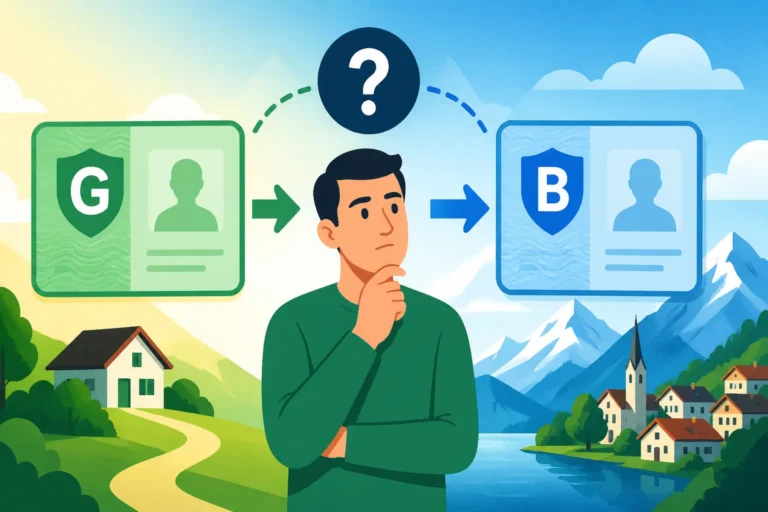
For everyone else—those we call "Third-Country Nationals" (including citizens of the USA, Canada, UK, and Australia)—the process is much more rigorous. There is no "right" to retire here; there is only a "possibility" granted at the discretion of the canton. This is why EU/EFTA vs Third-Country Nationals: Immigration Differences in Switzerland is such a critical topic to grasp before you even book a flight to view properties.
The Federal Act on Foreign Nationals and Integration AIG
The legal basis for retiring in Switzerland for non-EU citizens is found in Article 28 of the Federal Act on Foreign Nationals and Integration (AIG). This article outlines that a residence permit may be granted to retirees if they are over the age of 55, have special personal ties to Switzerland, and possess the necessary financial resources.
The term "special personal ties" is often the biggest hurdle. It isn't enough to have vacationed in Verbier for twenty years. The authorities often look for past residency, close family members living in the country, or significant business history. If you are starting from scratch with no prior history in the country, the discretionary nature of the Residence Permits in Switzerland: L, B, C, and G Permits Explained becomes very apparent.
Cantonal Sovereignty in Retirement Permits
In Switzerland, the federal government sets the broad rules, but the 26 cantons have significant leeway in how they apply them. Some cantons are known for being "retiree-friendly" because they value the tax revenue that wealthy seniors bring in, while others have strict quotas or higher financial bars. For example, a retiree might find a warmer welcome in Valais or Ticino than in a densely populated urban canton like Zurich.
When you apply, you aren't just applying to Switzerland; you are applying to a specific community. This is why understanding Where to Live in Switzerland: Cantons, Cities, and Commuter Zones is vital. The local migration office will vet your application before sending it to the State Secretariat for Migration (SEM) in Bern for final approval.
The Retired Persons Visa for Non EU EFTA Citizens
For those coming from outside the European bubble, the "Permit B for Retirees" is the target. This permit is usually issued for one year and is renewable annually, provided the conditions of your financial independence remain met. However, it is a "non-working" permit. You are strictly forbidden from engaging in any gainful activity, whether that is local employment or remote freelancing for a company back home.
Minimum Age and Personal Ties to Switzerland
The law specifies a minimum age of 55. While there are rare exceptions for health reasons, 55 is the hard line for the retirement category. But the "personal ties" requirement is where most applications live or die. You must prove that Switzerland is the center of your interests.
Valid ties might include having lived in Switzerland for a significant period in the past (perhaps on a work permit decades ago), having children or grandchildren who are Swiss residents, or owning property that you have used as a secondary residence for many years. If you cannot prove these ties, the canton may reject the application before even looking at your bank balance. This is why many retirees look into The Swiss B Permit: Eligibility, Renewal, and Restrictions to see if they might qualify under a different discretionary category.
Proving Financial Independence and Passive Income
You must prove that you have sufficient financial resources to live in Switzerland without ever needing social security or welfare. The Swiss authorities do not publish a "magic number" because the cost of living varies by canton, but they will look at your projected budget. This includes your pension, investment income, and savings.
The authorities will expect your income to cover not just housing and food, but also the high costs of Swiss health insurance and potential long-term care. When submitting your financial dossier, the documents must be clear and professionally translated. Using a service like RushTranslate ensures that your foreign pension statements and bank records meet the formal requirements of the cantonal migration offices. They are very particular about the "officialness" of your paperwork.
The No Work Rule and Its Implications
One of the most common shocks for "young" retirees (those in their mid-50s) is the absolute ban on work. Switzerland takes this very seriously. You cannot take a part-time consulting gig or manage a foreign business from your laptop in Lugano. The intent of this visa is for you to spend your wealth in the local economy, not to compete for resources or infrastructure while earning.
If you are caught working, your permit will likely not be renewed, and you could face deportation. For those who aren't quite ready to stop working entirely, investigating Freelancing and Entrepreneurship: Setting Up a Business in Switzerland might be a more viable, albeit more difficult, immigration route.
Financial Thresholds and the Lump Sum Taxation Option
If you don't have the "personal ties" required for a standard retirement permit, there is another, more expensive door: Lump-Sum Taxation, also known as "Taxation according to Expenditure." This is specifically designed for high-net-worth individuals who want to reside in Switzerland without working.
Wealth Requirements vs Annual Income
For a standard retirement permit, the canton will look at your annual income relative to your local cost of living. In an expensive canton like Zug, they might want to see a guaranteed annual income of CHF 100,000 or more for a couple, plus significant assets. In a more rural canton, that requirement might be slightly lower.
The goal is to ensure you can afford the Cost of Living in Switzerland 2026: Budgeting for Singles and Families without any risk of becoming a public ward. They will also factor in the "Wealth Tax," which is a unique feature of the Swiss system where you are taxed on your global net worth every year.
Lump Sum Taxation Pauschalbesteuerung for High Net Worth Individuals
Lump-sum taxation is a deal you strike with the canton. Instead of being taxed on your actual income and wealth, you are taxed based on your lifestyle expenses in Switzerland (usually calculated as seven times your annual rent or the rental value of your property).
To qualify for this, you generally need to be a non-Swiss citizen moving to Switzerland for the first time (or after a 10-year absence) and, crucially, you must not work. The "entry price" for this is high—usually requiring a minimum tax payment that effectively assumes an annual expenditure of several hundred thousand francs. This is often the only way for "Third-Country" retirees without family ties to secure a permit in cantons like Vaud or Geneva.
Comparison of Retirement Pathways
| Feature | EU/EFTA Citizens | Non-EU (Standard) | Non-EU (Lump-Sum) |
|---|---|---|---|
| Legal Right | Yes (Free Movement) | No (Discretionary) | No (Negotiated) |
| Minimum Age | None | 55 | None (but usually 55+) |
| Personal Ties | Not Required | Mandatory | Not Required |
| Work Allowed | No (on this permit) | No | No |
| Tax Basis | Income & Wealth | Income & Wealth | Lifestyle Expenses |
Health Insurance and Medical Care for Retired Expats
Once you have your permit, the next hurdle is the Swiss healthcare system. It is excellent, but it is also mandatory and expensive. I've seen many retirees arrive thinking their foreign Medicare or private plan will suffice, only to be hit with a "mandatory registration" letter from the canton within weeks.
Mandatory KVG vs International Private Medical Insurance IPMI
Every resident in Switzerland must purchase Swiss basic health insurance (KVG/LAMal). There are very few exceptions for retirees. Even if you have a top-tier international plan from Cigna Global, the Swiss authorities will usually insist that you also take out a local plan unless your international provider can prove they provide exactly the same coverage as the Swiss statutory requirement—and even then, many cantons are increasingly refusing these exemptions for permanent residents.
For many retirees, the best strategy is to use Cigna Global as a "bridge" or as supplementary insurance to cover private hospital rooms and international evacuations, while maintaining the mandatory Swiss plan for local GP visits and prescriptions. You can find more detail on this in Healthcare in Switzerland for Expats: The Complete System Overview (2027).
The 90 Day Registration Rule and Existing Conditions
You have 90 days from the date of your arrival (or the date your permit is granted) to sign up for a local insurance provider. The beauty of the Swiss system is that for the basic "KVG" level, providers cannot refuse you based on age or pre-existing conditions. This is a huge relief for seniors, but it comes at a price: premiums for older individuals are higher, and you must understand The Swiss Franchise System: How Deductibles and Copays Work to avoid massive out-of-pocket bills.
Accessing Specialists and Geriatric Care
Switzerland has one of the highest densities of doctors in the world. As a retiree, you will likely want a "Family Doctor" (Hausarzt) who coordinates your care. Depending on your insurance model (HMO, Telmed, or Standard), your access to specialists will vary. If you have chronic conditions, you should look for Finding Medical Care in Switzerland: Doctors, Specialists, and Referrals specifically in regions with major university hospitals like Lausanne (CHUV) or Zurich (USZ).
The Application Process: From Home Country to Local Commune
You cannot simply show up in Switzerland and ask for a retirement permit. The process must start at the Swiss consulate or embassy in your current country of residence. This is a multi-month, sometimes multi-year, endeavor.
Gathering Documents and Professional Translations
The dossier required for a retirement permit is exhaustive. You will need birth certificates, marriage certificates, a clean criminal record, a detailed CV (yes, even for retirement), a statement of your "personal ties," and proof of assets.
Because Swiss officials require documents in one of the national languages (German, French, or Italian), you will need certified translations. RushTranslate is often the go-to for expat communities because they understand the specific formatting required for "official" Swiss use. Do not try to translate these yourself; a rejected document can set your application back by months.
The Role of Cantonal Authorities in Discretionary Permits
Once you submit your application to the embassy, they send it to the migration office of the canton where you intend to live. This is where the real "vetting" happens. The canton will look at your financial stability and your "integration potential." They may even call you for an interview.
If the canton approves, they issue an "authorization for a visa," which allows you to enter Switzerland and collect your B Permit. If they deny it, you have the right to an appeal, but these are rarely successful unless a procedural error was made. This is why What Happens if You Miss the 90-Day Health Insurance Registration Window? and other administrative deadlines are so critical—they show you are a "compliant" resident.
Registering Your Arrival at the Gemeinde
Once you arrive with your entry visa, you have 14 days to go to the local town hall (Gemeinde or Commune) to register. This is a separate step from the visa application. You will bring your passport, your lease or property deed, and your marriage certificate. They will take your biometrics (fingerprints and photo), and a few weeks later, your physical Residence Permits in Switzerland: L, B, C, and G Permits Explained card will arrive in the mail.
Quality of Life and Integration for Senior Expats
Retiring in Switzerland isn't just about the permit; it's about building a life. The "loneliness" factor can be real, especially if you move to a small village where the locals have known each other for seventy years.
Choosing the Right Canton for Your Lifestyle
If you want an active social life with other English speakers, you might prefer the Zurich Expat Healthcare Guide: Hospitals, Clinics, and Emergency Contacts area or Geneva. If you want a quiet life of hiking and mountain air, the Bernese Oberland or Graubünden might be more your speed.
Keep in mind that the language barrier is a real integration factor. While many Swiss speak English, daily life—your tax bills, your insurance letters, your neighbor's "quiet hour" complaints—will be in the local language. Consider investing in a course like German for Business in Romandie: Certifications and Fluency Needs (or the French equivalent) even before you move.
Social Integration and Local Clubs
The best way to integrate into Swiss life as a senior is through "Vereine" (local clubs). Whether it's a hiking club, a choir, or a gardening group, these are the lifeblood of Swiss social life. The authorities actually look at your involvement in the community when it comes time to renew your permit or if you eventually apply for The Swiss C Permit (Permanent Residency): Fast-Track and Standard Routes after five or ten years of residency.
The Realities of Aging in Switzerland
Finally, consider the long term. Switzerland has excellent elderly care (Spitex), but it is expensive and usually not covered by basic insurance for non-medical assistance (like cleaning or grocery shopping). You should also familiarize yourself with Palliative Care and Advanced Directives (Patientenverfügung) in Switzerland to ensure your wishes are respected in the Swiss legal context.
Disclaimer
The information provided in this guide is for general informational purposes only and does not constitute legal or financial advice. Swiss immigration laws and cantonal practices are subject to change and are often applied on a discretionary, case-by-case basis. Always consult with a qualified Swiss immigration lawyer or a professional tax advisor before making any significant life decisions or financial commitments regarding your retirement in Switzerland.