Best Autumn Hikes for Fall Colors in Switzerland
Every expat or tourist in Switzerland eventually experiences that fleeting pang of regret when autumn arrives. You see those stunning photos of golden larches and crimson vineyards splashed across social media, and you realize you're missing out because you don't know where to begin your own fall foliage adventure. Well, fear no more, my friends! This guide is going to walk you through the absolute best autumn hikes in Switzerland, ensuring you're ready to immerse yourself in the breathtaking tapestry of fall colors this incredible country has to offer.
Why Swiss Autumn is a Hiker's Paradise
Autumn in Switzerland isn't just a season; it's an experience, a transformation that turns the already majestic landscape into something truly magical. The mountains, which are vibrant green in summer, erupt into a kaleidoscope of gold, amber, and fiery red. It’s a spectacle that needs to be seen and, more importantly, walked through.
The Unique Charm of Fall Foliage in the Alps
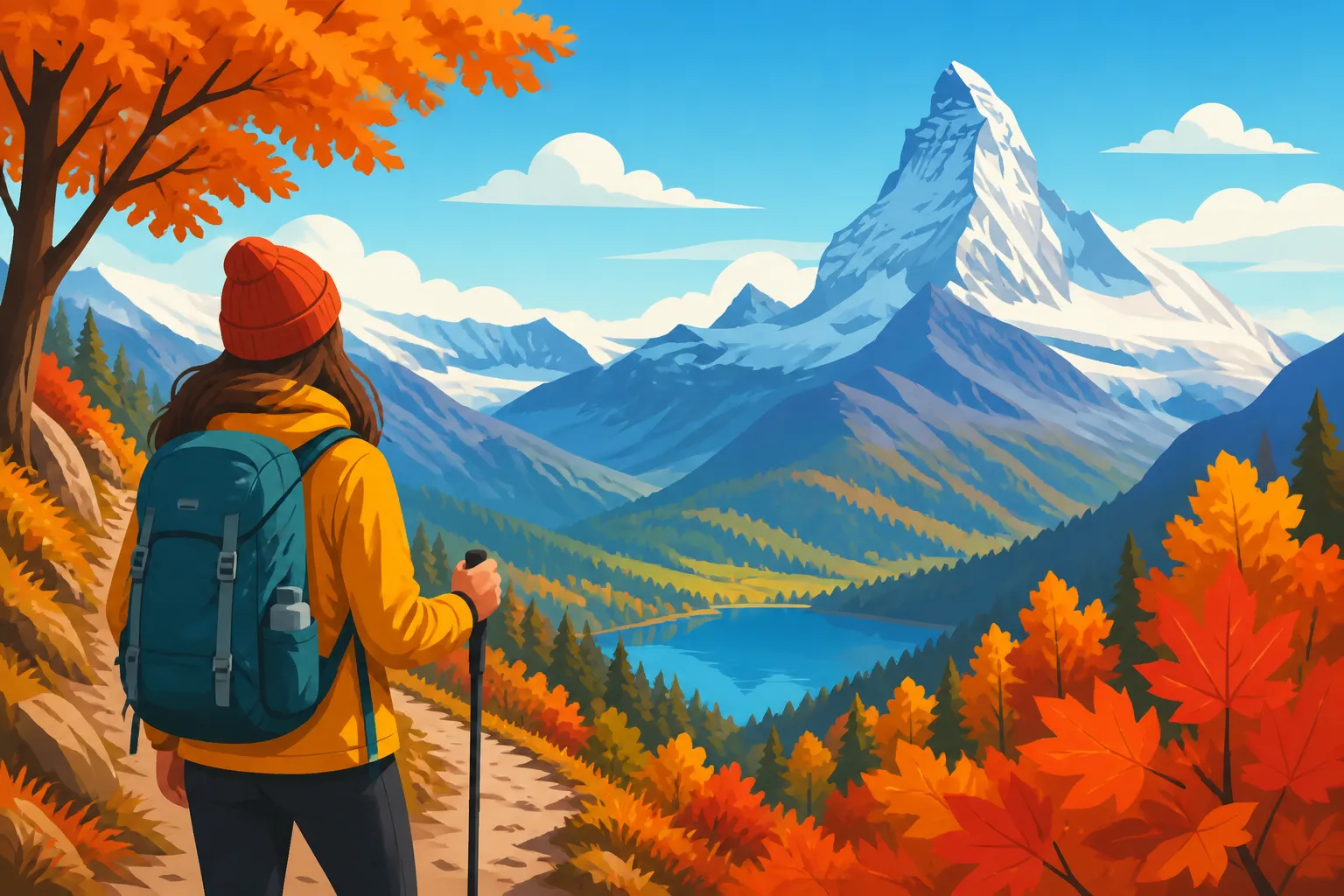
Imagine standing beneath towering larch trees, their needles shimmering like pure gold against a brilliant azure sky. Now picture that same scene framed by snow-dusted peaks, the crisp mountain air filling your lungs, and the gentle crunch of fallen leaves underfoot. This isn't a postcard; this is a typical Swiss autumn hike. Unlike the broader deciduous forests found elsewhere, Switzerland offers a unique blend of coniferous and deciduous trees, with the larches being the true stars of the show, transforming from green to a spectacular golden yellow before shedding their needles. This creates a striking contrast with the darker evergreen pines and the stark, rugged grey of the alpine rock faces.
The beauty of this season also lies in its tranquility. The frenetic energy of the summer tourist rush has subsided, leaving trails quieter and mountain huts more inviting. The temperatures are often ideal for hiking – cool enough to feel invigorating without the oppressive heat of July or August, yet usually mild enough to be comfortable for extended periods outdoors. You might even stumble upon local chestnut festivals or "Alpabzug" events, where cows descend from their summer pastures adorned with flowers, adding another layer of charm to your adventure.
Beyond the larches, you'll find other trees and shrubs adding to the vibrant palette. Beeches turn russet, birches shimmer yellow, and the low-lying berry bushes on alpine meadows burst into fiery reds and oranges. The lower altitudes, particularly in the south in Ticino or along the Geneva Lake, offer different but equally stunning displays from vineyards and mixed forests. It’s a symphony of color, a visual feast that photographers and nature lovers travel far and wide to capture.
Preparing for Your Autumn Adventure
Don't let the beauty lull you into complacency; autumn weather in the Swiss Alps can be notoriously fickle. One moment you're basking in glorious sunshine, the next a chilling wind whips up, or a sudden downpour hits. Layering is not just a recommendation; it's an absolute necessity. Start with a moisture-wicking base layer, add a warm fleece or down jacket, and top it off with a waterproof and windproof shell. A good pair of sturdy, waterproof hiking boots with excellent ankle support is non-negotiable. Trails can be damp, muddy, or even have patches of early snow at higher elevations. A good pair of hiking poles can also be a lifesaver, especially on descents or uneven terrain.
Always, always check the weather forecast for your specific hiking region, not just the general forecast for the canton. Mountain weather can differ dramatically from valley weather. Use reliable apps like MeteoSwiss or your preferred local Weather Apps and Webcams for Planning Swiss Mountain Trips. Furthermore, verify the operating times of mountain railways and cable cars. Many scale back their schedules or close entirely by late October or early November. There's nothing worse than planning a fantastic high-altitude hike only to find your ride down isn't running!
If you're planning an overnight stay to maximize your hiking time or explore a particular region deeply, remember that popular spots can still get booked up, especially on weekends. Using platforms like Booking.com can help you secure accommodation in advance, from cozy guesthouses in alpine villages to more luxurious hotels in resort towns. Remember, a good night's sleep in a warm, comfortable bed is the best way to prepare for another day of chasing those glorious fall colors. For a comprehensive guide on what to bring, check out our post on What to Pack for a Day Trip to the Swiss Alps.
Top Hiking Destinations for Unforgettable Fall Colors
Switzerland offers a diverse array of landscapes, and each region puts on its own unique autumn show. While larches are often the main draw, you’ll find incredible variety from high alpine valleys to lakeside vineyards.
Engadine Valley: Golden Larches Galore
If you've seen those iconic photos of utterly golden forests in Switzerland, chances are they were taken in the Engadine Valley in Graubünden. This high-alpine valley, home to chic St. Moritz and charming Sils and Pontresina, is truly the undisputed champion of autumn foliage, specifically for its breathtaking larch forests. The crisp, clean air at this altitude (often above 1,800 meters) combined with the abundant sunshine helps create an incredibly vivid golden spectacle, usually peaking in mid-October. The larches cling to the steep slopes, transforming entire mountainsides into sheets of shimmering gold, contrasting beautifully with the deep blue of the Engadine lakes below and the first dustings of snow on the surrounding peaks.
One of the most rewarding ways to experience this is to walk around the stunning lakes of Sils, Silvaplana, or St. Moritz. A particularly popular and relatively easy walk is the path from Maloja to Sils Maria, tracing the shoreline of Lake Sils, with golden larches reflecting perfectly in the still water. For something a bit more challenging, consider parts of the "Engadiner Höhenweg" which offers panoramic views over the entire valley. The Val Roseg, accessible from Pontresina, is another absolute must-do, with an easy, flat path leading through dense larch forests to a glacier restaurant, where you can watch wild ibex and chamois. The path from Muottas Muragl down to Pontresina or Celerina is also a classic, providing incredible vistas. To delve deeper into this magical area, consult our guide on Exploring St. Moritz and the Engadine Valley.
Getting to the Engadine is a scenic journey in itself, often involving picturesque train rides through tunnels and over viaducts. Pontresina and St. Moritz are well-connected by train, and local buses then take you to various trailheads. Remember that these areas are popular, so an early start is always recommended to enjoy the peace and quiet before more hikers arrive.
Lavaux Vineyards: Terraced Tints and Lake Views
Switching gears completely, head to the Lavaux region in the canton of Vaud for an autumn display of a different kind: the golden and crimson hues of grapevines set against the serene expanse of Lake Geneva. This UNESCO World Heritage site, with its impossibly steep, terraced vineyards, offers an experience that is both visually stunning and culturally rich. As the harvest wraps up, the leaves of the grapevines turn from green to brilliant yellows, oranges, and deep reds, creating a mosaic of color that cascades down to the lake. The combination of these vibrant vineyard colors, the deep blue of the lake, and the distant, often snow-capped peaks of the French Alps, is simply unforgettable.
A walk through the Lavaux vineyards is generally less strenuous than an alpine hike, making it accessible to a wider range of fitness levels. You can choose to walk from village to village – perhaps starting in Lutry, passing through Epesses, and ending in St. Saphorin or Rivaz. The well-marked paths lead you directly through the vineyards, offering countless photo opportunities and charming wine cellars where you can sample the local produce (many offer "caveaux ouverts" – open cellars – on weekends). You can easily combine parts of the walk with a scenic train ride or even a boat trip on Lake Geneva.
The air here is milder than in the high Alps, and the weather tends to be a little more stable. It's a perfect destination for a leisurely autumn day, allowing you to soak in the beauty, enjoy some local wine and cheese, and appreciate the unique blend of nature and human endeavor. Getting there is easy by train, with stops like Cully, Epesses, and St. Saphorin located directly within the vineyards. Don't miss our detailed guide on Hiking the Lavaux Vineyard Terraces Above Lake Geneva for specific route recommendations.
Valais: Beyond the Glaciers into Golden Valleys
The canton of Valais, renowned for its towering peaks and the iconic Matterhorn, also holds some truly spectacular autumn secrets. While many flock here for winter sports or summer mountaineering, those in the know cherish its golden autumns. The higher reaches of the Valais offer incredible views of the Aletsch Glacier – a UNESCO Natural World Heritage site – now framed by bursts of golden larches on the surrounding slopes. The areas around Fiescheralp, Bettmeralp, and Riederalp provide fantastic, mostly easy, hiking opportunities with sweeping views across the glacier, enhanced by the stunning fall colors. For prime views of the glacier, refer to our article on Aletsch Glacier Viewpoints: The Easiest Way to See It.
However, the real treasures of Valais in autumn often lie in its lesser-known side valleys. Val d'Anniviers, with villages like Zinal, Grimentz, and Chandolin, transforms into a haven of golden larch forests. The traditional wooden chalets, often hundreds of years old, look even more charming nestled amongst the fiery trees. The Val d'Hérens, home to the famous "pyramides d'Euseigne" rock formations, also offers incredible hiking trails through vibrant forests. These valleys are generally less crowded than the more famous Engadine, offering a more tranquil and authentic alpine experience. You might even find yourself sharing the trails with local sheep or goats.
Accessibility to these valleys often involves a train ride to a central hub like Sion or Sierre, followed by a PostBus journey up into the mountains. While some cable cars might still be running in early autumn, it’s crucial to check their seasonal operating times as they often close sooner than those in the larger resorts. Many of these regions also have wonderful mountain restaurants ("Buvettes d'Alpage") which might still be open in early autumn, serving hearty Valaisan specialties like raclette or dried meat, providing the perfect reward after a day of hiking.
Essential Tips for a Seamless Autumn Hike
Embarking on an autumn hike in Switzerland requires a bit more planning than a spontaneous summer stroll. The changing weather and shorter daylight hours mean being prepared is key to enjoying the stunning scenery to its fullest.
Navigating Public Transport & Planning Your Route
Switzerland's public transport system is legendary, and it truly shines when it comes to accessing remote trailheads. The SBB (Swiss Federal Railways) network, complemented by an extensive PostBus system and countless mountain railways, can get you almost anywhere. However, as mentioned, in autumn, schedules can change. Always check the SBB website or use the SBB Mobile App to Book Scenic and Regional Journeys for the most up-to-date timings, especially for the last connections down from mountain areas. Some mountain cable cars may run on reduced schedules or close entirely by late October. Planning your itinerary around these transport options is crucial, especially if you're undertaking a linear hike that doesn't loop back to your starting point. You can also use services like Omio to easily compare and book your train and bus tickets, making the journey planning a breeze.
For detailed trail information, the SwitzerlandMobility platform (available as a website and an app) is an indispensable resource. It provides comprehensive maps, elevation profiles, difficulty ratings, and estimated hiking times for countless routes across the country. This tool is a lifesaver for gauging whether a trail suits your fitness level and for avoiding unexpected surprises. We highly recommend checking out our guide on Hiking Apps for Switzerland: SwitzerlandMobility and Komoot for more details on how to use these invaluable resources. Always factor in shorter daylight hours – the sun sets earlier in autumn, especially behind high mountains, so plan to finish your hike with plenty of buffer time before dusk. Consider our advice on How to Plan a Car-Free Weekend in the Swiss Alps if you're relying entirely on public transport.
Capturing the Magic and Staying Respectful
Autumn colors are a photographer's dream. To capture the magic, aim for the "golden hour" – the hour after sunrise and the hour before sunset – when the light is soft and warm, making the colors truly pop. Reflections in still alpine lakes can create stunning mirrored images of golden forests and blue skies. Don't be afraid to experiment with different angles and compositions, perhaps incorporating a distant chalet or a winding path into your shot. A wide-angle lens can capture the expansive beauty, while a telephoto can compress the layers of color on distant peaks.
While capturing the beauty, it's paramount to practice the "Leave No Trace" principles. Stay on marked paths to protect delicate ecosystems and avoid getting lost. Pack out everything you pack in, including any food wrappers or fruit peels. Resist the urge to pick excessive amounts of foliage; let nature remain for others to enjoy. This is especially true for foraging, which often has strict local rules. Switzerland's natural environment is pristine because of these respectful practices, and it's up to all of us to maintain it. For instance, if you plan to enjoy a packed lunch, remember to use designated areas or bring a bag for your rubbish, as detailed in our advice on Picnic Spots and Public BBQ Areas in the Swiss Mountains.
Additionally, be mindful of local wildlife. Autumn is a critical time for many animals as they prepare for winter. Keep dogs on leashes, and maintain a respectful distance from any animals you encounter. The mountains are their home, and we are merely guests. Understanding Mountain Safety in Switzerland: Weather, Gear, and Emergency Numbers is also crucial for responsible hiking.
Accommodation and Guided Experiences
As the shoulder season, autumn can sometimes offer better deals on accommodation compared to peak summer or winter. However, certain popular regions, especially during the prime larch-coloring weeks, can still see high demand. It’s always a good idea to book your accommodation in advance, particularly if you have specific preferences or are traveling on a weekend. Websites like Booking.com offer a vast array of options, from charming boutique hotels to cozy bed and breakfasts in remote villages. Many hotels and guesthouses offer special "autumn hiking packages" which can include packed lunches or guided tours.
If you're new to Swiss hiking, or perhaps want to explore a region with the insights of a local expert, consider a guided hiking tour. Guides can lead you to the best viewpoints, share local knowledge about flora and fauna, and ensure your safety, particularly on more challenging routes. Platforms like GetYourGuide offer a selection of guided day trips or multi-day tours, sometimes even focusing specifically on autumn foliage. This can be a fantastic way to discover hidden gems and learn more about the region without the stress of planning every detail yourself.
| Hiking Region | Key Features | Best Time (Peak Colors) | Difficulty | Typical Duration | Accessibility (Public Transport) |
|---|---|---|---|---|---|
| Engadine Valley | Golden larches, alpine lakes, snow-capped peaks, crisp air | Mid-October | Easy to Medium | 2-5 hours | Excellent (SBB to St. Moritz/Pontresina, then bus) |
| Lavaux Vineyards | Crimson/golden grapevines, Lake Geneva views, charming villages | Late September-Mid-October | Easy | 2-4 hours | Very Good (SBB to Lutry/Cully/St. Saphorin) |
| Valais (Val d'Anniviers) | Dense larch forests, traditional chalets, remote valleys, glacier views | Mid-October | Medium | 3-6 hours | Good (SBB to Sierre, then PostBus) |
| Aletsch Glacier Region | Golden trees framing glacier views, high alpine plateaus | Early-Mid October | Easy to Medium | 2-4 hours (from cable car) | Good (SBB to Fiesch, then cable car) |
So there you have it, my fellow adventurers! Autumn in Switzerland is an absolute marvel, a fleeting but unforgettable burst of color that transforms the landscape into a painter's masterpiece. With a little planning and the right gear, you can experience this magic for yourself. Go on, embrace the golden season! Don't forget to also check out our general guide to Autumn in Switzerland: Foliage, Chestnuts, and Harvest Festivals to make the most of your visit.
Disclaimer
Please remember that while I strive to provide accurate and up-to-date information, local conditions, trail closures, and public transport schedules can change without notice. Always check official sources like SBB, local tourism boards, and weather forecasts before embarking on any hike. Your safety is paramount, so always be prepared for changing weather conditions, carry appropriate gear, and inform someone of your hiking plans. This guide is for informational purposes only and does not constitute professional advice.