How to Avoid Crowds at Switzerland’s Top Mountain Destinations
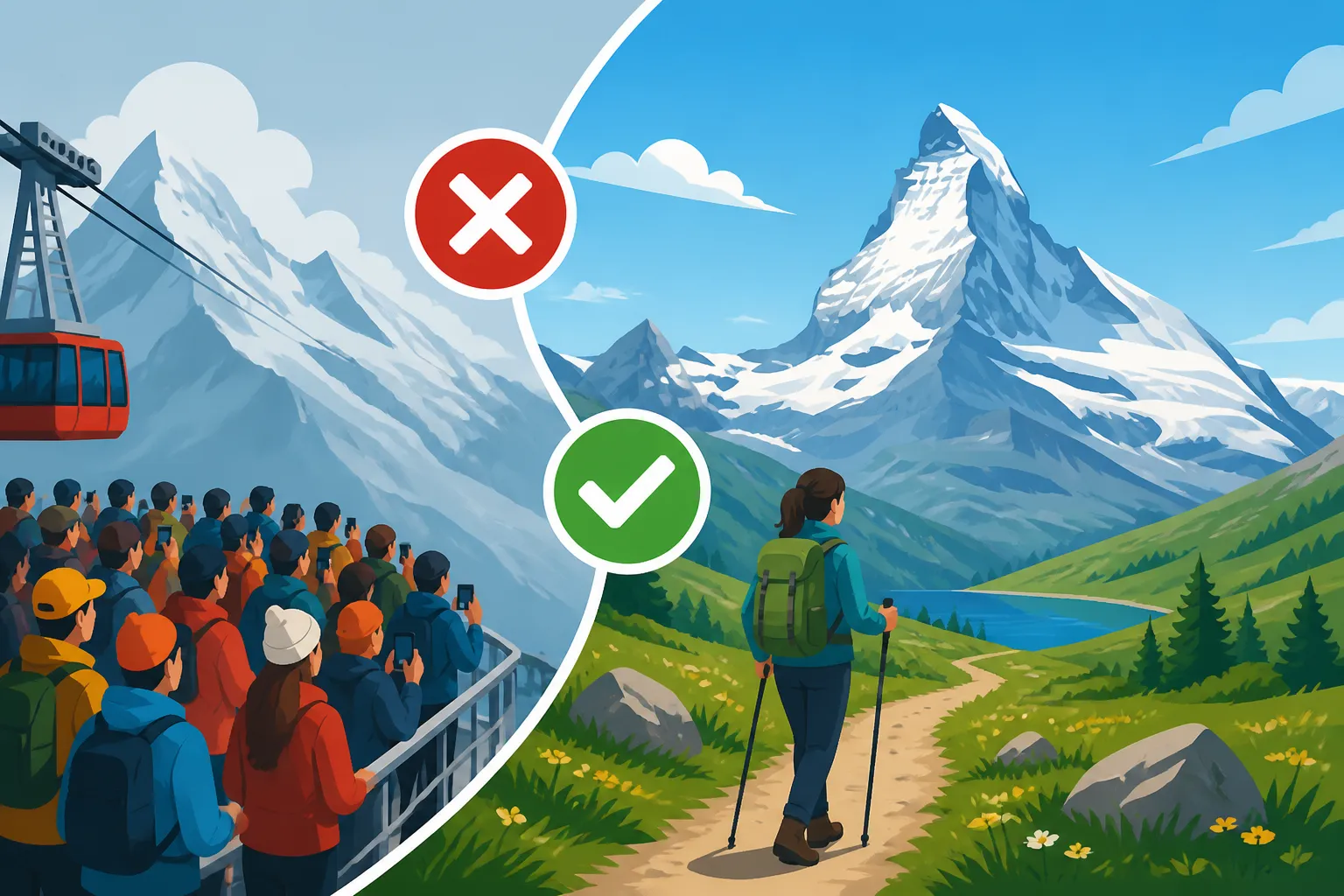
You’ve dreamt of those iconic Swiss mountain vistas, the crisp air, the cows with their bells, and the serene quiet. Then you get there, and suddenly you’re in a queue longer than your last tax return line, elbow-to-elbow with what feels like half the planet. Trust me, I’ve been there. That initial awe quickly gets replaced by a groan as you navigate throngs of people vying for the same perfect selfie spot. This guide is all about helping you reclaim that serene Swiss mountain experience, showing you how to dodge the crowds and find your slice of Alpine paradise.
Understanding the "Crowd Problem" in Switzerland
Let's be real, Switzerland's beauty is no secret. It's plastered all over postcards, travel blogs, and Instagram feeds, and for good reason! But this popularity, while great for the Swiss economy, can be a real buzzkill for us expats who want to experience the "real" Switzerland, not just the tourist version.
Why Certain Spots Become Tourist Magnets
Certain Swiss mountain destinations have achieved almost mythical status, and it’s no wonder they pull in the crowds. Think about places like the Jungfraujoch, often called the "Top of Europe," or the Gornergrat with its postcard-perfect views of the Matterhorn in Zermatt. These spots are iconic, globally recognized, and incredibly accessible, which is a double-edged sword for those of us seeking solitude.
Take the Jungfraujoch, for instance. It's a marvel of engineering, a train ride through the Eiger and Mönch mountains, culminating in a high-altitude experience. Tour operators worldwide market it heavily, leading to busloads of visitors daily, especially during peak season. You'll find similar scenarios at Mount Pilatus, easily reached from Lucerne, or the perpetually popular Mount Titlis. These places often have well-developed infrastructure – panoramic restaurants, ice palaces, gift shops – that cater to a mass-tourism market. Social media, too, plays a huge role. One stunning photo of a clear blue lake or a dramatic peak can instantly make a once-quiet spot the next must-see destination, bringing with it an inevitable influx of selfie sticks and chattering groups. It's a sad reality, but the most famous places are famous for everyone, not just us.
The Impact of Peak Seasons and Holidays
If you've spent any time living here, you'll know that the Swiss calendar is riddled with public holidays, not to mention school breaks that seem to be constantly happening somewhere in Europe. These times, combined with the traditional summer (July and August) and winter (December to March) high seasons, are when popular mountain destinations turn into human sardine cans.
Swiss national holidays, like August 1st, or Easter and Whitsun (Pentecost), see locals flocking to the mountains alongside international tourists. Then you have the various cantonal school holidays. While your kids might be in school, many families from Germany, France, Italy, or even other Swiss cantons will be on their breaks, all descending on the same picturesque valleys and peaks. Imagine trying to get a quiet moment at a viewpoint near Interlaken during the height of July, or trying to find space on a ski slope in Zermatt during Christmas week. It's not impossible, but it requires a very different strategy than a spontaneous mid-week jaunt in May. Understanding these seasonal and holiday patterns is the first step to outsmarting the crowds. You're not just dodging tourists; you're also dodging a significant portion of the local population who also want to enjoy their stunning country!
Strategic Planning: Timing is Everything
When it comes to enjoying Switzerland's mountain majesty without feeling like you're at a rock concert, good planning is your absolute best friend. Seriously, it makes all the difference.
The Early Bird Catches the Cable Car
This isn't just a quaint saying; it's practically scripture for crowd-avoidance in Switzerland. Getting to your chosen mountain destination right when it opens, or even a little bit before, is the single most effective way to experience that tranquil, pristine Alpine magic you dreamed of.
Imagine this: You arrive at the cogwheel railway station for Mount Pilatus in Alpnachstad or the gondola station for Mount Titlis in Engelberg a good 30 minutes before the first departure. You might see a few other early risers, but you'll be among the first on the transport. The journey up will be peaceful, allowing you to truly soak in the rising views. Once you reach the summit, for those precious first 30-60 minutes, you'll have the viewing platforms almost to yourself. The air is crisper, the light is softer for photographs, and the only sounds are the wind and perhaps a distant cowbell. I vividly remember being among the first up the first train to Jungfraujoch one frosty October morning. While everyone else was scrambling for the "Top of Europe" sign an hour later, I had already explored the Ice Palace in relative solitude and was enjoying a coffee with a view that felt like it was just for me. This early start strategy works wonders for places like the Gornergrat in Zermatt too; seeing the Matterhorn bathed in the soft morning glow before the crowds arrive is an unforgettable experience.
Late Afternoon Magic
Just as effective as an early start, but perhaps a bit more relaxed, is arriving in the late afternoon. Most of the large tour groups, especially those on day trips, will have begun their descent by 3 or 4 PM. This leaves the mountain tops significantly quieter.
Not only do you escape the bulk of the crowds, but you're also often rewarded with absolutely stunning light for photography. The "golden hour" as the sun begins to set paints the peaks in incredible hues of orange, pink, and purple. The atmosphere becomes more relaxed, and the panoramic restaurants often have more availability. You can enjoy a leisurely meal or a drink, watching the landscape transform. While it means you'll have less time to explore extensive hiking trails, if your goal is primarily to enjoy the views and the tranquility, a late afternoon visit is sublime. Plus, there's something rather magical about being on a nearly empty mountain as the day winds down, giving you a sense of peace that's hard to find in the midday rush.
Mid-Week vs. Weekend Visits
This might seem obvious, but it bears repeating with emphasis: if you can, avoid visiting Switzerland's premier mountain destinations on a Saturday or Sunday. Seriously, don't do it unless you absolutely have no other choice. Weekends are when locals, expats, and those on shorter trips descend en masse.
The difference in crowd levels between a Tuesday and a Saturday at a popular spot like Lake Lucerne, Interlaken, or a mountain peak is astounding. On a Tuesday in early June, you might find the trails pleasantly busy but still navigable. On a Saturday in late July, you could be stuck in traffic jams just getting to the cable car, queuing for ages, and then struggling to find a spot on the viewing platform. Public transport, particularly trains heading to mountain regions, can also be packed on weekends. The best strategy is to save your weekend adventures for smaller, more local hikes or towns, and dedicate your weekdays (if your schedule allows) to those bucket-list mountain excursions. You'll thank yourself for not having to battle for a spot on the panoramic terrace.
Off-Season Advantages
Ah, the shoulder seasons – often overlooked, but oh-so-rewarding! If you're flexible with your travel dates, consider visiting in late spring (May to early June) or early autumn (mid-September to October). These periods offer a fantastic balance of generally good weather and significantly fewer people.
In May and early June, the snow might still be clinging to the highest peaks, creating a stunning contrast with the vibrant green valleys and meadows bursting with wildflowers. The air is fresh, and while some mountain huts or higher trails might still be closed, many of the main attractions and mid-level hikes are open. Autumn, from mid-September to late October, is my personal favorite. The larch trees turn a brilliant golden, the air is incredibly crisp and clear, and the views are often spectacular. Many popular hiking routes, like those around Zermatt or the Engadine Valley, are less crowded, allowing you to truly immerse yourself in the scenery. Of course, the downside is that weather can be more unpredictable – you might get a sudden cold snap or a rainy day – but the payoff in terms of crowd reduction is usually well worth the slight risk. It's a trade-off, but often one that leads to a much more authentic and enjoyable experience.
Smart Travel Choices: Beating the Rush
Once you've nailed down the timing, it's time to get strategic about how you travel. A little foresight here can save you a whole lot of frustration later.
Booking in Advance: The Power of Pre-Purchased Tickets and Reservations
This is a non-negotiable for popular mountain excursions, especially if you're visiting during even moderately busy periods. Buying your tickets for mountain railways, cable cars, and even specific entry times online in advance is an absolute game-changer.
Think about it: you spend less time queueing at the ticket counter and more time enjoying the view. Many major attractions, like the Jungfraujoch or the Matterhorn Glacier Paradise, offer online booking with timed entry slots. This not only guarantees your spot but also helps regulate the flow of people, making the experience better for everyone. If you're using a Swiss Travel Pass or a Half-Fare Travelcard, you often still need to purchase the mountain ascent tickets separately, but you'll get a discount. Always check the official website of the mountain railway or cable car for booking options. Sites like Omio can be fantastic for comparing train tickets, but for the actual mountain lifts, go directly to the source like Jungfraubahn.ch or Pilatus.ch. For bundled experiences or guided tours that include mountain trips, GetYourGuide can be a useful platform to book ahead, often allowing you to skip lines entirely. Even for simple accommodation near popular spots, booking on sites like Booking.com well in advance ensures you get the best options. This tiny effort before your trip can massively improve your on-the-day experience.
Choosing Less Obvious Routes: Alternative Paths to Famous Peaks
Sometimes, the trick isn't avoiding the famous peak entirely, but approaching it differently. Many popular mountains have multiple access points, and some are far less frequented than others.
For instance, Mount Pilatus offers the "Golden Round Trip" which typically involves a gondola and aerial cableway from Kriens and the world's steepest cogwheel railway from Alpnachstad. Most people start at Kriens because it's closer to Lucerne. But what if you reversed it? Or what if you opted for an early morning ascent from Alpnachstad? You might find fewer crowds. Similarly, for the Jungfrau Region, while everyone flocks to Jungfraujoch, consider alternatives like First (Grindelwald-First), which offers thrilling activities like the Cliff Walk and ziplines, or Schynige Platte, famous for its Alpine garden and traditional wooden trains. Both offer phenomenal views of the Eiger, Mönch, and Jungfrau peaks without the same mass of people that the "Top of Europe" attracts. These alternatives give you incredible Alpine experiences without feeling like you're at a theme park. Don't be afraid to look at the map and see if there's a lesser-known village or cable car that can get you close to the action.
Embracing Public Transport Flexibility: SBB and Saver Day Passes
Switzerland's public transport system, primarily the SBB (Swiss Federal Railways), is legendary for its efficiency and reach. While it's fantastic, it also means that trains to popular hubs like Interlaken or Zermatt can get incredibly crowded, especially on weekends or during peak travel hours.
The key here is flexibility and real-time information. Always use the SBB mobile app (which is fantastic, by the way). It not only shows you schedules and allows you to buy tickets, but crucially, it often indicates the expected occupancy level of trains. If a train is marked as "high occupancy," consider waiting for the next one if your schedule allows, or adjusting your route. Purchasing a Half-Fare and Saver Day Passes for Leisure Travel in Switzerland can be incredibly cost-effective for residents, and a Saver Day Pass (Spartageskarte): How Residents Save on Day Trips can give you flexibility on specific routes while saving money. However, remember that even with these, the trains themselves can still be full. If you're planning a trip further afield and using public transport exclusively, seriously consider a SBB Travelcards: Is the Generalabonnement (GA) Worth the CHF 4000+ Cost?. This eliminates the need to buy individual tickets, saving time and mental energy, even if the trains are still busy. For some routes, the PostBus network can also offer a more scenic, if slightly slower, journey to smaller villages, which are often less crowded.
Beyond the Mainstream: Discovering Hidden Gems
Sometimes, the best way to avoid crowds is simply to not go where everyone else is going. Switzerland is full of incredible mountain experiences that don't make it onto the cover of every travel brochure, and these are often where you find the true charm.
Exploring Smaller, Local Mountains
While the Matterhorn is undeniably majestic, Switzerland boasts thousands of other equally stunning (and often more peaceful) peaks. These are the places where locals go, where the infrastructure is simpler, and where you'll find an authentic mountain experience without the international throngs.
Think about destinations like Stoos, a car-free village accessible by an incredibly steep funicular from Schwyz. From there, you can hike along the ridge walk with breathtaking views over Lake Lucerne, and you'll encounter far fewer people than on the Rigi. Or consider Melchsee-Frutt, another car-free gem that’s a fantastic hiking and fishing spot. In the canton of Glarus, Braunwald offers spectacular views and family-friendly trails, again, without the overwhelming crowds. Even in the popular Jungfrau region, venturing a little off the main Grindelwald-Lauterbrunnen circuit to places like the Mürren-Schilthorn area (which is incredible, by the way) or a smaller, lesser-known peak near Haslital can make a huge difference. These places often have lovely mountain restaurants (Berggasthäuser) where you can enjoy traditional Swiss food and truly feel like you’ve escaped the hustle and bustle. Do a little research into the smaller regional tourist offices, not just the big names, and you'll unearth some absolute treasures.
Hiking as an Escape: Getting Away from the Cable Car Stations
Even at the most popular mountain destinations, a bit of walking can dramatically reduce the crowd factor. Most tourists stick to the immediate vicinity of the cable car or train station, snap their photos, and head back down. This is your opportunity to find solitude.
From almost any mountain station in Switzerland, there are well-marked hiking trails leading off into the landscape. You don't need to embark on a multi-day trek; even a 30-minute walk along an easy trail can take you away from the main viewing platforms and into peaceful nature. For example, from the Gornergrat station, instead of staying put, walk downhill a bit towards the Riffelsee. The path is easy, and you’ll find stunning reflections of the Matterhorn in the lake, often with far fewer people than at the main lookout. Similarly, from the top of First, after enjoying the Cliff Walk, take one of the lovely, easy trails towards Lake Bachalpsee. You’ll find pockets of quiet and often better photo opportunities. Always check trail difficulty and conditions, especially if you're not an experienced hiker. Our guide on Swiss Hiking for Beginners: Trail Grades and the SAC System can help you understand the markers. Just remember to pack appropriate gear, even for a short walk, as mountain weather can change quickly.
Leveraging Local Knowledge and Tourist Information
Never underestimate the power of local insights. While guidebooks and top-10 lists are a good starting point, they rarely include the hidden gems or the current crowd dynamics.
When you arrive in a region, pop into the local tourist information office. These folks are usually incredibly knowledgeable and keen to help you discover the less-trodden paths. They can tell you about recent trail openings, local events, or smaller cable cars that most tourists overlook. Don't be afraid to ask your hotel staff or Airbnb host for their personal recommendations – they often know the best spots to avoid crowds or to catch a unique view. Online expat forums and local Facebook groups can also be a goldmine of information, as fellow residents share their latest discoveries and tips. Sometimes, simply looking at a detailed map of an area will reveal smaller peaks or remote valleys that are accessible by a lesser-known bus route or a tiny, charming old cable car.
Essential Tools and Mindset for Crowd-Free Exploration
Successfully dodging the masses in Switzerland's mountains isn't just about knowing where to go or when to go; it's also about having the right tools in your pocket and cultivating a flexible mindset.
Utilizing Weather Forecasts and Webcams: How to Adjust Plans
The weather in the Swiss Alps is notoriously fickle. What starts as a glorious sunny morning can quickly turn into a cloudy, rainy, or even snowy afternoon. However, this unpredictability can actually be your friend when it comes to crowds.
A perfectly blue-sky day often means peak crowds at all the major attractions. Sometimes, a forecast for "partly cloudy" or "mixed weather" can deter many day-trippers, leaving the mountains less busy. If you’re prepared for a bit of cloud or a light shower with proper gear, you might just have a more peaceful experience. Always check the very latest forecasts from reliable sources like MeteoSwiss, and crucially, check the mountain webcams! Most major resorts and even many smaller ones have live webcams you can access via their websites or the MeteoSwiss app. Seeing the actual conditions at the summit before you commit to the journey can save you a lot of disappointment (and money if it's completely fogged in). If you're wondering Is the Jungfraujoch Trip Worth It in Bad Weather?, those webcams will give you a real-time answer. Use this information to be flexible: if your chosen peak looks socked in, pivot to a lower-altitude hike or a lake cruise instead.
A Flexible Itinerary: Being Prepared to Pivot
This leads directly to the importance of a flexible itinerary. While it's good to have a plan, clinging to it rigidly in Switzerland can lead to frustration, especially if your goal is crowd avoidance.
Mountains often have their own agenda. Cloud cover can roll in, a popular attraction might have an unexpected closure, or you might simply arrive and realize it's far too busy for your liking. Having a "Plan B" (and even a "Plan C") is key. If the cable car to your dream peak looks like a sardine can, perhaps there's a lovely hike in the valley that still offers stunning views up at the peaks. If the top of Mount Rigi is swarming, maybe explore a charming village along Lake Lucerne instead. Switzerland has an embarrassment of riches when it comes to natural beauty, so there's always an alternative. Embrace the opportunity to discover something new and unexpected. Sometimes the most memorable experiences are those you stumble upon spontaneously.
Managing Expectations: Switzerland is Popular for a Reason
Finally, and perhaps most importantly, manage your expectations. Switzerland is incredibly beautiful, and its popularity is a testament to that. You won't always find yourself completely alone, even with the best planning.
There will be times when you encounter crowds, especially at iconic viewpoints or during peak seasons. That's okay. The goal isn't necessarily to achieve absolute solitude 100% of the time, but to significantly reduce the impact of crowds and find those moments of peace and awe that make a trip to the Swiss Alps so special. Focus on the stunning scenery, the incredible engineering, the fresh air, and the unique cultural experiences. Even if you're sharing a view with others, try to find a moment to step back, breathe it all in, and appreciate the immense beauty around you. With these strategies, you'll be well-equipped to navigate Switzerland's magnificent mountains on your own terms.
| Destination Category | Example Peak / Region | Crowd Level (Peak Season) | Best Times to Visit (for fewer crowds) | Key Features / Why it's Popular | Alternative Suggestions |
|---|---|---|---|---|---|
| Iconic / Very Popular | Jungfraujoch, Zermatt (Gornergrat), Mount Pilatus, Mount Titlis | Very High | Early morning (first ascent), late afternoon (last 2-3 hours), mid-week, shoulder season (May/Oct) | "Top of Europe," Matterhorn views, world's steepest cogwheel, glacier cave | Schynige Platte, First, Rigi, Stoos, Bettmeralp |
| Popular / Well-Known | Grindelwald First, Rigi Kulm, Harder Kulm (Interlaken), Lauterbrunnen Valley | High | Mid-week, early morning, late afternoon | Adventure activities, panoramic views, famous valleys | Smaller peaks near Lucerne, Emmental hikes, Glarus mountains |
| Lesser Known / Local Gems | Stoos, Melchsee-Frutt, Braunwald, Ebenalp (Appenzell) | Moderate to Low | Weekends (still manageable), anytime mid-week, shoulder season | Car-free villages, ridge hikes, authentic Swiss experience | Explore local cantonal tourist office recommendations |
| Hiking Trails (off-station) | Any marked trail 30+ min walk from a major station | Low to Moderate (depends on trail) | Anytime, especially when stations are busy | Solitude, stunning views away from crowds, nature immersion | Utilise Hiking Apps for Switzerland: SwitzerlandMobility and Komoot to find routes |
Disclaimer
The information provided in this guide is for general informational purposes only and does not constitute professional advice. While we strive to keep the information up-to-date and accurate, Swiss regulations, prices, and availability can change rapidly. Always verify current details with official sources, such as individual mountain railway websites, SBB, and local tourist offices, before making any travel plans or financial commitments. Travel involves inherent risks, and visitors are responsible for their own safety and adherence to local laws and guidelines, particularly in mountain environments. We recommend consulting Mountain Safety in Switzerland: Weather, Gear, and Emergency Numbers before any Alpine adventure.