The 14-Day Registration Rule: Signing Up at the Gemeinde/Commune
You’ve just landed, the jet lag is hitting, and you’re surrounded by unpacked boxes, only to realize the clock is ticking on your 14-day legal window. I remember my first move to Lausanne, frantically searching for my birth certificate while trying to figure out if the local office was even open on a Tuesday. This guide breaks down the essential 14-day registration rule to ensure you stay legal and stress-free.
Understanding the Legal Clock and the 14-Day Deadline
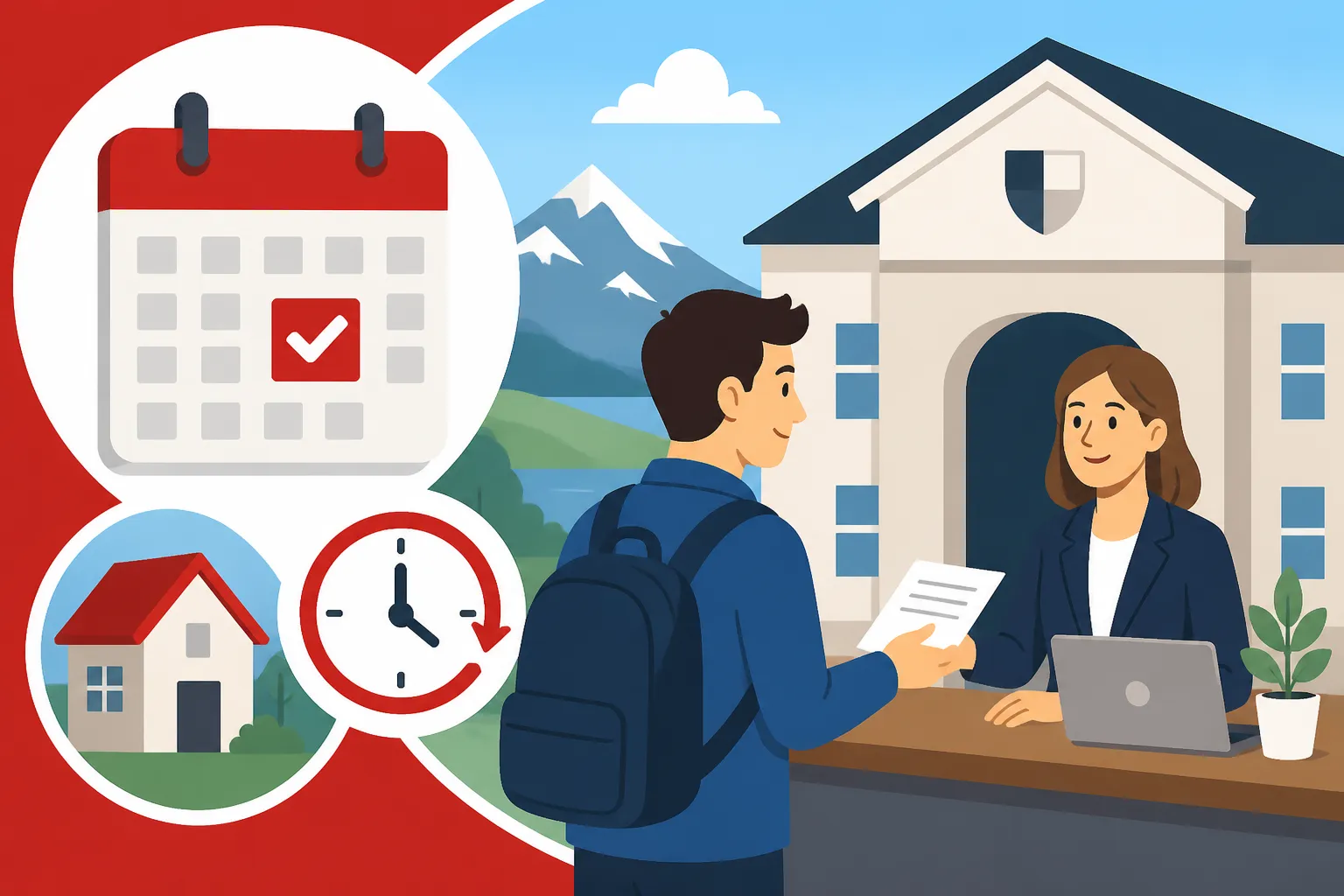
The Swiss system is built on precision, and nowhere is this more evident than in the "Meldepflicht" or the mandatory notification of your arrival. Within 14 days of crossing the border with the intent to live or work here, you must present yourself to the local authorities. This isn't just a polite suggestion; it is a fundamental legal requirement that triggers your access to everything from banking to healthcare.
Why 14 Days and Not a Month
The 14-day window exists to synchronize your residency with your tax and social security obligations. In Switzerland, the canton and the commune (Gemeinde) need to know exactly who is living within their borders to allocate resources correctly. If you are here on a work contract, your employer has likely already notified the cantonal authorities of your hire, but the "Anmeldung" at the local level is what confirms your physical presence at a specific address.
When I first arrived, I thought I could wait until I had my permanent furniture delivered. I was wrong. The clock starts the moment you "settle," which usually means the date you entered the country or the date your lease begins. Failing to register within this window can lead to administrative fines that start small but can escalate if you are perceived as intentionally evading the system. More importantly, without the "Anmeldebestätigung" (the registration certificate you receive after your visit), you will find it nearly impossible to sign up for a mobile phone plan, open a bank account, or finalize your Residence Permits in Switzerland: L, B, C, and G Permits Explained.
The Difference Between the Canton and the Commune
A common point of confusion for newcomers is the distinction between the Cantonal Migration Office (Migrationsamt) and the local Commune (Gemeinde/Einwohnerkontrolle). While the canton decides if you get a permit, the commune is where you actually "live." You do not go to the big cantonal office to register your arrival; you go to the town hall (Stadthaus) or the local district office (Kreisbüro) in your specific neighborhood. If you are living in Zurich, for example, you will likely be Registering Your Address at the Kreisbüro Within 14 Days of Moving based on the postcode of your apartment.
The commune acts as the gatekeeper. They collect your documents, take your fees, and then forward everything to the cantonal authorities for the final printing of your residence card. It is a decentralized system that feels very "hyper-local," which can be charming once you get used to it, but it means that rules can vary slightly even between two neighboring towns.
Preparing Your Paperwork Mountain
Before you step foot into the local Gemeinde, you need a folder—a thick, organized one. The Swiss love documentation, and showing up missing a single signature is a surefire way to be sent home to start over. I learned this the hard way when I forgot to bring my original marriage certificate and had to trek back across the city in the rain.
The Essential Document Checklist
For most expats, the requirements are standard, but the "original" vs. "copy" distinction is vital. You must bring your valid passport or national ID card (for EU/EFTA citizens). If you are here for work, you need your signed employment contract. If you are a student, your university enrollment letter is required.
One of the biggest hurdles is proving where you live. You cannot simply give an address; you must provide a signed lease agreement (Mietvertrag). If you are subletting or staying with a friend temporarily, you will need a "Wohnungsnachweis" or a written confirmation from the primary tenant or landlord stating that you are legally residing there. This document must include the landlord's contact details, as the commune will often verify this.
Translation and Certification Needs
If your documents—such as marriage certificates or birth certificates for your children—are not in one of the official Swiss languages (German, French, or Italian), you may need certified translations. While some communes accept English, many do not, especially in more rural areas. This is where services like RushTranslate become invaluable. Having a certified, Swiss-accepted translation ready to go saves days of back-and-forth.
Always check if your specific country of origin requires an "Apostille" for your documents to be recognized in Switzerland. For instance, Translation and Apostille Requirements for Marriage Certificates can be a complex topic if you were married in a non-EU country. The officials at the counter are generally helpful, but they cannot bend the rules for missing stamps or unverified translations. Using a professional service like RushTranslate ensures that your paperwork meets the exact standards required by the Einwohnerkontrolle.
Proof of Health Insurance
When you register, the official will remind you that you have 90 days to secure Swiss health insurance. However, some communes may ask if you have a transitional policy in place, especially if you are a non-EU national. While Is Basic Health Insurance (KVG) Mandatory for Expats? A Plain-English Guide provides the long-term roadmap, many expats use global providers like Cigna Global to bridge the gap during their initial move-in phase.
Having a policy from Cigna Global can provide peace of mind while you are navigating the dozens of local KVG providers. The commune wants to know you won't become a burden on the state if you have an accident during your first week. While you will eventually need a local Swiss-compliant plan, showing that you are already covered by an international heavyweight like Cigna Global shows the authorities that you are a prepared and responsible resident.
| Document Type | EU/EFTA Requirements | Non-EU (Third Country) Requirements |
|---|---|---|
| Identification | Valid Passport or ID Card | Valid Passport with Entry Visa (if applicable) |
| Proof of Residence | Signed Lease or Sublet Agreement | Signed Lease + Landlord Confirmation |
| Employment | Signed Swiss Work Contract | Work Permit Pre-approval (Ermächtigung) |
| Family Status | Marriage/Birth Certificates (Copies usually okay) | Original Certificates + Certified Translations |
| Photos | Usually taken on-site (Biometrics) | Usually taken on-site (Biometrics) |
| Fees | Approx. CHF 65 – 100 | Approx. CHF 120 – 250 |
The Step-by-Step Registration Process
Walking into the town hall for the first time can be intimidating. In major cities like Geneva or Zurich, the offices are modern and efficient, often using a "take a number" system. In smaller villages, you might find yourself in a historic building speaking to an official who has known every resident for thirty years.
Finding Your Office and Making an Appointment
The first step is identifying your "Einwohnerkontrolle" or "Office de la Population." Most communes now allow you to book an appointment online, which I highly recommend. If you show up as a walk-in, you might wait for hours, or worse, be told that they only see walk-ins during specific morning windows.
When you arrive, look for the "Anmeldung" (Registration) counter. If your German or French isn't up to par yet, don't panic. Most officials in major expat hubs speak excellent English, though they will appreciate it if you start with a friendly "Grüezi" or "Bonjour." They will take your folder, scan your documents, and ask a few basic questions about your religious affiliation (this is for the church tax) and your previous address.
The Biometric Appointment
Once your paperwork is processed at the local level, you will be scheduled for a biometric appointment at the cantonal migration office. This is where they take your fingerprints, photo, and signature for your actual residence card. Even though you register at the commune within 14 days, the physical card might take 2 to 4 weeks to arrive by post.
During this waiting period, your "Anmeldebestätigung" is your lifeblood. It is a simple piece of paper with an official stamp, but it serves as your temporary ID. You will need it for Mandatory Registration: How to Sign Up for Health Insurance Within 90 Days and for setting up your utilities. If you lose this paper, getting a duplicate usually costs around CHF 20-40, so keep it in a safe place.
Paying the Registration Fees
Registration is not free. Switzerland operates on a "user-pays" principle. You will be charged for the administrative processing at the commune and the cost of the biometric card itself. These fees vary significantly by canton. In Zug, it might be relatively affordable, while in Geneva, the costs can be higher due to different cantonal levies.
Most offices accept credit cards, debit cards, and TWINT, but some smaller village offices might still prefer cash. Always bring at least CHF 200 in cash just in case. Remember, this fee is separate from any costs associated with your visa application before you entered the country. It is a local residency fee that covers the local administration's work in setting up your "dossier."
Special Scenarios and Common Frustrations
Not every move to Switzerland is a straight line from a home country to a permanent Swiss apartment. Many of us start in temporary housing, and this can complicate the 14-day rule.
Registering with a Temporary Address
If you are staying in an Airbnb or a serviced apartment while you look for a permanent home, you still must register. You cannot wait until you find your "dream flat" in two months. The law requires you to register where you are currently sleeping.
The catch here is that some Airbnb hosts are not legally allowed to let guests register at their address. Before you book a long-term stay, ask the host: "Can I register my residency (Anmeldung) at this address?" If they say no, look elsewhere. Without a registered address, you are effectively a "tourist" in the eyes of the law, which means you cannot start working legally and you cannot meet the What Happens if You Miss the 90-Day Health Insurance Registration Window? deadline later on.
Moving with Pets and Families
If you are bringing a dog, the 14-day rule also applies to your four-legged friend. You must register your dog at the commune, provide proof of vaccinations, and pay the annual dog tax. In some cantons, you may also be required to prove you have completed a dog-owner competency course. For more on this, check out Registering a Dog in Your Canton and Taking the Mandatory SKN Course.
For families, every member must be present for the registration, including infants. The commune needs to verify the identity of every person living in the household. This can be a long day if you have small children, so pack snacks and toys. The good news is that Swiss offices are generally very child-friendly, with play corners often available in the waiting areas.
The Debt Register and Financial Background
While not always required on the first day of registration, you will soon become very familiar with the "Betreibungsauszug" (Debt Register Extract). Many landlords and even some official processes will ask for this once you have been in the country for a while. It proves you have no unpaid bills in Switzerland. When you first arrive, your register will be empty, which is a good thing. To understand how to manage this as you settle in, see How to Get a Betreibungsauszug at the Office des Poursuites.
Life After the 14-Day Registration
Once the stamp is on your paper and you walk out of the Gemeinde, the real work of integration begins. You are now a "resident," which comes with both rights and responsibilities.
The Health Insurance Countdown
The moment you register, the clock starts on your 90-day window to get health insurance. Even if you wait until day 89 to sign a contract, your coverage will be backdated to the day you registered at the commune. This means you will owe premiums for those first three months all at once.
This is why many expats prefer to have a transitional plan with a provider like Cigna Global while they compare local models. It gives you the flexibility to see a doctor immediately without waiting for the Swiss administrative machine to finish its paperwork. For a broader look at the medical landscape, read Healthcare in Switzerland for Expats: The Complete System Overview (2027).
Finding Your Local Support Network
Registering at the commune often gives you access to local resources you wouldn't find otherwise. Many towns offer free or subsidized language courses for new arrivals. They may also provide a "Welcome to the Commune" pack filled with information on local waste disposal, recycling rules, and community events.
If you are in a smaller canton, you might find that the local administration is your best source for Finding an English-Speaking Family Doctor in Zug or other specialized services. Don't be afraid to ask the official at the counter for recommendations on local "Vereine" (clubs) or integration events.
Taxes and the AHV Number
Your registration also triggers the creation of your Swiss social security (AHV) number if you don't already have one. This number is essential for your employer to pay your salary and for the tax authorities to track your "Quellensteuer" (withholding tax). If you are on a B or L permit, your taxes will be deducted directly from your paycheck, but the commune's registration is what tells the tax office which rate to apply based on your marital status and number of children.
Summary of the First 14 Days
The first two weeks in Switzerland are a whirlwind of heavy lifting and bureaucratic hurdles. However, if you treat the 14-day registration rule with the respect the Swiss authorities expect, you will find that the rest of your transition becomes significantly smoother.
Focus on your "Bewerbungsmappe" (application dossier), ensure your translations from RushTranslate are ready, and keep your health coverage active through a provider like Cigna Global while you settle in. The Swiss system is rigid, but it is also incredibly predictable. Once you are in the system, it works for you, providing the safety, stability, and high quality of life that brought you here in the first place.
Disclaimer
This guide is intended for informational purposes only and does not constitute legal or professional advice. Swiss immigration laws and local communal regulations are subject to change, and you should always verify the specific requirements with your local Gemeinde or Cantonal Migration Office before your visit. Be aware that 2026 regulations may differ slightly by canton.