Biometrics and Airport Immigration: What Happens at Swiss Border Control
Standing in the zig-zag line at Zurich Airport, sweating over whether your entry visa is sufficient or if you have the right "Ermächtigung," is an exhausting rite of passage for every expat. I vividly remember clutching my folder of papers, terrified that a single missing signature would send me back on the next flight. This guide deconstructs exactly what happens when you face Swiss border control and how biometrics bridge the gap between landing and living.
Navigating the Physical Arrival at Swiss International Airports
Landing in Switzerland, whether at Zurich (ZRH), Geneva (GVA), or Basel (BSL), presents a very specific administrative atmosphere. Unlike the chaotic energy of other international hubs, Swiss border control is characterized by a quiet, almost surgical efficiency that can be quite intimidating if you aren't prepared. The first thing you will notice is the triage system. There are distinct lanes for Swiss and EU/EFTA citizens and another, usually much longer lane, for "All Passports."
If you are arriving from outside the Schengen Area, you will inevitably pass through a passport control booth. For those of us moving here on a long-term visa, this is where the real "Welcome to Switzerland" begins. The officials are generally polite but extremely thorough. They aren't just looking at your passport; they are looking for the "Visa D" sticker or your Residence Permits in Switzerland: L, B, C, and G Permits Explained. If you are a non-EU citizen, the officer will likely ask for your "Ermächtigung zur Visumerteilung," which is the pre-authorization document issued by the cantonal migration office.
I’ve found that having a physical folder—yes, old-school paper—is a lifesaver here. Relying on your phone for documents is a gamble in the bowels of an airport where Wi-Fi can be spotty. When the officer asks for your proof of purpose, being able to slide a neatly organized folder across the counter makes the process significantly smoother. They may ask where you intend to stay, and if you haven't yet secured a permanent flat, having your temporary housing address ready is crucial.
The Interview: What Border Officers Actually Ask
The questioning at the Swiss border is rarely an interrogation, but it is a verification. If you are entering for work, they might ask for the name of your employer or a copy of your contract. They are essentially cross-referencing your verbal answers with the data already in the ZEMIS (the Central Migration Information System). If you are coming for Family Reunification: Bringing Your Spouse and Children to Switzerland, they may ask for the permit details of the family member already residing in the country.
One thing that caught me off guard during my first move was the question about my financial means. Even if you have a work contract, they want to be sure you won't become a burden on the state the moment you land. If you are a student, this is even more critical. You might be asked to show proof of a Swiss bank account or a scholarship. The officials are also highly attuned to the "90-day rule." If you are entering on a tourist visa while waiting for a permit, you must be very clear about your intentions to avoid being flagged for illegal residency.
The Transition to the Schengen Zone
If your flight to Switzerland involved a layover in another Schengen country (like Frankfurt or Paris), you might have already passed through "Schengen Border Control" there. In this case, your arrival in Switzerland will feel like a domestic flight, and you will walk straight to baggage claim. However, do not let this fool you into thinking you are "cleared." You still have a legal obligation to register your arrival.
Many expats make the mistake of thinking the stamp in their passport is the end of the journey. In reality, it is just the beginning of a 14-day countdown. Within two weeks of landing, you must complete your Registering Your Address at the Kreisbüro Within 14 Days of Moving. The border control process is simply the gatekeeper that allows you to start this local administrative process. If you bypassed the border gates due to a Schengen layover, make sure you keep your boarding passes as proof of your actual entry date into the Swiss Confederation.
The Biometric Process: From Fingerprints to the Residence Card
Biometrics are the backbone of the modern Swiss immigration system. If you are from a non-EU/EFTA country, your residence permit will not be a paper document or a stamp; it will be a credit-card-sized plastic card containing a chip with your biometric data. This includes two fingerprints and a digital facial image. The process of capturing this data usually happens after you arrive, at a dedicated cantonal biometric center, but the groundwork is laid at the border.
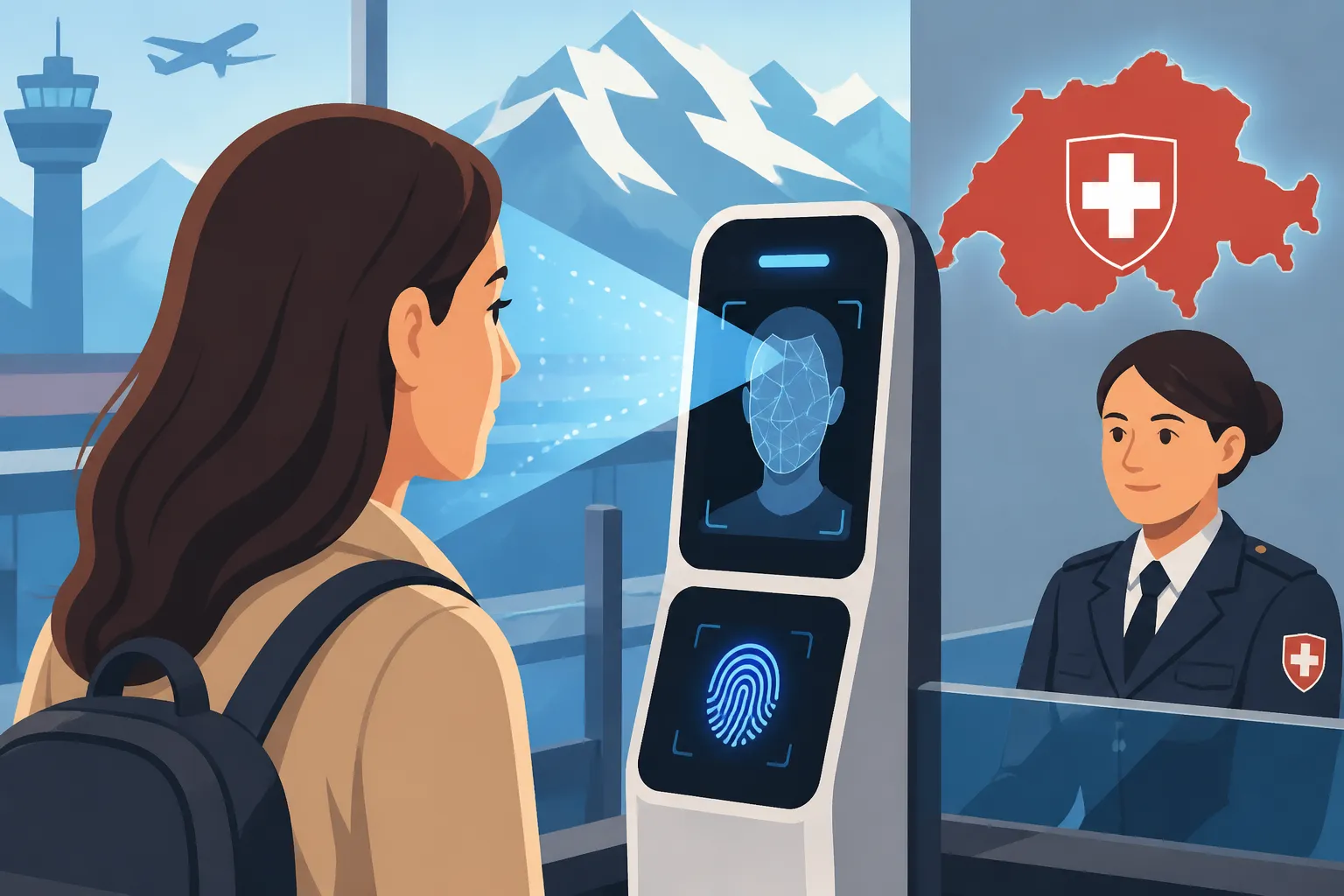
When you first enter, the border officer may scan your fingerprints to verify them against the data you provided at the Swiss embassy in your home country. This is to ensure that the person who applied for the visa is the same person standing at the gate. If there is a discrepancy, you could be held for secondary inspection. It sounds scary, but as long as your documents are genuine, it’s usually just a technical glitch or a smudge on the scanner.
Scheduling Your Biometric Appointment
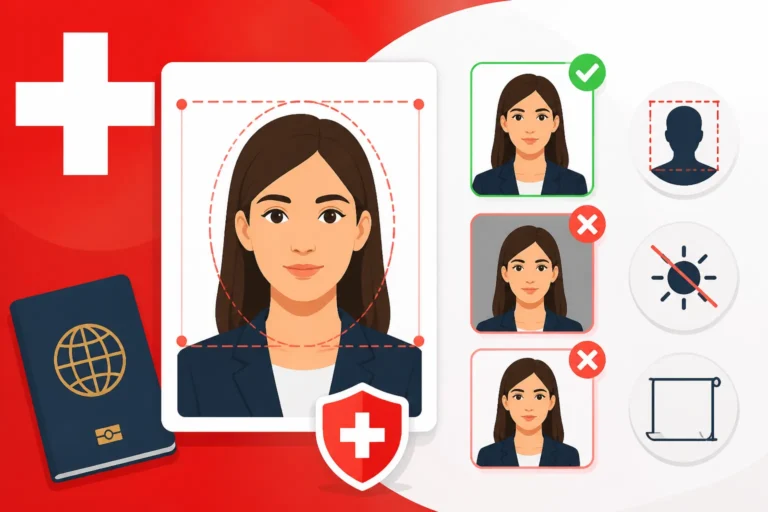
Once you have arrived and registered at your local commune or "Gemeinde," you will receive an invitation (often by post) to attend a biometric appointment. In major cities like Zurich or Geneva, these centers are high-tech facilities where you’ll be in and out in fifteen minutes. You will be asked to stare into a camera for a high-resolution photo—don't worry about smiling, Swiss permit photos are notoriously stoic—and place your index fingers on a glass scanner.
I always tell newcomers to treat this appointment with the same respect as a court date. If you miss it, it can delay the issuance of your permit by weeks, which in turn affects your ability to open a bank account or sign a mobile phone contract. If you are Entering Switzerland While Your B Permit Application is Still Pending, you are technically in a "grey zone," and your biometric card is the only thing that fully legitimizes your status.
The Technology Behind the Chip
The biometric card (Ausländerausweis) is compliant with international standards set by the ICAO. The chip stores your personal details, your photo, and your fingerprints in an encrypted format. Only authorized government agencies can read the fingerprint data. For you, the resident, this card is your ticket to freedom within the Schengen Area. It allows you to travel across borders without needing a separate visa for France, Germany, or Italy.
It is worth noting that for certain nationalities, the biometric process is more rigorous. The Swiss authorities are part of the Eurodac system, which shares biometric data across Europe to prevent multiple asylum applications and to track illegal immigration. Even if you are a highly-skilled professional, your data is part of this larger security net. Understanding that this is a standard procedure for everyone helps take the sting out of the perceived "intrusiveness" of the process.
Document Requirements and the Role of Professional Services
One of the biggest hurdles at both the border and the biometric office is the "language gap." Switzerland operates in German, French, Italian, and Romansh. While many border officers speak excellent English, your official documents—birth certificates, marriage licenses, or previous residency papers—must often be translated into one of the national languages to be accepted into the permanent record.
I learned the hard way that a "self-translation" or a cheap online version won't cut it. The Swiss authorities are sticklers for "Certified Translations." This is where a service like RushTranslate becomes invaluable. They provide the level of accuracy and certification that Swiss officials expect. Whether it’s translating your marriage certificate for family reunification or your university degree for a work permit, having a professionally translated document from RushTranslate prevents the "come back another day" scenario that every expat fears.
Proving Financial and Health Security
Beyond your passport, the two things Swiss authorities care about most are that you won't starve and that you won't be a medical liability. At the border, or during your follow-up immigration meetings, you may be asked to prove you have adequate health coverage. For the first 90 days, or until you are settled into the mandatory Swiss KVG system, having a robust international policy is a must.
I’ve seen many expats get caught out by arriving with basic travel insurance that doesn't meet the "resident-grade" requirements. This is why many veteran expats opt for Cigna Global. Their plans are specifically designed for the transition period and beyond, offering the comprehensive coverage that Swiss cantonal offices recognize. Having a Cigna Global certificate in your arrival folder tells the officer that you are a prepared, low-risk resident. For students, this is especially helpful as they navigate Health Insurance for International Students: KVG Exemptions and Private Options.
The Importance of the "Visa D"
For non-EU nationals, the Visa D is your entry ticket. It is a national visa that allows you to enter Switzerland with the intent to stay. The border officer will look for this and "activate" it with an entry stamp. If you enter on a C Visa (tourist visa) with the intent to work, you are violating the terms of your entry, and the consequences can be severe, including a multi-year ban from the Schengen Area.
Always ensure that your employer has followed the correct protocols. In Switzerland, the employer must prove they have prioritized local talent through a process called "Inländervorrang." You can read more about How Employers Prove 'Inländervorrang' to Hire a Non-EU Citizen to understand the hurdles your company went through just to get you to that border booth. Knowing this makes you realize why the officer is so diligent—they are the final check in a very long legal chain.
Customs, Red Channels, and the "Hidden" Border
After you pass through passport control and grab your bags, you face the second border: Customs (Zoll). This is where many expats accidentally break the law on their very first day. Switzerland has very strict limits on what you can bring in duty-free. The most common traps involve meat, alcohol, and tobacco.
| Category | Duty-Free Limit per Person | Notes |
|---|---|---|
| Fresh Meat | 1 kg | Includes poultry and processed meats |
| Butter/Cream | 1 kg / 5 liters | Very strict agricultural protection |
| Alcohol (up to 18%) | 5 Liters | Only for persons 17 and older |
| Alcohol (over 18%) | 1 Liter | Only for persons 17 and older |
| Total Value of Goods | 300 CHF | Includes new electronics/gifts |
If you are moving your entire life, you are entitled to bring "Household Effects" duty-free, but only if you have owned them for at least six months and you file the correct "Form 18.44" at the border. If you walk through the Green Channel with a brand-new, boxed 80-inch TV or a collection of expensive wine, and you get stopped, you will be fined heavily. The Swiss customs officers are notoriously eagle-eyed, often patrolling the baggage claim area even before you reach the exit.
Bringing Personal Medication
This is a major point of anxiety for many. If you arrive with a six-month supply of prescription meds, you must have a doctor's note in English, German, or French. For anything considered a controlled substance (like certain ADHD medications), the rules are even tighter. You should check the guide on Bringing Prescription Medication into Switzerland: Customs and Legal Limits before you pack.
I once saw a fellow traveler get pulled aside because they had an unlabeled bottle of "supplements" that looked like bulk medication. The Swiss are very wary of the illegal import of drugs. If you have your prescriptions clearly labeled and a letter from your physician (ideally translated if it's in an obscure language), you will generally be waved through.
The Red Channel: When to Use It
If you are unsure, always use the Red Channel. The officers appreciate honesty. If you have five kilograms of specialty biltong from South Africa or a massive amount of cash (over 10,000 CHF should be declared), tell them. Most of the time, for "household moves," they just want to see your 18.44 form and your permit or work contract.
Using the Red Channel doesn't mean you are in trouble; it means you are a responsible future resident. It’s a much better start to your Swiss life than being caught in the Green Channel and having your first official interaction with the state be a heavy fine and a record in the customs database.
Critical Scenarios: What if Things Go Wrong?
Despite our best efforts, sometimes the immigration process doesn't go linearly. Perhaps your permit card expired while you were on holiday, or your application is taking longer than the 90-day tourist window. These "edge cases" are where the Swiss system shows its rigid side.
One of the most common issues is Getting a 'Return Visa' (Rückreisevisum) When Traveling with an Expired Card. If you must leave Switzerland but your new B permit hasn't arrived, you cannot simply re-enter on your passport alone if you are a non-EU citizen. You must visit the migration office before you leave to get a physical visa stamp that allows you back in. Trying to explain this to a border officer at 6 AM after a long-haul flight is a recipe for disaster.
Entering with a Pending Application
If you have been offered a job and the paperwork is in progress, but you haven't received the final "Visa D," do not attempt to enter as a tourist to "start early." This is viewed as a serious breach of trust. The border officers have access to the pending application database. If they see you have an active work permit application but are entering on a tourist waiver, they may suspect you intend to work illegally.
Wait for the official "Go" from the consulate. If you absolutely must enter for a house-hunting trip, ensure you have a return ticket and can prove you aren't starting work yet. For more detail on this specific tightrope walk, see the guide on Entering Switzerland While Your B Permit Application is Still Pending.
What Happens if You Are Denied Entry?
If a border officer denies you entry, you will typically be held in a transit area. You have the right to contact your embassy, but the Swiss authorities have a high degree of autonomy in border matters. Usually, entry is only denied for serious reasons: lack of a valid visa, suspected "intent to overstay," or a criminal record flagged in the SIS (Schengen Information System).
To avoid this, double-check your passport validity. Switzerland requires your passport to be valid for at least three months beyond your intended stay. If you are moving here, your passport should ideally have at least a year or two left on it to avoid the headache of renewing a foreign passport while trying to secure a Swiss permit.
Final Steps: Life After the Airport
Once you have successfully navigated the border, passed through customs, and taken your first overpriced train into the city center, the "onboarding" continues. Your interaction with the airport border is just the prologue. The real story happens in the "Kreisbüro" or "Contrôle des Habitants."
Remember that your biometric card is not just an ID; it’s your key to the Swiss "social contract." You will need it for everything from picking up a package at the post office to verifying your identity for a bank. If you lose it, the process to replace it is expensive and requires a police report. Treat it with more care than your credit cards.
If you are a student or a researcher, your path might be slightly different. Universities often have dedicated days where migration officials come to the campus to process biometrics in bulk. Make sure to check your university email for these shortcuts, as they can save you a trip to the cantonal center. For more on the academic route, look into Health Insurance for International Students: KVG Exemptions and Private Options.
Switzerland is a country that rewards those who follow the rules to the letter. If you show up with the right documents, the right insurance (like Cigna Global), and translations from a trusted source like RushTranslate, you will find that the "daunting" Swiss border is actually a very well-oiled machine designed to welcome legitimate residents into one of the most stable societies in the world.
Disclaimer
This guide is intended for informational purposes only and does not constitute legal advice. Swiss immigration laws, customs regulations, and biometric procedures are subject to frequent changes. Always verify current requirements with the Swiss State Secretariat for Migration (SEM) or your local Swiss consulate before traveling. Using professional services like RushTranslate or Cigna Global does not guarantee entry but ensures your documentation meets standard expectations.