What Happens if You Miss the 90-Day Health Insurance Registration Window?
Moving to Switzerland often feels like a full-time job where the only pay is a stack of blue and white envelopes in your mailbox. I still remember sitting on my living room floor in Zurich, surrounded by half-unpacked boxes, staring at a notice from the authorities that I didn't quite understand. This guide solves the mystery of the 90-day health insurance deadline and explains the heavy consequences of letting that window slide past you.
The Legal Reality of the 90 Day Window
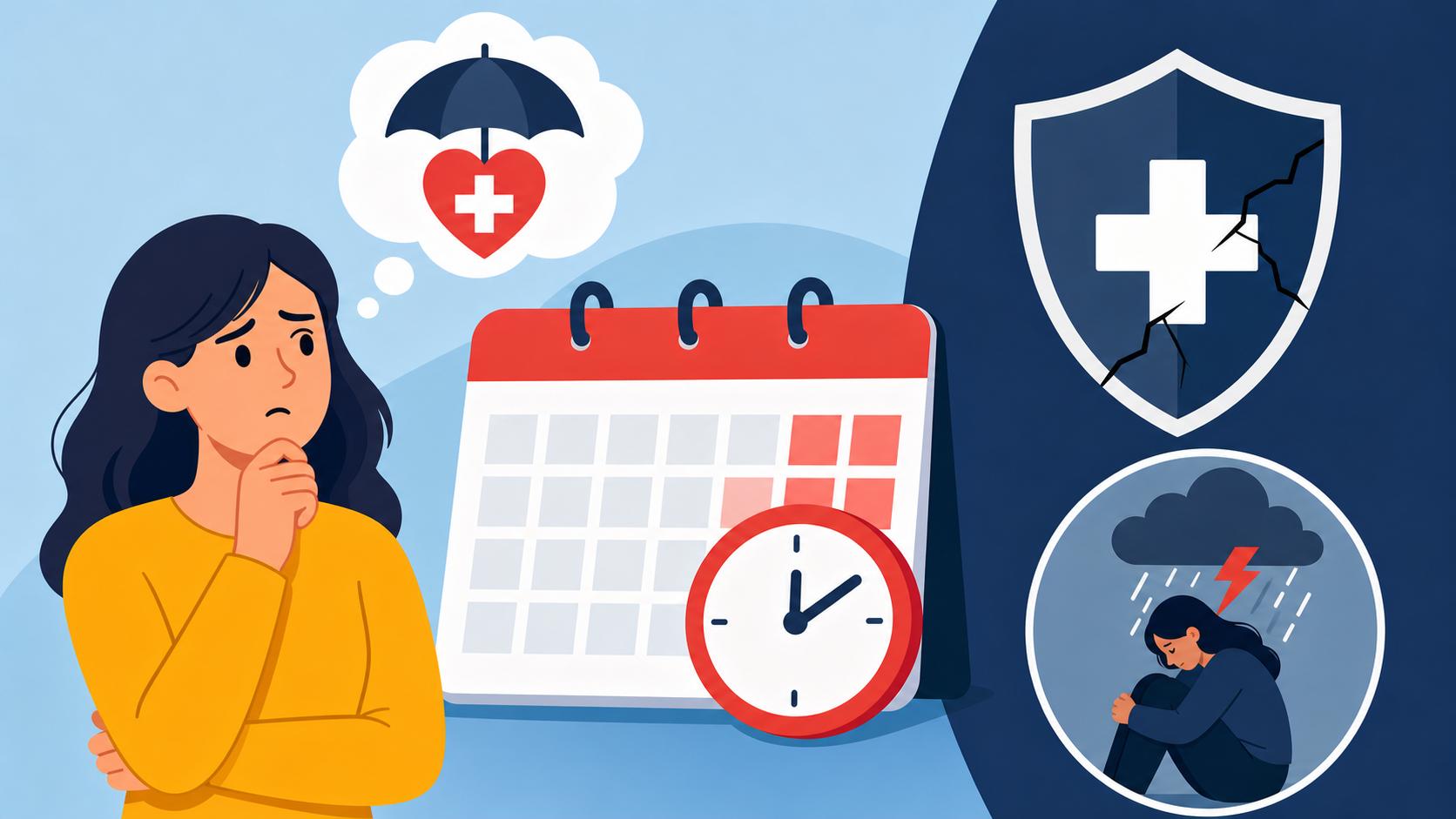
Switzerland operates on a principle of individual responsibility backed by strict federal law. The moment you register your arrival at the local Kreisbüro or Gemeinde, a silent timer starts ticking. According to the Federal Health Insurance Act (KVG), every person residing in Switzerland must be covered by basic health insurance. You are given exactly three months—90 days—to choose a provider and sign a contract.
This 90-day period isn't just a suggestion; it is a grace period designed to give you time to compare the dizzying array of private insurers. Many expats mistakenly believe that if they are healthy and don't visit a doctor during their first three months, they can simply start their insurance on the fourth month to save some money. This is a significant misconception that often leads to a "welcome to Switzerland" financial shock.
The law is designed so that there are no gaps in coverage. Even if you sign your contract on day 89, your coverage is backdated to the very first day you arrived in the country. This means you will owe premiums for the months you've already lived here. If you are looking for more than just the basics, some expats look into Supplementary Health Insurance (VVG): What It Covers and When to Buy It to fill gaps that the mandatory system doesn't cover, but the 90-day rule applies strictly to the mandatory KVG portion.
Retroactive Premiums and the Financial Trap
If you miss the 90-day deadline, the first thing that happens is a massive bill. Because insurance is mandatory from day one, the insurance company will bill you retroactively for every month since your official registration date. If you arrived in January and finally get around to insurance in June, expect a bill for six months of premiums to arrive all at once. For a single adult, this could easily exceed CHF 2,000, depending on your age and canton.
Beyond the base premiums, the law allows insurers to levy a "late-payment surcharge" if the delay was not justified. This is essentially a penalty for being late. The authorities take a dim view of people trying to "game" the system by delaying their enrollment. While you are waiting for your official Swiss insurance to kick in, you might find yourself needing basic health supplies or supplements. I personally found that ordering vitamins through iHerb was a lifesaver during my first few months while I was still trying to figure out which local pharmacies were the most cost-effective.
It is also important to understand The Swiss Franchise System: How Deductibles and Copays Work during this retroactive period. Even if you are paying for those past months, any medical bills you accumulated during that time will be subject to the deductible you eventually choose. If you had a minor emergency in your second month and haven't chosen a plan yet, you'll have to pay that bill out of pocket and then seek reimbursement later, which is an administrative nightmare.
Forced Enrollment: When the Canton Chooses for You
This is the scenario you want to avoid at all costs. The cantonal authorities (usually the Department of Health) receive a list of all new residents from the migration office. They cross-reference this list with the registries of the health insurance companies. If you haven't registered a plan after 90 days, you will receive a sternly worded letter. If you ignore that letter, the canton will eventually perform what is known as a "Zwangszuweisung" or "forced enrollment."
When the canton chooses for you, they do not go shopping for the best deal or the most expat-friendly service. They will simply assign you to any authorized insurer in your region. Often, this results in you being placed on a "Standard" model, which is the most expensive type of insurance. You lose the ability to choose cost-saving models like Telmed Insurance Explained: How Calling First Saves You Premium Costs or the HMO Model vs Family Doctor Model: Which Restricts You Less?.
Once you are forcibly enrolled, you are generally stuck with that insurer and that specific plan until the next open enrollment period at the end of the year. This can cost you hundreds of extra francs every month simply because you missed a deadline. For those who want more control over their healthcare and perhaps a more international level of service, looking into a provider like Cigna Global can be a helpful supplement, though it generally does not replace the mandatory Swiss KVG requirement for residents.
Impact on Medical Claims and Out of Pocket Costs
Missing the deadline doesn't just hurt your wallet through premiums; it creates a logistical wall between you and medical care. If you need to see a doctor or a specialist before your insurance is finalized, you will almost certainly have to pay the full amount upfront at the clinic. Many doctors are hesitant to treat new patients who cannot produce a Swiss insurance card (the VeKa).
If you find yourself in an urgent situation, you will still be treated, but the billing process becomes incredibly stressful. You can read more about Finding Medical Care in Switzerland: Doctors, Specialists, and Referrals to understand how the process normally works when you actually have your card in hand. If you have an emergency during the "gap" period, you will be dealt with, but the Emergency Medical Services: Ambulances, REGA, and Crisis Protocols follow-up billing will be sent directly to your home address, and you will be responsible for the full amount until your retroactive insurance is settled.
Furthermore, getting prescriptions filled is a challenge. Without an insurance card, the pharmacist cannot check if the medication is covered or bill the insurer directly. You can find more details on this in our guide on Pharmacies and Medication: Prescriptions, Costs, and OTC Regulations. I spent a small fortune on basic allergy meds in my first month because I hadn't yet navigated the Tiers Payant: Which Swiss Insurances Pay the Pharmacy Directly? system.
Summary of Consequences for Missing the Deadline
| Penalty Type | Impact Level | Description |
|---|---|---|
| Retroactive Premiums | High | You must pay all premiums back to your arrival date in one lump sum. |
| Late Surcharge | Medium | Insurers can add a percentage penalty for "unjustified" delays. |
| Forced Assignment | High | The Canton picks your insurer; you lose the right to choose a cheaper plan. |
| Out-of-Pocket Stress | Medium | You must pay 100% of all medical bills upfront until the card arrives. |
| Restricted Switching | High | Once the Canton assigns you, you usually cannot switch until January 1st. |
Special Considerations for Students and Cross-Border Workers
Not everyone falls under the same 90-day hammer, but the exceptions are very narrow. For example, if you are in the country on a student visa, you might be eligible for an exemption if you have equivalent coverage from your home country. However, you still have to apply for this exemption within the 90-day window. You cannot just ignore the requirement. For more on this, see Health Insurance for International Students: KVG Exemptions and Private Options.
Similarly, those commuting from neighboring countries have specific rules. Cross-Border Commuters (G Permit): Health Insurance Exemptions and Rules vary depending on whether you are coming from Germany, France, or Italy. Even in these cases, the 90-day rule for "exercising your right of option" is critical. If you don't choose between the Swiss system and your home country's system within that window, you are often defaulted into the Swiss KVG by law, which might not be the most tax-efficient choice for a frontalier.
Retirees moving to Switzerland face even more scrutiny, as they must prove they have adequate coverage to receive their residency permit. In these specialized cases, international insurers like Cigna Global are often used to demonstrate a high level of coverage, though the local commune will still require a formal sign-off or an exemption certificate to satisfy the KVG requirements.
How to Fix a Missed Deadline
If you realize today that you are at day 105 and haven't signed a contract, do not wait for the canton to find you. The best course of action is to be proactive.
- Compare Plans Immediately: Use a comparison tool to find a plan that fits your budget.
- Contact an Insurer: Apply online or call them. Be honest about your arrival date.
- Prepare for the Lump Sum: Set aside money for the retroactive premiums.
- Notify the Commune: Once you have your policy number, you can sometimes preempt the forced assignment by sending the details to your local residents' registration office.
Even if you've missed the window, you still have a small chance to pick your own provider before the "forced enrollment" machinery fully kicks in. If you have kids, this is even more urgent, as Maternity and Child Healthcare in Switzerland: From Pregnancy to Pediatrics and Pediatric Care: Checkups, Vaccination Schedules, and School Health are areas where you really want to have a provider you've chosen yourself, rather than one assigned by a bureaucrat.
Integration and Long-term Impacts
Failing to follow the 90-day health insurance rule can actually have minor ripple effects on your residency status. While a late insurance registration isn't usually enough to get a permit revoked, it contributes to a "non-compliance" trail. Switzerland values order and adherence to administrative deadlines. If you eventually apply for a The Swiss C Permit (Permanent Residency): Fast-Track and Standard Routes, the authorities look for a clean record of integration, which includes staying on top of your mandatory obligations.
While you are getting your health administration in order, don't forget the other aspects of well-being that are often overlooked in the "paperwork fog." Accessing Mental Health in Switzerland: Accessing Therapists and Psychiatric Care or even finding Dental Care in Switzerland: Costs, Insurance Reality, and Alternative Options becomes much easier once you are officially in the system. Many expats find that while they wait for the "big" system to work, staying healthy with quality products from iHerb and maintaining an international backup like Cigna Global provides the peace of mind needed to survive the transition.
Disclaimer
This guide is for informational purposes only and does not constitute legal or professional insurance advice. Swiss health insurance laws and cantonal regulations are subject to change. Always consult with the official federal and cantonal health authorities or a licensed insurance advisor to confirm your specific obligations and deadlines. Missing mandatory deadlines in Switzerland can result in significant financial penalties and legal complications.