Swiss Citizenship Test by Canton: How Questions Differ
The Swiss citizenship test, for many of us expats, feels like the final boss battle after years of navigating mountains of paperwork, learning German/French/Italian, and patiently integrating into Swiss society. It’s not just a quiz; it’s often an intense, nerve-wracking examination of your commitment to this country. What makes it even more complex, and frankly, a bit frustrating, is that there isn't one single, unified test. Instead, each canton, and even each commune, has its own unique flavor, adding layers of uncertainty to an already high-stakes process. This guide will peel back those layers, helping you understand how citizenship questions differ across Switzerland so you can prepare effectively.
The Federal Framework: Core Expectations for All Candidates
Before we dive into the fascinating, sometimes bewildering, world of cantonal differences, it's crucial to understand that there’s a federal baseline that every naturalization candidate must meet. Switzerland might be a confederation with strong cantonal autonomy, but the federal government sets the overarching rules for who can become Swiss. This means that regardless of whether you're in the bustling city of Zurich or a quiet village in Valais, you'll need to demonstrate a fundamental understanding of Switzerland as a whole.
Federal Requirements: What Every Canton Must Cover
At its heart, the federal expectation is that you are integrated and familiar with Swiss life. This isn't just a vague feeling; it translates into concrete knowledge domains that form the backbone of any citizenship test. You'll be expected to demonstrate a solid grasp of:
- Swiss History: From the foundational myth of the Rütlischwur to the formation of the modern federal state in 1848, the key historical events, figures, and developments that shaped Switzerland into what it is today. Think about major referendums, the role of neutrality, and significant social changes.
- Swiss Geography: Knowing your way around the 26 cantons, understanding the major mountain ranges (Jura, Alps), important lakes, and distinguishing between different regions like the Mittelland or the Pre-Alps. Questions might cover population distribution, main cities, or even principal rivers.
- Swiss Politics: This is often the trickiest part. Direct democracy is at the core of the Swiss system, so you'll need to understand concepts like referendums, initiatives, the Federal Council, the Federal Assembly, and the roles of the President (who, remember, is just one among equals in the Federal Council!). Knowledge of current political parties and their general ideologies is also expected.
- Rights and Duties: What does it mean to be a Swiss citizen? This includes understanding voting rights, the duty to pay taxes, the possibility of military or civil service, and fundamental rights enshrined in the constitution. This goes beyond mere facts; it’s about understanding your role and responsibilities within the civic framework.
These federal expectations are the common threads that run through all cantonal tests. Think of them as the national curriculum that every student (or, in this case, applicant) must master. However, the way these are tested, and the additional layers of cantonal and communal knowledge required, is where the real fun begins. For a deeper dive into these foundational aspects, you might find our guide on Understanding Swiss History and Politics for the Naturalization Test incredibly useful.
Language Proficiency: The Non-Negotiable Foundation
While not strictly part of the "citizenship test questions" in many cantons, language proficiency is an absolute prerequisite that underpins your entire naturalization application. You simply cannot become Swiss without demonstrating adequate language skills in one of the national languages (German, French, or Italian) relevant to your canton of residence. This isn't something they test during the citizenship interview itself; it's usually verified much earlier in the application process.
For ordinary naturalization, you'll generally need to prove at least B1 oral and A2 written proficiency according to the Common European Framework of Reference for Languages (CEFR). Some cantons or communes might even demand higher levels, especially for oral comprehension and production, as they want to ensure you can genuinely participate in local life. This means you'll typically need to provide an official language certificate, often from recognized institutions like Goethe-Institut for German, DELF/DALF for French, or CILS for Italian, or pass a fide test. Without this, your application won't even proceed to the knowledge assessment stage. It’s the gatekeeper, the essential key. You can learn more about this in our article Language Requirements for Swiss Permits: A1 to B2 Standards Explained or specifically for permanent residency in C Permit Language Requirements: Do I Need A2 Written and B1 Oral?.
Cantonal and Communal Nuances: Where the Real Differences Emerge
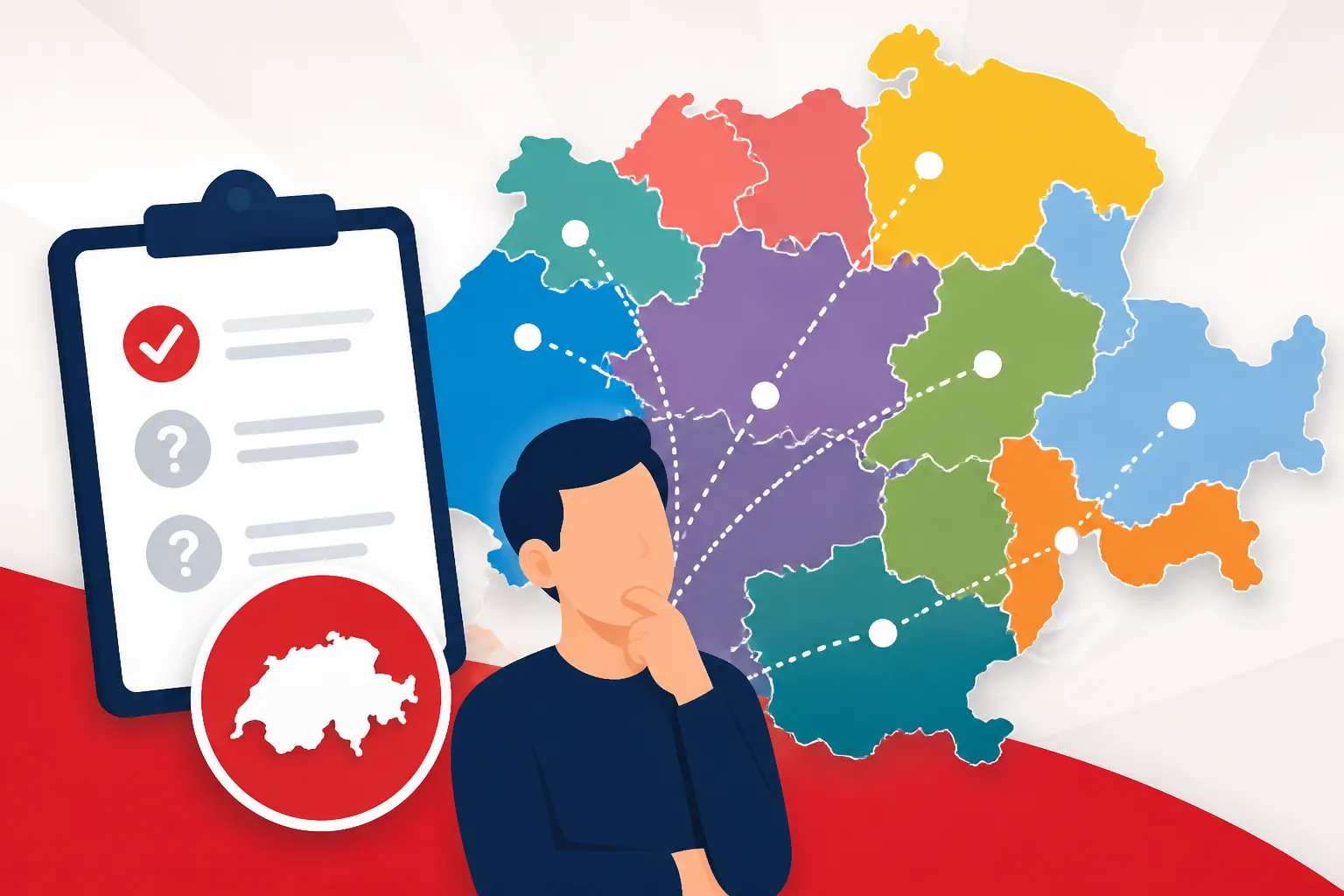
Once you've cleared the federal hurdles and proven your language chops, you enter the arena of cantonal and, most importantly, communal specificities. This is where the Swiss system truly showcases its federalist nature, often leaving expats scratching their heads. The variations can be significant, influencing not just the content but also the format and atmosphere of your test.
The Written Test: Canton-Specific Questionnaires and Online Assessments
Some cantons opt for a more standardized, objective approach, especially for the initial knowledge assessment. Many German-speaking cantons, for instance, utilize a multiple-choice Einbürgerungstest (naturalization test) that you can often practice for online or with official materials.
Let’s take Zurich as an example. They have a canton-wide questionnaire, available online, which covers federal, cantonal, and communal knowledge. It’s typically a multiple-choice format, where you need to score a certain percentage to pass. The questions here will drill down into specific Zurich history (e.g., the Kappel Wars), cantonal political structures (e.g., the Cantonal Council, executive body), and even specific Zurich quirks like the Sechseläuten festival. While it sounds straightforward, the sheer volume of material to memorize can be daunting, and it requires careful study of the official cantonal handbook.
In contrast, a canton like Geneva or Vaud in Romandie might rely more heavily on an oral interview process, sometimes with a preceding written component that could involve more open-ended questions or even a short essay on a topic related to Swiss society, rather than a strictly multiple-choice quiz. They are more likely to assess your understanding and ability to articulate your thoughts than just rote memorization. This distinction is crucial: are you being asked to recall facts, or to discuss and demonstrate comprehension? This is where practicing your chosen language becomes paramount.
The Oral Interview: Commune-Level Scrutiny
This is arguably the most unpredictable and, for many, the most intimidating part of the entire process. While some cantons have a relatively brief interview, many communes take their role in naturalization very seriously, turning the oral interview into a deep dive into your local knowledge, your personal values, and your genuine integration. This is where the questions truly differ not just by canton, but by the specific village or city you call home.
Imagine this scenario: you've lived happily in Bern for years, thinking you know the city. You might sail through questions about the Bundeshaus or the Zytglogge. But then, during your communal interview, you could be asked: "Which local quartier association is most active in your neighborhood?" or "What are the key agenda items from the last communal assembly meeting?" or even "Who is the current Gemeindepräsidentin (mayor) and what are their priorities for the coming year?"
In a small, traditional commune in Aargau or Luzern, these questions might become even more hyper-local. They might inquire about local traditions, specific hiking trails in the area, the name of the local Schützenverein (shooting club), or even the history of the village church. I’ve heard countless stories of people being asked about the nearest fire station, the name of the local school principal, or how often the communal council meets. They want to see if you are truly invested in their community, not just Switzerland in general.
This deep local scrutiny often leads to what many expats perceive as highly personal, or even irrelevant, questions. "What do you do on a Sunday?" is a classic, not just to check if you respect quiet hours but to see if you engage with Swiss life (hiking, family time, clubs). "Have you ever participated in a local festival?" or "Which local products do you buy?" These aren't meant to trick you, but to gauge your genuine engagement. For a more detailed look into what these interviews might entail, don't miss our article The Swiss Citizenship Interview Questions: What the Commune Asks You. Sometimes, even knowing the local slang or cultural nuances can make a difference, as we explored in Denied Swiss Citizenship for Not Knowing Local Geography: Real Case Examples.
Understanding the "Integration" Factor: Beyond Just Facts
Beyond simply rattling off facts about Swiss history or the names of federal councillors, the core of the citizenship process is proving your integration. This isn't just a knowledge test; it’s an assessment of your lifestyle and participation.
The questions you face, whether written or oral, are ultimately designed to answer a fundamental question: Are you truly part of Swiss society? This includes:
- Respecting Swiss Values: Orderliness, punctuality, environmental consciousness, adherence to rules (like recycling protocols and quiet hours), and a strong work ethic are often implicitly tested.
- Participation in Local Life: Do you volunteer? Are you a member of a Verein (club)? Do you interact with your neighbors? These are all signs of active integration. The Swiss value community involvement greatly.
- Financial Responsibility: Having no outstanding debts or Betreibungen (debt collection entries) is paramount. They check this rigorously. Your financial health is a direct indicator of your reliability and responsibility.
- Tolerance and Openness: While demanding integration, Swiss authorities also expect you to respect the country's diverse linguistic regions and cultural differences.
In short, the citizenship test and interview process, especially at the communal level, is about painting a comprehensive picture of your life in Switzerland. They want to see that you haven't just physically resided here but have actively become a part of the fabric of society. This is why joining local clubs or engaging in community activities, as discussed in Community and Integration: Making Friends and Adapting to Swiss Life, can be so beneficial, not just for networking but for your naturalization journey.
Preparing for Your Specific Cantonal Test: Practical Steps
Given these intricate differences, a one-size-fits-all approach to preparing for your Swiss citizenship test simply won't cut it. You need a targeted strategy tailored to your specific canton and commune.
Official Resources and Preparation Materials
Your first port of call should always be the official channels. Every canton's migration office (or relevant cantonal department) will have information, and often specific preparation materials, available on their website.
- Cantonal Websites: Search for "Einbürgerungstest [your canton]" or "Test de naturalisation [your canton]" (e.g., "Einbürgerungstest Zürich"). These sites often provide downloadable handbooks, lists of topics, or even direct links to online practice tests. For example, cantons like Aargau, Bern, and Zurich have robust online platforms for their written tests.
- Communal Offices: Don't underestimate the commune. Many smaller communes have their own specific naturalization guidelines or even recommended reading lists. A friendly visit or call to your Gemeindehaus or Commune office can yield invaluable insights into their local expectations.
- Recommended Textbooks: Some cantons might recommend specific textbooks or educational materials that cover federal, cantonal, and communal knowledge. Invest in these; they are your primary study guides.
Be wary of unofficial online quizzes unless they clearly state they are based on official cantonal materials. The questions can change, and you don’t want to waste time on outdated information.
Learning Local Culture and Politics: Beyond the Textbook
This is where the real work of integration, and therefore preparation, happens outside of pure memorization.
- Read Local News: Subscribe to your local newspaper, either physically or digitally. Follow communal politics. Understand who the key players are and what issues are currently being debated in your village or town. This isn't just for the test; it's genuinely being an informed resident.
- Attend Local Events: Go to the Chilbi, the Fasnacht, the local Winzerfest, or the communal general assembly. Engage with your neighbors, participate in Apéros. These experiences give you context and demonstrate genuine interest.
- Join a Verein: As mentioned earlier, becoming a member of a local club – be it a sports club, choir, hiking group, or cultural association – is one of the best ways to integrate. It shows commitment and provides opportunities to practice your language and learn about local customs first-hand. This practical involvement strengthens your argument for naturalization far more than any textbook knowledge alone. This is also why having a robust local network is so helpful, as it provides social capital, which you might value after the move. Moving to Switzerland and settling in can be a big undertaking, and services like Sirelo can simplify your international relocation by connecting you with trusted moving companies.
Mock Interviews and Language Practice
For the oral interview, practice is key.
- Language Tandems: Find a local language partner. Practice discussing current events, local politics, and your motivations for becoming Swiss. Ask them to quiz you on your commune's specific details.
- Mock Interviews: If available, some expat organizations or integration offices offer mock naturalization interviews. This can be incredibly helpful for getting a feel for the process and identifying areas where you need to improve.
- Be Honest and Authentic: While preparation is vital, remember that interviewers want to see a genuine person who is truly integrated. Be honest about your journey, your challenges, and your appreciation for Swiss life. Trying to bluff or present a false persona will likely backfire. This is often where people get tripped up; remember, they're not just testing your knowledge but your character and commitment to becoming part of their community. When discussing your future plans, remember your healthcare needs, and while Switzerland's system is top-notch, you might consider how an international health plan like Cigna Global could offer added flexibility for global travel or specific needs, though for day-to-day life here, the mandatory basic Swiss health insurance is your primary cover.
Navigating the Swiss naturalization process is a marathon, not a sprint. The citizenship test, with its varied cantonal and communal flavors, is a significant part of that journey. By understanding these differences and preparing strategically, you can confidently approach this final hurdle towards becoming a full-fledged member of the Helvetian family.
Here's a table summarizing some key differences you might encounter:
| Canton | Typical Test Format | Key Focus Areas | Common Resources | Unique Aspects |
|---|---|---|---|---|
| Zurich | Written (online/computerized) | Federal, cantonal (ZH history, politics), communal (local government, traditions) | Official ZH naturalization guide, online practice tests | Standardized multiple-choice questions; often followed by communal interview |
| Bern | Written (sometimes manual) | Federal, cantonal (BE history, politics, local figures), communal | Canton Bern naturalization handbook, communal websites | Strong emphasis on Bernese specificities; oral interview can be very detailed on local engagement |
| Geneva | Primarily oral interview | Federal, cantonal (GE history, political system), strong communal focus, integration | OCM website, local commune publications | Focus on discourse, understanding, and critical thinking; less rote memorization on written test |
| Vaud | Oral interview (often with written component) | Federal, cantonal (VD history, politics, cantonal symbols), strong communal | SCAV website, Vaud "Guide de naturalisation" | Assessments of active participation in local associations; questions on personal integration |
| Aargau | Written (online/computerized) | Federal, cantonal (AG landmarks, history, cantonal parliament), communal | Official AG "Staatskunde" test platform, communal info | Clear focus on the specificities of Aargau; structured oral interview for integration |
Disclaimer
Please remember that naturalization laws and procedures in Switzerland are subject to change. While every effort has been made to provide accurate and up-to-date information in this guide as of 2026, it should be considered for general informational purposes only. Always consult the official websites of the State Secretariat for Migration (SEM), your specific canton's migration office, and your local commune for the most current and legally binding requirements for Swiss citizenship. Individual cases may vary significantly.