How to Get a Betreibungsauszug at the Office des Poursuites
Finding yourself standing in a crowded hallway in a Swiss municipal building, clutching your B-permit and wondering why on earth you need a "debt certificate" just to rent a two-bedroom apartment, is a rite of passage for every foreigner here. I remember my first month in Zurich, feeling like I was being treated as a financial criminal simply because I didn't have this one specific piece of paper. This guide solves the mystery of the Betreibungsauszug, showing you exactly how to navigate the Office des Poursuites or Betreibungsamt to get your clean bill of health.
Understanding the Role of the Betreibungsauszug in Swiss Life
In Switzerland, your financial reputation is managed through a localized database known as the debt collection register. Unlike credit scores in the US or UK, which are managed by private companies and use complex algorithms, the Swiss system is a literal ledger of whether anyone has officially "sued" you for money in the last five years. It is a public record, and in this country, a clean extract is more valuable than a gold watch when it comes to administrative hurdles.
You will most commonly be asked for this document when you are looking for a home. Landlords and relocation agencies will rarely even look at your application without a fresh extract, usually no more than three months old. It is a core part of Applying for a Flat: The Bewerbungsmappe (Application Dossier) Essentials and serves as proof that you aren't bringing a trail of unpaid bills into your new residence. Beyond housing, you might need it when applying for a large credit limit, a car lease, or even certain high-security jobs.
The system is uniquely Swiss because of how easy it is for someone to initiate a claim. In many countries, you need a court order to mark someone's credit. Here, someone can initiate a "Betreibung" against you for a small fee without providing immediate proof of the debt. This is why Checking Your Debt Register Extract (Betreibungsauszug) for Loans is so critical before you start any major financial application; you need to ensure no one has filed a "ghost" claim against you that you didn't know about.
Locating Your Local Office des Poursuites or Betreibungsamt
The most confusing part for newcomers is that there isn't one single "Swiss Debt Office." The registry is decentralized and managed at the municipal or district level. Where you go depends entirely on where you are officially registered as a resident. If you move from Geneva to Zurich, your record doesn't automatically "merge" in a way that makes it easy for a single office to see your whole history, though the system is becoming more interconnected in 2026.
In German-speaking cantons like Zurich, Bern, or Zug, you are looking for the Betreibungsamt. In Zurich, these are organized by "Kreis" or district. If you live in District 4, you must go to the office specifically for that district. In French-speaking regions like Geneva or Vaud, you will be heading to the Office des Poursuites. In Geneva, this is a centralized office (the Office des Poursuites de Genève), which makes things a bit simpler than the fragmented district system in Zurich.
If you have just arrived and are working through your Financial Checklist for Your First 30 Days as an Expat in Switzerland, you might not have a history in the local office yet. However, you still need the document to show that your record is "blank" or "empty." For those who have lived in multiple cantons within the last few years, a landlord might actually ask for extracts from your previous locations as well. This is a common pain point, as it requires contacting offices where you no longer live.
The Process of Requesting Your Extract
You have three main ways to get your hands on this document, and each has its own timeline and "vibe." Having done this both in person while sweating through an apartment hunt and online while sitting in a cafe, I can tell you that convenience usually costs an extra five francs.
Option 1: The In-Person Visit (The Fastest Way)
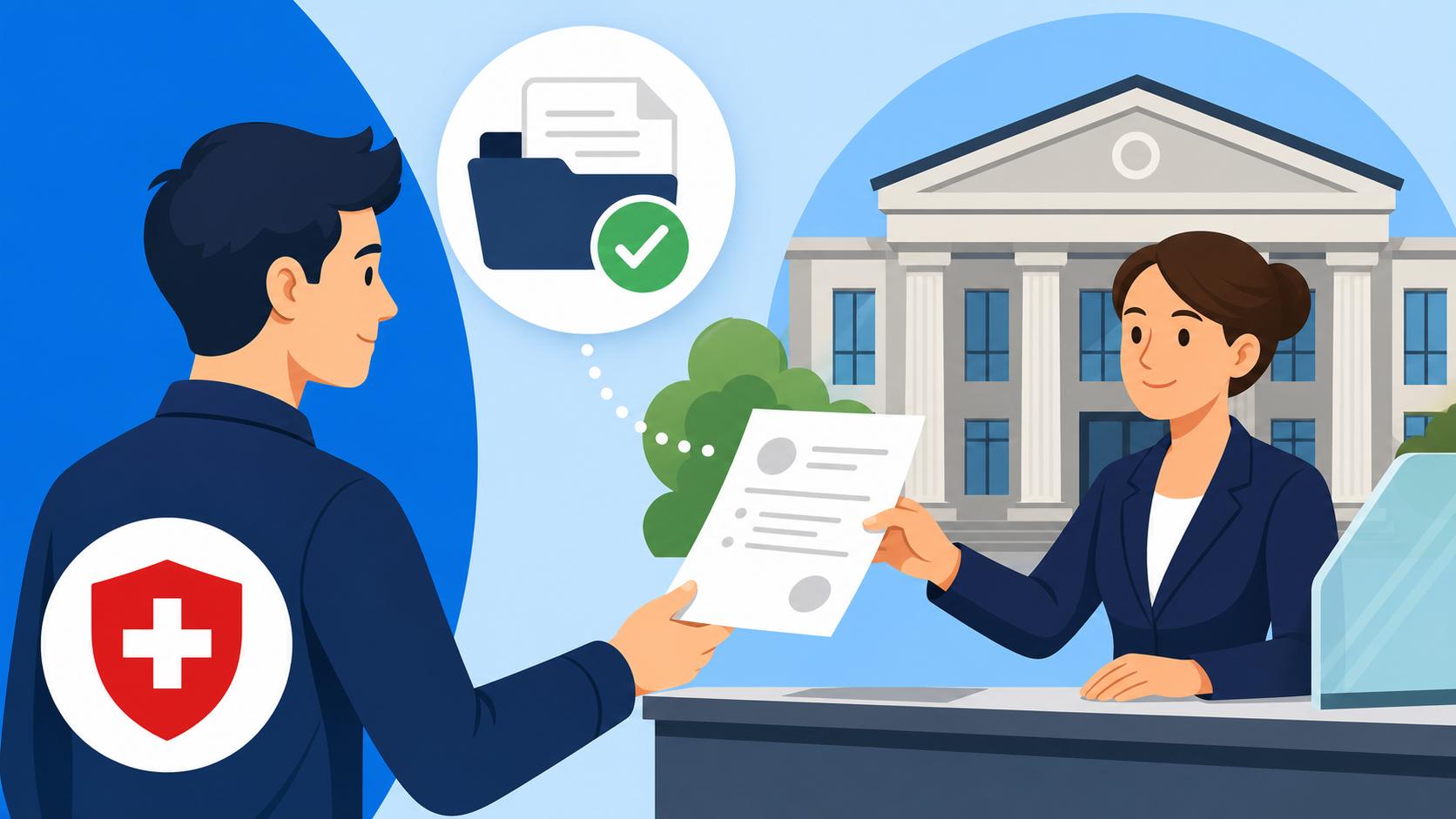
If you need the paper right now because you just found the perfect apartment and the viewing is in two hours, go in person. You walk into the Betreibungsamt, take a number, and wait. When it is your turn, you present your ID (passport or residency permit). They will check the database, print the document, stamp it with an official seal, and hand it to you. The whole process takes about five minutes once you reach the counter.
Most offices now accept cards, including international ones like Wise, or local favorites like TWINT. It is worth noting that while you are there, you should also ensure your address is correctly updated in their system. This is a great time to ask questions if you see anything unexpected on the printout.
Option 2: The Online Request (The Modern Way)
Most cantons now offer an online portal where you can request the extract. You will need to upload a scan of your ID and pay via credit card or TWINT. The office will then process the request and mail the physical paper to your registered address. Many offices also offer a "digital-only" PDF version with a QR code for verification, which is increasingly accepted by major real estate agencies.
There is also a federal portal (EasyGov.swiss) that can help route your request to the correct office, which is helpful if your German or French isn't quite up to navigating a specific municipal website yet. If you are managing your global finances and using platforms like Trade Republic or Binance for your investments, you are likely already comfortable with digital verification, and the Swiss online system will feel relatively straightforward.
Option 3: Postal Request
If you aren't tech-savvy and can't make it to the office during their (often limited) opening hours, you can send a letter. You include a copy of your ID and a self-addressed, stamped envelope. This is the slowest method and is generally only used by people who have moved abroad and need an extract for historical purposes.
| Method | Speed | Cost (Approx.) | Best For |
|---|---|---|---|
| In-Person | Instant | CHF 17 – 20 | Urgent apartment applications |
| Online Portal | 1-3 Business Days | CHF 18 – 25 | General planning and convenience |
| Federal EasyGov | 2-5 Business Days | CHF 20 – 30 | People unsure of their local office |
| Postal Mail | 5-10 Business Days | CHF 17 + Postage | Former residents living abroad |
Requirements, Fees, and Documentation
The Swiss bureaucracy loves its rules, but the requirements for a Betreibungsauszug are surprisingly lean. You primarily need to prove who you are and that you have a "legitimate interest" in the record. If you are requesting your own record, the interest is assumed.
You must bring your physical residency permit (L, B, or C permit). If your permit is still being processed, a passport and the "Meldebestätigung" (the paper you got when you registered at the town hall) should suffice. For those who are just moving and haven't fully set up their local banking, using a Wise card to pay the fee is a smart move to avoid the high exchange rates of foreign bank cards at government terminals.
The standard fee is usually CHF 17 for the extract itself, but most offices add a small "processing" or "postage" fee if you aren't there in person, bringing the total closer to CHF 20 or CHF 22. This is a small price to pay to avoid the nightmare of What is a Betreibung? How an Unpaid Bill Ruins Your Swiss Credit Score. Keep the original document safe; while you can scan it for online applications, some landlords insist on seeing the original with the raised seal or the specific colored paper many offices use to prevent forgery.
What to Do If Your Extract Is Not Clean
This is the nightmare scenario for any expat. You get your extract, and instead of a beautiful blank page saying "No entries found," there is a line item showing an unpaid bill from a health insurance company or a mobile provider. This can happen even to the most diligent people, often due to a missed piece of mail during a move.
If the entry is legitimate, you must pay it immediately. However, simply paying it does not always remove it from the register; it just marks it as "paid." For many landlords, a paid entry is still a red flag. You may need to negotiate with the creditor to have them "withdraw" the claim entirely. This is why Clearing an Unjustified Betreibung sauszug from the Swiss Debt Register is a topic every long-term resident should understand.
If the entry is unjustified—perhaps a company billed you for a service you never signed up for—you have the right to file an "Intervention" or "Opposition" (Rechtsvorschlag). In 2026, laws have become slightly more debtor-friendly, allowing you to hide certain entries from third parties if the creditor doesn't follow up with court action within a specific timeframe. This is vital for maintaining your standing as you navigate the Cost of Living in Switzerland 2026: Budgeting for Singles and Families, where a single financial black mark can limit your ability to find affordable housing.
Pro-Tips for Expats and New Arrivals
After a few years here, you learn the "hacks" that make this process easier. First, always order your extract about two weeks before you actually need it if you are doing it online. The Swiss post is fast, but you don't want to be waiting on a letter when an agency asks for your dossier.
Second, if you are looking for a flat in a competitive city like Zurich or Geneva, consider getting a fresh extract every 30 days. Some agencies are extremely picky and consider an extract "expired" if it is older than one month, even though the legal standard is usually three to six months. It’s an annoying expense, but in the context of Renting in Switzerland: The Complete 2027 Guide for Expats, it is a necessary investment.
Third, remember that your Betreibungsauszug only covers the time you were living in that specific district. If you have moved frequently, you are a "high-risk" applicant in the eyes of a conservative Swiss landlord. Having a clean extract from your current office plus a "clean" history from your previous one can put you at the top of the pile.
Finally, keep an eye on your mail. The most common way for a "Betreibung" to start is a forgotten bill. Since Swiss Taxes Explained: Federal, Cantonal, and Municipal Rates can lead to multiple different invoices throughout the year, it is easy to lose track. If you are using digital banking tools and managing assets on Binance or Trade Republic, ensure your physical mail address is always updated with every service provider to avoid an accidental entry on your record.
Disclaimer
The information provided in this article is for general informational purposes only and does not constitute legal or financial advice. While we strive to keep the information up to date and correct, the administrative processes and fees at Swiss debt collection offices can change at the cantonal or municipal level. Always consult with the official website of your local Betreibungsamt or Office des Poursuites for the most current requirements and legal procedures.