Working on a Schengen Tourist Visa in Switzerland: Fines and Legal Risks
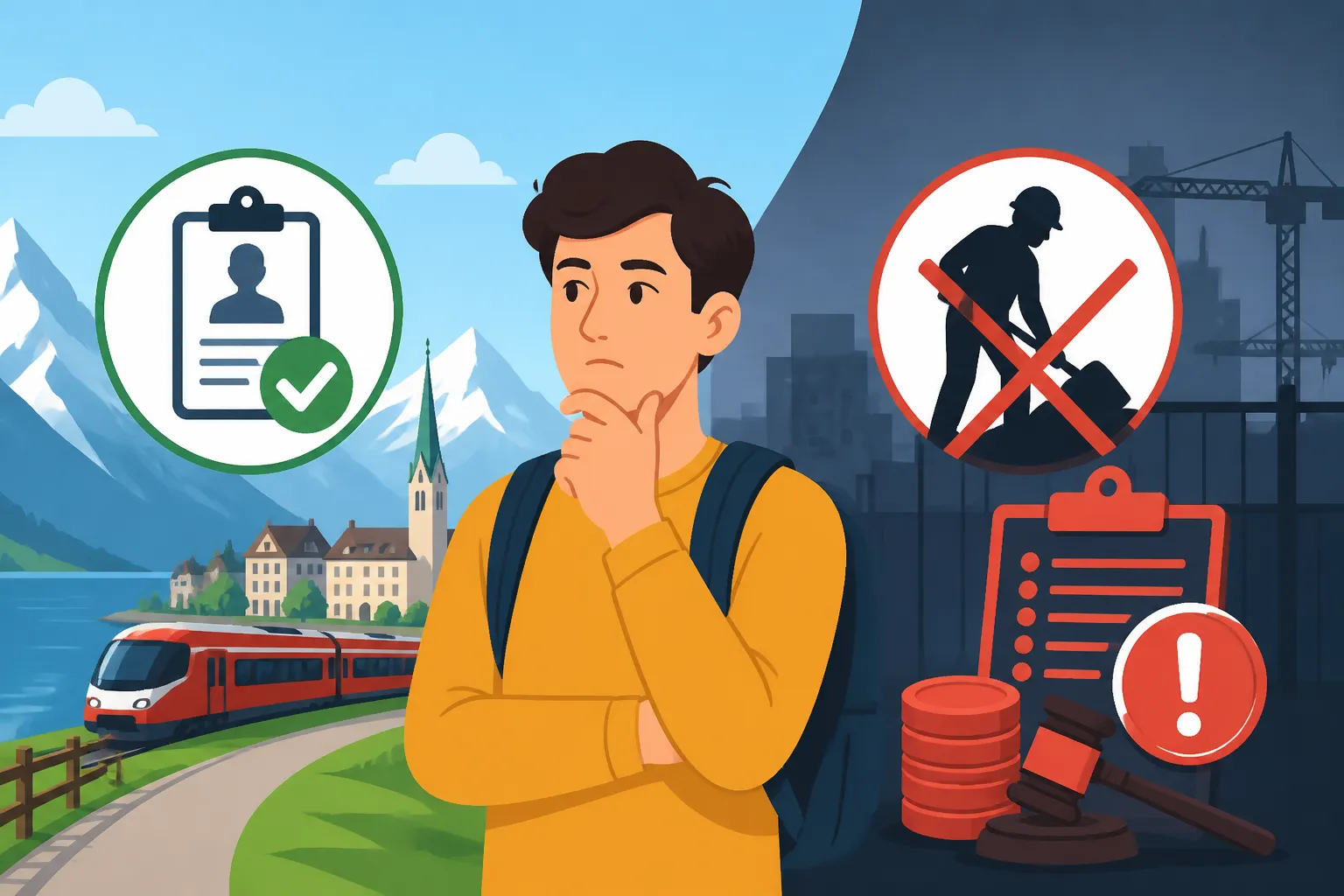
Many newcomers to Switzerland think they can "test the waters" by taking a short gig or doing a bit of remote work while visiting on a tourist stay, but the Swiss authorities are incredibly strict about this. I remember the heavy silence at the dinner table when a friend confessed they were "helping out" at a local café without a permit—the anxiety is real because the consequences are permanent. This guide breaks down exactly why working on a Schengen visa is a massive risk and what the actual legal penalties look like for expats.
The Legal Definition of Work in the Eyes of the Swiss Confederation
One of the biggest misconceptions I see in the expat community is the definition of what constitutes "work." In Switzerland, the State Secretariat for Migration (SEM) views almost any productive activity as employment, regardless of whether money changes hands in a Swiss bank account or if you are working for a company back home. If you are on Swiss soil and performing a task that contributes to a business, you are technically working.
The Schengen Visa (Type C): Tourist and Short-Business Rules for TCNs allow you to visit for tourism, to see family, or to attend business meetings. "Business meetings" is a very narrow category. It covers things like sitting in a conference room, negotiating a contract, or attending a trade fair. It does not cover opening your laptop at a Starbucks in Zurich and coding for eight hours for your employer in New York. If your activity produces a "marketable service," the Swiss authorities consider it employment.
When you enter on a tourist visa, you sign an implicit agreement that you are here for leisure. Violating this isn't just a minor administrative hiccup; it is considered a breach of the Federal Act on Foreign Nationals and Integration (AIG). I’ve seen cases where people thought they were safe because they were volunteering for a non-profit, only to find out that even unpaid work requires a specific authorization. This is why understanding Residence Permits in Switzerland: L, B, C, and G Permits Explained is so critical before you attempt to perform any labor on Swiss soil.
The Financial Sting: Fines and Administrative Costs
Switzerland is a country of rules, and those rules are backed by significant financial penalties. If you are caught working without the proper authorization, the fines are not just "slap on the wrist" amounts. For the individual worker, fines can range from a few thousand Swiss Francs to much higher, depending on the duration of the illegal employment and the amount earned.
However, the real hammer falls on the employer. If a local Swiss business hires you without checking your papers, they face massive fines per employee. Because the Swiss system is so decentralized, local labor inspectors (Kantonales Arbeitsamt) frequently conduct spot checks on construction sites, restaurants, and even office buildings. They will ask to see your Swiss Visas and Work Permits: The Complete 2027 Guide for Expats documentation on the spot.
| Type of Violation | Potential Fine (Individual) | Potential Fine (Employer) | Administrative Consequence |
|---|---|---|---|
| Remote work for foreign co | CHF 1,000 – 5,000 | N/A (usually) | Possible expulsion |
| Local "under the table" work | CHF 2,000 – 10,000 | CHF 5,000 – 50,000 | Immediate deportation |
| Overstaying + Working | CHF 5,000+ | N/A | Schengen-wide entry ban |
| Unpaid "Trial" work | CHF 500 – 2,000 | CHF 2,000+ | Warning or Permit denial |
Beyond the fine, you will be billed for the administrative costs of your own investigation. The Swiss government will charge you for the time the police and migration officers spent processing your case. This can add another CHF 1,000 to CHF 3,000 to your total "bill" before you are even asked to leave the country.
The Long-Term Legal Risks and the Entry Ban
The most devastating consequence of working illegally on a Schengen visa isn't the money—it’s the "Fernhaltebericht" or the entry ban. If you are caught working without a permit, the SEM has the power to ban you from the entire Schengen Area (not just Switzerland) for a period of 2 to 5 years, or even longer in severe cases. This information is entered into the Schengen Information System (SIS), meaning if you try to fly into Paris or drive into Italy two years later, your name will flag at the border and you will be turned away.
This ban effectively kills any future chance of a legal career in Switzerland. If you ever hope to apply for The Swiss B Permit: Eligibility, Renewal, and Restrictions in the future, a prior record of illegal employment is an automatic grounds for denial. The Swiss migration offices value "integrity" and "adherence to public order" above almost everything else. Once you have a record of "Schwarzarbeit" (black work), you are viewed as a high-risk individual who cannot be trusted to follow the strict Working in Switzerland as an Expat: Jobs, Culture, and Employment Laws that keep the local economy stable.
I’ve met people who tried to hide their illegal work during a later residency application, but the Swiss are thorough. They will look at your bank statements, your social media, and even ask for proof of how you supported yourself during your previous "tourist" visits. If the math doesn't add up, they will find out.
The Digital Nomad Gray Area and Remote Work
With the rise of remote work, many expats assume that if they aren't taking a job from a Swiss person, they aren't doing anything wrong. They think, "I’m just a digital nomad!" The reality is that Switzerland does not currently have a dedicated visa for this. Many ask Does Switzerland Have a Digital Nomad Visa Available in 2026? only to find that the answer is still a resounding no.
Technically, if you are working remotely for a company outside of Switzerland while on a Schengen visa, you are in a legal gray area that leans toward "illegal." While the police are unlikely to kick down your Airbnb door because you’re typing on a laptop, you are still violating the spirit of your visa. Furthermore, you won't have the social protections or insurance coverage you need. For example, your travel insurance likely won't cover you if you have a health crisis while performing work duties. In these transition periods, having a global plan from someone like Cigna Global is a smart move to ensure you have coverage that doesn't depend on your local employment status, but it doesn't make your work "legal."
Another issue is tax residency. If you stay in Switzerland and work for more than 90 days, you might accidentally trigger tax liabilities. The Swiss authorities share information with other European tax offices, and trying to explain why you were working in a Geneva apartment for three months without a permit is a conversation you want to avoid.
The Proper Path to Working Legally
If you are currently on a tourist visa and you find a job you love, the worst thing you can do is start working immediately. You must leave the country and have the employer apply for a permit on your behalf. This is where the Third-Country National Quotas: How the Swiss Permit Limits Work come into play. It is a highly competitive process where the employer must prove How Employers Prove 'Inländervorrang' to Hire a Non-EU Citizen—essentially showing that no Swiss or EU citizen could be found to do the job.
During this application process, you will need a mountain of paperwork. Your diplomas, birth certificates, and professional certifications will all need to be translated into one of the national languages (German, French, or Italian). I always recommend using a service like RushTranslate to handle these documents, as they provide the certified translations that Swiss cantonal offices demand.
Keep in mind that while your application is pending, you are generally not allowed to be in Switzerland "waiting" if your 90-day tourist limit has expired. You need to wait for the "Ermächtigung zur Visumerteilung" (authorization for visa issuance) from the comfort of your home country. Cutting corners here by staying and "helping out" at the office will only result in your permit being denied at the final hurdle.
Summary of Risks for the "Casual" Worker
If you are still tempted to take a short-term gig or work "under the table" while on your Schengen stay, consider these daily realities:
- Health and Accidents: If you are injured while working illegally, your Swiss accident insurance (which doesn't exist) won't cover you. You might find yourself with a CHF 20,000 hospital bill that your tourist insurance rejects because you were engaged in an illegal activity.
- The "Denunciation" Culture: Switzerland has a strong culture of civic duty. Neighbors or competitors who notice someone working without a permit are very likely to report it to the authorities. It’s not "snitching" in the local view; it’s protecting the system.
- Professional Reputation: Many industries in Switzerland are small. Being caught working illegally can lead to being blacklisted by recruiters who won't touch a candidate with a history of migration violations.
Instead of taking the risk, spend your time as a tourist networking and researching the market. Use your 90 days to meet people for coffee (which is allowed!) and line up a legitimate offer that allows you to apply for the proper permits. The peace of mind of having a legal B permit in your wallet is worth every bit of the wait. It allows you to access long-term health solutions from Cigna Global and build a real life in the Alps without looking over your shoulder.
Disclaimer
This article is intended for informational purposes only and does not constitute legal advice. Immigration laws in Switzerland are subject to frequent changes and vary significantly between cantons. Always consult with the Swiss State Secretariat for Migration (SEM) or a qualified immigration lawyer before making any decisions regarding your residency or employment status. Neither the author nor this website assumes liability for actions taken based on the information provided herein.