Translation and Apostille Requirements for Marriage Certificates
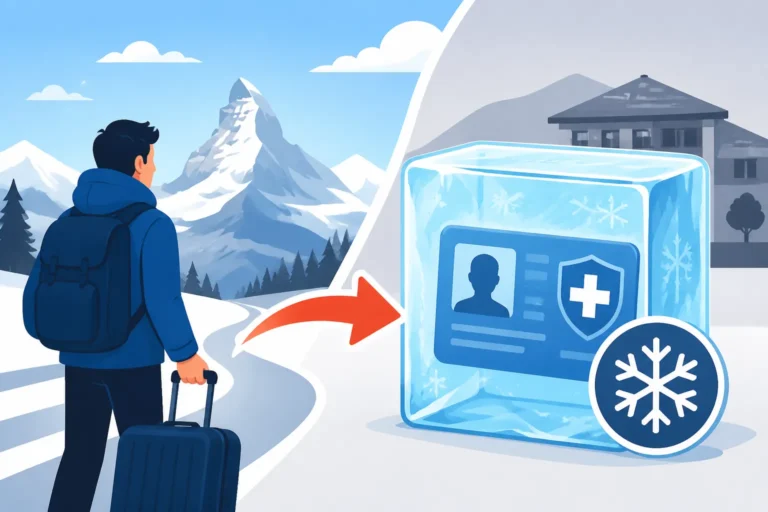
Navigating Swiss bureaucracy often feels like climbing the Eiger without a rope, especially when a single missing stamp on your marriage certificate can stall your entire residency application. I remember sitting in a cold waiting room in Zurich, clutching a document I thought was official only to be told it was effectively scrap paper. This guide solves the mystery of translation and apostille requirements for your marriage certificate.
Why Switzerland is So Strict About Your Marriage Certificate
The Swiss administrative system is built on a foundation of verified, up-to-date documentation. When you arrive as an expat, your marital status isn't just a personal detail; it is a legal pivot point that determines your tax bracket, your eligibility for social security, and most importantly, your spouse’s right to live in the country. If you are applying for Family Reunification: Bringing Your Spouse and Children to Switzerland, the authorities need absolute certainty that your marriage is recognized under Swiss law.
The Role of the Zivilstandsamt
In Switzerland, the Civil Registry Office, or Zivilstandsamt (Office de l'état civil in French-speaking cantons), is the gatekeeper of your personal status. Even if you are already registered at the [Migrationsamt] in a city like Zurich or Geneva, the Zivilstandsamt must often "verify" your foreign marriage certificate before it can be entered into the Infostar system (the national civil status register).
This verification process is where most expats hit a wall. You might think that because your certificate is in English and comes from a reputable country, it should be accepted at face value. However, Swiss officials operate on a strict "trust but verify" protocol. They aren't just looking at the names on the paper; they are looking for the chain of legality that proves the document is genuine.
The Infamous Six Month Rule
One of the most frustrating hurdles I encountered was the validity window. Most Swiss cantons require that your marriage certificate be "fresh"—meaning it was issued by your home country’s registry within the last six months. They do not want the original certificate you received on your wedding day ten years ago. They want a newly issued certified copy. The logic is that your marital status could have changed (divorce or annulment) in the intervening years, and a fresh certificate is the only way to prove the marriage is still active.
If you are currently preparing your [B-Permit] application, do not wait until the last minute to request this new copy from your home country. International mail and processing times can be unpredictable, and missing The 14-Day Registration Rule: Signing Up at the Gemeinde/Commune because you’re waiting on a piece of paper from London or New York can lead to unnecessary fines.
Understanding the Apostille: The Golden Seal of Authenticity
An apostille is essentially a specialized certificate, issued by a Secretary of State or a Ministry of Foreign Affairs, that identifies your marriage certificate as a legitimate public document. Switzerland is a member of the Hague Apostille Convention, which simplifies the process of document legalization between member countries.
Why a Standard Notary is Not Enough
A common mistake I see new arrivals make is thinking a local notary public’s stamp is sufficient. In the eyes of a Swiss official at the [Kreisbüro], a notary stamp only verifies that a person signed a document; it does not verify the document’s standing as a government record. The apostille is a higher level of authentication. It is usually a large, numbered sticker or a separate sheet of paper attached to your marriage certificate with a colorful ribbon or embossed seal.
Without this "seal of approval," your marriage certificate has no legal weight in Switzerland. This requirement is non-negotiable for most non-EU citizens and even for many EU nationals depending on the specific canton’s local rules. If you are unsure where to start, you can look for services like Finding English-Speaking Notaries for Visa Documents in Switzerland to help bridge the gap, but remember that the final apostille must come from the government body that issued the original document.
Exemptions and International Treaties
There are rare cases where you might not need an apostille. Switzerland has bilateral treaties with certain countries, and it is also a member of the CIEC (International Commission on Civil Status). If your marriage certificate is an "International Form" issued by a country like Germany, Italy, or Austria, it may be accepted without further legalization. However, for most expats from the US, UK, Canada, or Australia, the apostille is a mandatory requirement.
| Origin of Document | Apostille Required? | Translation Required? | Validity Rule |
|---|---|---|---|
| EU (International Form) | Usually No | No | 6 Months |
| USA / UK / Canada | Yes | Yes (if not in DE/FR/IT) | 6 Months |
| Non-Hague Countries | Full Legalization | Yes | 6 Months |
| CIEC Member States | No | No | 6 Months |
Translation Requirements for Swiss Authorities
Once you have your fresh marriage certificate and its accompanying apostille, you face the next challenge: language. Switzerland has four national languages, and while English is widely spoken in business, it has no official standing in the administration.
Certified vs. Sworn Translations
Swiss authorities generally require a "beglaubigte Übersetzung" (certified translation). This means the translation must be performed by a professional who is recognized by the courts or the cantonal authorities. They will attach a signed statement and a stamp testifying to the accuracy of the work. For documents that need to meet rigorous standards, using a specialized service like RushTranslate can be a lifesaver, especially when you need a fast turnaround for English-to-German or English-to-French translations that are formatted correctly for official eyes.
I have seen people try to submit a translation done by a bilingual friend, and it never ends well. The official at the desk will politely—or sometimes not so politely—reject it. They need a paper trail of accountability. If there is an error in the translation of your wedding date or the legal names, it can cause a ripple effect of problems in your Swiss Visas and Work Permits: The Complete 2027 Guide for Expats application.
Translating the Apostille Itself
A common question is whether the apostille needs to be translated along with the marriage certificate. In most cantons, the answer is yes. Even though the headers of an apostille are often in French or have standardized numbered sections, the specific handwritten or typed details are in the language of the issuing country. To be safe, ensure your translator includes the entire document package, including all stamps, seals, and the apostille page itself.
This level of detail is also crucial when Translating Medical Records from English to German/French for Your Hausarzt, as Swiss professionals in all sectors value precision and formal certification over informal summaries.
Practical Steps to Prepare Your Documents
Preparing your marriage certificate is a linear process, but it requires patience and a bit of a "detective" mindset to find the right offices in your home country.
Step 1: Secure the New Original
Contact the Vital Records office or the registry office where you were married. Request a "Certified Copy for Use Abroad." Mention that it is for use in Switzerland. In the United States, this often means going through the county clerk; in the UK, it involves the General Register Office. Remember, this must be done no more than six months before you intend to hand it over to the Swiss authorities.
Step 2: Obtain the Apostille
Once you have the new certificate, it must be sent to the appropriate government authority for the apostille. In the US, this is the Secretary of State in the state where the marriage occurred. In the UK, it is the Foreign, Commonwealth & Development Office (FCDO). This step often requires a separate fee and can take anywhere from a few days to several weeks.
Step 3: Professional Translation
With the legalized document in hand, find a certified translator. Using a service like RushTranslate ensures that the nuances of your legal document are captured correctly. In Switzerland, you can also find local translators through the Swiss Association of Translators, Terminologists, and Interpreters (ASTTI). The translator will need to see the original (or a high-quality scan) and will provide you with a physical document that is physically bound to a copy of your certificate with a seal.
Step 4: Submission and Registration
Take your original marriage certificate, the original apostille, and the original certified translation to your local Registering Your Address at the Kreisbüro Within 14 Days of Moving appointment. They will take copies and usually return the originals to you, though some cantons may keep them for a few weeks to perform an internal audit. Once they accept the documents, your marital status is "active" in Switzerland. This is the moment you can finally sign up for essentials like Mandatory Registration: How to Sign Up for Health Insurance Within 90 Days.
Document Requirements for Health and Insurance
You might wonder why a visa guide is so focused on your marriage certificate, but the reach of this document extends into your daily life. For instance, when you are Understanding KVG/LAMal: Mandatory Basic Health Insurance Explained, your insurer needs to know your family status to correctly process your premiums and potential subsidies.
Linking Your Family to Insurance
If you are the primary breadwinner and your spouse is not working, your insurance provider, such as Cigna Global, will need to see proof of your relationship to manage your international or local coverage appropriately. While Cigna Global offers excellent flexibility for expats, the Swiss government still insists that your basic Is Basic Health Insurance (KVG) Mandatory for Expats? A Plain-English Guide is based on your registered status in the commune.
If your marriage certificate isn't properly translated and apostilled, your spouse may be treated as a single individual in the system, which can complicate tax filings and insurance payouts. Having your documents in order ensures that you are seen as a family unit from day one, allowing you to access the correct deductibles and family-based insurance models.
Common Pitfalls and How to Avoid Them
Even with a guide, it is easy to trip over the small details. I’ve seen expats lose months of time because they overlooked a single signature or a "copy" versus an "original."
The "Original" Confusion
In many countries, a "certified copy" of a marriage certificate is legally the same as an "original." However, Swiss officials can be very literal. If they ask for the original, they mean the document issued by the government with a raised seal or a wet-ink signature. They will not accept a photocopy of a certified copy, even if the photocopy is in color. Always bring the physical document you received in the mail from your home country’s registry.
Non-Hague Convention Countries
If you were married in a country that is not a signatory to the Hague Convention (such as many countries in Southeast Asia or the Middle East), the process is much more grueling. You will likely need "Full Legalization." This involves getting the document certified by your local Ministry of Foreign Affairs and then "legalized" by the Swiss Embassy or Consulate in that country. This can take months and often requires a "verification of origin" fee, which can be quite expensive.
Changing Names After Marriage
If one spouse changed their name after marriage, but the marriage certificate still shows the maiden name, you will need additional proof, such as a deed poll or an updated passport. Swiss authorities are very sensitive to "identity continuity." If the name on your [B-Permit] application doesn't perfectly match the name on the marriage certificate, expect questions. Keeping a clean paper trail of name changes, translated by a reputable source like RushTranslate, is the only way to avoid these delays.
Special Situations: Same-Sex Marriage and Divorce
Switzerland legalized same-sex marriage in 2022, which has simplified things significantly for many expat couples. Previously, same-sex marriages from abroad were often converted into "Registered Partnerships." Now, they are recognized as full marriages. However, the documentation requirements remain the same: you still need a fresh certificate, an apostille, and a translation.
If you have been married before, be prepared to provide the [Zivilstandsamt] with your divorce decree from your previous marriage. This document also requires an apostille and a certified translation. The Swiss authorities want to ensure that you were legally free to marry your current spouse.
It is also worth noting the legal implications of your status if your relationship changes while in the country. Understanding What Happens to Your Spousal Visa if You Divorce a Swiss Citizen or a fellow expat is vital, as your residency is often tied to that very marriage certificate you worked so hard to legalize.
Final Advice for a Smooth Transition
The secret to surviving Swiss immigration is to be over-prepared. When you head to your appointment at the commune or the migration office, bring a folder with every possible document, organized with tabs.
When you sit down with the official, having your marriage certificate, the apostille, and the translation from a service like RushTranslate ready to go shows that you respect the system. It sets a positive tone for your entire residency. And once the paperwork is filed, you can stop worrying about stamps and start enjoying the high quality of life, the reliable healthcare supported by providers like Cigna Global, and the breathtaking beauty of your new Swiss home.
Disclaimer
This guide is for informational purposes only and does not constitute legal advice. Swiss immigration laws and cantonal requirements can change frequently. Always verify the specific document requirements with your local Cantonal Migration Office or Zivilstandsamt before submitting your application.