Ski Season Prep: Renting vs Buying Ski Gear for Your Kids
The first time I stood in a Swiss sports shop looking at a pair of child-sized skis that cost more than my monthly grocery bill, I nearly turned around and headed back to the lowlands. I spent that first winter completely overwhelmed by the logistical nightmare of outfitting two growing children for the slopes. This guide solves the "buy vs. rent" dilemma by breaking down the true costs, local secrets like the seasonal rental system, and where to find the best deals without draining your savings.
The Economics of Growing Feet and Shifting Skills
In Switzerland, the winter season isn't just a hobby; it is a cultural cornerstone that dictates the rhythm of family life from December to April. However, for expat parents, the financial commitment can be staggering. The primary challenge is the biological reality of children: they grow. A pair of boots that fits perfectly in November will almost certainly be pinching toes by the time the February sports holidays arrive. When you factor in the Cost of Living in Switzerland 2026: Budgeting for Singles and Families, every franc spent on gear that might only last four months needs to be justified.
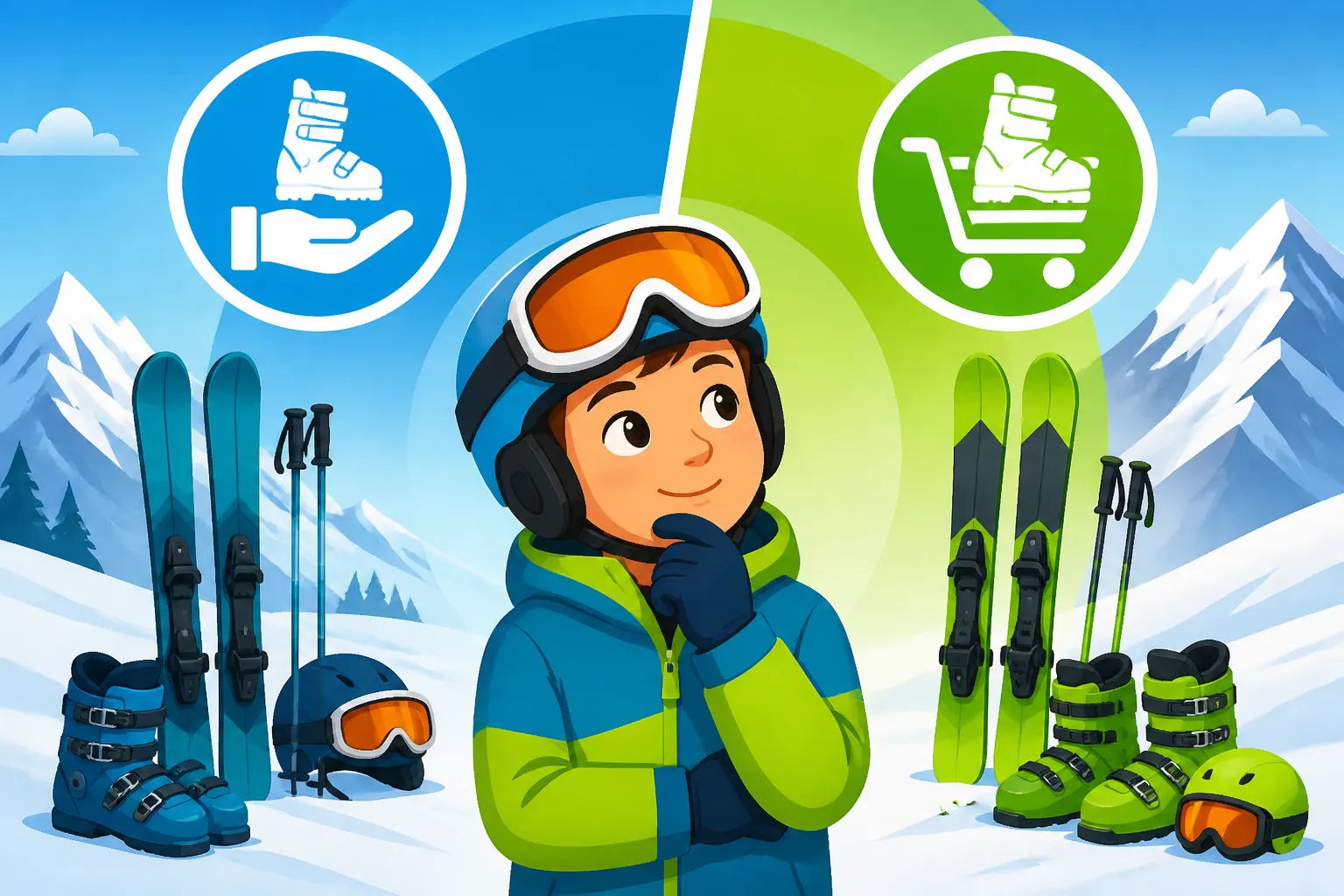
If your child is a complete beginner, the "renting" argument is almost always the winner. Beginners are hard on gear. They cross their tips, they walk over gravel in their ski boots, and they fall—a lot. Rental equipment is designed to take this abuse. More importantly, as a child progresses from those first pizza-wedge turns to parallel skiing, their equipment needs change. A soft, flexible ski that helps a four-year-old find their balance will actively hinder them once they start gaining speed. Renting allows you to swap gear mid-season if your child suddenly has a "growth spurt" in their skill level, ensuring they are always on the safest and most appropriate equipment for their current ability.
For those who have just moved and are still Where to Live in Switzerland: Cantons, Cities, and Commuter Zones, consider the storage implications as well. Swiss apartments are known for their efficiency, but storing four pairs of skis, boots, and poles in a small cellar (Keller) can be a headache. If you are using a platform like HousingAnywhere to find a temporary or furnished spot, you likely won't have the space for a full family's worth of winter hardware. Renting eliminates the need to find a home for bulky gear during the humid summer months when the mountains turn from white to green.
Understanding the Swiss Saisonmiete System
One of the best-kept secrets for expats is the "Saisonmiete" or seasonal rental. Unlike the "daily rental" you might be used to from vacationing in France or Austria, the Swiss system allows you to rent a full set of gear in October or November and keep it until April. You take the gear home, keep it in your own cellar, and use it whenever you head to the mountains. This is significantly cheaper than renting at the resort every weekend and saves you the hour-long queue at the rental shop on a Saturday morning when you should be on the lift.
Major retailers like Ochsner Sport, Decathlon, and SportX (Migros) offer these packages. A typical seasonal rental for a child includes skis, boots, and poles, and usually costs between CHF 100 and CHF 180 depending on the quality and the child's height. This is a fraction of the cost of buying new. Furthermore, these shops usually include a free service (waxing and edge sharpening) mid-season. If your child’s feet grow in January, you simply walk back into the shop, and they swap the boots for a larger size at no extra cost. This peace of mind is worth its weight in gold for parents navigating their first Alpine winter.
When you are out on the slopes, especially in larger resorts like Verbier or Zermatt, staying connected is vital for safety. I always recommend getting a local eSIM through Airalo to ensure you have data for weather apps and maps without relying on spotty resort Wi-Fi. It’s a small detail that makes the logistical side of a ski day much smoother. If you are traveling between cantons, you’ll also want to check the Weather and Geography: Föhn Winds, Winter Readiness, and Alpine Living to ensure the resort you are heading to isn't closed due to high winds, which can happen unexpectedly in the Alps.
When Buying Becomes the Smarter Move
While renting hardware is often the default, there are specific scenarios where buying makes more sense. The most obvious is the "Hand-Me-Down Strategy." If you have three children spaced two years apart, buying a high-quality pair of skis and boots once and passing them down through all three kids is far more economical than paying for twelve different seasonal rentals over the years. Swiss gear is built to last; a pair of Stockli or Fischer junior skis can easily survive three or four seasons of use if they are maintained properly.
Where you buy matters immensely. Avoid the high-end boutiques in the center of Zurich or Geneva unless you have a massive budget. Instead, look for a "Ski-Börse." These are local equipment exchange markets, often organized by schools or local sports clubs in October and November. You can find nearly new equipment for 30% of the retail price. Another fantastic resource is Shopping at Brockis (Brockenhaus): Finding High-Quality Thrift Furniture; while they are famous for sofas, many larger Brockis have a dedicated sports section where you can find boots and skis for under CHF 50.
If you prefer new gear but want to avoid Swiss retail prices, many expats look across the border. Ordering specific accessories or base layers from Amazon Germany can save you a significant amount on VAT and retail markup, provided you stay within the customs limits. Just remember that for the actual skis and boots, you really need a professional to check the "DIN settings" on the bindings. This is a safety calculation based on the child's weight, height, and ability. Never attempt to adjust these yourself; a mistake here is the difference between a minor fall and a broken leg.
| Feature | Seasonal Rental (Saisonmiete) | Buying New | Buying Second-Hand (Börse) |
|---|---|---|---|
| Average Cost | CHF 100 – 180 per season | CHF 400 – 700 full set | CHF 80 – 200 full set |
| Maintenance | Included (Waxing/Edges) | Extra (CHF 40-60 per service) | Extra (CHF 40-60 per service) |
| Growth Flexibility | High (Free size swaps) | None | None |
| Storage Need | Winter only | Year-round | Year-round |
| Resale Value | Zero | 30-50% after 2 years | High (often sell for what you paid) |
Essential Soft Goods: What You Should Never Rent
While you can rent skis, boots, and even helmets, there are "soft goods" that every child needs of their own. This includes high-quality base layers (merino wool is the Swiss gold standard), waterproof gloves, and proper ski socks. Renting these is either impossible or unhygienic. In the Swiss system, children are often out in the snow for four to five hours at a time during school lessons. If they get cold or wet, the experience is ruined. I learned the hard way that cheap "water-resistant" gloves from a supermarket are not the same as "waterproof" gloves from a dedicated mountain brand.
The Swiss layering system is a science. It starts with a moisture-wicking base layer, followed by a fleece or "Puff" mid-layer, and topped with a high-quality shell. Don't forget the importance of a "Buff" or neck gaiter. In Switzerland, the Pediatric Care: Checkups, Vaccination Schedules, and School Health experts will tell you that protecting the face and neck from the biting alpine wind is the best way to prevent the dreaded winter ear infections and croup that plague the local kindergartens.
Safety gear is the one area where I lean towards buying new. While you can rent helmets, a helmet's integrity is compromised if it has taken a significant impact. You have no way of knowing if a rental helmet was dropped on a concrete floor by the previous user. Buying a new, MIPS-equipped helmet for your child is a non-negotiable investment in my book. When transporting all this gear, many families rely on the incredible train network. If you are planning multiple trips, checking if SBB Travelcards: Is the Generalabonnement (GA) Worth the CHF 4000+ Cost? makes sense for your family is a vital part of your winter budgeting. Just be aware that during peak season, the family carriages on the InterCity trains are packed with ski gear, much like the rules for Taking Bicycles on Swiss Trains: Mandatory Reservations and Velo Tickets, so plan your boarding strategy accordingly.
Navigating the Logistics of Ski School and Gear
Once the gear is sorted, the next hurdle is the "Ski School" (Skischule). In most Swiss resorts, children are grouped by their "Swiss Snow League" level. If you have rented gear, the instructors can easily swap things out if they notice a problem. If you have bought gear, you are responsible for ensuring those bindings are adjusted correctly for the specific boots. Many expat parents find the first morning of ski school to be a chaotic rite of passage.
One tip I wish I knew: label everything. In a sea of 50 children all wearing similar black rental boots and red helmets, things get lost instantly. Use permanent markers or waterproof labels on the inside of every boot and the top of every ski. This is particularly important for the Maternity and Child Healthcare in Switzerland: From Pregnancy to Pediatrics stage, where younger toddlers are still learning to keep track of their belongings.
Ultimately, the goal of all this prep is to enjoy the unique magic of a Swiss winter. Whether you choose the flexibility of a seasonal rental or the long-term investment of buying, the memories of your child’s first successful run down a blue slope at Flumserberg or Lenzerheide will far outlast the sting of the equipment costs. Take it from someone who has been there: the "Saisonmiete" is your best friend for the first few years, and the local "Ski-Börse" is your best friend once you decide to commit.
Disclaimer
The information provided in this guide is for informational purposes only and based on personal experience and current market research as of 2026. Costs, regulations, and availability of services can change based on the canton and specific retail providers. Always verify safety standards and equipment settings with a certified professional technician before allowing a child to use ski equipment.