Buying a Car: Leasing, Autoscout24, and Mandatory Auto Insurance
Navigating the Swiss car market can feel like trying to solve a Rubik's Cube while someone yells at you in Swiss German. I remember the absolute panic I felt when I first realized my international insurance wouldn't cut it and the MFK inspection looked more rigorous than a medical exam. This guide solves every technical and administrative headache of car ownership in Switzerland.
Understanding the Swiss Car Market: To Buy or Not to Buy
Deciding whether to own a vehicle here is the first major hurdle. Unlike many other countries where a car is a baseline necessity, Switzerland’s incredible infrastructure often makes a vehicle a luxury or a very specific lifestyle choice. You have to weigh the freedom of alpine drives against the reality of expensive parking and high maintenance costs.
The Hidden Costs of Car Ownership in Switzerland
When you first look at a price tag on a used Audi or Volvo, it might seem reasonable. However, the purchase price is just the tip of the iceberg. You need to factor in the Cantonal road tax, which varies wildly depending on where you live and the CO2 emissions of your vehicle. Then there is the mandatory insurance, the seasonal tire changes (which are not optional if you value your safety and your legal standing), and the cost of parking. In cities like Zurich or Geneva, a dedicated parking spot can cost as much as a small room in other countries.
I learned the hard way that "wear and tear" items are significantly more expensive to fix here due to high labor rates. A simple brake pad replacement can easily set you back double what you’d pay in neighboring Germany or France. Before committing, you should look into the Cost of Living in Switzerland 2026: Budgeting for Singles and Families to see how a car fits into your overall financial picture.
Navigating Public Transport vs. Personal Mobility
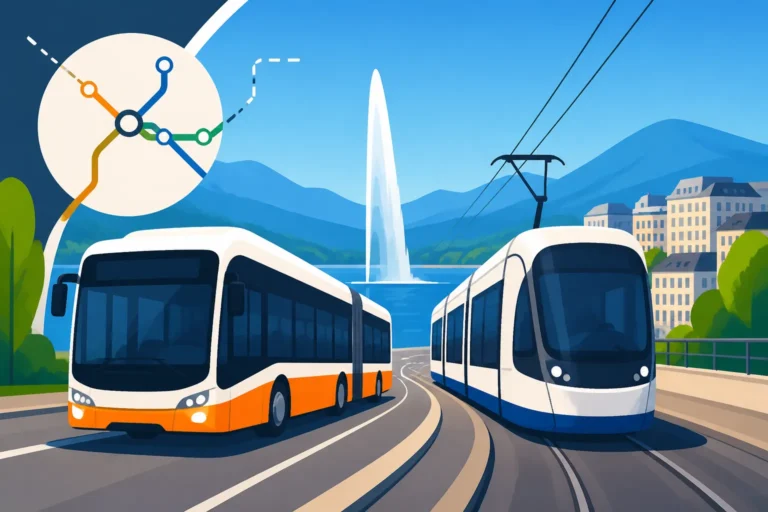
Before you hit the showrooms, spend a month using the SBB app. For many expats, a car is actually slower for commuting than the train. However, if you live in a rural village or have a family with three kids and a dog, the train stops being the "easy" option. I personally found that while the train was great for work, my weekends were transformed once I had the freedom to reach trailheads that weren't serviced by PostBuses.
If you are on the fence, compare the cost of a car against the SBB Travelcards: Is the Generalabonnement (GA) Worth the CHF 4000+ Cost? or consider if you really just need a vehicle for occasional trips. For those still in the process of moving and securing a permanent base, platforms like HousingAnywhere can help you find apartments that specifically include parking, which is a massive win in the Swiss rental market.
Depreciation and Resale Value in the Swiss Context
Swiss buyers are notoriously meticulous. They expect a full service history (Serviceheft) with every stamp from an authorized dealer. If you buy a car and skip a single scheduled service, you will see its resale value plummet when you try to sell it later. The market favors well-maintained, late-model German brands, but Japanese and Korean cars are gaining ground for their reliability and lower maintenance overhead.
When I bought my first car here, I didn't realize how much the "options" mattered. In Switzerland, features like 4×4 (AWD) are almost a requirement for resale in mountainous cantons. If you buy a front-wheel-drive car to save money now, you might find it very difficult to offload in three years when you decide to upgrade or leave the country.
Where and How to Find Your Vehicle
Once you’ve decided to take the plunge, the search begins. The Swiss market is highly digitized, but there are still old-school "garages" in every village that hold hidden gems. Knowing where to look—and what red flags to avoid—will save you thousands of francs.
Mastering Autoscout24 and Local Marketplaces
Autoscout24 is the undisputed king of car listings in Switzerland. It is where almost every professional dealer and serious private seller lists their inventory. The filters are your best friend here. You can filter by the date of the last MFK (Motorfahrzeugkontrolle), which is crucial. If a car hasn't had an MFK in over a year, you are essentially buying a potential repair bill.
I spent weeks refreshing my searches on Autoscout24 before I found a deal that didn't feel like a trap. Don't forget to look at secondary sites like Tutti.ch or Ricardo.ch, where private sellers often list cars at lower prices because they don't want to pay the high listing fees of the professional sites. Just remember that when buying from a private individual, you have zero warranty protection unless specifically stated in a contract.
Dealing with Garages vs. Private Sellers
In Switzerland, a "Garage" is both a repair shop and a dealership. Buying from an established garage gives you a level of security that is worth the extra 1,000 or 2,000 francs. Most will offer a 12-month "Quality1" or similar warranty. When I bought my second Swiss car, I chose a local garage specifically because they handled all the registration paperwork for me, which saved me a half-day at the Strassenverkehrsamt.
If you go the private route, you must be prepared to do the legwork. You’ll need to ensure the seller has the "Fahrzeugausweis" (grey card) and that it isn't marked with a "Code 178," which indicates the car is currently under a leasing contract and cannot be sold. If you’re traveling to see cars in different cantons, make sure your phone is loaded with data via Airalo so you can research the vehicle's history or check insurance quotes on the fly.
The Importance of the MFK Inspection
The Motorfahrzeugkontrolle (MFK) is the periodic technical inspection that every car in Switzerland must pass. For a new car, the first one is after four years, then three, then every two years. If you are buying a used car that is more than ten years old, you want an MFK that is "fresh" (within the last few months).
Passing the MFK is not like passing an MOT in the UK or a basic smog check in the US. They check everything from engine cleanliness (literally, they may ask you to steam-clean the engine) to the tiniest bit of rust on the chassis. I once saw a car fail because the windshield wiper fluid was the wrong "color" for the season—okay, maybe that’s an exaggeration, but they are incredibly strict.
Financing Your Swiss Car: Cash, Credit, or Leasing
How you pay for your car in Switzerland involves more than just a bank transfer. The country has a very specific "leasing culture" that catches many expats off guard. Understanding the math behind these options is vital for your long-term solvency.
The Pros and Cons of Leasing in Switzerland
Leasing is incredibly popular here because it allows you to drive a much nicer car than you might be able to afford in cash. You pay a monthly fee, usually over 36 or 48 months, with a fixed interest rate. However, you need to be aware of the "Residual Value" (Restwert). At the end of the lease, you don't own the car unless you pay a large lump sum.
The biggest trap for expats is the insurance requirement. If you lease, you are legally required to have "Vollkasko" (full casco) insurance, which is the most expensive tier. Additionally, if you lose your job or have to leave the country suddenly, terminating a lease early can be financially devastating. For a deeper dive into the numbers, read the guide on Buying a Car in Switzerland: Leasing vs Financing Financial Comparison before signing anything.
Personal Loans and Direct Cash Purchases
If you have the savings, buying in cash is almost always the best financial move in Switzerland. It gives you the power to negotiate a "Barzahlung" (cash payment) discount at many independent garages. If you don't have the full amount, a personal loan might actually be cheaper than leasing because it allows you to choose a lower insurance tier (though I wouldn't recommend it for a new car) and you own the asset from day one.
Interest rates for personal loans are regulated in Switzerland, but they can still be high for "Third-Country Nationals" or those on an L Permit. Your residency status plays a huge role in your ability to get credit. Check The Swiss B Permit: Eligibility, Renewal, and Restrictions to see how your permit type might influence your financial options with Swiss banks.
Comparative Costs of Payment Methods
| Feature | Cash Purchase | Leasing | Personal Loan |
|---|---|---|---|
| Ownership | Immediate | Bank owns the car | Immediate |
| Insurance Req. | Your choice | Mandatory Vollkasko | Your choice |
| Flexibility | High (sell anytime) | Low (early exit fees) | Medium |
| Total Cost | Lowest | Highest (interest + fees) | Moderate |
| Monthly Burden | None | Fixed monthly payment | Fixed monthly payment |
Mandatory Auto Insurance: Navigating the Swiss System
You cannot drive your car off the lot—or even get your license plates—without proof of insurance. The Swiss system is efficient, but you need to know the three main types of coverage to avoid overpaying.
Haftpflicht, Teilkasko, and Vollkasko Explained
Haftpflicht (Third-party liability) is the absolute minimum required by law. It covers damage you cause to others. Without a certificate of insurance (Versicherungsnachweis) for Haftpflicht, the Cantonal authorities will not issue your plates.
Teilkasko (Partial casco) adds coverage for things out of your control: fire, theft, hail (which is a real threat in the Swiss summer), and collisions with animals. Given how much it hails in certain parts of Switzerland, Teilkasko is usually considered the "sensible minimum" for most expats.
Vollkasko (Full casco) covers everything, including damage you cause to your own car in an accident. If your car is less than four years old or is on a lease, this is essentially mandatory. I recommend looking at Mandatory and Optional Insurance: Liability, Legal, and Household to see how auto insurance fits into your broader Swiss insurance portfolio.
Finding the Best Rates and Discounts
Insurance premiums in Switzerland are calculated based on your age, nationality, years of driving experience, and even your postal code. Some insurers used to charge higher premiums for certain nationalities, though this is becoming less common.
One of the best ways to save money is the "No-Claims Bonus" (Bonus-Malus system). If you can prove you had a clean driving record in your home country, many Swiss insurers will start you at a discounted rate. I had to get a translated letter from my previous insurer in the US to save 30% on my first year’s premium. If you need help with these documents, RushTranslate is a great resource for getting certified translations that Swiss authorities and insurers will accept.
Adding Extras: Glass, Parking Damage, and Roadside Assistance
The Swiss love their "extras." You will be offered "Parkschaden" (parking damage) coverage, which pays for those mysterious dents that appear when you’re shopping at Migros. It's expensive but can be worth it if you park in tight city garages.
Also, check if your insurance includes roadside assistance. If not, you might want to join the TCS (Touring Club Suisse), which is the Swiss equivalent of the AAA or RAC. They are incredibly efficient and provide peace of mind when you're driving over a high alpine pass in January. For small car accessories like emergency kits or better ice scrapers, Amazon Germany usually has a better selection and better prices than local specialized shops, and they ship directly to Switzerland.
Registration, Plates, and Technical Inspections
In Switzerland, the license plates belong to you, not the car. This is a strange concept for many, but it means you can have "interchangeable plates" if you own two cars, only paying insurance and tax on the more expensive one.
Converting the MFK and Cantonal Registration
When you buy a car, the seller will give you the "Annulliert" (cancelled) Fahrzeugausweis. You take this, along with your insurance confirmation (which the insurer sends digitally to the authorities) and your ID/Permit, to the local Strassenverkehrsamt (Road Traffic Office).
If you are moving from another canton, you have 14 days to register your car in your new home. This is part of the broader 14-Day Registration Rule: Signing Up at the Gemeinde/Commune that applies to your residency as well. The process is usually very fast; I’ve walked into the Zurich office and walked out with my new plates in under 20 minutes.
Understanding the Road Tax and Yearly Fees
Every year, usually in January, you will receive a bill from your Canton for the "Verkehrsabgabe" (road tax). This is calculated differently in every canton. Some cantons, like Zurich, base it on the weight and displacement of the engine. Others, like Geneva, focus heavily on CO2 emissions.
If you drive an electric vehicle, some cantons offer a massive discount or even a total exemption for the first few years. This is a significant factor to consider if you are debating between a petrol SUV and a Tesla. It’s these kinds of Cantonal Premium Reductions (Prämienverbilligung) for Low-Income Households or tax variations that make living in one canton significantly cheaper than another for car owners.
The Swiss Highway Vignette
To drive on the "Autobahn" (highways), you need a vignette. It costs CHF 40 and is valid for the calendar year. You can buy a physical sticker at any gas station or post office, but the new E-Vignette is much more convenient as it’s tied to your license plate. If you don't have one and get caught on the highway, the fine is CHF 200 plus the cost of the vignette. For more details on the 2026 rules, check Swiss Autobahn Vignette: E-Vignette vs Physical Sticker for 2026.
Maintenance and Everyday Driving Realities
Driving in Switzerland is a dream because the roads are perfect, but the rules are strict. "Strict" in Switzerland means zero tolerance. If the sign says 50 km/h and you’re doing 53, you will get a bill in the mail.
Winter Tires and Seasonal Readiness
While there is no federal law that explicitly says "you must change to winter tires on October 1st," there is a law that says your car must be "roadworthy" for the conditions. If you have an accident on a snowy road with summer tires, your insurance will likely refuse to pay, and you could face criminal charges.
The rule of thumb is "von O bis O"—from October to Ostern (Easter). I usually book my tire change appointment in September because the garages fill up instantly. Expect to pay around CHF 100-150 for a "Pneuwechsel" (tire change) and storage of your off-season tires (Reifenhotel). This is one of those Cost of Living Realities: Groceries, Telecoms, and Household Expenses that you have to budget for annually.
Parking Regulations and Blue Zones
Parking is a science in Switzerland. White zones are paid parking (usually via an app like EasyPark or Twint). Blue zones require a "Blue Disk" placed in your window, allowing you to park for free for a limited time (usually one hour).
If you live in a city, you can apply for a "Anwohnerparkkarte" (resident parking permit) for your specific zone. It usually costs around CHF 300 per year and allows you to park in the Blue Zone in your neighborhood indefinitely. Without this, finding a spot becomes a daily nightmare. Be careful with private parking spots; the Swiss have no problem calling a tow truck if you’re blocking their "Privat" space for even five minutes.
Strict Traffic Laws and Fines
Swiss speeding fines are legendary. For minor infractions, there is a fixed scale. For "major" speeding, the fine is calculated based on your monthly income, and you can easily end up with a multi-thousand-franc penalty and a prison sentence.
Radars are everywhere—often hidden in trash cans or behind signs. They are not there to be "fair"; they are there to enforce the limit. If you are new to the country, I highly recommend reading up on Converting Your Foreign Driver's License to a Swiss Fahrausweis because once you have a Swiss license, you are fully under the "points" and suspension system of the local authorities.
Buying a Car in Switzerland Disclaimer
This guide is intended for informational purposes only and reflects the personal experiences of the author and general Swiss regulations. Laws and cantonal regulations regarding vehicle ownership, insurance, and taxation can change frequently. Always consult with official cantonal authorities (Strassenverkehrsamt) and your insurance provider before making a purchase or signing a contract.