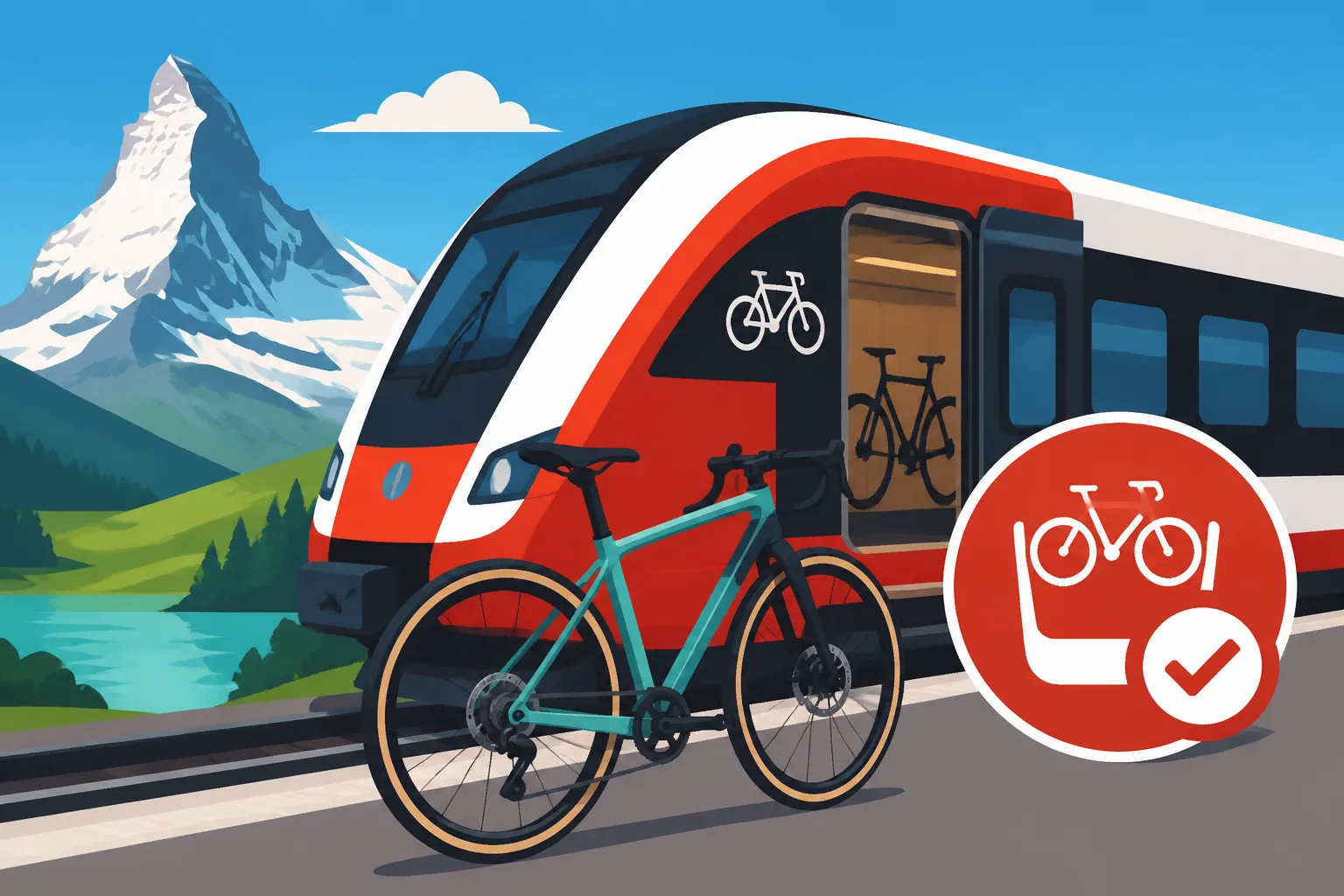
Taking Bicycles on Swiss Trains: Mandatory Reservations and Velo Tickets
Standing on the platform at Zurich HB as the InterCity train pulls in, only to realize you forgot to book a bike hook, is an exhausting rite of passage for many expats. I have personally spent a frantic afternoon sweating through my cycling jersey while a polite but firm conductor explained that my bike simply wasn't allowed on the train. This guide solves the confusion around SBB bike rules, mandatory reservations, and pricing to keep your weekend tours stress-free.
The Foundation of Bike Transport on SBB
The Swiss Federal Railways (SBB) is remarkably bike-friendly, but that friendliness comes with a thick manual of rules that can catch you off guard. Unlike some countries where you can simply wheel your bike into any open space, Switzerland treats your bicycle as a passenger that requires its own valid "ticket to ride." Whether you are commuting from a suburban area you found through HousingAnywhere or heading into the Alps for a grueling climb, you must understand that "transporting" a bike and "carrying" a bike are two different legal concepts in the eyes of the conductor.
If you can fold your bike or remove the front wheel and tuck it into a dedicated transport bag (like a TranZbag), it counts as "hand luggage." In this specific scenario, your bike travels for free. However, for the 95% of us who just want to wheel our mountain bikes or e-bikes onto the carriage, a Velo-Ticket is non-negotiable. This applies to all standard trains, including the S-Bahn, RegioExpress, and InterCity lines. The system is designed to be efficient, but it is rigid. If you are a new arrival and still setting up your local phone plan, ensure you have an eSIM from a provider like Airalo so you can access the SBB Mobile app on the fly; trying to navigate these rules at a ticket machine while a train is departing is a recipe for a headache.
Understanding the Velo Ticket Pricing Structure
The cost of taking your bike on a train depends heavily on whether you hold a The Half-Fare Travelcard (Halbtax) or other subscriptions. For short hops, you might only need a point-to-point bike ticket, which is typically half the price of a standard second-class fare for that same route. However, there is a "cap" on how much you should pay. If your half-fare journey costs more than 15 CHF, you should instead purchase the Velo Day Pass (Velo-Tageskarte).
For those who have committed to Swiss life and invested in SBB Travelcards: Is the Generalabonnement (GA) Worth the CHF 4000+ Cost?, you still generally need to pay for your bike, though the Velo Day Pass remains your best friend for long-distance trips. It is also worth noting that many local transport networks have their own specific rules for peak hours. In cities like Zurich or Geneva, taking a bike on the tram or S-Bahn during rush hour (06:00–08:00 and 16:00–19:00) is either discouraged or outright banned to leave room for commuters.
| Ticket Type | Price (with Half-Fare) | Price (Full Fare) | Best Used For |
|---|---|---|---|
| Point-to-Point Bike | Half of 2nd Class Fare | Half of 2nd Class Fare | Short commutes or single-stop hops |
| Velo Day Pass | 15 CHF | 15 CHF | Cross-canton trips or multi-train journeys |
| Junior Travelcard | Free (with conditions) | N/A | Children under 16 with a parent |
| Annual Bike Pass | 240 CHF | 240 CHF | Daily commuters or hardcore enthusiasts |
Mandatory Reservations: The Great Expat Pitfall
The most significant hurdle for foreigners is the "Reserveringspflicht" or mandatory reservation requirement. Between March 21st and October 31st, you cannot simply board an InterCity (IC) train with a bike without a specific hook reservation. This rule was implemented to manage the massive surge in cycling tourism during the warmer months. These reservations cost 5 CHF and are tied to a specific train at a specific time.
If you are planning a trip through Where to Live in Switzerland: Cantons, Cities, and Commuter Zones and intend to use the main arteries like the IC1 (Geneva to St. Gallen) or the IC5 (the Jura foot line), you must book your hook early. These spots often sell out days in advance for sunny Saturdays. The SBB app will show a small bicycle icon next to the train connection; if that icon is framed in a square, a reservation is mandatory. If the icon is glowing red, it means the bike spaces are already fully booked. I once had to wait three hours at Lausanne station because I assumed I could "just squeeze in." The conductors will not let you "squeeze in" on an IC train because a bike in the aisle is considered a fire hazard.
Dealing with E-Bikes and Special Equipment
As e-bikes become the standard in the hilly terrain of Switzerland, the SBB has updated its capacity, but weight remains an issue. Most bike hooks on Swiss trains are designed for standard tire widths. If you are riding a "fat bike" or a heavy e-cargo bike, you may find it impossible to lift your bike onto the vertical hooks provided in the older carriages. In newer InterCity tilting trains, the bike areas are often at ground level, but they are limited to two or three spots per car.
Before you go out and buy a high-end e-bike from a retailer or through Amazon Germany, check the weight. You are responsible for loading and unloading your bike yourself. The train staff is not required to help you lift a 25kg e-bike onto a high hook. If your bike has a trailer for kids, you generally have to pay for a second bike ticket for the trailer, and you must ensure the trailer can be folded if the train is crowded. This is why many families choose to live in commuter-friendly zones where they can cycle directly to work without needing the train at all.
How to Find Your Carriage on the Platform
The stress of the two-minute stop at a Swiss station is real. You are standing on the platform, and the train is 300 meters long—where do you stand? Look at the electronic "sector" signs (A, B, C, or D) on the platform. The SBB app or the platform display will show a diagram of the arriving train. Look for the wagon with a large, glowing bicycle symbol. This is usually at the very front or the very back of the train, though on some double-decker trains, it can be in the middle.
If you find yourself in the wrong sector when the train arrives, do not panic. Walk quickly toward the correct wagon. Do not try to board a standard passenger wagon and "walk through" the train with your bike; the doors and aisles are too narrow, and you will likely scratch someone’s expensive suitcase or, worse, their legs. If you are worried about the security of your bike once it’s on the hook, remember that Buying a Used Bicycle: Checking Frame Numbers for Stolen Bikes is a common topic here for a reason. While Swiss trains are safe, it is always wise to use a simple cable lock to secure your frame to the hook, especially if you are heading to the dining car for a coffee.
International Travel and Regional Variations
Taking your bike across the border to Italy, France, or Germany requires an even higher level of planning. International trains like the EuroCity (EC) or the TGV Lyria have very strict bike quotas, and the reservation is often mandatory year-round, not just in the summer. The prices for international bike tickets are also higher, usually starting around 12 to 20 CHF depending on the destination.
Within Switzerland, some private mountain railways (like those in the Bernese Oberland or the Valais) may not accept the SBB Velo Day Pass. They often have their own "MTB Transport" fees because they use specialized racks on the back of the train or cable car. Always check the specific mountain line’s website before you arrive. If you are still navigating the administrative side of Swiss life, such as Converting Your Foreign Driver's License to a Swiss Fahrausweis, you might find that the bike-train combination is actually faster than driving, provided you master these booking rules.
Managing your Cost of Living Realities: Groceries, Telecoms, and Household Expenses often involves finding ways to save on transport. If you find the 15 CHF daily fee too steep for frequent use, consider buying a "Velo-Pass" for the year. It costs 240 CHF and pays for itself if you take your bike on the train more than 16 times a year. It is a fantastic investment for those who want to see every corner of this beautiful country on two wheels.
Important Considerations for Travelers
- Check the Symbols: A "crossed-out bike" symbol in the timetable means bike transport is forbidden on that specific connection. This is common on replacement bus services.
- The Self-Loading Rule: You must be physically able to lift your bike. If you have a physical limitation, you can call the SBB Call Center Mobility at least an hour in advance to request assistance, but this is primarily for those with registered disabilities.
- Group Travel: If you are traveling in a group of ten or more people with bikes, you must give the station at least 48 hours' notice. They may need to attach an extra wagon to accommodate you.
- The SBB App is King: Always buy your bike ticket and your reservation through the app. It stores the QR code, which makes the ticket inspection process seamless.
Health and Medical Disclaimer
The information provided in this guide is for informational purposes only and does not constitute professional advice. While cycling is a healthy activity, ensure you are in proper physical condition before attempting high-altitude routes in Switzerland. Always wear a helmet, as Swiss traffic laws and mountainous terrain can be unforgiving. We are not responsible for any injuries, fines, or damages incurred while following the advice in this article. Check official SBB (Swiss Federal Railways) documentation for the most current pricing and regulations, as these can change annually.